

What Is the XQM-20 20L Vertical Production Planetary Ball Mill? A Powder Grinder
What Is the XQM-20 20L Vertical Production Planetary Ball Mill?
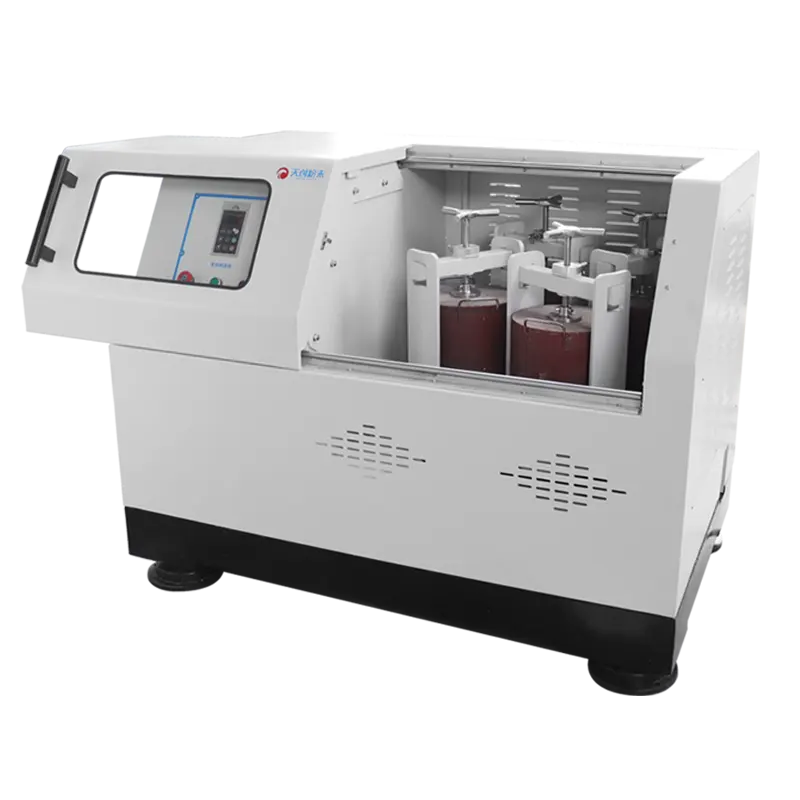
In simple terms, the XQM-20 20L vertical production planetary ball mill is a larger-format planetary grinding machine designed to reduce solid materials to fine powders through the combined action of rotating jars and grinding media. It belongs to the planetary ball mill family, but its vertical production description points to a configuration intended for larger workloads than a typical small laboratory unit. Instead of using a single rotating drum, a planetary mill carries one or more grinding jars around a central axis while each jar also turns around its own axis. This dual motion creates strong impact and friction inside the jar, making the equipment useful for sample preparation, formulation work, and small-batch production where controlled particle size reduction matters.
Readers often meet this machine while comparing laboratory mills with scale-up options. The XQM-20 is listed on the manufacturer product page as the XQM-20 20L vertical production planetary ball mill, which is the best place to confirm its current jar arrangement, control package, and electrical configuration. This article explains the working principle, main parts, performance factors, and selection points in plain technical language. It is not a substitute for the manufacturer datasheet; rather, it is a practical FAQ for buyers, engineers, and students who want to understand what the equipment does and how to judge whether it fits a project.
How Planetary Motion Creates Fine Grinding
The word planetary describes the path of the grinding jars. In a simplified model, a sun wheel or main disk rotates, and the jars sit on this disk like planets around a sun. As the disk turns, each jar is also driven to rotate around its own axis, usually in the opposite direction. The result is a complex motion in which the grinding balls inside the jar are repeatedly lifted, thrown, and rolled against the jar wall and against one another.
This motion is more energetic than simple tumbling in a conventional ball mill. The centrifugal forces generated by the main disk and the jar rotation create a high-energy collision zone. Material trapped between colliding balls is fractured; material rubbed between balls and the jar wall is abraded. Because the process happens inside a closed jar, it can handle small to moderate amounts of material with limited loss and controlled contamination, provided the jar and ball materials are chosen correctly.
For the XQM-20 class, the vertical layout affects how jars are mounted and how material behaves during rotation. A vertical production planetary mill is generally arranged so that the grinding jars are held in a sturdy frame and driven through a reliable transmission. The exact speed ratio, jar size, and motor specification determine the energy input. These details should always be checked against the product page or quotation, because two machines with the same nominal volume can have different speed ranges and therefore different grinding performance.
From Feed Material to Finished Powder: The Process Path
The basic process can be described as a sequence: load, seal, rotate, discharge, and characterize. First, the operator places the material and grinding media into a clean grinding jar. The jar is sealed, mounted in the machine, and secured according to the manufacturer instructions. The control system then starts the main disk and jar rotation. During rotation, repeated impact and friction reduce particle size. After the set time or energy input, the jar is removed, opened in a suitable environment, and the powder is separated from the balls and characterized.
Inside the jar, three mechanisms usually act together. Impact occurs when a grinding ball strikes a particle at speed. Attrition occurs when particles are caught and sheared between moving surfaces. Abrasion occurs as particles rub against the jar wall and adjacent media. The balance among these mechanisms depends on ball size, ball density, fill level, jar volume, material load, rotation speed, and grinding time. A process dominated by large, dense balls tends to favor impact and may be suitable for breaking down brittle materials. A process using smaller media and gentler conditions tends to favor finer grinding and better uniformity, although it may take longer.
The final particle size is not controlled by one dial alone. It is the outcome of an energy budget: how much mechanical energy is delivered to the powder and how efficiently that energy causes fracture rather than heat, noise, or wear. In practice, operators adjust the running time, ball-to-powder ratio, and rotation speed, then check the result by laser diffraction, sieving, microscopy, or another suitable method. Over-grinding can broaden the size distribution, introduce excessive heat, or increase contamination from media wear, so the goal is usually a stable recipe rather than the smallest possible number on a report.
Core Components of a Vertical Production Planetary Ball Mill
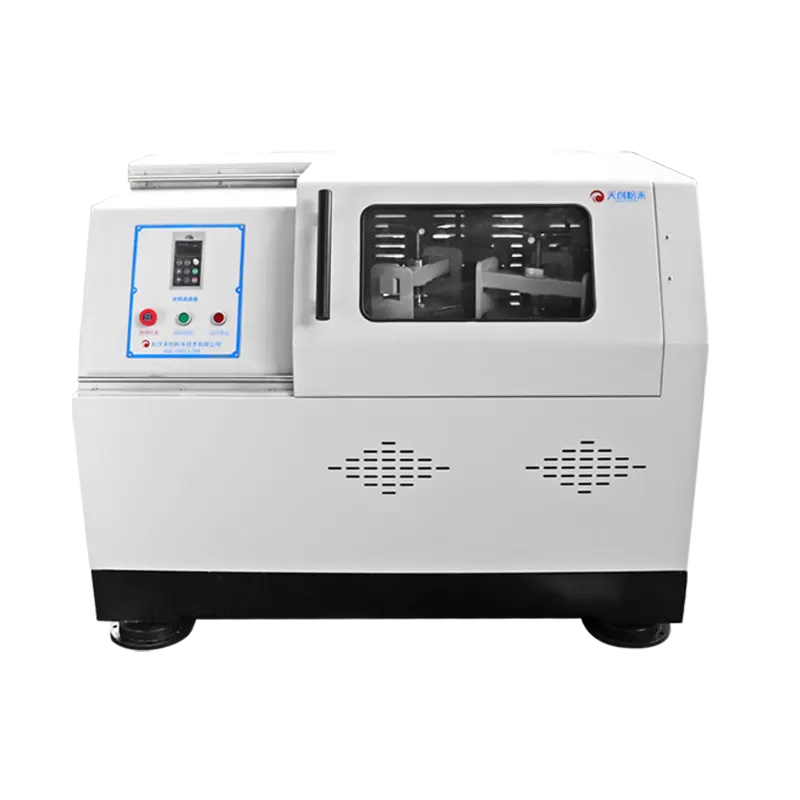
A planetary ball mill is more than a motor and a jar. The main assembly usually includes a rigid base frame, a vertical main drive, jar holders, a safety guard, a control panel, and a braking or interlock system. The frame must absorb vibration and keep the rotating parts aligned. The jar holders must grip the jars firmly because even a small amount of movement at high speed can damage the jar, the holder, or the drive. The guard and interlock are important safety features: they keep hands away from moving parts and help prevent operation with an improperly secured jar.
The grinding jars and media are the working chamber of the process. They are available in materials such as stainless steel, agate, zirconia, corundum, tungsten carbide, nylon, PTFE, and polyurethane, although the exact options offered for this model should be confirmed with the supplier. Material choice affects contamination, wear life, and cost. For example, a hard and dense medium may grind efficiently but can introduce trace wear metals; a chemically inert jar may protect purity but may have lower impact energy. The right combination depends on the feed material, target purity, and acceptable level of wear.
The control system is another key part. A basic machine may offer timers and speed settings, while a more advanced production-oriented unit may include programmable recipes, speed ramps, overload protection, and status alarms. For repeatable work, the ability to store and recall a program is valuable because it reduces operator-to-operator variation. The control package also affects how easily the machine can be integrated into a production record system, although the exact features of the XQM-20 must be taken from its current specification sheet.
Key Performance Indicators to Compare
When comparing the XQM-20 with other planetary mills, start with usable capacity rather than the number in the model name. A 20L designation is a useful class indicator, but the real question is how much material and media can be loaded into the jar configuration while leaving enough free volume for motion. Overfilling a jar can reduce impact efficiency and raise internal pressure; underfilling can waste capacity and cause excessive wear. Ask for the recommended jar volume, media load, and batch range for the materials you intend to process.
Next, look at particle size capability. A supplier may state a minimum achievable size, but that value is material-dependent and should be treated as an indicator, not a guarantee for every powder. Brittle crystals, soft polymers, fibrous plants, and ductile metals behave very differently under impact. For a realistic assessment, request a trial or ask for reference data on a material close to yours. Also ask how particle size is measured, because laser diffraction, sieving, and microscopy can produce different numbers.
Energy use, noise, and heat are related to grinding intensity. Higher speed and longer runs usually increase energy consumption and heat generation. If the material is heat-sensitive, the jar may need cooling, intermittent running, or a different mill type. Maintenance access is equally practical: check how easily jars can be removed, how the drive is lubricated, how belts or couplings are inspected, and whether spare parts are available. A machine that is difficult to clean or service can lose more production time than a slightly slower machine.
Understanding the 20L Designation and Batch Planning
The 20L in the model name is a useful starting point for capacity discussions, but it should not be read as a promise that every batch will contain exactly 20 liters of powder. A grinding jar must contain media as well as material, and it needs free space for the media to move. The practical batch size is therefore smaller than the nominal jar volume and depends on the desired ball-to-powder ratio. A batch intended for fine grinding may use a relatively low powder load so that collisions remain frequent and energetic.
Batch planning also affects reproducibility. If the operator changes the fill level from run to run, the same speed and time may produce different particle sizes. A better approach is to define a standard load, a standard media charge, and a standard filling procedure, then record them in a batch sheet. For larger production campaigns, it is worth running a small design-of-experiments series to find the range where the mill is stable. This reduces the risk of over-grinding, excessive jar wear, and inconsistent product quality.
Laboratory Mill or Production Mill? A Scale-Up Question
The XQM-20 is described as a production-oriented vertical planetary mill, which places it between small laboratory grinders and larger industrial milling systems. A laboratory planetary mill is often used for gram-scale samples, method development, and rapid screening. A production planetary mill is built for larger batches, longer running periods, and more demanding mechanical duty. The scale-up is not simply a matter of multiplying the jar volume; it also changes the way heat is removed, how media are loaded, and how operators handle jars safely.
For scale-up, begin with a small experiment that records the full recipe: material mass, ball mass, ball diameter, jar material, rotation speed, grinding time, and any pauses. Then compare the energy per unit mass rather than copying the same time. A larger jar may need a different ball size or fill ratio to achieve a similar collision environment. The most reliable approach is to run a designed series of trials and measure particle size, distribution width, and contamination. If the product page lists recommended configurations, use those as a starting point, but verify them against your own material.
Materials and Applications That Fit This Machine
Planetary ball mills are used in ceramics, minerals, chemicals, battery materials, pigments, pharmaceuticals, food science, and university research. Typical tasks include fine grinding, mixing, mechanical alloying, mechanochemical reaction, and sample preparation for analysis. The XQM-20 larger format may suit pilot batches, small production lots, and development work where a laboratory mill is too small but a full industrial mill is not yet justified. It can be useful when a project needs multiple formulations, controlled contamination, and a recorded grinding recipe.
However, not every material is a good match. Sticky or ductile materials can coat the jar and balls, reducing grinding efficiency. Heat-sensitive materials may degrade unless the process is cooled or run in short cycles. Very abrasive materials can shorten jar life and increase contamination. Reactive powders may require an inert atmosphere, which depends on the jar sealing and glove-box or gas-line arrangement. Before committing, test the actual feed material and check the resulting particle size, morphology, and purity.
How to Select the Right Configuration
Selection should start with the product, not the machine alone. Define the target particle size, acceptable size distribution, batch size, material hardness, and contamination limit. Then decide whether a planetary mill is the right category. If the material is extremely heat-sensitive, a cryogenic or low-temperature mill may be better. If the required tonnage is very large, a different production mill may be more economical. If the goal is only coarse breaking, a jaw crusher or hammer mill may be more appropriate before fine grinding.
For the XQM-20, ask the supplier to confirm the available jar materials, usable jar volume, maximum batch mass, speed range, control features, safety interlocks, and power supply. Request a sample trial with your material if possible. Compare not only the purchase price but also the cost of jars and media, expected wear life, energy consumption, and downtime for cleaning. A well-matched jar and media set can improve product quality and reduce long-term cost more than a small difference in machine price.
Operation and Maintenance Checklist
Safe operation begins with a clean jar, correct media, and a secure lid. Check that the jar is rated for the intended speed and that the gasket or sealing ring is in good condition. Do not exceed the manufacturer recommended load or speed. Balance the jars if the machine uses multiple stations; an unbalanced load creates vibration and can damage bearings. During the first runs, monitor for unusual noise, smell, or movement, and stop immediately if anything seems wrong.
After each batch, clean the jar and media according to the material and jar type. Avoid mixing incompatible cleaning agents with the jar lining. Inspect the jar for cracks, chips, or worn seals. Check the machine fasteners, guard, and emergency stop at the recommended intervals. Keep a log of grinding parameters and maintenance so that changes in performance can be traced. These habits are simple, but they protect both the operator and the quality of the powder.
Safety and Powder Handling
Fine powders can create dust, and some materials may be hazardous if inhaled or if they react with air. Use appropriate containment, ventilation, and personal protective equipment when opening jars and handling powder. Avoid dry sweeping that disperses dust; use wet cleaning or vacuum equipment rated for the material. If the powder is flammable, reactive, or toxic, follow the material safety data sheet and the site safety procedure. The mill itself should be installed on a stable floor with enough clearance for jar changes and maintenance.
Mechanical safety is equally important. Never bypass a guard or interlock. Confirm that the jar holders are locked before starting the machine. If a jar is damaged or a lid seal is worn, replace it rather than attempting a temporary repair. Keep the working area clean so that tools or loose objects cannot fall into the rotating assembly. These precautions are standard for production equipment, and they become more important as jar size and batch mass increase.
Frequently Asked Questions
Is the XQM-20 suitable for continuous production?
The model name describes a vertical production planetary ball mill, but production can mean different things. Some production mills run batch cycles with larger jars; others are integrated into a continuous line. The product page should be consulted for the actual operating mode. For many materials, batch operation is preferred because it gives clear control over energy input and cleaning between lots.
Can it grind down to nanometer size?
Planetary mills can produce very fine particles, but the achievable size depends on the material, media, jar, speed, time, and measurement method. Do not rely on a single nano claim. Ask for test data on a comparable material and define the measurement technique before accepting a specification.
Why does the jar material matter?
The jar and balls are in direct contact with the powder. A soft jar may contaminate the product; a very hard jar may be more wear-resistant but can add its own trace elements. Chemical compatibility, wear life, and cost all matter. The right choice is the one that meets the purity and budget requirements of the application.
Product Information and Further Reading
For the current configuration, dimensions, available jars, and control options, see the official XQM-20 20L vertical production planetary ball mill product page. The page also provides product images that help with layout planning and operator training. Because specifications can change, confirm critical details with the supplier before purchase. If you are comparing this model with a laboratory planetary mill or a different production mill, use the same material trial and the same particle-size test for a fair comparison.
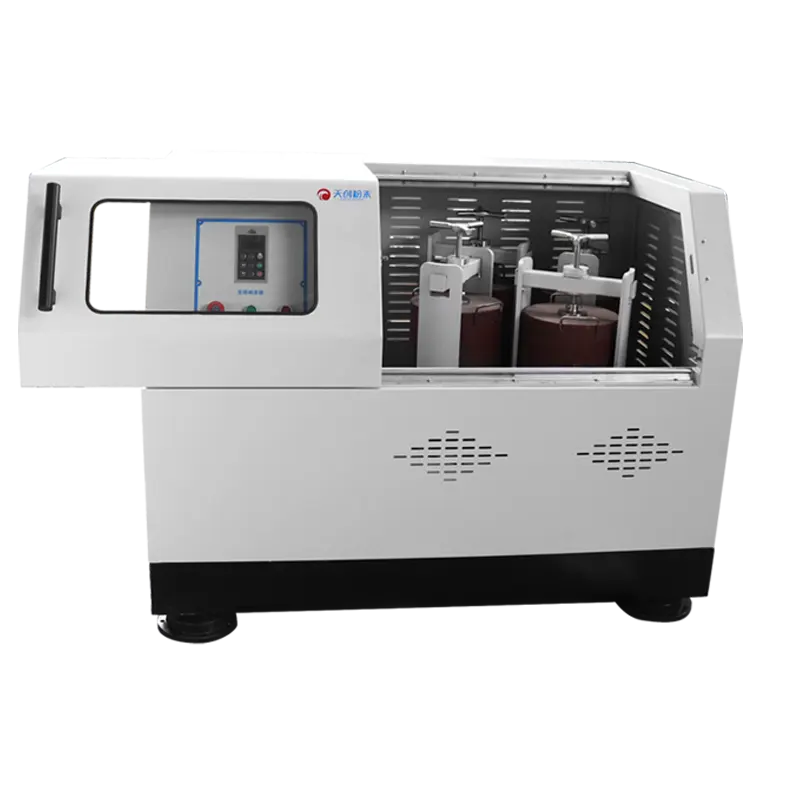
In summary, the XQM-20 20L vertical production planetary ball mill is a production-class planetary grinding system for turning solid materials into fine powders through impact, attrition, and abrasion inside rotating jars. Its value lies in controlled energy input, flexible jar and media selection, and a scale that bridges laboratory work and larger production. The best choice depends on the material, target fineness, batch size, and maintenance plan, not on a single headline number.
Related Products
XQM-20 20L Vertical Production Planetary Ball Mill
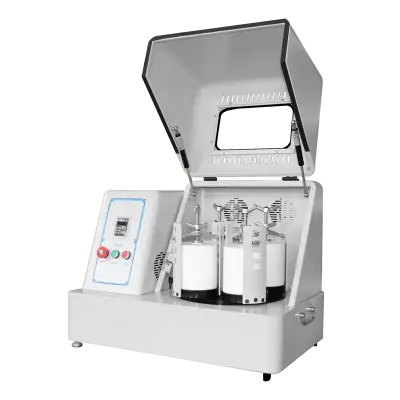
Laboratory planetary grinder
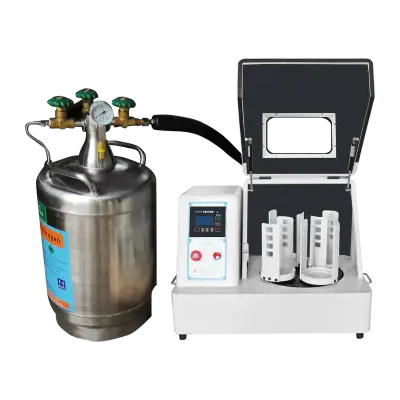
Liquid Nitrogen Planetary Ball Mill
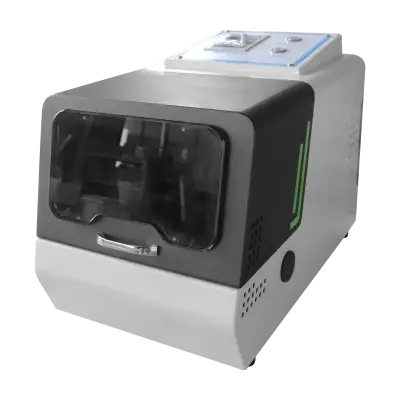
Micro Planetary Ball Mill
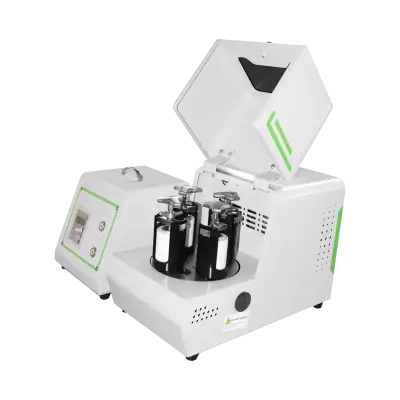
Micro Planetary Ball Mill
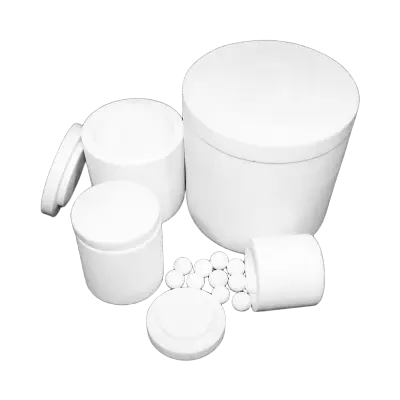
A grade Corundum planetary Mill Jar
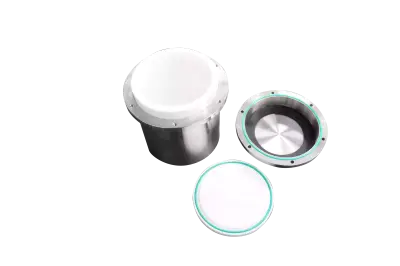
304 stainless steel lined with zirconia mill jar
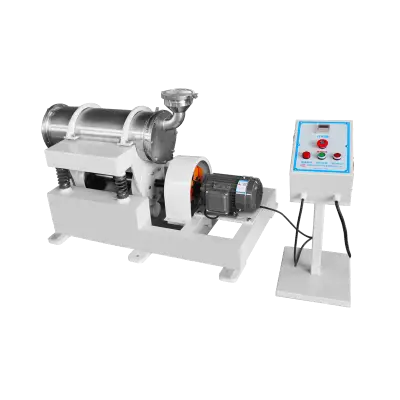
Lightweight vibrating ball mill
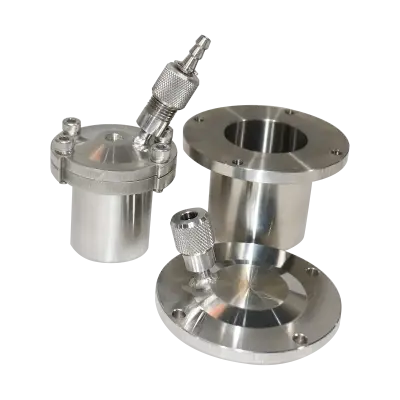
vacuum planetary mill jar
Get In Touch
Our professional team will reply to you within one business day. Please feel free to contact us!