

What is a Vertical Production Planetary Ball Mill? A High-Volume Grinding Equipment for Industrial Powder Processing
What is a Vertical Production Planetary Ball Mill?
At its core, a vertical production planetary ball mill is a specialized high-energy grinding device designed for continuous or batch processing of bulk materials into fine powders, down to the micron or even nano scale. Unlike laboratory-scale planetary mills, this vertical production model is engineered for industrial throughput, capable of handling large volumes of material while maintaining the exceptional efficiency of planetary motion. Industries such as mining, metallurgy, ceramics, chemicals, and advanced materials rely on this equipment to achieve uniform particle size reduction, mixing, and mechanical alloying.
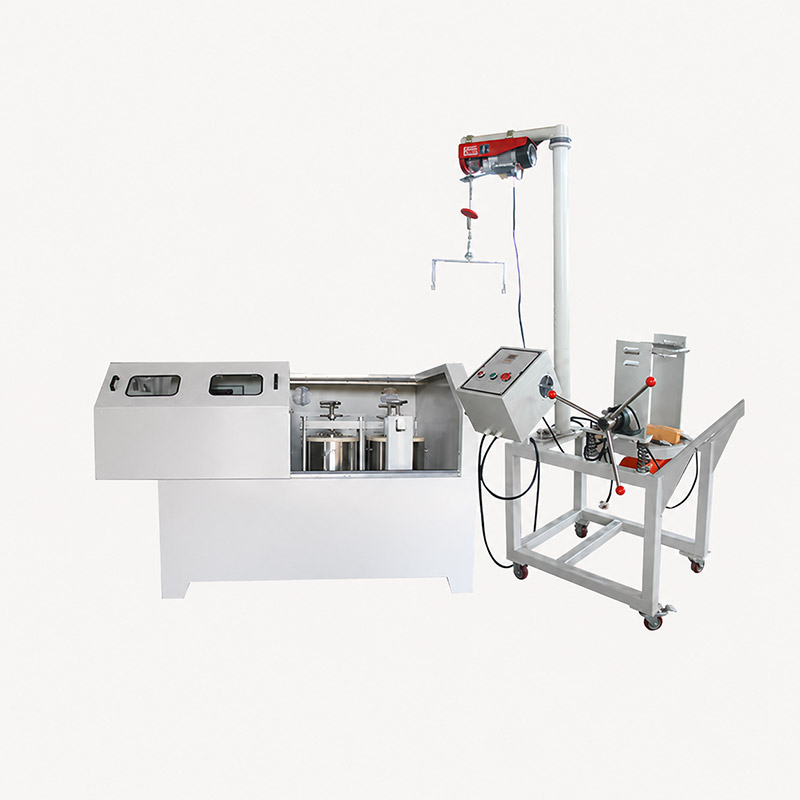
Core Function and Working Principle
The vertical production planetary ball mill transforms coarse feed materials (typically less than 10 mm) into fine powders through a combination of impact, compression, and friction. The heart of the system is a rotating main disk (sun wheel) on which several grinding jars are mounted vertically. When the main disk rotates, each jar simultaneously rotates around its own axis in the opposite direction, creating a planetary motion. This unique dual rotation generates powerful centrifugal forces (up to 20 g or more) that drive the grinding balls against the jar walls, causing intense collisions and shear actions between balls, jar walls, and material.
The key parameters that influence grinding efficiency and final particle size include the rotation speed ratio (sun wheel to jar), grinding time, ball-to-powder weight ratio, and the size and material of grinding media. By precisely controlling these variables, operators can achieve reproducible results, from coarse crushing to ultra-fine grinding. The vertical design is particularly advantageous for production environments because it allows for easy loading and unloading, better heat dissipation, and a smaller footprint compared to horizontal configurations of similar capacity.
Key Components and Design Features
Unlike laboratory models, the vertical production planetary ball mill incorporates robust construction to withstand continuous operation. Key components include:
- Heavy-duty main drive: High-torque motor and gearbox ensure stable rotation under load.
- Grinding jars: Available in various materials (stainless steel, zirconia, agate, nylon, PTFE, etc.) to suit different material contamination requirements. Jars can be sealed for vacuum or inert gas grinding.
- Locking mechanism: Quick-release clamps or screw locks secure the jars during operation, preventing accidents.
- Programmable control system: Advanced models feature a touchscreen interface for setting speed, time, forward/reverse cycling, and pause intervals, enabling automated multi-step milling protocols.
- Cooling system: Some versions include a built-in cooling fan or water jacket to manage temperature rise during prolonged grinding.
Key Performance Indicators and Selection Criteria
When selecting a vertical production planetary ball mill, consider the following critical parameters:
Processing Capacity
Production models typically offer total jar volumes from 2 L to 20 L or more per batch. The number of jars (commonly 2 or 4) and their individual capacities determine the total batch size. For continuous operation, some models allow sequential processing.
Grinding Fineness
With optimal settings, these mills can achieve particle sizes as small as 0.1 micron (100 nm). The final fineness depends on the material properties, grinding media size, and processing time. For example, hard materials like quartz may require longer milling or harder media like zirconia.
Speed and Power
Rotational speed of the sun wheel typically ranges from 100 to 600 rpm, with jar speeds proportionally higher. Higher speeds generate more energy but also increase wear and heat. Power consumption scales with capacity; a 4 L production mill might require 0.75–1.5 kW, while larger units may need several kW.
Automation and Programmability
Modern production mills incorporate microcomputer control with touchscreen interfaces, allowing users to set precise timing, speed stages, and even store multiple recipes. This is essential for quality control in industrial settings.
Maintenance and Durability
Look for mills with accessible drive components, easy jar replacement, and robust seals. Heavy-duty bearings and gears reduce downtime. Some models offer self-lubricating systems.
Applications and Selection Advice
Vertical production planetary ball mills are widely used in:
- Advanced materials research and production: Mechanical alloying, nano-powder synthesis, and dispersion of nanomaterials.
- Mining and mineral processing: Fine grinding of ores, coal, and industrial minerals.
- Ceramics and glass: Preparation of ceramic powders, glazes, and frits.
- Chemicals and pigments: Homogenization of dyes, pigments, and catalysts.
- Pharmaceuticals and food: Fine grinding of active ingredients and additives (with appropriate jar materials).
For users seeking a balance between throughput and fineness, a vertical production planetary ball mill with 4 jars of 1 L each is an excellent starting point. If material purity is critical, choose jars made of the same material as the sample (e.g., zirconia for ceramics). For heat-sensitive materials, consider models with external cooling or intermittent operation programs. Always consult the manufacturer's specifications to match the machine's speed range and jar material to your specific application requirements.
References
Related Products
Get In Touch
Our professional team will reply to you within one business day. Please feel free to contact us!