

What is a Production Type Stirred Ball Mill? A High-Efficiency Grinding Equipment for Industrial Fine and Ultra-Fine Powder Production
What is a Production Type Stirred Ball Mill?
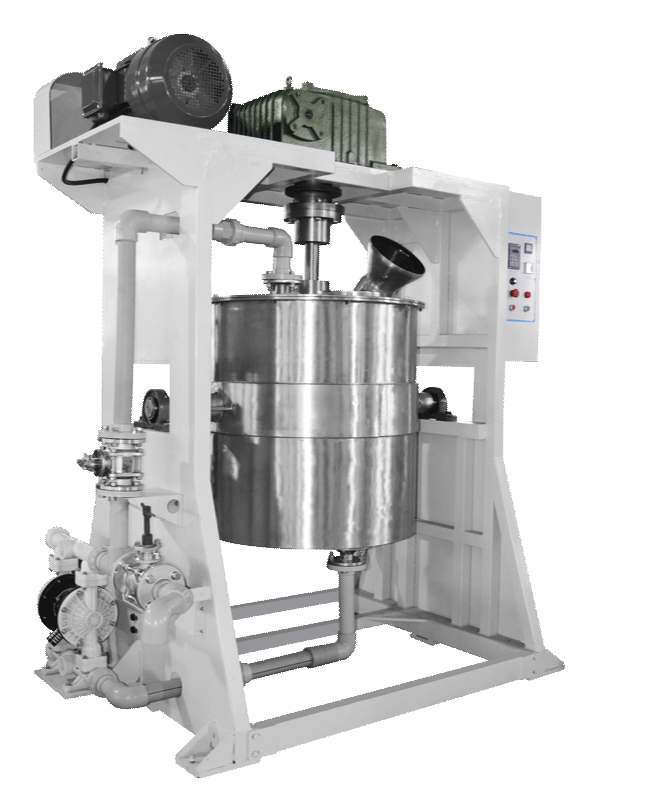
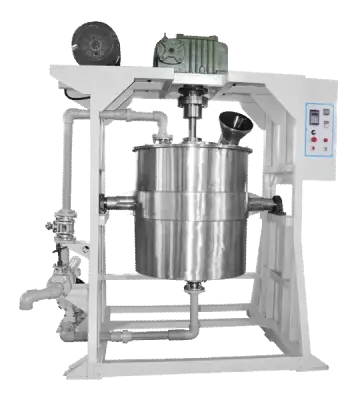
At its core, a production type stirred ball mill is a specialized industrial grinding machine designed for fine and ultra-fine powder production. It is used by manufacturers in mining, ceramics, chemicals, paints, pigments, battery materials, and advanced ceramics to efficiently reduce particle size through a high-energy stirring mechanism. Unlike traditional ball mills that rely on tumbling motion, the stirred ball mill achieves higher grinding efficiency, lower energy consumption, and a narrower particle size distribution, making it an ideal choice for large-scale fine powder processing.
Core Function and Working Principle
The production type stirred ball mill transforms raw materials from coarse particles (typically up to several millimeters) into fine or ultra-fine powders (down to micron or even submicron levels). The device consists of a stationary grinding chamber (vertical cylinder) and a rotating agitator (stirrer) mounted on a central shaft. As the agitator rotates at high speed, it drives the grinding media (such as zirconia beads, steel balls, or ceramic balls) and the feed material into a chaotic, turbulent motion. This motion generates intense impact, shear, and friction forces between the media and the particles, effectively breaking down the material.
Key process parameters include agitator speed, media size and filling ratio, residence time, and slurry viscosity. For wet grinding, the material is typically mixed with a liquid (water or solvent) to form a pumpable slurry, which can be circulated through the mill for multiple passes to achieve the desired fineness. The mill can also be configured for dry grinding with special design modifications, though wet grinding is more common for production-scale operations.
Core Components and Customization Options
The production type stirred ball mill is built with robust industrial components to ensure reliability and long service life. The main parts include:
- Grinding Chamber (Mill Jar): Typically made of stainless steel, with optional inner linings such as polyurethane (PU), alumina, zirconia, nylon, PTFE, or tungsten carbide to prevent contamination and suit different materials.
- Agitator Assembly: A shaft with specially designed discs or paddles (e.g., pin-type, disc-type, or spiral-type) that rotates at high speed to energize the grinding media.
- Cooling Jacket: A water-cooling jacket around the chamber allows precise temperature control, preventing heat buildup during long grinding cycles.
- Sealing System: Full sealing design enables vacuum or inert gas atmosphere protection for oxygen-sensitive materials.
- Material Circulation System: An optional pump and circulation loop continuously recirculate the slurry through the mill, ensuring uniform grinding and efficient heat dissipation.
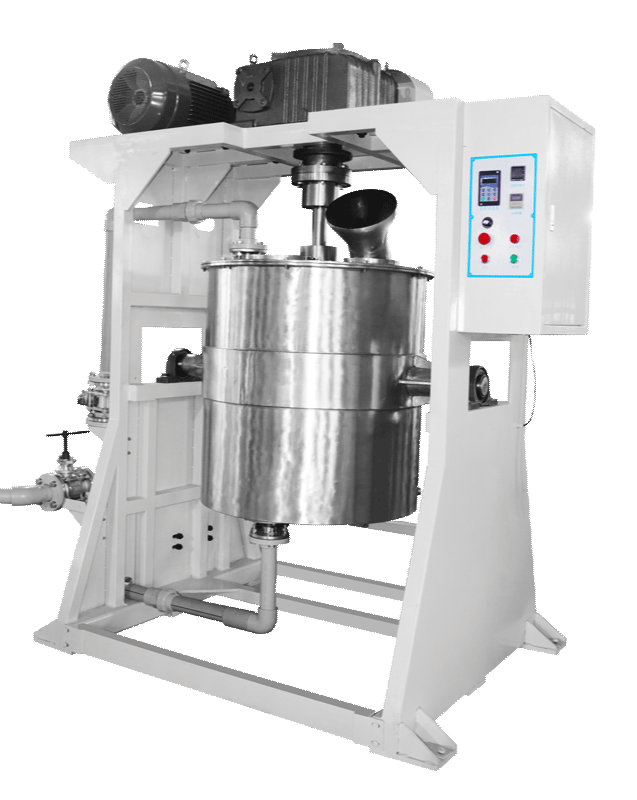
- Lifting Mechanism: Electric or hydraulic lifting systems simplify cleaning, maintenance, and media replacement.
Customization options include different liner materials, grinding media types, cooling/heating jackets, circulation systems, and automation levels (PLC control with touchscreen interface).
Key Performance Indicators and Selection Criteria
When selecting a production type stirred ball mill, consider the following critical factors:
- Processing Capacity (Throughput): Ranges from tens of liters to thousands of liters per batch or continuous operation. Choose a model that matches your production volume.
- Final Particle Size (Fineness): Typically achievable from 1–20 microns, with some models reaching submicron (≤100 nm). The required fineness will determine the milling time, media size, and power input.
- Energy Efficiency: Stirred ball mills are inherently more energy-efficient than conventional tumbler mills, consuming 30–50% less energy for the same grinding task.
- Automation and Control: Modern mills offer programmable logic controllers (PLC) with touchscreen interfaces, allowing precise control over speed, temperature, circulation, and process timing.
- Material Compatibility: The chamber liner and grinding media must be chemically inert and wear-resistant to avoid contamination. Options include ceramic (zirconia, alumina), polymer (PU, nylon, PTFE), or metal (stainless steel, hard alloy).
- Maintenance and Cleanability: Look for easy-access designs, quick-release seals, and lifting systems that simplify media replacement and chamber cleaning.
Application Areas and Selection Advice
The production type stirred ball mill is widely used in the following industries:
- Mining & Mineral Processing: Fine grinding of ores (e.g., gold, copper, molybdenum) and non-metallic minerals (e.g., calcium carbonate, silica, talc).
- Ceramics & Advanced Materials: Production of ceramic powders, electronic ceramics, magnetic materials, and battery cathode materials (e.g., lithium cobalt oxide, NMC).
- Paints, Coatings, & Pigments: Ultra-fine dispersion of pigments, fillers, and functional additives.
- Chemicals & Pharmaceuticals: Grinding of agrochemicals, dyes, catalysts, and pharmaceutical excipients.
- New Materials & Nanotechnology: Preparation of nano-powders, graphene, and other advanced materials.
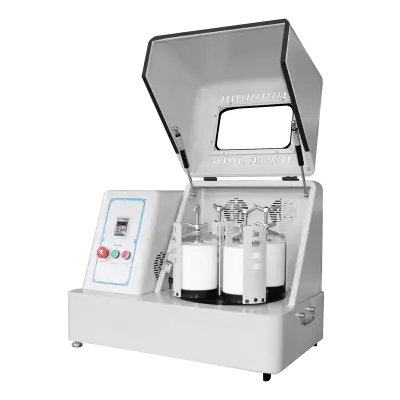
For users with small-scale research or pilot testing needs, a lab stirred ball mill is recommended to validate the process before scaling up. For medium-scale production, a lightweight stirred ball mill offers a compact solution. For full industrial production, the production type stirred ball mill with electric lifting and circulation is the optimal choice. Always consult with the manufacturer to tailor the mill configuration to your specific material and throughput requirements.
References
Related Products
Get In Touch
Our professional team will reply to you within one business day. Please feel free to contact us!