

What Is a Production Type Stirred Ball Mill? A Machine for Fine Powder Grinding
What Is a Production Type Stirred Ball Mill?
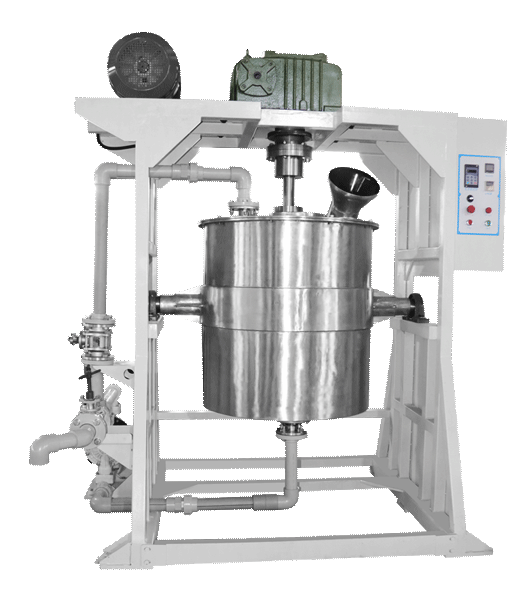
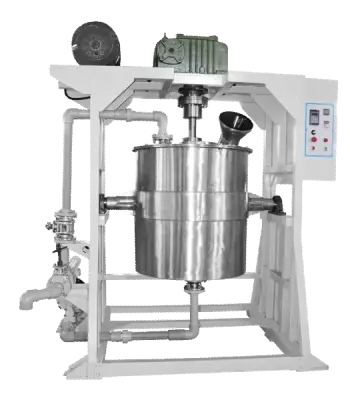
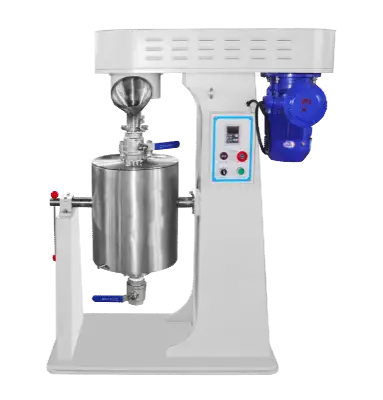
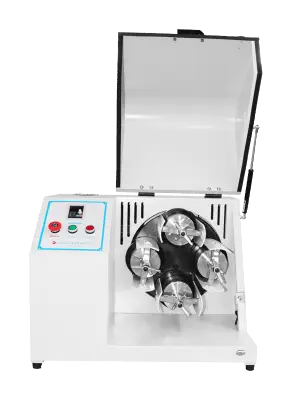
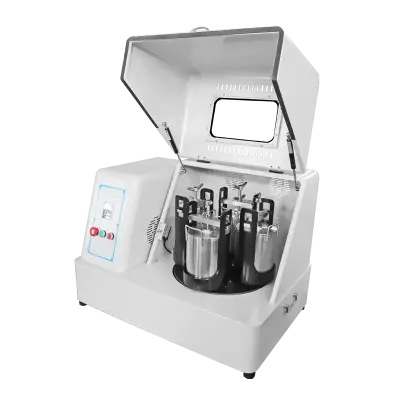
From its core, a production type stirred ball mill is a professional fine grinding machine that mineral processing, chemical, ceramic, battery material, and advanced powder industries use to reduce solid particles to fine or ultrafine sizes in larger production settings. Unlike a traditional tumbling ball mill, which relies mainly on the falling motion of grinding media inside a rotating drum, a stirred ball mill uses a rotating shaft or agitator to stir the media inside a stationary grinding chamber. This agitation creates intensive shear, impact, and attrition forces that break down particles efficiently. The production type designation points to a machine built for continuous or higher-volume output rather than only for laboratory sample preparation. It is an industrial grinding solution for manufacturers who need reliable particle size reduction, good reproducibility, and scalable throughput. More product details are available on the Production type stirred ball mill page.
Readers often meet this equipment when they search for a mill that can handle larger batches, produce fine slurries, or support downstream processes such as coating, ceramics, pigments, and battery slurries. The machine's role is not simply to crush material; it is to create a controlled particle size distribution that affects reactivity, suspension stability, surface area, sintering behavior, and final product quality. Because fine grinding is often the most energy-intensive step in a powder process, understanding how a stirred ball mill works and how to select one is important for both technical and commercial decisions.
Core Function and Working Principle
From Coarse Feed to Fine Slurry
A stirred ball mill transforms solid feed material from a coarse or intermediate state into a fine powder or fine slurry. In a wet grinding setup, the feed is mixed with a liquid carrier, often water or a solvent, to form a pumpable slurry. In a dry grinding setup, the material remains in powder form, although many production stirred mills are used for wet processing because liquid helps control dust, transport material, and dissipate heat. The grinding chamber is partially filled with small grinding media, such as ceramic beads, zirconia balls, steel balls, or other wear-resistant spheres. The feed enters the chamber, where the moving media repeatedly contact and compress the particles. The result is a reduction in particle size and, in many cases, a more uniform distribution.
The transformation is not a single event but a sequence of many collisions and shear events. Coarse particles are first broken at natural cracks and weak points. As grinding continues, the particles become smaller, and the dominant breakage mechanism shifts from impact to attrition and shear. Eventually, the mill reaches a practical fineness limit for the material, media size, energy input, and residence time. At that point, further grinding may consume much more energy with little additional size reduction, or it may cause unwanted effects such as agglomeration, contamination, or overheating. Good process design therefore balances fineness targets against throughput and cost.
Stirring Mechanism and Grinding Media Motion
The defining feature of a stirred ball mill is the internal agitator. It usually consists of a central shaft fitted with pins, discs, arms, or other stirrer elements. When the shaft rotates, it transfers energy to the grinding media and creates a highly active media bed. Instead of relying on gravity to cascade media from the top of a rotating drum, the stirred mill keeps the media in constant motion within a compact chamber. This design allows high energy density: a relatively small volume of media can receive a large amount of mechanical energy. The vigorous motion produces shear forces between media surfaces, compressive forces from collisions, and attrition as particles are caught between moving bodies.
The grinding chamber is normally stationary, which simplifies sealing, cooling, and connection to feed and discharge lines. The agitator speed, media filling ratio, media size, and media density all influence the energy transferred to the powder. Higher agitator speed generally increases collision frequency and shear rate, but it also raises power draw and wear. Smaller media create more contact points and can produce finer particles, while larger media are better at breaking coarse feed. Media density affects impact energy; dense media can grind faster but may also increase contamination risk and drive higher torque requirements. The optimal combination depends on the feed size, target fineness, material hardness, and acceptable contamination level.
Process Parameters That Shape the Final Product
Several process parameters control the outcome of stirred media milling. The first is feed particle size. A mill performs best when the feed is already reduced to a size that the selected media can effectively capture. Very coarse feed may block passages, accelerate wear, or require a pre-crushing step. The second parameter is solids concentration in wet grinding. A slurry that is too dilute wastes energy and reduces production rate, while a slurry that is too thick may become viscous, hinder media motion, and cause uneven grinding. The third is residence time or circulation time. Longer grinding generally produces finer particles, but the relationship is not linear; after a certain point, the curve flattens and energy efficiency drops.
Temperature is another important variable. Fine grinding generates heat through friction and collision. If the material is heat-sensitive, such as certain polymers, pharmaceuticals, or biological products, the mill may need cooling jackets or chilled liquid. Temperature control also protects seals, bearings, and the product itself. Finally, the choice of grinding media and chamber lining affects contamination. For materials where iron or other metal contamination is unacceptable, ceramic or zirconia media and liners may be preferred. For heavy-duty mineral grinding, steel or other hard media may be acceptable. Each decision influences particle size, purity, throughput, and maintenance interval.
Main Types and Configurations
Batch, Circulation, and Continuous Production Designs
Stirred ball mills appear in several configurations, and the production type is usually associated with higher capacity and more automated operation. A batch stirred mill grinds a fixed quantity of material for a set time, then discharges it. This is common in laboratories and pilot plants because it offers flexibility and easy recipe changes. A circulation mill pumps slurry through the grinding chamber and a holding tank many times. This design can achieve narrow particle size distributions and is useful when the product must be kept moving to avoid settling or overheating. A continuous production mill feeds material at one end and discharges it at the other, often with a controlled residence time. It is suitable for steady, high-volume output and can be integrated into a larger production line.
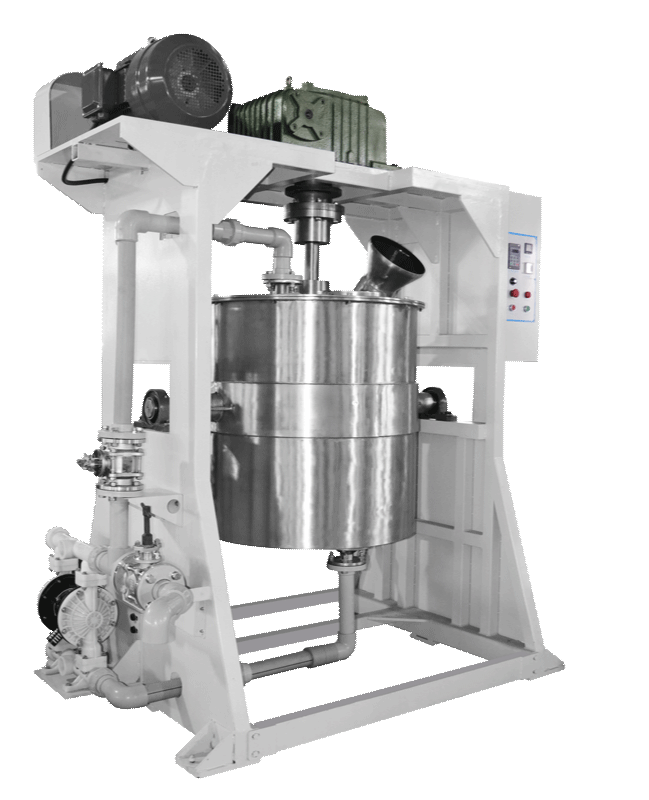
Production type stirred ball mills are often designed for continuous or semi-continuous duty, with larger drive systems, robust seals, and wear-resistant internals. They may include feed pumps, discharge screens or separators, temperature sensors, flow meters, and control panels. The level of automation varies. Some machines provide basic motor control and local gauges, while others support recipe management, data logging, and closed-loop adjustment of feed rate or agitator speed. The right configuration depends on whether the user prioritizes flexibility, maximum throughput, narrow distribution, or easy cleaning between products.
Horizontal and Vertical Chamber Arrangements
Stirred mills can be built with horizontal or vertical grinding chambers. A horizontal chamber is common in many production mills because it is easy to service, has a predictable media distribution along the length, and can be arranged with multiple agitator discs on a single shaft. It also integrates well with pumps and piping in a horizontal production line. A vertical chamber may save floor space and can use gravity to assist media retention, but it may require different sealing and discharge arrangements. In both cases, the internal geometry must ensure that the media are fluidized and that dead zones do not form. Dead zones reduce grinding efficiency and can cause localized overheating or wear.
The shape and orientation also affect scale-up. A mill that works well at laboratory scale may not behave identically when enlarged. Production scale-up must consider shaft speed, media size, chamber volume, power density, and slurry flow. Engineers often use dimensional analysis and pilot testing to match energy input per unit mass, residence time, and media surface area. This is why a production type mill should be selected with the help of application testing rather than by simply multiplying laboratory results.
Wet and Dry Grinding Variants
Wet grinding is the most common mode for stirred ball mills because the liquid medium helps disperse particles, control temperature, and transport material through the mill. It is widely used for mineral slurries, ceramic slips, pigments, inks, battery cathode and anode slurries, and chemical suspensions. Dry grinding is possible for some materials, but it can be more challenging because powder flow, dust, and particle agglomeration must be managed. Dry stirred mills may use air classification or other separation steps to remove fine product and return coarse particles. The choice between wet and dry depends on the downstream process. If the next step requires a slurry, wet grinding avoids a drying step. If the final product must be a dry powder, dry grinding can reduce energy used for drying, but it may require more complex dust control.
Key Components and Technology
Grinding Chamber and Wear Liner
The grinding chamber is the heart of the machine. It contains the media, receives the feed, and provides the volume in which particle breakage occurs. The chamber must be strong enough to withstand internal pressure, vibration, and abrasive wear. Its inner surface is usually protected by a liner made from wear-resistant metal, ceramic, polyurethane, or another suitable material. The liner protects the chamber wall and can also influence the grinding action through its surface profile. A smooth liner reduces turbulence, while a profiled liner may increase media agitation or lifting. Liner replacement is a normal maintenance item, and easy access is important for production uptime.
Chamber size determines residence time and throughput potential. A larger chamber can hold more media and process more material per pass, but it also requires a more powerful drive. The chamber should be designed to avoid sharp corners, narrow gaps, and areas where media can pack or stagnate. Proper internal geometry ensures that the entire media bed participates in grinding. It also helps discharge fine product without carrying out too much media. Screens, slots, or dynamic separators are often used at the discharge to retain media while allowing slurry or powder to exit.
Stirrer Shaft, Discs, and Pins
The stirrer shaft transmits torque from the drive to the grinding media. It must be rigid, balanced, and resistant to fatigue and wear. Discs, pins, or arms mounted on the shaft create the local velocity gradients that fluidize the media. The number, spacing, and diameter of these elements affect the intensity and distribution of grinding energy. Too few elements may leave inactive zones; too many may increase drag and power consumption without proportional grinding benefit. The stirrer material must be compatible with the product. For aggressive minerals, hardened steel or coated surfaces may be used. For high-purity products, ceramic or polymer-coated components may be selected to reduce metal contamination.
Media selection is closely linked to the stirrer design. Media must be small enough to fluidize well but large enough to break the feed. They must also be hard and tough enough to resist fracture and wear. Common media include zirconia, alumina, agate, stainless steel, carbon steel, and tungsten carbide. Each has different density, hardness, and contamination profile. In production, media wear is a recurring cost, so the total cost of ownership includes media consumption, liner replacement, and downtime. A well-matched media and stirrer combination can improve grinding efficiency and extend service life.
Drive, Sealing, and Cooling Systems
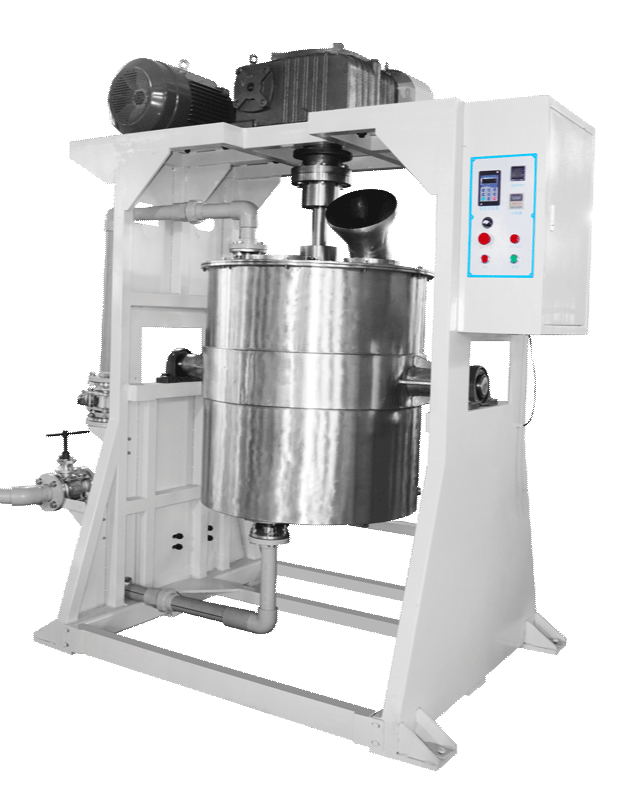
The drive system provides the power needed to rotate the agitator against the resistance of the media and slurry. It typically includes a motor, gearbox or belt drive, coupling, and bearings. Production mills need a robust drive with overload protection because media motion can create high starting torque and fluctuating loads. Variable frequency drives are common because they allow agitator speed to be adjusted for different products and throughputs. Speed control is valuable during startup, when the media bed may be settled, and during process optimization.
Sealing is critical in wet grinding. The shaft passes through the chamber wall, so the seal must prevent slurry leakage while allowing rotation. Different seal types include mechanical seals, lip seals, and packed glands, each with different pressure, speed, and maintenance characteristics. A seal failure can cause product loss, contamination, and downtime. Cooling is also important. A water jacket or cooling coil may be fitted around the chamber to remove heat. In some cases, the slurry is circulated through an external heat exchanger. Temperature control protects the product and the machine, especially when grinding for long periods or when using small media at high speed.
Key Performance Indicators and Selection Points
Throughput and Capacity
Throughput is one of the first specifications a buyer considers. It is usually expressed as kilograms per hour or liters per hour of slurry, depending on the industry. However, advertised capacity must be evaluated together with target fineness. A mill may process a large volume at a coarse grind, but its capacity will drop when the target particle size becomes finer. Production planning should therefore define the required particle size distribution, solids concentration, and operating hours before comparing machines. It is also important to consider whether the mill will run continuously or in batches, because batch handling, cleaning, and discharge can reduce effective output.
Scale-up from laboratory results is not a simple linear calculation. A small mill may achieve a certain fineness in a few minutes, but a larger mill may need different media size, agitator speed, and flow rate to reach the same result. Pilot-scale testing is often the most reliable way to estimate production capacity. During testing, engineers measure specific energy consumption, particle size distribution, temperature rise, and wear rate. These data help predict operating cost and confirm whether the selected production type stirred ball mill can meet the required output.
Particle Size Control and Distribution
Fine grinding is not only about reaching a target median size. The width and shape of the particle size distribution also matter. A narrow distribution is often desirable for consistent product performance, while a broad distribution may be acceptable for some fillers or bulk materials. Stirred media mills can produce narrow distributions when the residence time is uniform and the media size is well matched to the feed. Overgrinding can create excessive fines, which may affect filtration, rheology, or sintering. Under-grinding leaves coarse particles that can cause defects or inconsistent behavior.
Particle size is influenced by media size, media density, agitator speed, solids loading, flow rate, and grinding time. Smaller media generally produce finer particles but may not break coarse feed efficiently. Higher speed increases energy input but also heat generation and wear. The best approach is to define a specification based on the application, then adjust the machine parameters during commissioning. Laser diffraction, sieve analysis, or microscopy may be used to verify the distribution. Production quality control should include regular sampling because media wear and feed variation can shift the result over time.
Energy Efficiency and Wear
Grinding is energy-intensive, and fine grinding is especially demanding. A production type stirred ball mill is often chosen because it can deliver high energy density in a compact chamber, which may improve efficiency compared with some conventional mills. However, efficiency depends on how well the machine is matched to the duty. Important indicators include specific energy consumption per ton of product, power draw at the target fineness, and the rate of media and liner wear. Energy cost can dominate the total cost of ownership, so even a small improvement in grinding efficiency can have a large financial impact.
Wear is both a cost and a contamination risk. Abrasive minerals can wear media, stirrer discs, liners, and seals. Wear particles may enter the product, which is unacceptable for high-purity ceramics, battery materials, and pharmaceuticals. Selecting the right materials and monitoring wear rates are essential. Some mills use ceramic-lined chambers and ceramic media for contamination-sensitive products. Others use hardened steel for heavy-duty mineral grinding. Maintenance schedules should include inspection of media size, media level, liner thickness, seal condition, and drive components. A well-maintained mill produces a more stable product and avoids unexpected downtime.
Automation and Reproducibility
Modern production equipment increasingly includes automation to improve reproducibility. A stirred ball mill may be equipped with sensors for motor load, temperature, flow, pressure, and product level. A programmable logic controller can adjust agitator speed, feed rate, and cooling based on these signals. Recipe management allows operators to switch between products with less manual intervention. Data logging helps trace batch quality and identify drift. For a production environment, automation can reduce labor, improve safety, and make the process more consistent. However, automation should be matched to the operator's technical capability and maintenance resources. Simple, robust controls may be better than highly complex systems in some plants.
Maintenance and Service Access
Maintenance convenience is a practical selection factor that is often overlooked. The mill should allow easy access to the grinding chamber, agitator, seals, and discharge system. Quick-opening covers, modular liners, and accessible bearings reduce downtime. Spare parts should be readily available, and the manufacturer should provide clear maintenance instructions. Media charging and removal should be safe and efficient. If the mill is used for multiple products, cleanability is important to prevent cross-contamination. A production type stirred ball mill that is difficult to clean or service can erode the benefits of its grinding performance. Buyers should ask about maintenance intervals, typical wear part life, and the skill level required for service.
Operating and Scale-Up Considerations
Installation and Commissioning
Installation planning should begin before the mill arrives. The machine needs a level foundation, adequate floor space for service access, and connections for power, cooling water, and feed and discharge lines. Vibration isolation may be required if the mill is installed near sensitive equipment. Commissioning should include a careful check of rotation direction, seal tightness, media charge, instrument calibration, and safety interlocks. A dry run without media can help confirm mechanical alignment, while a water test can reveal leaks or flow problems. After these checks, the mill can be tested with the actual material at progressively higher solids loading and speed.
Commissioning is also the stage when the process recipe is established. The operator should record baseline values for motor load, temperature, flow rate, and particle size. These records become the reference for future production. If the mill is part of a larger plant, the control system should be integrated with upstream and downstream equipment so that feed rate and discharge quality remain stable. Training for operators and maintenance staff is essential, because a stirred ball mill performs best when its media, seals, and cooling system are managed consistently.
Safety and Environmental Control
Safety considerations include rotating equipment, electrical power, hot surfaces, chemical exposure, and dust or slurry leaks. Guards should protect the drive and shaft area, and emergency stops should be easy to reach. If the process uses solvents or reactive liquids, the mill area needs proper ventilation and spill containment. Dry grinding may require dust collection and explosion prevention measures, depending on the material. Noise can also be a factor, especially at high agitator speeds, so sound insulation or hearing protection may be needed. A risk assessment should cover normal operation, cleaning, maintenance, and upset conditions.
Environmental control is closely related to safety. Wet grinding produces a slurry that must be contained and handled, while dry grinding produces dust that must be captured. Cooling water should be managed to avoid waste, and any solvent vapors should be treated or recovered. The grinding media and liners wear over time, so used parts must be disposed of or recycled according to local rules. These factors may not affect grinding performance directly, but they influence plant compliance and operating cost.
Common Troubleshooting Points
If product fineness drops, the cause may be worn media, a lower media charge, a change in feed size, or a reduction in agitator speed. If throughput falls, the slurry may be too viscous, the discharge screen may be partly blocked, or the feed pump may be underperforming. If temperature rises too quickly, the cooling system may be undersized or the solids loading may be too high. If vibration increases, the agitator may be unbalanced, the bearings may be worn, or the media may have packed in one part of the chamber. Systematic troubleshooting should check one variable at a time and compare results with the commissioning baseline.
Preventive maintenance is the best way to avoid many problems. Regular inspection of media size and level, seal condition, liner wear, and drive alignment can catch small issues before they become failures. Recording operating data helps identify trends such as gradually increasing motor load or temperature. When a problem is found, the root cause should be corrected rather than simply adjusting the set point. For example, adding more media to compensate for worn media may increase power draw without restoring the original grinding efficiency.
Cost of Ownership and Spare Parts
The purchase price of a production type stirred ball mill is only one part of the total cost. Energy, grinding media, liners, seals, bearings, maintenance labor, and downtime all contribute over the life of the machine. A mill that uses less energy and wears more slowly may cost more initially but save money in the long run. Spare parts availability is also important. If a critical seal or liner must be imported with a long lead time, a single failure can stop production for weeks. Buyers should discuss recommended spare parts, wear life estimates, and service support with the supplier.
Media cost deserves special attention because media are consumed continuously. The price per kilogram of media may be low, but the total annual consumption can be significant. Media that break easily or wear quickly can also contaminate the product and increase maintenance. The best media choice balances grinding performance, wear life, and product purity. In some cases, a more expensive ceramic media reduces contamination and improves product quality enough to justify the higher initial cost. The same logic applies to liners and stirrer components.
Applications and Selection Advice
Industries That Use Production Stirred Ball Mills
Production stirred ball mills are used in many industries where fine and ultrafine powders or slurries are required. In mineral processing, they grind ores and industrial minerals to liberate valuable minerals or produce fillers and pigments. In ceramics, they prepare slips and glazes with controlled particle size for consistent sintering and surface finish. In the chemical industry, they disperse and grind pigments, dyes, and coatings. In battery manufacturing, they are used to prepare electrode slurries where particle size and homogeneity affect cell performance. In pharmaceuticals and biotechnology, they may be used for fine milling of active ingredients or carrier materials, often with strict temperature and contamination control. Other applications include food processing, cosmetics, inks, and advanced materials research.
The common thread is the need for controlled particle size reduction at a scale larger than a laboratory mill can provide. A production mill must handle continuous feed, maintain stable temperature, and produce a consistent product over long runs. It must also fit into the plant's material handling, pumping, and quality control systems. Because different industries have different priorities, the same basic machine may be configured very differently. A ceramic application may emphasize contamination-free grinding and narrow distribution, while a mineral application may emphasize throughput, wear life, and energy efficiency.
How to Choose the Right Configuration
Choosing a production type stirred ball mill begins with a clear process specification. Define the feed material, feed size, target particle size, required throughput, solids concentration, temperature limit, and acceptable contamination level. Then consider the available floor space, utilities, and automation requirements. If the product is heat-sensitive, prioritize cooling and low-temperature operation. If contamination is critical, select ceramic or polymer-lined components and appropriate media. If the feed is coarse, consider a pre-crushing or pre-grinding step. If the target is very fine, smaller media and higher energy input may be necessary. Pilot testing can confirm the design before full-scale investment.
It is also wise to compare total cost of ownership rather than purchase price alone. Media and liner wear, energy consumption, maintenance labor, and downtime can exceed the initial cost over the life of the machine. A supplier with application experience can help select the chamber size, agitator geometry, media type, and control system. The Production type stirred ball mill is one example of a machine intended for production-scale fine grinding. Buyers should request performance data, wear estimates, and service recommendations for their specific material.
Frequently Asked Questions
Is a stirred ball mill the same as a planetary ball mill?
No. A planetary ball mill uses rotating jars that revolve around a central axis, creating high-energy impact and friction in small batches. It is widely used in laboratories for sample preparation and research. A stirred ball mill uses a central agitator inside a stationary chamber and is more commonly used for larger-scale production. Both can produce fine particles, but they differ in scale, media motion, heat management, and process control. The production type stirred ball mill is designed for higher throughput and continuous operation, while planetary mills are often preferred for small, flexible batches.
Can a stirred ball mill grind heat-sensitive materials?
Yes, but special care is needed. Grinding generates heat, so a heat-sensitive material may require a cooled chamber, chilled slurry, lower agitator speed, shorter residence time, or a combination of these measures. In some cases, cryogenic or low-temperature milling may be used, although that is more common in laboratory equipment. The key is to monitor temperature and adjust the process so that the product does not degrade. Cooling capacity should be selected based on the energy input and the material's temperature limit.
What determines the final particle size?
Final particle size depends on the feed size, media size and density, agitator speed, grinding time or residence time, solids concentration, and the material's hardness and breakage behavior. Smaller media and longer grinding usually produce finer particles, but there are practical limits. When particles become very small, interparticle forces can cause agglomeration, and further grinding may not reduce the primary particle size. A good process balances fineness with throughput, energy use, and product stability.
How important is the grinding media?
Grinding media are critical to both performance and cost. Media size, shape, density, hardness, and chemical compatibility affect grinding efficiency and product purity. Small, dense media can create high shear and fine grinding, while larger media are better for coarse feed. Media wear adds to operating cost and can contaminate the product. Selecting the right media for the application is therefore as important as selecting the mill itself.
Conclusion
A production type stirred ball mill is a versatile fine grinding machine for industries that need controlled particle size reduction at production scale. Its stationary chamber and rotating agitator create intense shear and impact forces that can turn coarse feed into fine powder or slurry. The most important selection factors are throughput, target particle size, energy efficiency, wear resistance, automation, and maintenance access. By defining the application clearly and testing before scale-up, buyers can choose a configuration that delivers consistent quality and efficient operation. For more information, visit the Production type stirred ball mill product page.
Related Products
Get In Touch
Our professional team will reply to you within one business day. Please feel free to contact us!