
What is an Electric Lifting Stirred Ball Mill? A High-Efficiency Grinding Equipment for Fine and Ultra-Fine Powder Processing

What is an Electric Lifting Stirred Ball Mill?
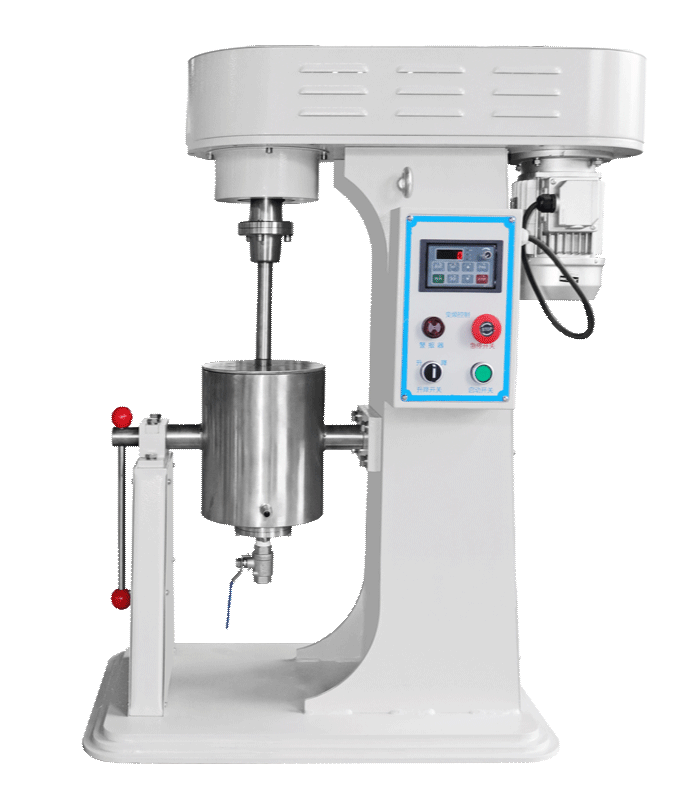
At its core, an electric lifting stirred ball mill is a high-efficiency grinding device designed for fine and ultra-fine comminution of solid materials. Unlike conventional tumbling ball mills that rely on drum rotation, this mill uses a rotating agitator (stirrer) to impart kinetic energy to grinding media, producing intense shear, impact, and friction forces that break down particles rapidly. The "electric lifting" feature refers to a motorized mechanism that raises and lowers the grinding chamber, significantly easing jar handling, cleaning, and sample exchange — a practical advantage in laboratory and small production settings.
Core Working Principle
The mill consists of a stationary or rotating grinding jar filled with a chosen grinding media (such as zirconia, alumina, or steel balls) and the material to be ground. An agitator shaft equipped with stirring arms or discs is inserted into the jar. When the shaft rotates at high speed, it drives the media into motion, creating a fluidized bed of beads that collide and shear against the particles suspended in the slurry (wet grinding) or dry powder (dry grinding). The energy density is much higher than in rotary ball mills, enabling finer particles to be achieved in shorter times — often down to the submicron or nanometer range.
The electric lifting system employs a powerful motor and screw mechanism to raise and lower the agitator assembly, allowing easy access to the jar. This eliminates manual lifting and reduces operator strain, while ensuring precise positioning of the stirrer inside the jar for consistent grinding conditions.
Key Features of the Electric Lifting Design
- Motorized Jar Exchange: One-button electric lifting moves the agitator in and out of the jar, simplifying batch changes and cleaning.
- High Energy Density: The agitated bead motion provides 2–5 times more impact energy per unit volume than conventional ball mills, accelerating the grinding process.
- Gentle Lifting Control: Smooth, adjustable lifting speed protects the grinding chamber and agitator from shock damage.
- Versatile Grinding Modes: Supports both wet and dry milling by simply switching the media type and process parameters.
- Compact Footprint: Despite the lifting mechanism, the unit occupies minimal bench space, ideal for busy labs.
Types of Stirred Ball Mills
Stirred ball mills come in several configurations tailored to different throughput and particle fineness needs. The lab stirred ball mill is designed for small batch R&D, often with manual jar clamping. The lightweight stirred ball mill offers a portable option for routine tests. The production type stirred ball mill handles continuous large-volume operations. The electric lifting stirred ball mill bridges the gap between lab and production: it retains the ease of use for small batches while incorporating the motorized lift that is common in larger industrial units.
Performance Indicators and Selection Guide
When selecting an electric lifting stirred ball mill, consider the following metrics:
- Processing Capacity: Typical jar volumes range from 0.5 L to 5 L for lab-scale units, with an option for larger volumes on request.
- Particle Size Control: Achievable d50 can be as low as 0.1–1 μm depending on material, media size, and grinding time. The mill can produce narrow particle size distributions.
- Speed Range and Agitator Design: Variable speed drives (e.g., 100–1500 rpm) allow optimization for different materials. Disc or pin-type agitators affect shear intensity.
- Material Compatibility: Jars and agitators are available in various wear-resistant materials (stainless steel, PTFE, nylon, polyurethane, alumina, zirconia) to match the sample chemistry.
- Automation: Some models include programmable timers, speed ramps, and automatic reversing cycles to enhance reproducibility.
- Maintenance: The lifting mechanism requires periodic lubrication, but the overall design is simple, with easy-to-replace seals and bearings.
For users who need frequent jar changes or process development with multiple formulations, the electric lifting model significantly reduces manual labor and turnaround time compared to manual counterparts.
Application Fields
The electric lifting stirred ball mill is widely used in ceramic glazes, electronic pastes, battery electrode slurries, pigments, coatings, pharmaceuticals, and chemical catalysts. It is particularly valuable for R&D labs that require rapid prototyping of fine powders and for small-batch production where consistent quality and quick changeover are priorities. When combined with appropriate grinding media and jar options, this mill offers a flexible, space-saving solution for achieving submicron and nano-scale particles in both wet and dry environments.
Related Products
Get In Touch
Our professional team will reply to you within one business day. Please feel free to contact us!