

What is a Lightweight Stirred Ball Mill? A High-Efficiency Grinding Equipment for Wet and Dry Ultrafine Pulverization
What is a Lightweight Stirred Ball Mill?
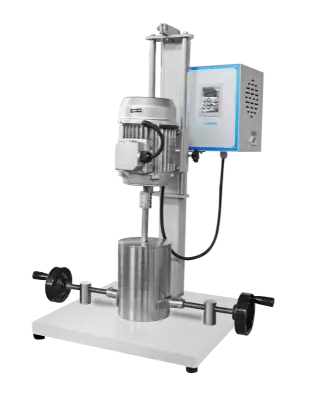
At its core, a lightweight stirred ball mill is a specialized grinding device used in laboratories and pilot-scale production to perform ultrafine pulverization of solid materials in both wet and dry environments. Unlike traditional drum ball mills that rely on tumbling action, this equipment utilizes a rotating agitator inside a stationary grinding chamber to generate intense shear, impact, and friction forces, enabling particle size reduction down to the submicron or even nanometer range. Its compact design and low weight make it ideal for research institutions, small batch manufacturing, and process development where space and sample volume are limited.
Core Functions and Working Principle
The primary function of a lightweight stirred ball mill is to convert coarse or agglomerated particles into a fine, homogeneous powder or slurry. The mill consists of a grinding chamber filled with small grinding media (typically zirconia or ceramic beads) and an agitator shaft equipped with discs, pins, or impellers. When the agitator rotates at high speed, it imparts kinetic energy to the media, causing them to collide with each other and with the chamber walls, thereby breaking down the material trapped between them.
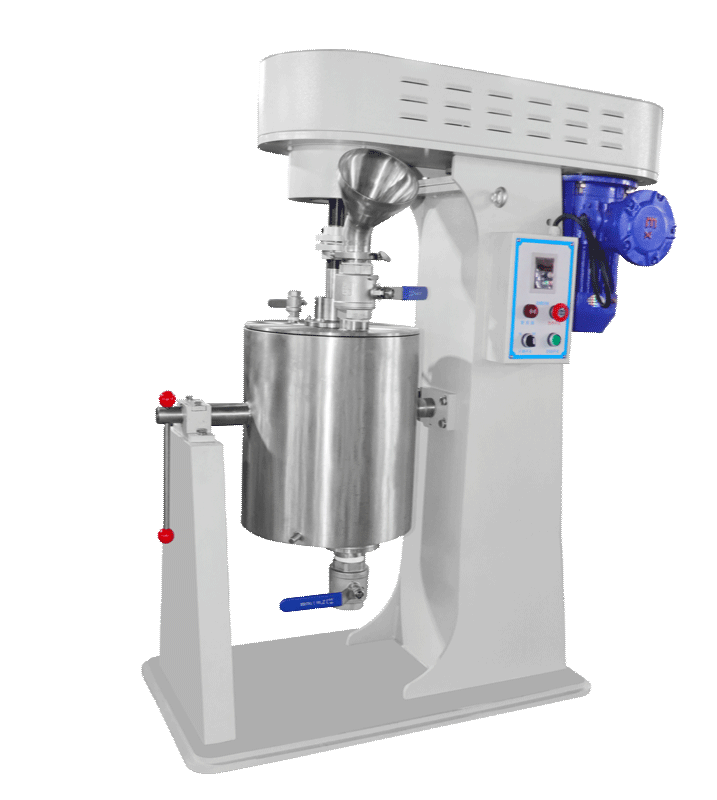
Key process parameters include agitator speed (typically 500–3000 rpm), media size (0.3–3 mm), solid concentration in slurry, and residence time. Higher speeds and smaller media generally produce finer particles but increase energy consumption and heat generation. The mill can be operated in batch or continuous mode, with the slurry recirculated through the chamber until the desired particle size distribution is achieved. An integrated cooling jacket helps maintain temperature control, which is critical for heat-sensitive materials such as pharmaceuticals or food ingredients.
Types and Configurations of Stirred Ball Mills
Lightweight stirred ball mills belong to the broader family of stirred ball mills, which come in several configurations to suit different scales and applications:
Laboratory Stirred Ball Mill
Designed for bench-top use, these units typically have chamber volumes from 0.1 L to 2 L. They are manually loaded and unloaded and are ideal for R&D, formulation development, and small sample testing. The lightweight version is a subcategory that emphasizes portability and ease of handling.
Electric Lifting Stirred Ball Mill
For larger lab or pilot batches (e.g., 5 L to 20 L), the electric lifting stirred ball mill features a motorized lifting mechanism that simplifies chamber cleaning and material discharge. Its sturdy construction allows higher energy input and throughput.
Production Type Stirred Ball Mill
When scaling up to industrial production (e.g., 50 L to 500+ L), the production type stirred ball mill offers robust continuous operation, automated controls, and advanced cooling systems for 24/7 manufacturing.
The lightweight stirred ball mill sits between lab and electric lifting models, offering a balance of compactness and moderate capacity (typically 0.5 L to 5 L), making it suitable for frequent batch changes and mobile applications.
Key Performance Indicators and Selection Criteria
When evaluating a lightweight stirred ball mill, consider the following metrics:
- Grinding Fineness: Achievable d50 can be as low as 100 nm for easy-to-grind materials; harder materials may reach 1–5 μm. Check the product specifications for reported minimum particle size.
- Processing Capacity: Batch sizes range from a few grams to several kilograms per hour, depending on chamber volume and material properties. For continuous operation, throughput can be increased with recirculation setups.
- Energy Efficiency: Stirred ball mills are known for higher energy density compared to drum mills, meaning faster grinding per unit volume. However, the lightweight model's motor power (usually 0.5–3 kW) is lower than industrial units, affecting throughput.
- Automation & Programmability: Many modern units offer touchscreen controls, programmable speed ramp, timer, and data logging, enabling reproducible results and unattended operation.
- Material of Construction: The chamber and agitator can be made of stainless steel, polyurethane, or ceramic-lined to prevent contamination. For metal-sensitive materials, a ceramic or polymer lining is essential.
- Cooling Performance: Effective cooling (water jacket or chiller connection) prevents overheating during prolonged runs, especially for dry grinding or heat-sensitive substances.
Application Fields and Selection Advice
Lightweight stirred ball mills are employed across diverse sectors:
- Material Science: Preparing nano-powders for electronics, battery materials, and advanced ceramics.
- Pharmaceuticals: Wet milling of drug nanocrystals and homogenization of suspensions.
- Food and Cosmetics: Fine grinding of pigments, flavors, and active ingredients.
- Chemical Industry: Dispersion of catalysts, dyes, and fillers.
- Mining and Minerals: Ultrafine grinding of ores and tailings for leaching or flotation.
For users who primarily need to process small volumes (less than 1 L) occasionally and value portability, a basic lightweight model with manual lifting is sufficient. If your work involves frequent batch changes or requires easy cleaning, choose a unit with quick-release chamber and simple agitator design. For stricter contamination control, opt for a model with ceramic or polymer contact parts. Always verify that the available motor power and cooling capacity match the intended material's hardness and heat sensitivity.
References
Related Products
Get In Touch
Our professional team will reply to you within one business day. Please feel free to contact us!