

What is a Lightweight Stirred Ball Mill? A Compact Stirred Ball Mill for Laboratory Ultrafine Grinding and Dispersion
What is a Lightweight Stirred Ball Mill?
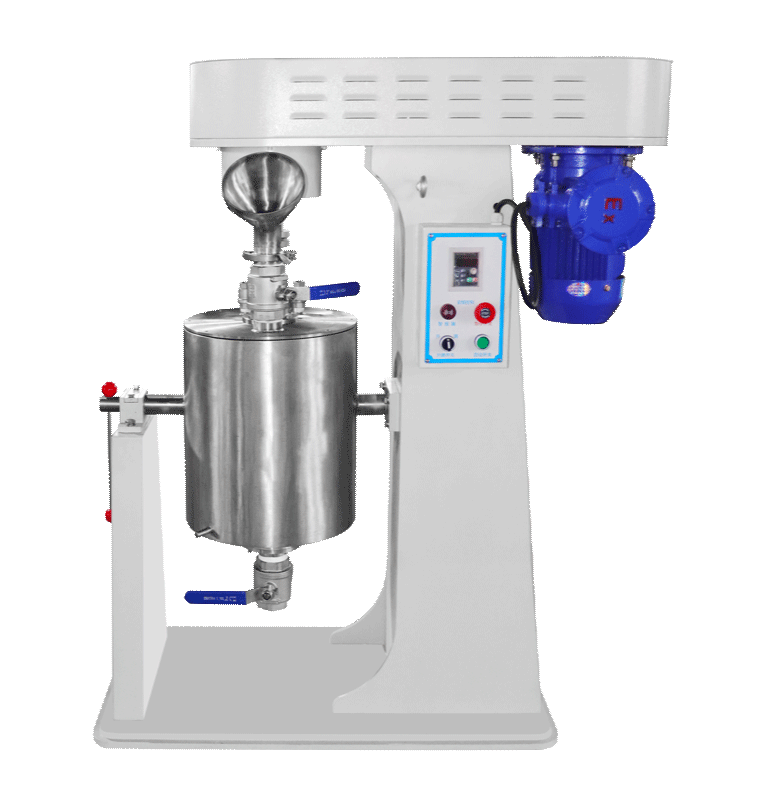
At its core, a lightweight stirred ball mill is a specialized laboratory grinding device that researchers and technicians use to perform ultrafine grinding, dispersion, and mechanical alloying of a wide variety of materials. Unlike traditional tumbling ball mills that rely on the rotation of a heavy drum, this mill uses a stationary grinding chamber with a rotating agitator shaft that stirs the grinding media at high speed. The intense shear and impact forces generated by the rapidly moving media efficiently reduce particle size down to the micron or even submicron range, making it an indispensable tool for R&D laboratories, universities, and quality control departments.
Core Function and Working Principle
The lightweight stirred ball mill transforms coarse feed materials into ultrafine powders through a process called agitated media milling. The grinding chamber is filled with a charge of small grinding beads (typically 0.3–3 mm in diameter) made of materials such as zirconia, glass, or steel. The agitator shaft, equipped with stirring arms or discs, rotates at high speeds (often 500–3000 rpm) inside the chamber, causing the beads to move vigorously. The material to be ground, either as a dry powder or as a slurry, is introduced into the chamber and subjected to three main forces: impact from bead collisions, shear from the relative motion between beads, and compression from the pressure exerted by the agitated media. This combination of forces results in rapid particle size reduction and uniform dispersion.
Key process parameters that influence the final product fineness include the agitator speed, grinding media size and material, bead filling ratio, residence time, and the solid concentration of the slurry. By optimizing these parameters, operators can achieve precise control over the particle size distribution, often reaching d50 values below 1 micron. The lightweight design incorporates a compact motor and drive system that reduces the overall weight and footprint, making it easy to place on a lab bench or move between workstations.
Core Components and Key Technologies
Although the product type is relatively singular, its performance depends on several critical components:
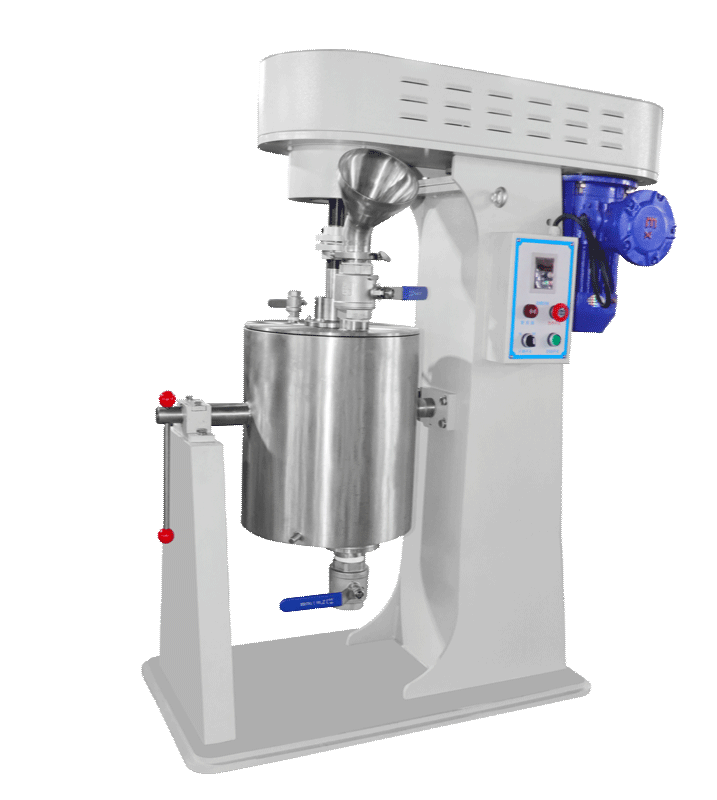
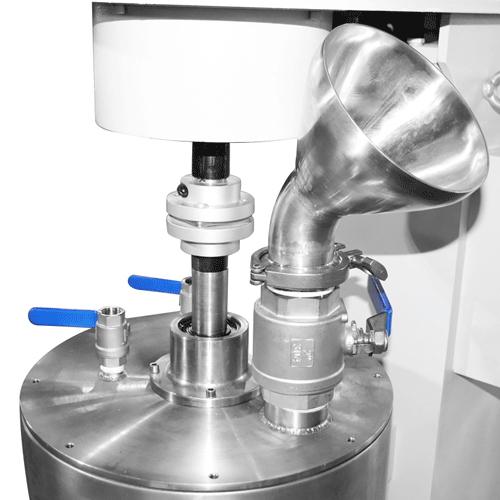
- Agitator Shaft and Stirring Elements: The agitator is the heart of the mill. Typically made of wear-resistant stainless steel or ceramic-coated materials, it features specifically designed discs or arms that create optimal fluid dynamics for efficient grinding. The geometry of the stirring elements directly affects the energy distribution and grinding efficiency.
- Grinding Chamber: The stationary chamber is usually constructed from stainless steel or ceramic-lined materials to prevent contamination. Its internal volume is small (often 0.5–5 liters), matching the scale of laboratory work. The chamber is designed to be easily disassembled for cleaning and media replacement.
- Grinding Media Separation System: A critical feature of stirred ball mills is the ability to separate the grinding media from the ground product. The lightweight stirred ball mill employs a dynamic gap separator or a sieve at the product outlet, which retains the beads while allowing the milled slurry to pass through. This ensures continuous operation without media loss.
- Temperature Control Option: Many models allow the circulation of cooling water through a jacket around the grinding chamber, preventing overheating of heat-sensitive materials during prolonged grinding sessions.
Key Performance Indicators and Selection Criteria
When selecting a lightweight stirred ball mill for your laboratory, consider the following factors:
- Grinding Capacity and Throughput: Laboratory mills typically handle sample volumes from 100 mL to 5 L per batch. For continuous operation, some models offer a recirculation mode where the slurry is pumped through the mill multiple times until the desired fineness is achieved.
- Fineness and Particle Size Control: The ability to reach submicron sizes is a primary advantage. Look for a mill that can achieve d50 values below 1 micron with a narrow particle size distribution. The mill should allow precise adjustment of speed and grinding time.
- Power and Energy Efficiency: Lightweight models typically use 0.5–2 kW motors. The specific energy input per unit mass of product determines the efficiency. A well-designed mill delivers high energy density to the media, reducing grinding time.
- Automation and Programmability: Modern lab mills offer digital control panels with programmable timers, speed ramps, and data logging. This enhances reproducibility and ease of use.
- Maintenance and Cleaning: The ability to quickly disassemble the chamber and agitator for cleaning is crucial in labs that process multiple samples. Look for a mill with simple, tool-free access to internal parts.
- Noise and Vibration: Lightweight mills are designed to operate quietly, typically below 70 dB, and with minimal vibration, making them suitable for benchtop use in shared laboratory spaces.
Application Fields and Selection Advice
The lightweight stirred ball mill is widely used in the following industries:
- Ceramics and Advanced Materials: For fine grinding of ceramic powders, glazes, and nano-pigments.
- Paints and Coatings: For dispersing pigments and achieving uniform color strength.
- Pharmaceuticals and Cosmetics: For micronizing active ingredients and producing stable suspensions.
- Chemical and Mineral Processing: For grinding ores, catalysts, and functional fillers.
- Food and Herbals: For fine grinding of spices, cocoa, and plant materials.
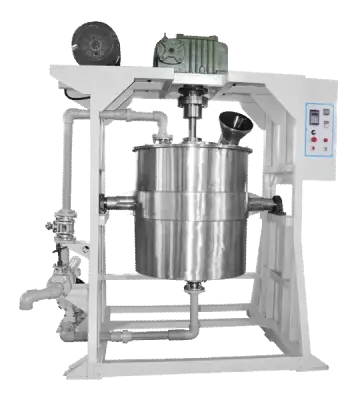
For first-time buyers, we recommend starting with a lab stirred ball mill if you need a smaller capacity (e.g., 0.5 L) for basic research. If you anticipate scaling up later, choose a lightweight stirred ball mill with a variable-speed drive and a larger chamber (1–5 L) that can also handle recirculation mode. For production-scale applications, consider the production type stirred ball mill.
References
Lightweight stirred ball mill - https://www.planetaryballmills.com/products/grinding-series/stirring-ball-mill/lightweight-stirred-ball-mill.html
Lab stirred ball mill - https://www.planetaryballmills.com/products/grinding-series/stirring-ball-mill/lab-stirred-ball-mill.html
Electric lifting stirred ball mill - https://www.planetaryballmills.com/products/grinding-series/stirring-ball-mill/electric-lifting-stirred-ball-mill.html
Production type stirred ball mill - https://www.planetaryballmills.com/products/grinding-series/stirring-ball-mill/production-type-stirred-ball-mill.html
Related Products
Get In Touch
Our professional team will reply to you within one business day. Please feel free to contact us!