
The Complete Guide to Vacuum Freeze Drying Ovens: How They Work and Why You Need One

What Is a Vacuum Freeze Drying Oven?
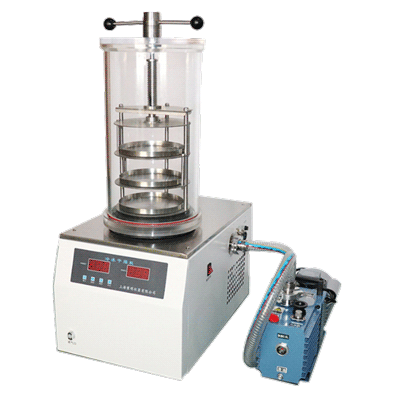
Imagine you could take a delicate strawberry, remove all the water from it without ever heating it up, and still have a piece of fruit that looks, smells, and tastes almost exactly like the fresh original. Sounds like magic, right? Well, that's exactly what a vacuum freeze drying oven does. Also known as a lyophilizer or freeze dryer, this remarkable piece of equipment uses a process called lyophilization to gently remove moisture from heat-sensitive materials.
In simple terms, freeze drying works by first freezing the product, then placing it under a deep vacuum so that the frozen water (ice) can turn directly into vapor — skipping the liquid phase entirely. This phenomenon is called sublimation. Because the entire process happens at low temperatures, the structure, nutrients, and bioactive compounds of the original material are preserved almost perfectly. That's why you'll find freeze dried coffee, instant soup mixes, and even life-saving pharmaceutical drugs.
How Does the Freeze Drying Process Work?
Let's walk through the three main stages of freeze drying, so you can really understand what's happening inside the chamber.
Stage 1: Freezing
First, the material is cooled well below its eutectic point — typically between -40°C and -80°C. This ensures that all the water in the sample is completely frozen into solid ice crystals. The rate of freezing matters: slow freezing creates larger ice crystals, which can damage cell walls, while rapid freezing yields smaller crystals and better preservation of the original structure. Our TENCAN vacuum freeze drying oven provides precise temperature control to optimize this step for your specific application.
Stage 2: Primary Drying (Sublimation)
Once the product is frozen solid, the system reduces the chamber pressure to a very low level — often below 10 Pa. Under these conditions, the ice begins to sublimate directly into water vapor. The vapor is then captured on a cold trap (also called a condenser) where it refreezes. This stage removes about 95% of the water content. The key is to supply just enough heat to drive sublimation without melting the product. Our oven uses a sophisticated heating shelf system that maintains uniform temperature across all samples.
Stage 3: Secondary Drying (Desorption)
After the ice is gone, there's still a small amount of bound water molecules attached to the material. The temperature is gradually raised (still under vacuum) to desorb these remaining molecules. This final step reduces the moisture content to as low as 1-3%, producing a stable, shelf-stable product that can be rehydrated instantly.
Why Choose a Vacuum Freeze Drying Oven Over Other Drying Methods?
You might be wondering: why not just use a regular oven or a vacuum drying oven? Great question. The answer lies in the preservation of heat-sensitive components. Traditional drying methods involve heat, which can degrade vitamins, proteins, and flavors. Freeze drying, on the other hand, operates at low temperatures, so:
- Nutritional content stays intact
- Original shape and texture are maintained
- Color and aroma are virtually unchanged
- Rehydration is fast and complete
- Product can be stored at room temperature for years
This makes it the gold standard for drying high-value materials like coffee extracts, probiotics, enzymes, blood plasma, and even entire flowers for decorative purposes.
Applications of Vacuum Freeze Drying Ovens
From your kitchen to the research lab, freeze drying has found its way into countless fields. Here are some of the most common uses:
Food Industry
Freeze dried fruits, vegetables, herbs, and instant meals are everywhere. Think of the crunchy strawberries in your cereal, the instant coffee in your mug, or the lightweight backpacking meals. The process retains flavor and nutrients while extending shelf life dramatically.
Pharmaceutical & Biotechnology
Many vaccines, antibiotics, and protein-based drugs are freeze dried to maintain stability and potency. Because these compounds are often sensitive to heat and moisture, lyophilization is the only practical way to store them for long periods. The TENCAN vacuum freeze drying oven is designed to meet the stringent requirements of pharmaceutical labs, with precise vacuum and temperature control.
Laboratory & Research
Whether you're preserving biological samples, preparing specimens for electron microscopy, or concentrating heat-sensitive compounds, a freeze dryer is an indispensable tool. Many universities and research institutes rely on our equipment for its reliability and reproducibility.
Key Features of the TENCAN Vacuum Freeze Drying Oven
At 长沙天创粉末技术有限公司 (TENCAN), we've engineered our vacuum freeze drying oven to deliver performance, durability, and ease of use. Here's what sets it apart:
- Wide temperature range: The cold trap can reach temperatures as low as -60°C, ensuring efficient condensation of water vapor.
- High vacuum level: Ultimate vacuum below 10 Pa for rapid sublimation.
- Stainless steel construction: Easy to clean, corrosion-resistant, and suitable for GMP environments.
- Touch screen control: User-friendly interface with programmable recipes for different materials.
- Compact footprint: Designed to fit on your lab bench without sacrificing capacity.
- Multiple safety features: Over-temperature protection, vacuum lock, and alarm systems.
You can also combine it with other drying equipment in your lab, such as our circulation oven for general drying tasks, or the microwave vacuum drying oven for faster processing of certain materials.
How to Choose the Right Freeze Dryer for Your Needs
Before you pull the trigger on a purchase, consider these factors:
- Sample size and throughput: How much material do you need to dry per batch? Our ovens come in various sizes to accommodate from a few grams to several kilograms.
- Temperature requirements: Do you need to go below -80°C? For most food and biological samples, -60°C is sufficient.
- Vacuum performance: A lower ultimate vacuum speeds up drying but requires a better pump. We offer options with built-in or external vacuum pumps.
- Automation level: Do you want manual control, or a fully programmable system with data logging? Our touchscreen controllers offer both flexibility and simplicity.
- Budget: Freeze drying is an investment, but the long-term savings from reduced waste and extended shelf life often justify the cost.
Conclusion
Whether you're a food scientist developing new instant products, a pharmacist formulating stable drug formulations, or a researcher preserving precious biological samples, a vacuum freeze drying oven is a technology that can transform your work. The gentle, low-temperature process ensures that your product retains its essential qualities, while the long shelf life opens up new possibilities for storage and distribution.
At 长沙天创粉末技术有限公司 (TENCAN), we're passionate about helping you achieve the best results. Our vacuum freeze drying oven is built with care, tested rigorously, and backed by our responsive support team. If you have any questions about which model suits your application, or if you'd like to see a demo, feel free to reach out. We're here to help you freeze dry like a pro.
Related Products
Get In Touch
Our professional team will reply to you within one business day. Please feel free to contact us!