
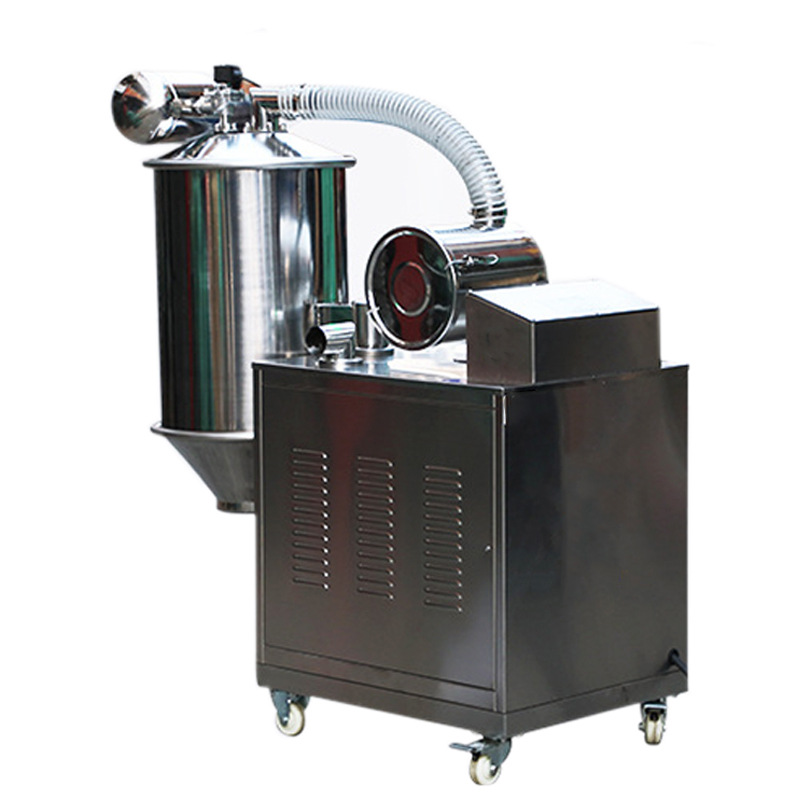
The Ultimate Guide to Vacuum Feeders: How They Work and Why You Need One

Introduction: The Hidden Hero of Clean Powder Handling
If you've ever worked with powders—whether in a lab, a pharmaceutical plant, or a food processing facility—you know the mess they can make. Dust flying everywhere, contamination risks, and manual labor that's both slow and unsafe. That's where a vacuum feeder (also called a vacuum powder feeder or vacuum conveyor) steps in. It's like a silent, powerful helper that moves powders and granules from one place to another without any dust or fuss.
In this guide, we'll walk through everything you need to know about vacuum feeders: how they work, what makes them special, and why the TENCAN vacuum feeder stands out in the market. No jargon overload—just clear, practical insights.
What Exactly Is a Vacuum Feeder?
Simply put, a vacuum feeder is a device that uses negative pressure (vacuum) to suck up powder or granular materials through a pipe and deliver them into a hopper, mixer, or processing machine. Think of it like a giant, industrial-strength straw that never loses its grip.
These machines are designed to replace manual loading, which is messy, slow, and risky for workers. They're widely used in industries where cleanliness, automation, and efficiency matter: pharmaceuticals, food, chemicals, battery materials, and plastics.
At the heart of a vacuum feeder is a vacuum pump (usually a high-pressure vortex blower) that creates suction. The material enters through a suction nozzle, travels through a sealed hose, and gets separated from the air by a filter. Once the hopper is full, the machine automatically stops and releases the material into the destination—all without any dust escaping.
How a Vacuum Feeder Works (Step by Step)
Let's break it down into a simple story:
- Creating the Vacuum: The vortex blower starts, drawing air out of the system and creating a strong negative pressure inside the hopper and pipe.
- Material Intake: The suction nozzle (or wand) is placed into the material. The vacuum pulls the powder or granules into the airstream and carries them through the hose.
- Separation: Inside the hopper, a filter (often a sintered metal or cloth filter) separates the material from the air. The material falls down into the hopper, while clean air passes through the filter.
- Automatic Discharge: When the hopper is full, a sensor tells the controller to stop the vacuum. A discharge valve opens, and the material drops into the target machine or container.
- Filter Cleaning: Right after discharge, a pulse of compressed air blows backward through the filter to clean it. This keeps the system running efficiently and prevents clogging.
- Repeat: The cycle starts again automatically, thanks to the controller. No manual intervention needed.
It's a beautifully simple, yet highly effective, process. The entire system is enclosed, so there's zero dust leakage.
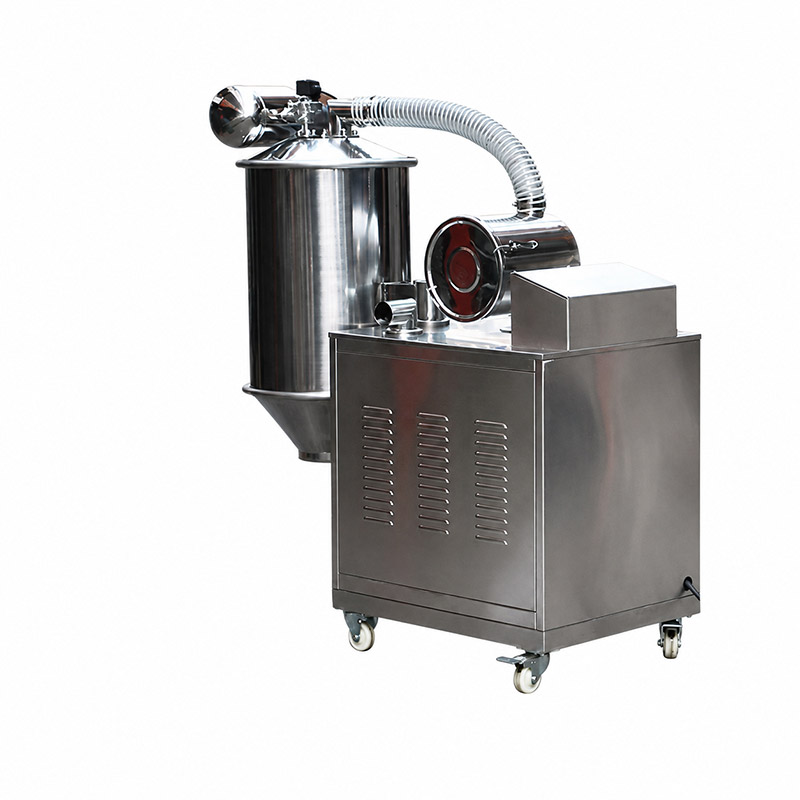
Key Features That Make a Vacuum Feeder Stand Out
Not all vacuum feeders are created equal. Here's what to look for in a quality model, like the one from 长沙天创粉末技术有限公司 (TENCAN):
1. Stainless Steel Construction
All contact parts should be made of 304 or 316L stainless steel. This ensures corrosion resistance, easy cleaning, and compliance with GMP and FDA standards. TENCAN's vacuum feeder uses exactly that—no cheap materials.
2. Pulse Jet Filter Cleaning
Without automatic filter cleaning, the filter would quickly clog and reduce suction. A pulse jet system blasts compressed air at regular intervals, keeping the filter fresh. This is a must for any continuous operation.
3. High-Pressure Vortex Blower
Instead of a regular vacuum pump, the best vacuum feeders use a vortex blower. It's quieter, smaller, longer-lasting, and delivers strong, consistent suction. TENCAN's units are equipped with high-quality blowers that run smoothly.
4. Intelligent Control System
Modern vacuum feeders come with a PLC or simple controller that monitors material level, automatically starts/stops the cycle, and even adjusts suction power. Some models include remote monitoring and alarms.
5. Customizable Options
Different materials behave differently. Fine powders like titanium dioxide may need special filters, while fragile granules need gentle handling. TENCAN offers customization: different hopper sizes, motor power, filter types, and even mobile carts for easy movement.
Where Can You Use a Vacuum Feeder?
Almost anywhere you need to move powders or granules! Here are some common applications:
- Pharmaceuticals: Transferring active ingredients, excipients, and herbal powders without cross-contamination.
- Food & Beverage: Handling sugar, flour, spices, milk powder, and protein powders in a hygienic manner.
- Chemicals: Moving pigments, plastic resins, and additives safely.
- Battery Materials: Conveying lithium carbonate, graphite, and other fine powders used in energy storage.
- Plastics: Feeding pellets and powders into injection molding machines or extruders.
- Laboratories: Smaller vacuum feeders are perfect for pilot plants and R&D labs where small batches need to be moved cleanly.
If you're curious about how a vacuum feeder could fit into your specific setup, the TENCAN vacuum feeder product page has detailed specs and application examples.
Why Choose TENCAN for Your Vacuum Feeder?
You might be wondering: with so many suppliers out there, why should you trust 长沙天创粉末技术有限公司 (TENCAN)? Good question. Here are a few reasons:
- Over a decade of experience in powder handling equipment. TENCAN knows powders inside out.
- Full CE certification and compliance with international standards. Safety and quality are baked in.
- Custom solutions—they don't just sell stock models. They'll work with you to design the perfect feeder for your material.
- Global shipping and support with a strong reputation for after-sales service.
And if you're not sure yet, you can always check out their other lab equipment, like the experimental flotation machine or portable tissue grinder—they bring the same level of quality to every product.
Frequently Asked Questions About Vacuum Feeders
Q: What's the difference between a vacuum feeder and a vacuum conveyor?
A: They're essentially the same thing. Some people call it vacuum feeder, vacuum conveyor, or vacuum powder feeder. All refer to a system that uses vacuum to transport bulk materials.
Q: Can I use a vacuum feeder for sticky materials?
A: It depends on the design. For sticky or cohesive powders, you may need a special hopper with a vibrator or a conical bottom to prevent bridging. TENCAN can modify the design to handle such materials.
Q: How high can a vacuum feeder lift material?
A: Typically, up to 10–15 meters vertically, depending on the blower power and material density. For higher lifts, multiple stages or a stronger blower may be needed.
Q: Is it easy to clean?
A: Yes. The stainless steel construction and smooth surfaces are easy to wipe down. Many models come with a quick-release clamp for the hopper and filter, making disassembly a breeze.
Q: Do I need compressed air for the pulse filter cleaning?
A: Yes, a small supply of compressed air (around 5–7 bar) is required for the pulse jet system. This is standard in most industrial facilities.
Final Thoughts: A Cleaner, Smarter Way to Move Powders
If you're still scooping powders by hand or dealing with dust clouds in your workshop, it's time to upgrade. A vacuum feeder is an investment that pays for itself quickly through reduced waste, improved safety, and higher productivity.
And when you're ready to choose one, you know where to look. The TENCAN vacuum feeder combines reliability, flexibility, and quality—just what you need to keep your powder handling clean and efficient.
Got questions? Drop a comment or reach out to the team at TENCAN. They'll help you find the perfect fit.
Related Products
Get In Touch
Our professional team will reply to you within one business day. Please feel free to contact us!