Contact Us
Choose your preferred way to contact our team
Free Quote
Fill out the form to obtain prices and information
Send an Email
Share your needs and concerns
+86 19021571516

Why choose us
Simple ordering, reliable quality, professional support.
Easy Process
Clear communication from product selection to delivery, so your team can move faster.
Quality Assurance
Stable manufacturing, strict inspection, and support for configuration requirements.
Expert Support
Application-oriented advice for planetary ball milling, sample preparation, and scale-up needs.
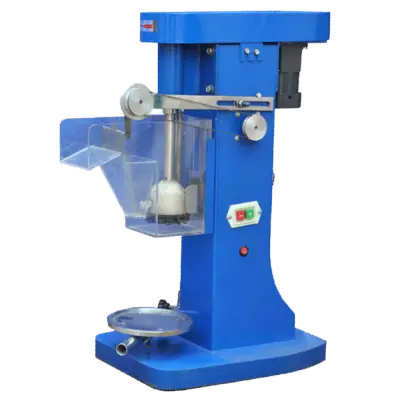
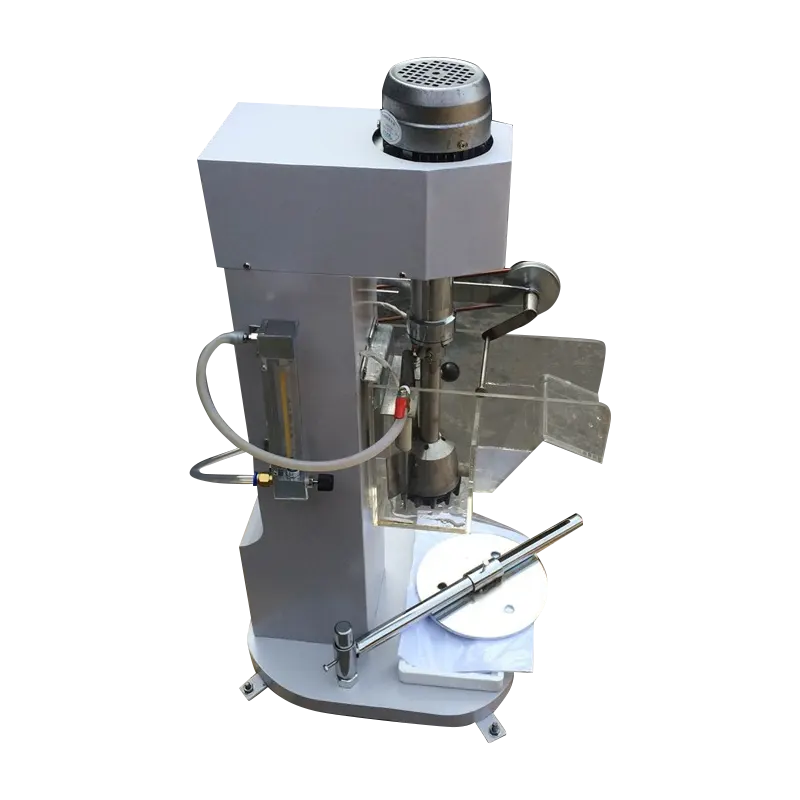
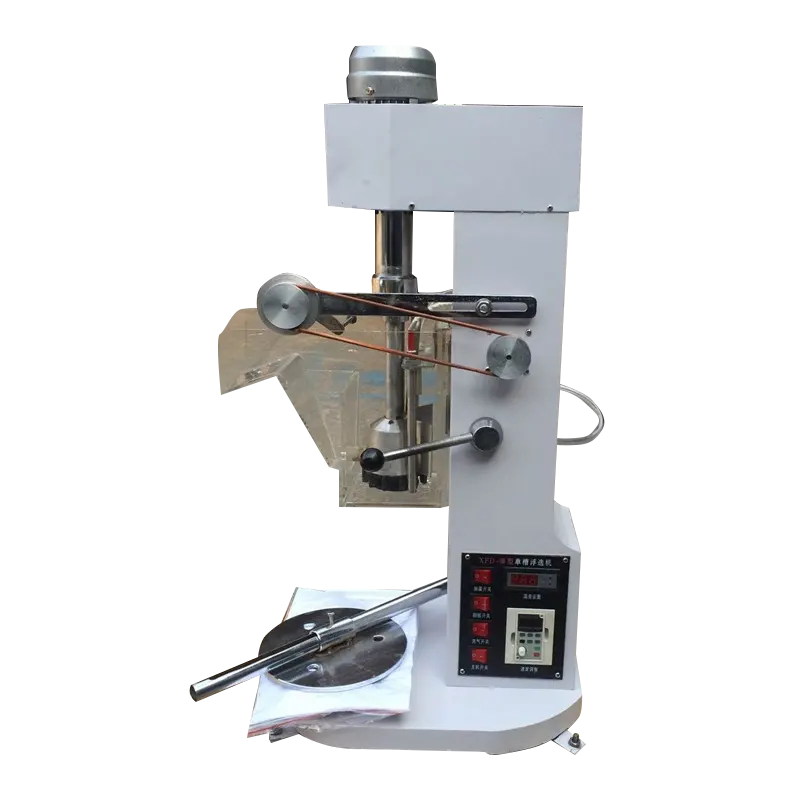
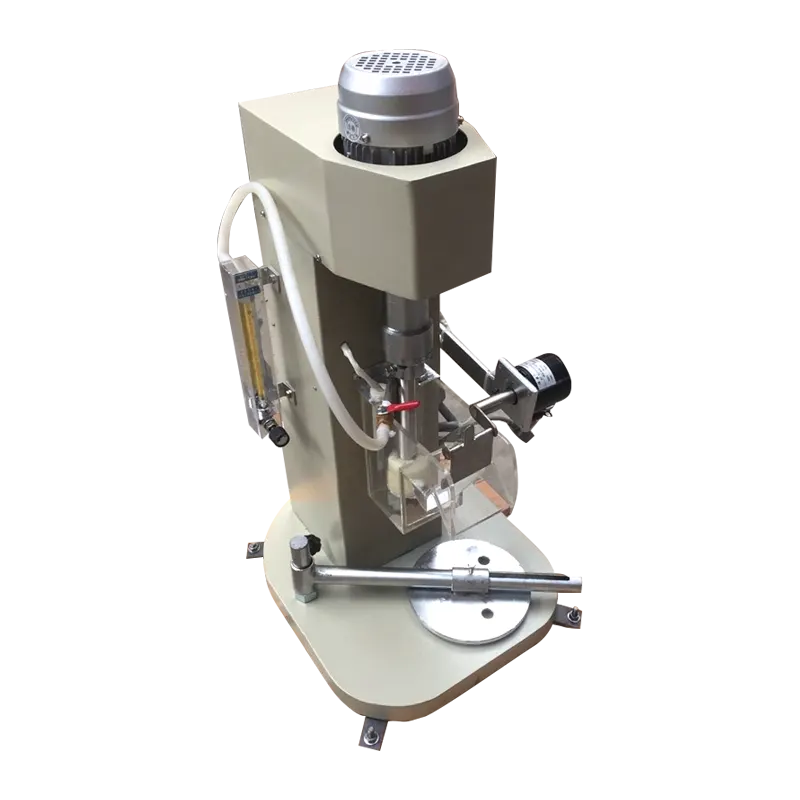
The experimental flotation machine is used to separate ferrous metals, non-ferrous metals, precious metals, chemical raw materials and non-metallic minerals, and recover useful minerals. The device has a large suction volume and low power consumption. The impeller has backward-inclined upper and lower blades. The upper blade generates upward circulation of slurry, and the lower blade generates lower circulation of slurry. Each tank has three functions of air suction, slurry suction and flotation. It forms a self-contained flotation circuit without any auxiliary equipment. The horizontal configuration facilitates process changes and ensures reasonable slurry circulation, which can minimize the precipitation of coarse sand. In addition, the equipment is also equipped with an automatic control device for the slurry surface, which can be easily adjusted.
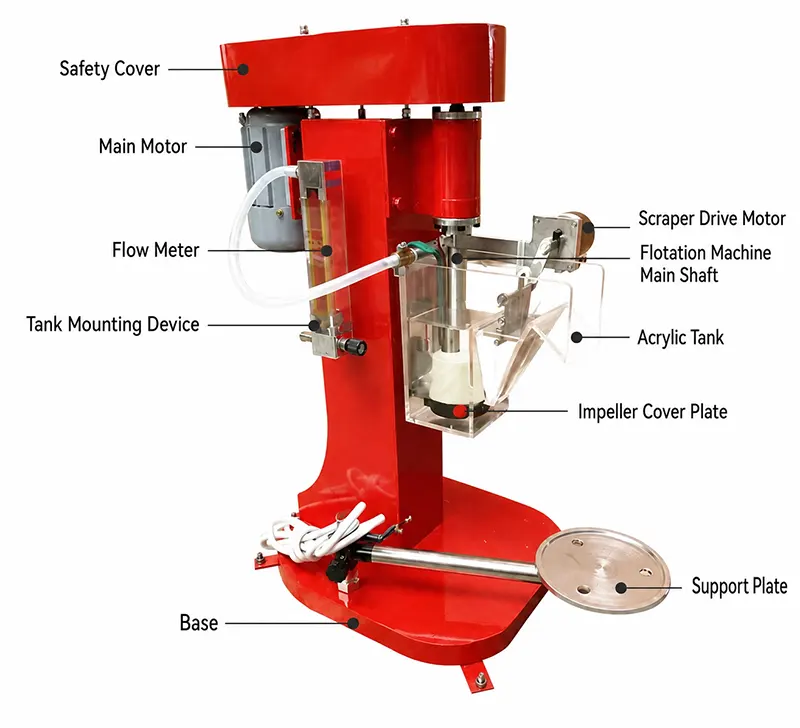
- Metal ore sorting: rough selection and selection of non-ferrous metals such as copper, lead, zinc, gold, nickel, etc. Ferrous metals (such as iron ore) account for 50%
- Non-metallic mineral enrichment: purification of minerals such as phosphate rock, potassium salt, graphite, quartz sand, etc.
- Environmental protection applications: industrial wastewater deoiling, waste paper deinking, oil field sewage treatment and microbial separation
- Special scenarios: recovery of coarse-grained minerals in the grinding circuit (such as flash flotation machine), smelting slag treatment
Technical parameters
| serial number | Technical parameters | unit | FX-0.5 | FX-0.75 | FX-1 | FX-1.5 | FX-3 | FX-8 |
|---|---|---|---|---|---|---|---|---|
| 1 | flotation tank volume | L | 0.5 | 0.75 | 1 | 1.5 | 3 | 8 |
| 2 | Impeller diameter | MM | F 45 | F 45 | F 55 | F 60 | F 70 | F 80 |
| 3 | Impeller I | RPM | 2590 | 2590 | 2100 | 1910 | 1890 | 1400 |
| 4 | Speed II | RPM | 2130 | 2130 | 1700 | 1590 | 1544 | 1400 |
| 5 | Scraper speed | RPM | 30 | 30 | 30 | 30 | 30 | 30 |
| 6 | Feeding particle size | MM | -0.2 | -0.2 | -0.2 | -0.2 | -0.2 | -0.2 |
| 7 | motor | W | 90W - 2800r/min | 250W | ||||
| 8 | Voltage | V | 220/380 | 220/380 | 220/380 | 220/380 | 220/380 | 220/380 |
| 9 | Dimensions | long | 520 | 520 | 520 | 560 | 570 | 380 |
| 10 | Width | 263 | 263 | 263 | 265 | 310 | 505 | |
| 11 | high | 628 | 628 | 628 | 590 | 668 | 970 | |
| 12 | weight | kg | 30 | 30 | 35 | 40 | 50 | 80 |
After the slurry and chemicals are fully mixed, they are fed into the bottom of the tank of the flotation machine. After the impeller rotates, a negative pressure is formed in the wheel cavity, so that the slurry under the tank and in the tank enter the mixing zone through the lower suction port and the upper suction port of the impeller respectively. The air also enters the mixing zone along the air guide sleeve, where the slurry, air and chemicals are mixed. Under the action of the centrifugal force of the impeller, the mixed slurry enters the mineralization zone. The air forms bubbles and is crushed. It fully contacts the slurry to form mineralized bubbles. Under the action of the stator and the turbulent plate, it is evenly distributed in the tank section and moves upward into the separation zone. It is enriched to form a foam layer and is discharged by the scraping mechanism to form concentrate foam.
Parameters
| Model | FX |
|---|---|
| Grinding Jar Capacity | |
| Feed Size | |
| Output Size | |
| Speed | |
| Power | |
| Voltage | |
| Dimensions | |
| Weight | 0 |
Related Videos
The trusted choice of industry leaders

FAQ
-
What is a Hanging Tank Flotation Machine? A Laboratory Flotation Device for Selective Mineral Separation
A hanging tank flotation machine is a lab-scale flotation device used for mineral separation, agitation, and scrubbing of small ore samples. It mimics industrial froth flotation to separate valuable minerals from gangue based on surface hydrophobicity. Ideal for geological, metallurgical, and research labs, it features interchangeable hanging tanks and adjustable impeller speeds for precise flotation testing.
MORE >> -
What is an Experimental Flotation Machine? A Laboratory Device for Mineral Separation Research and Beneficiation Testing
An experimental flotation machine is a specialized laboratory device used to simulate the industrial flotation process for mineral separation, beneficiation research, and ore washability testing. It works by agitating ore pulp and air to form bubbles, allowing hydrophobic valuable minerals to attach and float while gangue sinks. Key features include adjustable impeller speed, aeration, and multi-cell configurations for batch testing. This guide covers its working principle, main types (mechanical agitation, aeration, hanging tank), selection criteria, and applications in geology, metallurgy, coal, and chemical industries.
MORE >> -
What is an Experimental Flotation Machine? A Device for Mineral Separation in Laboratory Research
An experimental flotation machine is a specialized laboratory device that separates valuable minerals from gangue using froth flotation. It is widely used in research institutions, mining laboratories, and universities for ore beneficiation studies, reagent selection, and process optimization. This article covers its working principle, types, key performance indicators, and selection guidelines.
MORE >>
Get In Touch
Our professional team will reply to you within one business day. Please feel free to contact us!