

What is an Experimental Flotation Machine? A Laboratory Device for Mineral Separation Research and Beneficiation Testing
What is an Experimental Flotation Machine?
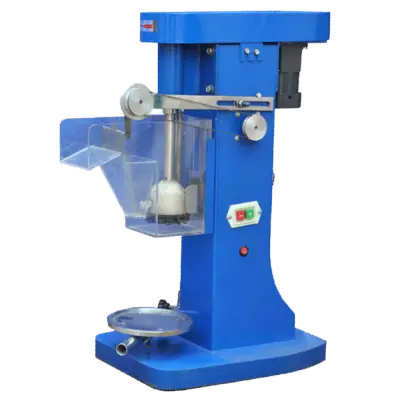
At its core, an experimental flotation machine is a specialized laboratory device designed to simulate the industrial froth flotation process on a small scale. It is used by geological research institutes, metallurgical laboratories, coal preparation plants, chemical engineering departments, and universities to conduct mineral separation studies, ore washability testing, and process optimization. By precisely controlling aeration, agitation, and reagent addition, this equipment allows researchers to evaluate the floatability of different ores and determine the optimal conditions for recovering valuable minerals from gangue.
Core Function and Working Principle
The fundamental function of an experimental flotation machine is to separate valuable minerals from waste rock based on differences in their surface hydrophobicity. The process involves three key steps: agitation and aeration, mineralization, and froth collection.
First, the ore pulp mixed with flotation reagents is fed into the cell. The impeller rotates at high speed, creating a strong vortex that draws air from the atmosphere (or from an external aeration source) into the pulp. The air is broken into fine bubbles, which are dispersed throughout the slurry. At the same time, the reagents modify the surface of the target minerals, making them hydrophobic (water-repellent). These hydrophobic particles then attach to the rising bubbles, forming mineralized froth that accumulates at the surface. The froth is scraped off by a scraper blade into the concentrate launder, while the hydrophilic gangue remains in the pulp and is discharged as tailings.
Key process parameters—such as impeller speed, aeration rate, pulp density, reagent dosage, and flotation time—can be precisely adjusted to mimic various industrial conditions. For example, the multi-cell models (like XFDM series) often feature digital timers and programmable controllers to automate the entire flotation cycle, ensuring high reproducibility of test results.
Main Types of Experimental Flotation Machines
Based on the mechanism of aeration and agitation, experimental flotation machines can be classified into several common types:
Mechanical Agitation Type
This is the most traditional design, where the impeller both stirs the slurry and draws in air through a central tube. It is simple, self-aerating, and suitable for most base metal ores (copper, lead, zinc, etc.). However, it may have higher energy consumption and limited control over bubble size.
Forced-Aeration (Pneumatic) Type
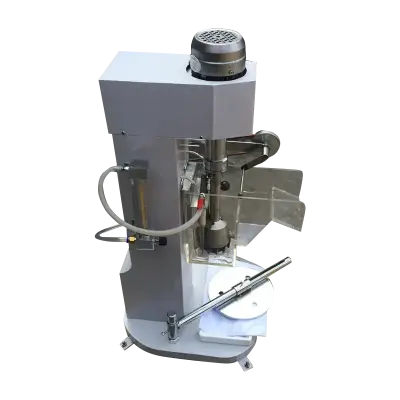
In this design, air is supplied from an external blower or compressor, while the impeller mainly serves to disperse the bubbles. This allows independent control of aeration rate and impeller speed, leading to better bubble size distribution and lower energy consumption. It is ideal for fine-grained ores or when precise aeration control is needed.
Hanging Tank Flotation Machine
As the name suggests, the cell (tank) is suspended from a frame, making it easy to interchange cells of different volumes. This type is particularly useful for labs that need to test multiple ore samples with varying cell sizes. The hanging tank design also facilitates cleaning and maintenance.
Additionally, some advanced models incorporate frequency conversion technology for stepless impeller speed adjustment, digital displays, and automatic liquid level control, further enhancing accuracy and repeatability.
Key Performance Indicators and Selection Criteria
When selecting an experimental flotation machine, consider the following critical factors:
- Cell Volume Range: Typical lab flotation machines offer cells from 0.5L to 8L (or more). Choose a range that matches your sample size and testing requirements. Multi-cell units allow sequential testing without cross-contamination.
- Impeller Speed and Aeration Control: Look for models with adjustable speed (e.g., 0–2000 rpm) and independent aeration regulation. Digital display and frequency conversion ensure precise setting and reproducibility.
- Material of Construction: The cell and impeller should be made of corrosion-resistant materials such as stainless steel, PVC, or high-manganese steel (for abrasive ores). For coal flotation, special materials may be required.
- Automation Level: Advanced models offer programmable timers for each stage (conditioning, flotation, scraping), automatic liquid level control, and even data logging. This reduces operator variability and improves test consistency.
- Ease of Maintenance: Quick-release impellers, washable cells, and accessible aeration valves save time between tests.
Application Areas and Selection Advice
Experimental flotation machines are widely used in:
- Geological and mineral exploration – to assess the floatability of newly discovered ore deposits.
- Metallurgical research – to optimize flotation circuits for base metals, precious metals, and industrial minerals (e.g., copper, gold, fluorite, graphite).
- Coal preparation – to determine the washability of fine coal and design flotation-based cleaning plants.
- Chemical and environmental engineering – for treating oily sludge or recovering valuable components from industrial waste.
For basic research or educational labs, a simple mechanical agitation model with a single cell (e.g., 1L) is sufficient. For commercial beneficiation testing, a multi-cell forced-aeration machine with automation features is recommended to achieve higher throughput and reproducibility. Always ensure the machine conforms to relevant industry standards (e.g., those set by the former Ministry of Geology and Mineral Resources in China).
References
Related Products
Get In Touch
Our professional team will reply to you within one business day. Please feel free to contact us!