
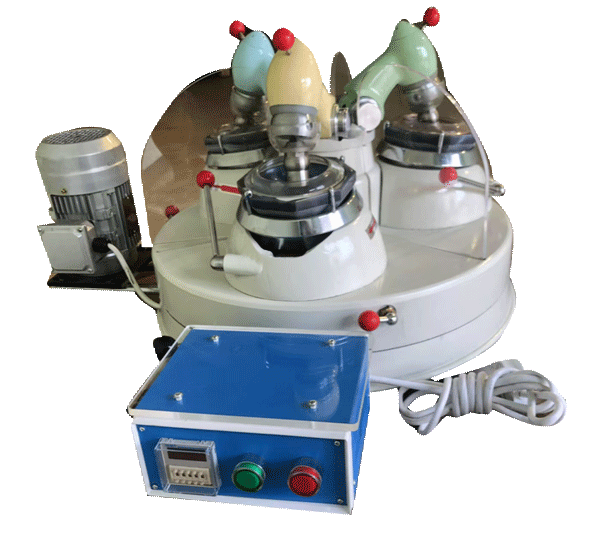
Agate Grinder with Three Working Stations: A Must-Have for Precision Sample Preparation

Why Choose an Agate Grinder with Three Working Stations?
If you're working in a lab that processes multiple samples daily, you know how critical consistency and purity are. The Agate Grinder with Three Working Stations from TENCAN is designed to solve exactly that problem. Instead of grinding one sample at a time, you can now process up to three samples simultaneously, all under the same controlled conditions. That means higher throughput, better reproducibility, and less time spent waiting.
Agate (a natural form of microcrystalline quartz) is the material of choice for sample preparation in many demanding fields. It's incredibly hard yet chemically inert, so it won't introduce unwanted contaminants into your precious samples. Whether you're preparing rocks for XRF analysis, grinding pharmaceutical ingredients, or milling ceramics for research, this machine delivers the purity you need.
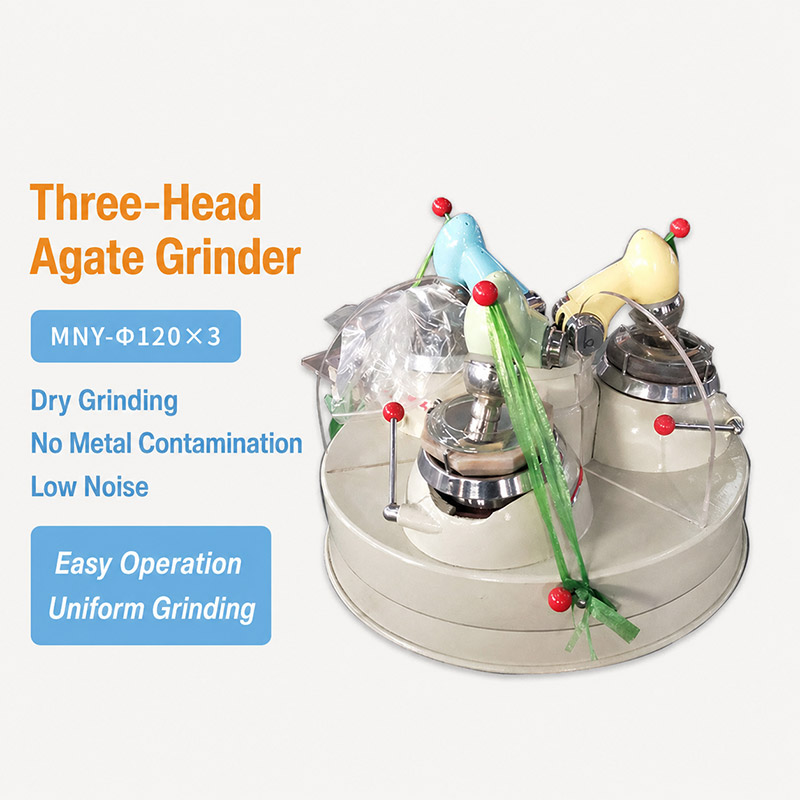
What Exactly Is an Agate Grinder?
Let's break it down. A grinder in this context is a machine that reduces solid materials into fine powders through friction, impact, or shear. The term "agate grinder" refers to the fact that the grinding components – typically the mortar and pestle – are made from agate. This is a huge advantage over steel or ceramic grinders because agate is extremely hard (Mohs scale 7) and has virtually no porosity. It doesn't absorb chemicals, and it won't chip off and contaminate your sample.
Now, the "three working stations" part is what sets this model apart. You have three independent grinding stations, each with its own agate mortar and pestle. They can be operated simultaneously or independently, allowing you to run different grinding cycles for different samples. For example, you might want to grind one sample for 5 minutes and another for 10 minutes – no problem. Each station is independently controlled.
Key Features of the TENCAN Three-Station Agate Grinder
1. High Purity & Low Contamination
As mentioned, agate is one of the purest materials for grinding. It's free from heavy metals like iron, tungsten, or cobalt that can leach from steel or tungsten carbide grinders. If you're doing trace element analysis, this is a game-changer. The agate grinder with three working stations ensures that your sample remains as uncontaminated as possible.
2. Simultaneous Processing of Multiple Samples
Three stations mean you can process three samples at once. This is a huge time-saver for labs that need to run batches. Whether you're comparing different geological samples or preparing duplicates for quality control, the throughput is significantly higher than a single-station unit.
3. Adjustable Grinding Pressure and Time
Each station can be set with its own pressure and duration. You can fine-tune the grinding parameters to match the hardness of your material. Soft materials like clay need gentle pressure, while hard rocks might require more force. The intuitive control panel makes adjustment simple.
4. User-Friendly Design
The machine is designed for easy operation. The mortars are easy to load and unload, and the pestles are driven by a reliable motor. The compact footprint fits on any lab bench. Plus, cleaning is straightforward because the agate components can be easily wiped or rinsed with solvent.
Applications Across Industries
This grinder is not a one-trick pony. It's used in a wide range of fields:
- Geology & Mining: Grinding rock samples for XRF, XRD, or ICP analysis. The low contamination is critical for accurate elemental analysis.
- Pharmaceuticals: Preparing active ingredients or excipients for formulation studies. The inert surface prevents unwanted reactions.
- Materials Science: Milling ceramics, carbides, or composite materials to fine powders for sintering or characterization.
- Environmental Analysis: Grinding soil or sediment samples for pollutant testing.
- Food & Agriculture: Milling grains, seeds, or dried materials for nutrient analysis.
How Does It Compare to Other Grinders?
You might be wondering: why not just use a ball mill or a mortar and pestle? Let's compare.
A laboratory rod grinder uses steel rods, which can cause iron contamination. A single-station agate grinder is great for purity but slower. The three-station version gives you both purity and speed. For wet grinding, you might consider a colloid mill, but that's a different technology for emulsions. If you need ultra-fine particles, an air jet mill could be a better fit, but it's more expensive and requires compressed air.
For most routine sample preparation in analytical labs, the agate grinder with three stations hits the sweet spot between purity, throughput, and cost.
Technical Specifications (Typical)
While exact specs may vary, here's what you can expect from a typical TENCAN model:
| Parameter | Value |
|---|---|
| Number of Stations | 3 |
| Grinding Material | Natural Agate |
| Sample Capacity per Station | 10 – 50 g (depending on material) |
| Grinding Time Range | 0 – 99 minutes per station |
| Motor Power | ~120 W |
| Power Supply | 220V / 50Hz (customizable) |
| Dimensions (L x W x H) | ~500 x 400 x 300 mm |
| Weight | ~25 kg |
For the most accurate data, please refer to the product page.
Tips for Using Your Agate Grinder
To get the best results, keep these points in mind:
- Always clean the mortars and pestles thoroughly between samples. Even a tiny residue can affect the next sample's purity.
- Start with a short grinding cycle and check the particle size. Over-grinding can generate heat and alter certain materials.
- Use the correct sample volume. Don't overfill the mortar – leave room for the pestle to move freely.
- For very hard materials, consider pre-crushing to reduce the grinding time.
- Use the independent timers wisely. You can stagger the start times to finish all three samples at the same moment.
Why Trust TENCAN?
长沙天创粉末技术有限公司 (TENCAN) has been a trusted name in powder processing equipment for years. They specialize in everything from planetary ball mills to three-roll mills. Their machines are used in universities, research institutes, and industrial labs worldwide. The agate grinder with three working stations is just one example of their commitment to quality and innovation.
If you're looking for other grinding solutions, check out their three roll mill for dispersing high-viscosity materials, or the micro airflow pulverizer for ultra-fine dry grinding.
Final Thoughts
If you're serious about sample preparation and need to balance purity, efficiency, and cost, the Agate Grinder with Three Working Stations is a smart investment. It's not just a grinder – it's a productivity booster. No more waiting for one sample to finish before starting the next. You can run three parallel experiments and get consistent results every time.
Ready to upgrade your lab? Head over to the product page for more details and pricing. Or, if you have questions, feel free to reach out to the TENCAN team – they're always happy to help you find the perfect grinder for your needs.
Related Products
Get In Touch
Our professional team will reply to you within one business day. Please feel free to contact us!