
Tungsten Carbide Mill Ball: The Ultimate Grinding Media for High-Hardness Materials

What Makes Tungsten Carbide Mill Balls So Special?
Have you ever tried grinding something so hard that ordinary steel balls just bounce off it, or worse, wear down in minutes? That's exactly the problem tungsten carbide mill balls are designed to solve. These little spheres are like the superheroes of the grinding world – they take on the toughest materials and come out unscathed.
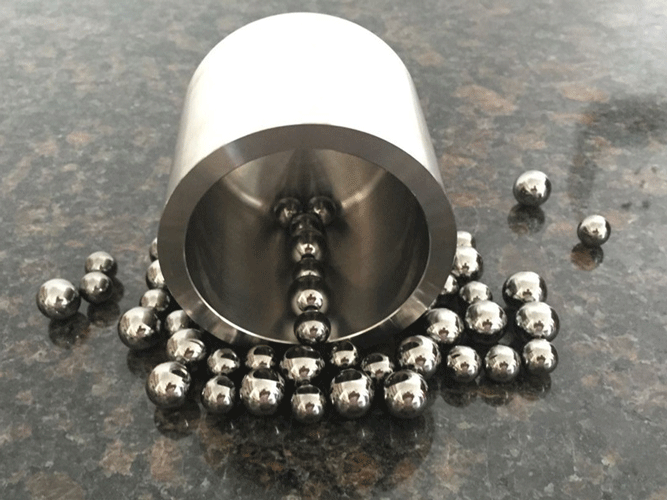
At their core, tungsten carbide (chemical formula WC) is a compound of tungsten and carbon. It's incredibly hard – nearly as hard as diamond – and has a density of around 15.63 g/cm³. That's more than one and a half times denser than steel. This combination of extreme hardness and high density makes it a dream material for grinding media in tungsten carbide mill ball applications.
How Are Tungsten Carbide Grinding Balls Made?
You might be wondering, "How do you make something that's already so hard even harder?" The process starts with powder metallurgy. Tungsten carbide powder is mixed with a binder, usually cobalt (Co), in percentages like 6% (YG6) or 8% (YG8). This mixture is pressed into spherical shapes and then sintered at extremely high temperatures – around 1400°C to 1600°C. The result is a cemented carbide ball that's both tough and wear-resistant.
The cobalt binder acts like a glue, holding the hard WC grains together. A higher cobalt content (like 8%) gives better toughness, while a lower cobalt content (like 6%) provides higher hardness. So you can choose the right balance depending on your application.
Key Specifications You Should Know
When you're shopping for tungsten carbide mill balls, here are the numbers that matter most:
- Density: ~15.0 – 15.6 g/cm³ (depending on cobalt content)
- Hardness: HRA 88 – 92 (Rockwell A scale) – that's extremely hard
- Size range: Typically from 1 mm to 20 mm diameter, but custom sizes are available
- Grades: YG6 (6% Co), YG8 (8% Co), YG10 (10% Co), and more
- Surface finish: Unground (as-sintered) or ground (polished) for different friction requirements
For example, a YG6 grade ball with 6% cobalt offers a perfect balance of hardness and wear resistance for most lab grinding tasks. If you need higher impact resistance, go for YG8 or YG10.
Why Choose Tungsten Carbide Over Other Grinding Media?
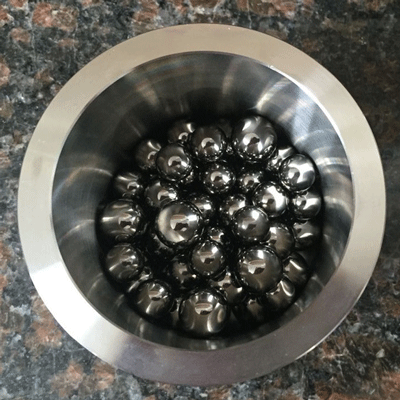
Let's face it – there are plenty of options out there. 304 stainless steel grinding balls are cheap, zirconia grinding balls are great for ceramics, and agate balls are ideal for contamination-free grinding. But when it comes to grinding super-hard materials like silicon carbide, cemented carbides, minerals, or even diamond abrasives, nothing beats tungsten carbide.
Here's a quick comparison:
| Property | Tungsten Carbide | Stainless Steel 304 | Zirconia |
|---|---|---|---|
| Density (g/cm³) | ~15.0 | ~7.9 | ~6.0 |
| Hardness (HV) | ~1500 | ~200 | ~1200 |
| Wear resistance | Excellent | Moderate | Good |
| Contamination risk | Low (if WC is inert) | Iron contamination | ZrO₂ contamination |
As you can see, tungsten carbide is the heavyweight champion when it comes to hardness and density. The high density means each ball packs more kinetic energy during milling, resulting in faster and finer grinding. That's why many planetary ball mill users prefer them for demanding applications.
How Does a Planetary Ball Mill Use Tungsten Carbide Balls?
You've probably seen a planetary ball mill in action. The grinding jars rotate on their own axis while also revolving around a central sun wheel. This creates a complex motion where the balls inside the jar experience both impact and friction forces. With tungsten carbide balls, the high density means they deliver stronger impacts, crushing even the toughest particles into submicron powders.
For instance, a typical NM200 small planetary ball mill from TENCAN can achieve particle sizes down to 0.1 µm using tungsten carbide media. The ball-to-powder ratio, rotation speed, and grinding time all play a role. But the media itself is the critical factor – if your balls are too soft, they'll wear out and contaminate your sample. Tungsten carbide resists wear so well that you can use the same set of balls for hundreds of runs without noticeable degradation.
Real-World Applications
Where do tungsten carbide mill balls shine? Let me give you a few examples:
- Hard metal recycling: Grinding cemented carbide scrap back into powder for reuse.
- Mining and mineral processing: Crushing ores containing quartz, corundum, or other hard minerals.
- Battery material research: Milling lithium cobalt oxide, graphite, or silicon anodes where contamination must be minimized.
- Ceramic industry: Preparing fine ceramic powders like alumina, zirconia, or silicon nitride.
- Geology and paleontology: Grinding rock samples for X-ray diffraction or chemical analysis.
In each case, the extreme hardness of tungsten carbide ensures that the grinding media themselves don't break down, which means less contamination and more consistent results.
Tips for Choosing the Right Tungsten Carbide Ball
Before you hit that "add to cart" button, here are a few pointers:
- Match the ball size to your jar volume. A good rule of thumb: use balls that are 1/10 to 1/5 of the jar diameter. For a 50 ml jar, 5–10 mm balls work well.
- Consider the cobalt content. For impact grinding (like crushing large chunks), choose YG8 or YG10 for higher toughness. For fine grinding, YG6 is better because it's harder and wears less.
- Check the surface finish. Unground balls have a slightly rough surface that provides more friction, which can be beneficial for certain materials. Polished balls are smoother and reduce contamination.
- Always buy from a reputable supplier. TENCAN (Changsha Tianchuang Powder Technology Co., Ltd.) offers high-quality tungsten carbide mill balls with consistent grades and precise dimensions. You can trust their products for reliable performance.
Common Questions About Tungsten Carbide Mill Balls
Can tungsten carbide balls be used for wet grinding?
Absolutely. Tungsten carbide is chemically inert to most acids and solvents, so it works well in both dry and wet milling. Just make sure to clean them thoroughly after each use to prevent corrosion from aggressive chemicals.
How long do these balls last?
With proper use, a set of tungsten carbide balls can last for years. The wear rate is extremely low – typically less than 0.1% weight loss per 100 hours of milling, depending on the material being ground.
Are they safe for food or pharmaceutical grinding?
Tungsten carbide is non-toxic and biocompatible, but it's always best to check with your specific regulatory requirements. In many labs, they are used for pharmaceutical research without issues.
Final Thoughts
If you're serious about grinding hard materials, tungsten carbide mill balls are not just an option – they're a necessity. They save you time, money, and frustration by delivering consistent results batch after batch. Whether you're a researcher pushing the limits of nanotechnology or a production engineer needing reliable milling media, tungsten carbide balls from TENCAN are a smart investment.
Ready to upgrade your grinding game? Check out the full range of tungsten carbide mill ball options and find the perfect match for your planetary ball mill.
Get In Touch
Our professional team will reply to you within one business day. Please feel free to contact us!