
What is a Jar Mill with 8 Working Station? A High-Efficiency Grinding Equipment for Multi-Sample Laboratory Powder Processing

What is a Jar Mill with 8 Working Station?
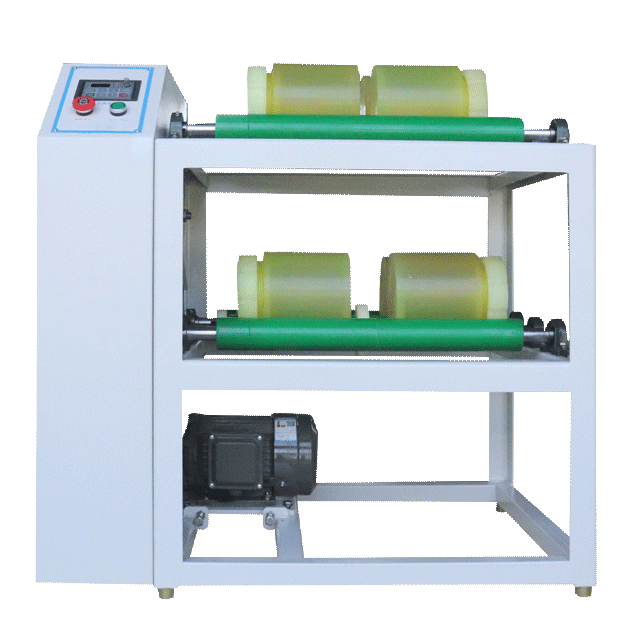
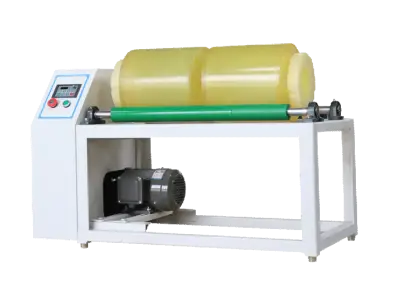
At its core, a jar mill with 8 working station is a specialized drum ball mill designed for laboratory and small-scale production environments. It is used to grind, mix, and homogenize solid materials into fine powders by rotating sealed jars on a set of rollers. The key differentiator of this model is its ability to accommodate up to eight grinding jars simultaneously, making it an ideal solution for laboratories that need to process multiple samples in parallel — whether for material research, quality control, or formulation development. This equipment effectively transforms coarse or granular materials into homogeneous powders with controlled particle sizes, all in a compact benchtop footprint.
Core Function and Working Principle
How the Jar Mill Works
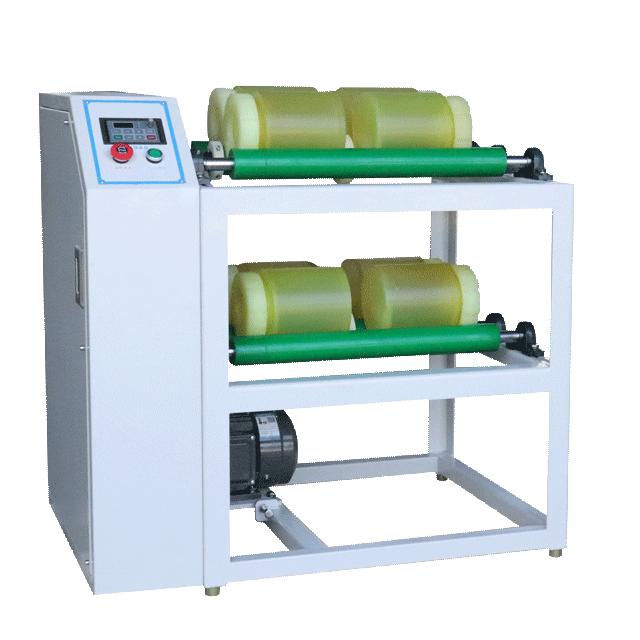
The jar mill operates on a simple yet effective principle: the grinding jars are placed on rotating rollers, and as the rollers turn, the jars rotate around their own axis. Inside each jar, grinding media (such as balls made of agate, zirconia, or stainless steel) tumble and cascade, generating impact and friction forces that break down the material. The 8-station design means that all jars rotate simultaneously at the same speed, ensuring consistent processing conditions across samples.
Key process parameters include roller speed (typically adjustable via a variable frequency drive), grinding time, and jar size. The mill can accommodate jars ranging from small volumes (e.g., 0.5 L) to larger ones (up to 5 L or more, depending on the model). The rotational speed directly influences the energy input into the grinding media: higher speeds impart more kinetic energy, leading to faster particle size reduction, but may also increase wear and heat generation. For optimal results, users must balance speed, material properties, and desired fineness.
From Coarse Feed to Fine Powder
The material fed into the jar typically has particle sizes ranging from a few millimeters to centimeters. After the milling process, the product can reach down to micron or even sub-micron levels, depending on the grinding media used and the duration of milling. The mill is designed for both dry and wet grinding applications. In wet grinding, a liquid medium (e.g., water, ethanol) is added to the jar to reduce agglomeration and improve dispersion. The 8-station configuration enables researchers to run parallel experiments, varying parameters like jar material, media size, or milling time, to quickly optimize formulations.
Key Components and Technology
Roller Assembly and Drive System
The heart of the jar mill is its roller system. The 8-station model features multiple sets of parallel rollers, each pair supporting one jar. The rollers are typically covered with a friction-enhancing material, such as polyurethane or rubber, to prevent jar slippage. A single motor drives all rollers through a belt or chain mechanism, ensuring synchronized rotation. The drive system is equipped with a variable frequency drive (VFD) that allows stepless speed adjustment, typically in the range of 30–300 rpm or higher.
Grinding Jars and Media
The mill is compatible with a wide variety of jar materials, including stainless steel, agate, zirconia, alumina, nylon, and polyurethane. Each material offers different advantages: agate is ideal for contamination-free grinding of soft to hard materials; zirconia provides high wear resistance for hard samples; and stainless steel is cost-effective for routine applications. The grinding media must be chosen to match the jar material and the sample. For example, using the same material for jar and balls reduces cross-contamination. The 8-station design supports interchangeable jars, allowing users to quickly switch between different materials or sample types.
Key Performance Indicators and Selection Tips
Processing Capacity and Throughput
The total throughput of the jar mill with 8 working station depends on the jar volume and the number of jars. For instance, using 1-liter jars, the mill can process up to 8 liters per batch. However, the actual loading capacity per jar should not exceed 60% of jar volume to leave space for grinding media and material movement. Users should consider their daily sample volume: for high-throughput labs, this model can significantly reduce processing time compared to single- or dual-station mills.
Particle Size Control and Uniformity
One of the main concerns in laboratory milling is achieving reproducible particle size distribution. The 8-station jar mill offers excellent uniformity because all jars experience identical rotational conditions. Final particle sizes can range from about 100 microns down to 1 micron or less, depending on the material and grinding parameters. For precise control, users can employ a timer or programmable controller to set milling duration. Some advanced models may include digital displays and programmable cycles for increased repeatability.
Energy Efficiency and Maintenance
Compared to planetary ball mills, jar mills generally consume less energy per unit of material due to their simpler drive system. They also generate less heat, making them suitable for heat-sensitive materials. Maintenance is straightforward: periodic inspection of rollers, lubrication of bearings, and cleaning of jars are the main tasks. The open-roller design allows easy access for cleaning and jar replacement. The mill's robust construction ensures long service life even under continuous use.
Application Fields and Selection Advice
Industries and Scenarios
The jar mill with 8 working station is widely used in:
- Materials research and development – preparing composite materials, ceramics, and alloys in small batches.
- Pharmaceuticals – grinding active ingredients, excipients, and herbal materials for drug formulation.
- Chemical industry – mixing pigments, catalysts, and additives.
- Geology and mining – processing rock, mineral, and ore samples for analysis.
- Food and agriculture – milling grains, spices, and seeds for testing.
Choosing the Right Model
When selecting a jar mill, consider the number of samples you typically process. For labs with moderate to high throughput, the 8-station version is an excellent choice. If sample volume is low, a two-station jar mill or four-station jar mill may suffice. Also consider the jar material: for highly abrasive or precious samples, agate or zirconia jars are recommended. The TENCAN jar mill series offers models with different roller configurations and accessories, allowing you to tailor the system to your specific needs.
References
Get In Touch
Our professional team will reply to you within one business day. Please feel free to contact us!