

What Is a Jar Mill with 8 Working Stations? A Multi-Jar Grinder for Modern Labs
From the core, a jar mill with 8 working stations is a laboratory grinding machine that rotates several grinding jars at once, so a lab can reduce multiple small samples to fine powder in a single run without dedicating one mill to each batch. It is used for parallel sample preparation, comparative grinding trials, and small-lot powder work where each sample must remain in its own closed container. The eight working stations are the defining feature: several jars can be loaded, run, and evaluated together while the material inside each jar stays separate. For the product page, see the Jar mill with 8 working station.
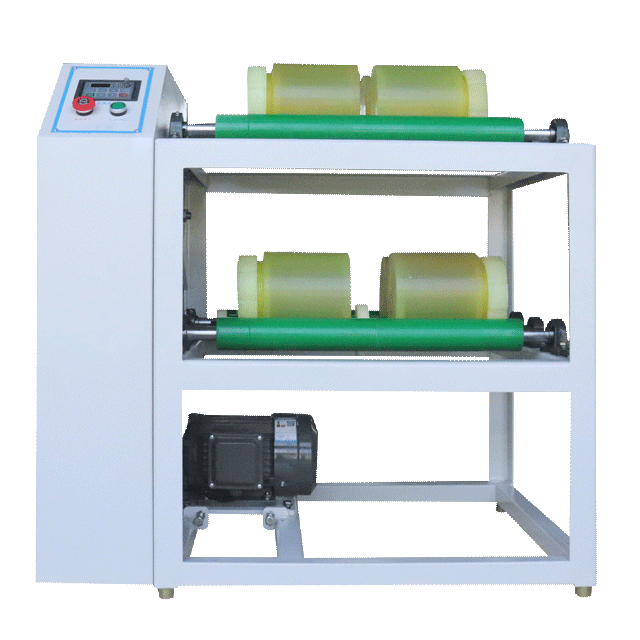
What the Equipment Does: From Feed Material to Fine Powder
A jar mill is built around a simple idea: if a closed jar containing grinding media and coarse particles is rotated, the moving media will break the particles down by impact, attrition, and abrasion. The feed material begins as granules, crystals, clinker, ceramics, soil, or another brittle solid. After enough revolutions, the same material leaves the jar as a finer powder, with the final particle size depending on the energy input and the grinding configuration.
The jar is the grinding chamber. It holds the sample and the media, and it also acts as the wear surface. In a multi-station mill, each jar sits in a working station that supports it and applies rotation. Because the jars are closed, fine dust remains contained, and samples can be kept apart. This separation is important when a laboratory is preparing several formulations, comparing raw materials, or repeating a method for validation.
The drive system turns the jars. As the jar rotates, the media charge is lifted on one side and then cascades or tumbles back. Particles caught between media balls, or between media and the jar wall, are subjected to repeated stresses. The result is not a single cutting action but a cumulative process: many small fractures produce a finer powder. The exact motion depends on the mill design, the jar diameter, the media load, and the rotation speed.
Rotation, Media, and Jar Interaction
Three components work together: the jar, the grinding media, and the material. The jar defines the volume and the contamination risk. The media provides the moving energy. The sample responds according to its hardness, toughness, and initial particle size. A hard, brittle material may fracture quickly; a soft or sticky material may need a different approach. In practice, the operator adjusts the media size, media quantity, sample load, and run time to reach a target fineness without overheating or overgrinding.
Media selection is not only about size. Density affects impact energy, while surface condition affects friction. Smaller media create more contact points and can support finer grinding, but they may not break large feed particles efficiently. Larger media deliver more impact but can leave a coarser product and add wear. A sensible starting point is to match media size to the top size of the feed, then adjust from there. The jar material should also be compatible with the sample so that wear does not become a source of contamination.
Process Variables That Shape the Result
Rotation speed is one of the most visible variables. If the jar turns too slowly, the media may slide rather than tumble, and grinding becomes inefficient. If it turns too fast, the media may centrifuge against the wall, reducing the relative motion that does the work. The useful range depends on jar diameter and mill design, so the correct setting should be established by trial or from the supplier's operating guidance rather than copied from another jar size.
Grinding time is equally important. A short run may only break agglomerates, while a longer run can reduce primary particles further. Beyond a certain point, additional time may not improve the target specification and can increase heat, wear, and the share of very fine particles. Fill level also matters: too little media reduces contact, while too much media can restrict movement and raise the load on the drive. The best combination is usually the one that reaches the target particle size reproducibly with the least energy and wear.
Why Eight Working Stations Matter in a Laboratory
A single-jar mill is useful, but it can become a bottleneck when a laboratory needs replicates, comparative trials, or several samples in one working day. An eight-station jar mill addresses that workflow problem. Instead of running one jar at a time, the operator can load up to eight jars, set the run parameters, and process multiple samples together. This does not change the fundamental grinding mechanism, but it changes how efficiently the laboratory can use the machine.
The value of multiple stations is especially clear in method development. A researcher may want to compare the same material with different grinding times, different media sizes, or different jar materials. With eight stations, those variations can be arranged in one campaign, which reduces the risk that changing room conditions or operator technique will confound the comparison. In quality control, multiple stations can support replicate checks or the preparation of several lots under the same nominal conditions.
There is also a practical benefit in sample organization. Each jar can be labeled and tracked by position, so a batch can be loaded, run, and unloaded without mixing samples. Operators should still use a clear loading map, especially when some stations are empty. A balanced load is generally preferable because it helps the machine run smoothly. The exact loading rules for a given model should come from the manufacturer, since motor size, drive layout, and jar weight vary between designs.
Main Configurations and Core Components
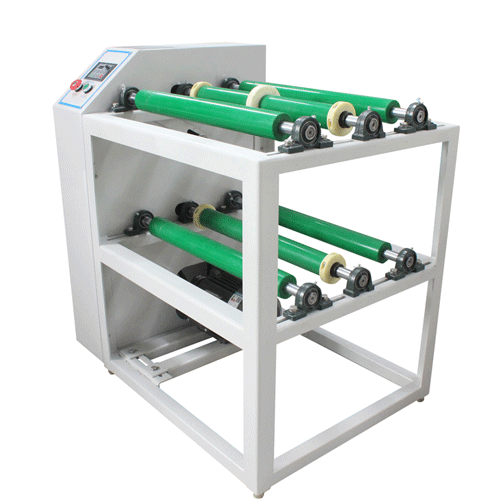
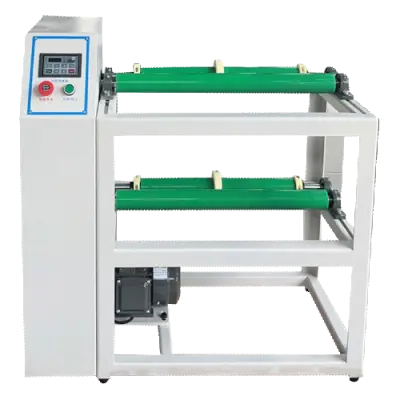
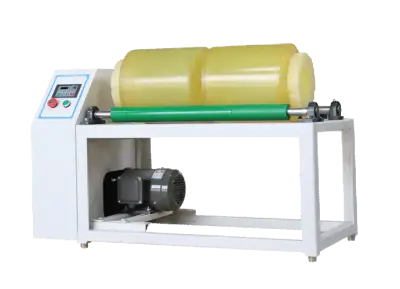
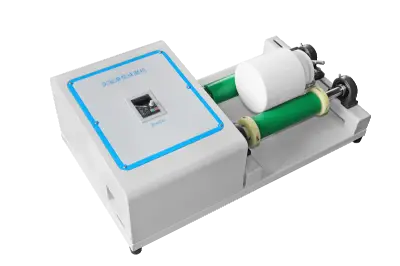
Jar mills are a family of laboratory grinding equipment rather than a single fixed design. The common roller jar mill supports one or more jars on rotating rollers; the jars turn as the rollers move beneath them. A multi-station version extends this concept to several jar positions. Other laboratory mills use different motions, such as planetary rotation, to deliver higher energy or different grinding kinetics. The jar mill with 8 working stations is a multi-jar laboratory configuration, and its exact drive arrangement, speed range, and jar capacity should be confirmed from the product documentation.
Roller-Type Multi-Jar Mills
In a roller-type jar mill, the jar rests on rollers and is rotated by friction. This design is mechanically straightforward and allows jars to be changed without complex tooling. The grinding action is usually gentler than in high-energy planetary mills, which makes roller jar mills useful for moderate size reduction, homogenization, and methods that do not require very high impact energy. With eight stations, the same frame and drive can serve several jars, so the laboratory gains throughput without buying eight separate machines.
The roller approach also places importance on jar diameter and weight. A large, heavy jar needs a suitable station and drive; a small jar may need adapters or a different roller spacing. The jar surface must be clean and in good condition so that rotation is smooth. If a jar slips or vibrates, the grinding result can become inconsistent. For this reason, operators should check that each jar is seated correctly before starting a run.
Planetary and Other Laboratory Alternatives
Planetary ball mills use a different motion: jars rotate around a central axis while also spinning on their own axes. This produces higher energy and can reach finer particles faster, but it also generates more heat and may not be necessary for every sample. A multi-station roller jar mill is often chosen when the priority is parallel processing of moderate samples rather than maximum energy. The right choice depends on the target particle size, sample hardness, available time, and sensitivity to heat.
Jars, Media, and Sample Contact Parts
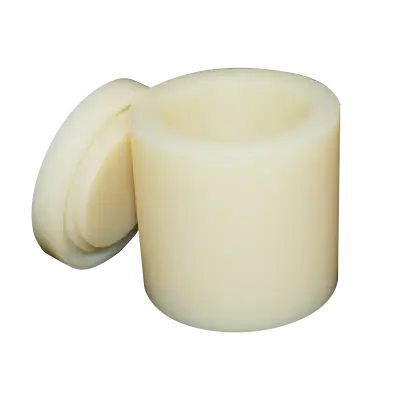
The jar and media are the parts that touch the sample, so they deserve close attention. Common jar materials include stainless steel, agate, zirconia, alumina, tungsten carbide, nylon, PTFE, and polyurethane. Each has a different balance of hardness, wear resistance, chemical inertness, and cost. A hard ceramic jar may be appropriate for abrasive minerals, while a polymer jar may be preferred when metal contamination must be avoided. The media should be selected with the same logic: compatibility first, then size and density to suit the feed.
Jar volume, wall thickness, and lid design affect both grinding performance and handling. A jar that is too large for the sample may waste media and energy; a jar that is too small may not provide enough room for media movement. The lid and sealing arrangement should prevent leakage during rotation. Cleaning is also part of the selection: a simple jar geometry and smooth inner surface make it easier to recover material and avoid carryover between samples.
Key Performance Indicators and Selection Points
When comparing jar mills, it is tempting to focus only on the number of stations. The number matters, but it is not the whole story. A useful evaluation looks at the working volume per jar, the usable speed range, the drive capacity, the control system, and the effort required to clean and maintain the machine. The goal is not the largest machine on paper; it is the machine that matches the laboratory's sample size, target fineness, and workflow.
Capacity, Working Volume, and Station Use
Capacity should be read carefully. A jar mill may have eight stations, but the practical batch size depends on the volume of each jar and the amount of media that must be loaded. The sample load is usually a fraction of the jar volume because the media needs space to move. Users should estimate the mass of sample they need per test, then check whether the jar size and number of stations can deliver that mass without overfilling. If the work involves large samples, fewer large jars may be more useful than many small jars.
Station utilization is another practical point. Not every run needs all eight stations, but the machine should be comfortable with the loads that will actually be used. A laboratory that mostly runs one or two samples may not need eight stations, while a laboratory that prepares many replicates will benefit from the parallel capacity. The selection should also consider future growth: a multi-station mill can absorb more work without a second purchase, provided the jar size and drive capacity are appropriate.
Particle Size Control and Reproducibility
Particle size control comes from the combination of speed, time, media, and sample load. A well-chosen jar mill should allow these variables to be set consistently and repeated from run to run. Reproducibility is not only a machine property; it also depends on sample preparation, jar filling, and operator technique. For that reason, laboratories should establish a written procedure for each material, including the jar type, media charge, sample mass, rotation setting, and run time.
It is also important to define what fine means for the application. A method that only needs to break agglomerates is different from one that needs submicron particles. Multi-station jar mills are often used for intermediate and fine grinding rather than as a guarantee of a specific particle size. The final result should be verified with an appropriate particle-size measurement method, and the grinding recipe should be adjusted if the distribution is too broad or the top size is too large.
Energy, Automation, and Maintenance
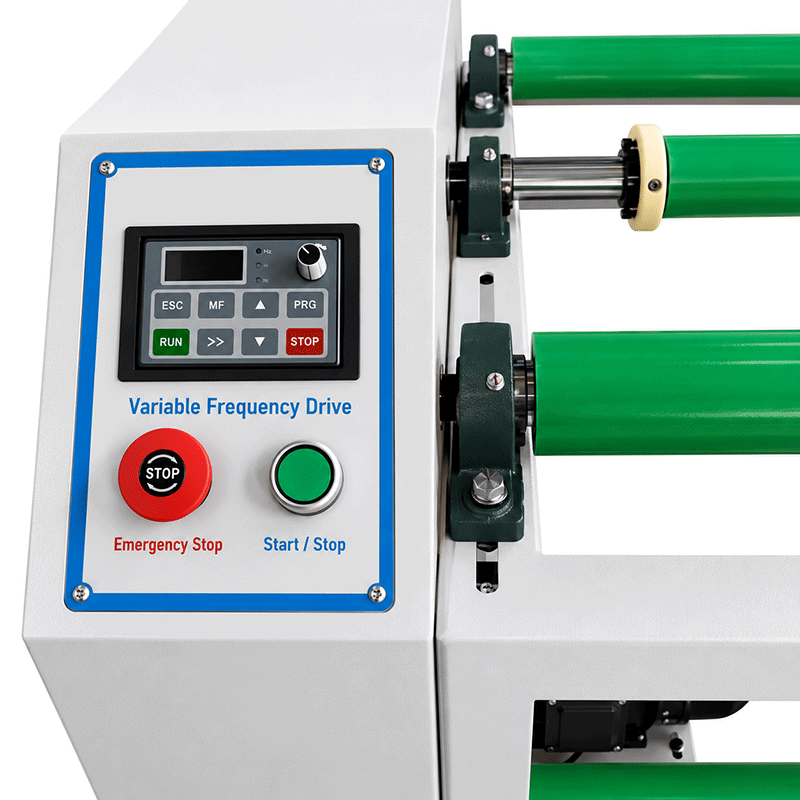
Energy use in a jar mill is influenced by the moving mass of jars and media, the rotation speed, and the run time. A machine that is oversized for the sample can waste energy, while an undersized machine may run longer and wear faster. Good practice is to choose a mill that can handle the intended jar load at a reasonable speed and to avoid running empty stations unnecessarily. If the mill has programmable controls, those features can improve repeatability by storing time and speed settings for routine methods.
Maintenance is usually simple in concept but important in practice. Rollers, bearings, seals, and drive components should be kept clean and checked for wear. Jars should be inspected for cracks, chips, or lid damage before each use. Media should be checked for contamination and replaced when worn. A clean machine and clean jars reduce the risk of cross-contamination and help maintain consistent grinding performance. The supplier's manual should be followed for lubrication, belt tension, and any model-specific service intervals.
Applications and Selection Advice
Multi-station jar mills are used in laboratories that work with minerals, ceramics, glass, cement, chemicals, pharmaceuticals, food materials, soils, and other brittle solids. They are common in sample preparation, quality control, materials research, and teaching. In these settings, the mill is often part of a workflow that includes weighing, drying, sieving, and analysis. The jar mill's role is to produce a representative, homogeneous powder that is fine enough for the next step without introducing unacceptable contamination.
Matching the Mill to the Workflow
The first selection question is sample size. If the laboratory routinely prepares small samples, a multi-station mill with smaller jars may be ideal because it allows many samples to run at once. If larger samples are common, a mill with fewer but larger jars may be more practical. The second question is target fineness. A moderate roller mill may be sufficient for coarse to fine grinding, while a higher-energy mill may be needed for very fine work. The third question is contamination control: the jar and media material should be chosen to protect the sample chemistry.
Users should also consider the operating environment. A multi-station mill needs bench space, a stable power supply, and enough clearance for loading and unloading jars. Noise and vibration should be acceptable for the room. If the laboratory runs many different methods, programmable controls and clear documentation are valuable. If the laboratory is teaching students, simple loading and safe operation may matter more than advanced programming. In all cases, the product documentation should be checked for the actual jar size, speed range, and control features rather than assumed from the station count alone.
Practical Operating and Safety Notes
Before a run, check that each jar is clean, dry, and free of damage. Add the sample and media according to the established method, seal the lid firmly, and place the jar correctly in its station. Confirm that the jar is seated and that the load is balanced. Close any guards before starting the mill, and do not open the machine while it is moving. After the run, allow the jar to settle before opening it, and handle fine powders with appropriate dust protection.
Record the parameters for every batch: jar position, jar material, media type and size, sample mass, speed, and run time. These records make it easier to repeat a successful result and to investigate a batch that does not meet specification. If a jar shows leakage, unusual noise, or vibration, stop the run and inspect the setup. Safety and consistency both depend on good housekeeping and a willingness to correct a poor jar load before continuing.
Frequently Asked Questions
Does every station need to be loaded?
Not necessarily. Many laboratories run fewer than eight jars when the workload is small. However, the load should be arranged so that the machine runs smoothly, and any empty-station rules in the manual should be followed. The machine's drive and balancing requirements are model-specific.
Can different jars be used on the same run?
In principle, multiple jars can be used at once, but they should be compatible with the stations and should not create an unbalanced or unsafe load. Different jar materials or sizes may change the grinding result, so comparisons should be designed carefully. Check the supplier's guidance for approved jar types and loading limits.
How do I choose the jar and media material?
Start with sample chemistry and contamination risk. If metal contamination is unacceptable, choose a non-metal jar and media that are hard enough for the sample. If the sample is abrasive, choose a wear-resistant material. Then consider the target particle size and the energy needed. The jar and media should be treated as a system rather than selected independently.
How long should a sample be ground?
There is no universal time. The correct time depends on the material, feed size, target fineness, jar volume, media charge, and rotation speed. A sensible approach is to run a small trial, check the particle size, and adjust the time in steps. This avoids overgrinding and helps build a reproducible method.
What maintenance matters most?
Keep the rollers and jar surfaces clean, inspect jars for damage, check media for wear, and follow the manual for drive maintenance. A simple daily check of jar condition and station cleanliness prevents many common problems.
Where to Learn More
For the specific configuration, available jars, and current product information, see the Jar mill with 8 working station page. Buyers should confirm jar volume, speed range, control options, and recommended media with the supplier before selecting a unit for a particular method.
Related Products
Get In Touch
Our professional team will reply to you within one business day. Please feel free to contact us!