

What Is a Lab Vibration Ball Mill? A Lab Grinding Device for Rapid Fine Powder
Quick Definition of a Lab Vibration Ball Mill
From a practical standpoint, a lab vibration ball mill is a laboratory-scale grinding machine that uses high-frequency vibration to shake a sealed grinding jar and its grinding media. Instead of rotating a large drum, the mill transfers oscillatory mechanical energy directly to the jar, causing the media inside to impact and rub the sample. The result is a fast, compact, and reproducible method for reducing small batches of solid material to fine powder. Laboratories use it for sample preparation, materials research, quality control, and small-scale powder production.
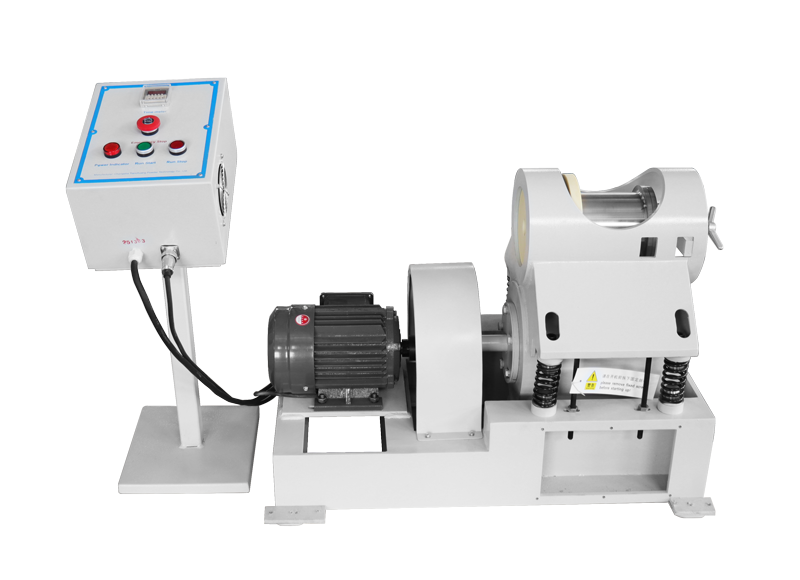
The name describes both the motion and the mechanism. “Vibration” refers to the rapid back-and-forth or circular oscillation of the jar holder, while “ball mill” indicates that loose grinding media—usually spheres—do the comminution work. Because the jar is closed, the process is contained and dust is limited. This is useful when a limited amount of material must be processed quickly and with minimal loss. A representative model is the lab vibration ball mill listed on the TENCAN product page.
How a Lab Vibration Ball Mill Works
The basic function of a lab vibration ball mill is to convert a coarse or granular sample into a fine, homogeneous powder. The sample and grinding media are placed in a jar. When the machine runs, an electric motor drives an eccentric weight or vibration exciter. The resulting oscillation is transmitted through springs or elastic mounts to the jar holder. Inside the jar, the media are thrown against the walls and against one another, while particles are caught between them and fractured.
Unlike a conventional rotating ball mill, which relies on media being lifted and cascading under gravity, a vibration mill uses high-frequency, small-amplitude motion. The media do not need to fall from a great height. They continuously collide, shear, and rub the sample at a rapid rate. This makes grinding intensive for small samples. Repeated impacts create cracks along grain boundaries and through particles. Friction and shear refine the particles further. As grinding continues, particle size decreases, specific surface area increases, and the distribution can become narrower if the process is controlled.
The main process parameters are vibration frequency, amplitude, grinding time, media size and density, jar fill ratio, and the properties of the sample. Frequency and amplitude determine how energetic and frequent the collisions are. Higher energy usually accelerates size reduction, but it can also increase heat, wear, and contamination. Grinding time has a similar effect: longer grinding generally produces finer powder, but after a point particles may agglomerate or the jar may become too hot. Media size and density also matter. Larger, denser balls carry more momentum and break harder particles, while smaller balls provide more contact points for fine grinding.
Core Components and Mechanical Design
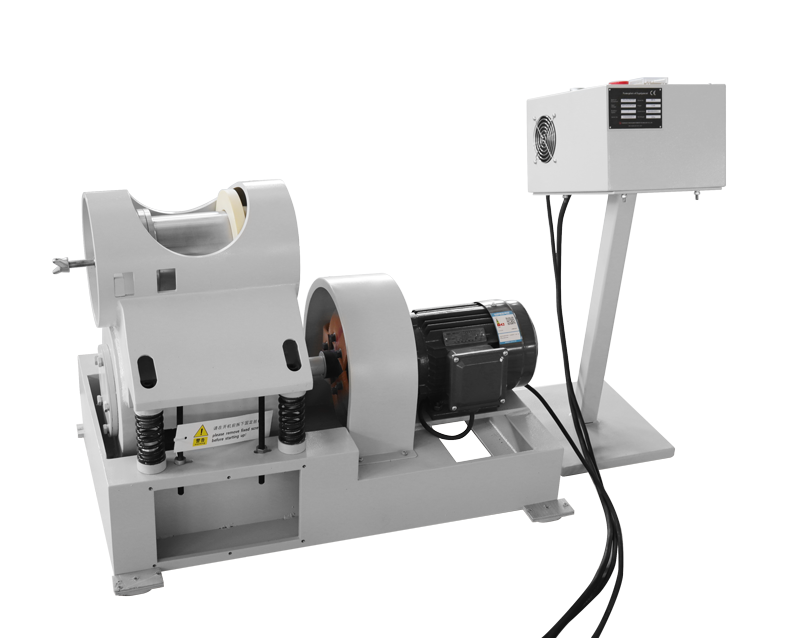
A typical lab vibration ball mill has four main functional groups. The first is the grinding chamber: one or more jars plus the grinding media. The jar must withstand repeated impact, abrasion, and sometimes chemical attack. Common jar materials include stainless steel, agate, zirconia, corundum, tungsten carbide, nylon, and PTFE. Each offers a different balance of hardness, wear resistance, density, and contamination risk. Stainless steel is durable but can introduce iron contamination. Agate and zirconia are often chosen for contamination-sensitive work. Tungsten carbide is extremely hard and dense, making it useful for very hard or brittle samples.
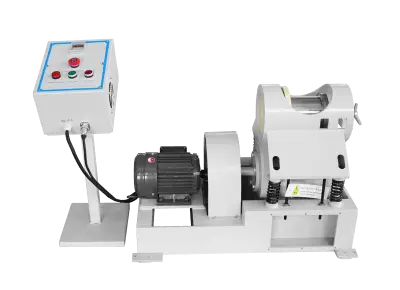
The second group is the vibration drive. It usually consists of an electric motor, an eccentric mass or unbalanced rotor, and springs or flexible supports. The motor spins the eccentric mass, creating an oscillating force. The springs isolate vibration from the base and allow the jar holder to move with the required amplitude. A well-designed drive runs smoothly, limits noise, and keeps the jar motion consistent from batch to batch. The third group is the clamping and safety system. Because the jar moves rapidly, it must be securely fixed. Most laboratory models use a mechanical clamp, screw-down lid, or quick-release locking device. An enclosure or interlock can prevent operation when the jar is not properly secured.
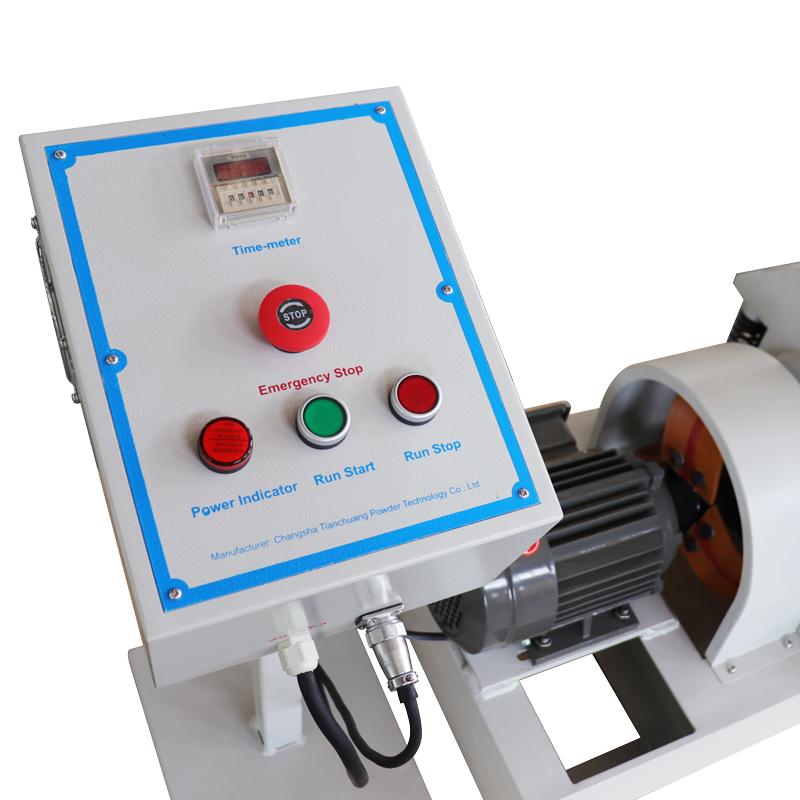
The fourth group is the control system. Basic models may offer a timer and an on/off switch. More advanced models may include digital programming, adjustable frequency, multiple grinding cycles, and stored methods. Programmability improves reproducibility across operators and experiments. It also allows gentle pre-grinding followed by high-energy fine grinding, which can help with heat-sensitive materials.
Main Types and Configurations
Lab vibration ball mills differ in jar number, size, drive power, and material options. Understanding these differences helps users select the right model.
Single-Jar and Multi-Jar Models
A single-jar mill holds one grinding jar. It is compact, easy to load, and suitable when only one sample is processed at a time or when the sample is valuable and must be tracked individually. A multi-jar model holds two or more jars and can grind several samples simultaneously under the same conditions. This improves throughput and comparability, which is useful for routine quality control and comparative studies.
Benchtop and Heavy-Duty Designs
Benchtop models are intended for small sample volumes and general laboratory use. They are relatively light and easy to place on a standard bench. Heavy-duty vibration ball mills use stronger frames, larger motors, and more robust clamps to handle larger jars, denser media, and longer cycles. They may be used for pilot-scale work or for materials that require high energy input.
Dry and Wet Grinding
Vibration mills can perform dry or wet grinding. Dry grinding is common for geological samples, ceramics, minerals, and powders that must remain free-flowing. Wet grinding uses a liquid such as water or ethanol to form a slurry. The liquid disperses particles, reduces dust, and can limit temperature rise. However, wet grinding requires a compatible jar, and the slurry must be dried or filtered afterward. The choice depends on the sample, the target particle size, and the downstream analysis.
Jar and Media Materials
Because contamination is a major concern in trace analysis and advanced materials, many mills offer interchangeable jars and media. A laboratory may keep stainless steel jars for general grinding, zirconia jars for contamination-sensitive work, and agate jars for soft or medium-hard samples. The media should generally match the jar material or be compatible with it. Mixing materials is possible, but it changes wear behavior and contamination risk.
Key Performance Indicators and Selection Points
When choosing a lab vibration ball mill, evaluate several performance indicators rather than a single specification. Exact values vary by model, so compare the product datasheet and application notes for the specific machine.
Capacity and Jar Volume
Capacity is expressed as jar volume, sample mass, or both. A larger jar accepts more sample and media, which can increase throughput, but it also requires a stronger drive and a heavier machine. The practical capacity is limited by the need to leave free space for media movement. Overfilling reduces efficiency and can cause overheating. Underfilling wastes capacity and may cause excessive media-to-media collisions.
Final Fineness and Particle Size Distribution
Final fineness depends on the sample’s initial size, hardness, brittleness, and moisture, as well as the mill’s energy input and grinding time. A vibration ball mill can produce fine powders in the micrometer range for many materials, and some samples can be reduced further with extended grinding. The goal is not always the smallest particle. Sometimes a narrow distribution or a specific median size is more important. Overgrinding can create amorphous layers, oxidation, or re-agglomeration.
Throughput and Grinding Time
Throughput describes how much sample can be processed in a given time. In a laboratory, it often means how many samples can be prepared per day. Short grinding times are convenient but may not reach the required fineness. Long times improve fineness but reduce batch count and increase wear. A programmable mill helps by allowing precise, repeatable cycles. For comparative studies, consistent grinding time is more important than the shortest possible time.
Energy, Noise, and Automation
Energy use in a laboratory mill is usually modest, but efficient drive systems reduce operating cost. Noise comes from the motor, the moving mechanism, and collisions inside the jar. A sturdy frame, spring isolation, and sound-reducing enclosure can improve comfort. Automation affects reproducibility. A digital timer, adjustable frequency, and stored programs allow users to repeat a method exactly. Even a simple timer removes operator variability.
Maintenance, Wear Parts, and Safety
Main wear parts include the jar, grinding media, seals, and vibration mechanism. Jars and media should be inspected for cracks, chipping, and excessive wear. Worn media lose efficiency and can contaminate samples. The drive may require periodic inspection of springs, fasteners, and bearings. Safety features protect the operator and the sample. A securely clamped jar, a well-sealed lid, and an enclosure are essential. For hazardous or reactive materials, containment and compatible jar materials are necessary.
Applications and Selection Advice
Lab vibration ball mills are used in geology, mining, materials science, environmental analysis, pharmaceuticals, cement research, and metallurgy. They prepare rock, ore, mineral, ceramic, glass, metal oxide, battery, soil, sediment, sludge, clinker, and alloy samples for analysis or further processing. In analytical laboratories, they help produce representative powders for X-ray fluorescence, X-ray diffraction, atomic absorption, and other methods. In materials research, they support powder synthesis, composite preparation, and particle size reduction.
Selection advice depends on the user’s priorities. A teaching laboratory or small research group may prefer a compact benchtop model with one jar and simple controls. A busy analytical laboratory may need a multi-jar or programmable unit for consistent sample throughput. A materials group working with hard ceramics or alloys may need a heavy-duty model and tungsten carbide or zirconia jars. A laboratory analyzing trace elements should prioritize contamination control and choose agate, zirconia, or PTFE where appropriate. For any application, confirm that the jar and media are compatible with the sample and the intended analysis. Testing a small batch before scaling up is always wise.
Operating Tips and Common Questions
Good practice begins with representative sampling. The mill can only grind what is placed in the jar, so the sample must be collected and divided properly. If the sample is too large, pre-crush it to a size that fits the mill. The jar should be clean and dry unless wet grinding is intended. The lid must be sealed tightly to prevent leakage and dust. Grinding time should be determined experimentally. Start with a short run, inspect the powder, and increase the time gradually. This avoids overgrinding and saves energy. If the sample becomes warm, use shorter cycles with cooling intervals or a lower frequency.
One common question is whether a lab vibration ball mill is the same as a planetary ball mill. They are related but not identical. A planetary mill uses rotating jars mounted on a rotating sun wheel, creating centrifugal and Coriolis forces. A vibration mill uses an oscillating jar holder. Both can produce fine powders, but their motion, energy transfer, and optimum parameters differ. A vibration mill is often compact and effective for small samples, while a planetary mill may offer different energy levels and jar configurations.
Another question is whether a vibration mill can produce nanoparticles. Some models and setups can reduce certain materials to very fine sizes, but reaching true nanoscale powder usually requires extended grinding, small media, and careful control of agglomeration. Not every material behaves the same way. Hard and brittle materials grind more readily than soft, ductile, or fibrous ones. Users should define a target size range and test the process rather than assume a result. A third question concerns wet versus dry grinding. Dry grinding is simpler because no liquid is needed. Wet grinding improves dispersion and reduces dust but adds a drying step. If the sample is hygroscopic or reactive, wet grinding may be preferable. For product-specific options, the lab vibration ball mill page can be consulted.
Conclusion
A lab vibration ball mill is a compact and effective grinding device for fast, reproducible fine powder preparation. It works by transmitting high-frequency vibration to a sealed jar, where grinding media impact and shear the sample. The key selection factors are jar volume, final fineness, throughput, automation, maintenance, and contamination control. By understanding how the mill works and how its parameters affect the powder, users can choose a model that fits their samples and workflows. Whether the goal is analytical sample preparation, materials research, or quality control, a vibration ball mill can be a valuable addition to the laboratory. For detailed specifications and available options, refer to the lab vibration ball mill product page.
Related Products
Get In Touch
Our professional team will reply to you within one business day. Please feel free to contact us!