

What Is a Lab Vibration Ball Mill? A Grinding Device for Ultrafine Lab Samples
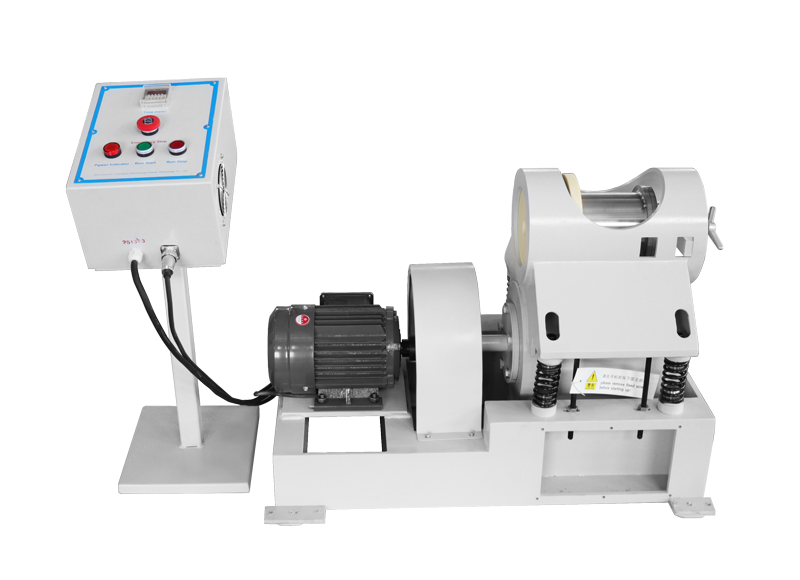
From a practical standpoint, a lab vibration ball mill is a compact grinding machine used in laboratories to reduce small batches of solid material to fine or ultrafine powder. It does this by shaking a closed grinding jar, usually together with grinding balls, at high frequency, so the sample is repeatedly struck, rubbed, and sheared. The result is a fast, contained, and repeatable way to prepare samples for analysis, formulation, or further research. Unlike a conventional rotary ball mill, which turns a large drum slowly, a vibration ball mill uses an oscillating drive. That makes it relevant when small sample volume, short grinding time, and contamination control matter more than tonnage.
What Does a Lab Vibration Ball Mill Do?
At its simplest, the machine converts a coarse or granular laboratory sample into a finer powder inside a sealed jar. The jar is clamped to a vibrating frame, and the frame moves rapidly in a controlled pattern. Because the jar moves, the grinding media inside it do not simply rest on the sample. They collide with the powder and with each other, while friction along the jar wall adds a shearing action. The combination of impact and friction is what reduces particle size.
This makes the equipment useful for preparing representative samples before chemical analysis, particle size measurement, spectroscopy, X-ray diffraction, or other laboratory tests. It is also used in early-stage formulation work, where a researcher needs a small amount of milled material without setting up a full production line. The closed jar limits dust and sample loss, which is important when the available material is expensive, hazardous, or difficult to obtain.
Users often ask whether a vibration ball mill is simply a small ball mill. In one sense it is, because it uses balls as grinding media. In another sense it is different, because the driving motion is vibration rather than slow rotation. That change in motion gives the device a distinct operating profile: compact size, energetic agitation, and a strong dependence on jar volume, media size, and running time.
How Vibration Grinding Works
From Coarse Particles to Fine Powder
Grinding begins when the drive system sets the jar into rapid oscillation. The grinding balls gain kinetic energy and repeatedly hit the sample. Each impact can fracture brittle particles, while rolling and sliding contact gradually wear down the edges and surfaces of the particles. In many laboratory applications, the initial feed is already crushed to a manageable size, so the vibration mill functions as a fine-grinding or homogenizing step rather than as a primary crusher.
The final particle size depends on a balance between breakage and re-agglomeration. Smaller particles have a greater tendency to stick together, especially in dry grinding, and the energy supplied by the mill may eventually be used to break apart clusters rather than individual crystals. For this reason, a longer grinding time does not always produce a proportionally finer powder. At some point, the particle size distribution reaches a practical limit, and further running may add heat or contamination without improving the result.
Frequency, Amplitude, and Grinding Media
The vibration frequency and amplitude determine how energetically the media move. Higher frequency generally means more impacts per unit time, while amplitude influences the travel distance of the media and the force of each collision. The optimum combination is not universal. A dense, hard sample may require a more energetic setting, while a fragile or heat-sensitive material may need gentler conditions and shorter intervals.
Grinding media size, density, and shape are equally important. Larger or denser balls carry more momentum and can break tougher particles, but they also create more wear and may leave a broader particle size distribution. Smaller balls provide more contact points and can be better for fine grinding, although they may lack the energy to break large feed particles. The media material must also be compatible with the sample. A jar and ball set that is harder than the sample reduces contamination, while a softer set may be chosen when the sample is sensitive to metallic iron or other trace elements.
Heat, Contamination, and Sample Loss
Vibration grinding is energetic, so heat is a normal consideration. The jar, media, and sample can warm up during prolonged operation. For most routine laboratory work this is manageable through short grinding cycles with pauses. For temperature-sensitive materials, users should consider the thermal stability of the sample, the heat capacity of the jar, and whether a cooled or intermittent process is needed. The key point is that grinding conditions should be tested on a small scale before a long run is committed.
Contamination is another practical limit. Wear can come from the jar, the media, or the sample itself. Choosing a jar and ball material that matches the sample hardness and analytical requirements is therefore part of method development, not an afterthought. Sample loss is usually low in a closed jar, but fine powder can coat the walls and media, so recovery and cleaning procedures should be included in the test plan.
Core Components and Their Functions
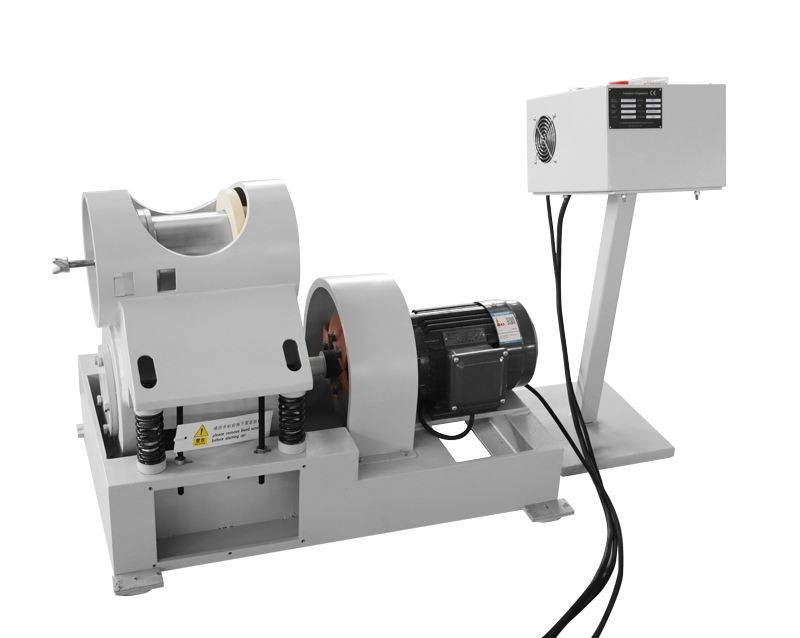
A laboratory vibration ball mill is built around a small number of functional systems. Although details differ between models, the same basic logic applies: create controlled vibration, hold the jar securely, and let the operator manage time and operating conditions.
- Vibrating drive and frame: The motor and eccentric or oscillating mechanism generate the rapid movement that agitates the grinding media. The frame transfers this motion to the jar without allowing it to work loose.
- Grinding jar: The jar contains the sample and media. Jar material, volume, and sealing quality affect contamination, sample loss, and the achievable grinding energy.
- Grinding media: Balls or other media provide the impact and friction. Their size, density, and material should be selected for the feed size and the required fineness.
- Clamping system: A secure clamp keeps the jar in position during vibration. Poor clamping can reduce efficiency, increase noise, or create a safety risk.
- Controls and timer: Simple timers or programmable controls allow repeatable runs. For method development, the ability to set and record time and operating mode is valuable.
- Safety enclosure or guard: A guard protects the operator if a jar, lid, or clamp fails. Laboratory units should be operated according to the manufacturer's instructions and local safety rules.
The grinding jar is often the most influential component in practice. A jar that is too large for the sample may waste energy on empty space, while an undersized jar may not provide enough room for media movement. The jar material also matters: agate, zirconia, stainless steel, tungsten carbide, and other materials are chosen for different combinations of hardness, wear resistance, and chemical compatibility. The TENCAN lab vibration ball mill product page is the appropriate place to confirm the available jar and media options for the current configuration.
Types and Configuration Choices
Within the laboratory vibration ball mill category, configuration choices usually matter more than a long list of model names. One important choice is jar material. Hard ceramic jars such as agate, corundum, or zirconia are common when metallic contamination must be avoided. Stainless steel or tungsten carbide jars may be selected when toughness and density are priorities, provided the sample chemistry is compatible. The right choice depends on the sample, the analytical method, and the acceptable level of trace contamination.
Another choice is the number and size of grinding jars. A single-jar unit is straightforward and is often used for method development or small batches. A multiple-jar arrangement can improve throughput or allow several samples to be processed under similar conditions, but it also requires more attention to balancing, clamping, and cross-contamination control. Bench space, available power, and the number of samples per day should all be considered.
A third consideration is the control system. Basic units may offer a timer and simple start-stop operation. More advanced configurations may provide programmable settings or digital displays. For research groups that need to compare results over time, reproducibility is more valuable than a large feature list. The operator should be able to return to the same jar, media, fill level, and time setting and obtain a comparable result.
Key Performance Indicators and Selection Criteria
Capacity and Sample Volume
Capacity should be assessed in terms of useful sample volume, not only the nominal jar volume. A jar needs enough free space for the media to move, so the practical sample load is usually well below the jar's total capacity. Buyers should ask how much material can be processed in a typical run and whether the resulting batch size matches the analytical method. For trace analysis or expensive materials, small batches may be an advantage; for routine screening, a larger usable load can save time.
Particle Size and Reproducibility
The target particle size and acceptable particle size distribution are central selection criteria. A vibration mill is often chosen for fine grinding, but the achievable result depends on the feed, media, jar, time, and material behavior. Users should test with their own sample whenever possible. Reproducibility is equally important: the same procedure should give a similar distribution, not merely a visually fine powder. Recording time, media charge, jar type, and sample mass is a simple way to make results comparable.
Material Compatibility and Contamination
Every grinding setup introduces some wear. The question is whether that wear matters for the application. In geological or ceramic analysis, iron contamination from a steel jar can be unacceptable, while in other work a tough steel system may be the most practical choice. Users should compare the hardness and chemistry of the sample with the jar and media. They should also consider cleaning: a jar that is difficult to clean can carry residue from one sample to the next.
Energy, Noise, and Maintenance
Vibration grinding can be noisy and can transmit vibration to the bench. Laboratory placement, a stable surface, and appropriate hearing protection may be needed depending on the unit and the working environment. Energy use is usually modest compared with production-scale mills, but the overall cost of ownership includes media wear, jar replacement, and operator time. Maintenance is simplest when the jar and clamp are easy to access, the controls are clear, and spare parts are available.
Applications and Selection Advice
Typical applications include sample preparation for mining and geology, ceramics and glass research, battery and energy materials, catalysts, pigments, pharmaceuticals, food science, and general materials research. In each case, the mill is valued for its ability to handle small amounts of material in a contained environment and to produce a fine, relatively uniform powder. It is not intended to replace a production mill, but it can provide the early-stage data needed to decide whether a larger grinding route is worth pursuing.
For a first-time buyer, the selection process should start with the sample: its initial size, hardness, brittleness, moisture content, and sensitivity to heat or contamination. Next comes the analytical requirement: how fine the powder must be and how reproducible the result must be. Only then should the buyer compare jar materials, media options, control features, and bench space. A practical trial with a small representative sample is often more informative than a long specification sheet. The lab vibration ball mill should be matched to the method, not selected in isolation.
Frequently Asked Questions
Is a vibration ball mill the same as a planetary ball mill?
No. Both use balls and jars, but the motion is different. A planetary mill combines rotation of the jar around its own axis with rotation around a central axis. A vibration mill oscillates or vibrates the jar. The best choice depends on the sample, the required energy, and the available jar format.
Can it grind wet and dry samples?
Many laboratory ball mills can be used for dry or wet grinding, but the jar, media, and sample must be compatible. Wet grinding can reduce dust and help disperse fine particles, while dry grinding is simpler for some analytical workflows. The manufacturer's guidance should be followed for the specific jar and material.
Why does longer grinding not always make the powder finer?
As particles become smaller, they tend to agglomerate and coat the media and jar. The mill then spends energy breaking clusters or generating heat rather than reducing primary particles. A shorter, optimized cycle often gives a better result than a very long run.
What should be checked before each run?
Check the jar for cracks or wear, confirm that the lid seals correctly, use the recommended media charge, and make sure the jar is clamped securely. Never operate the mill without the guard or according to the manufacturer's safety instructions. After the run, allow the jar to cool if necessary before opening it.
Further Reading
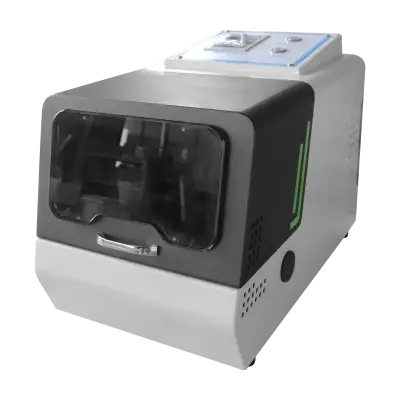
For current product details, available jars, and configuration information, see the TENCAN lab vibration ball mill page. Specifications and options should always be confirmed with the supplier before purchase.
Related Products
Get In Touch
Our professional team will reply to you within one business day. Please feel free to contact us!