
Lab Vibration Ball Mill: How It Grinds Samples Fast Without a Big Footprint

Walk into a busy sample-prep lab and you will see the usual lineup: a jaw crusher, a rotary mill, a sieve shaker, and a bench that looks like it has survived three decades of projects. The lab vibration ball mill is the compact specialist in that lineup. It does not spin a big drum. It shakes a small grinding chamber filled with media and sample at high frequency, so the grinding balls hammer and rub the material into finer particles. If you are weighing a purchase, trying to get more from an existing unit, or wondering why anyone would vibrate a chamber instead of rotating one, this guide is for you. We will look at the working principle, practical uses, buying checks, and the habits that keep a small mill productive.
What a lab vibration ball mill actually does
A conventional ball mill is easy to picture: a horizontal drum turns, the media tumble, and gravity does much of the work. A vibration mill takes another route. The grinding chamber sits in a frame and is driven by an unbalanced motor or an eccentric mechanism, so the whole chamber moves rapidly instead of rotating in a large circle. The amplitude is small and the frequency is high. That combination keeps the media energetic in a compact space.
In a laboratory version, the chamber is small enough to sit on a bench or a sturdy stand. You load a sample, add grinding media, set the running time, and let the vibration do the work. Because the chamber itself moves, the media do not need a tall drop height. They collide with one another, with the chamber wall, and with the sample at a rapid rate. The result is a dense mix of impact and friction, which is exactly what you want for fine grinding and intimate mixing.
The motion: small amplitude, high frequency
Small amplitude does not mean gentle. It means the chamber travels a short distance but reverses direction many times. Imagine a bowl of marbles on a tray that is shaken quickly. The marbles do not need to be lifted high to bounce off each other; they just need to be kept in motion. In a vibration mill, the media behave in a similar way, but with far more energy and in a confined chamber. The high frequency keeps the ball bed active, while the small amplitude keeps the machine compact.
This is also why a vibration mill can feel different from a rotary mill in use. The sound is more of a rapid buzz than a steady tumble, and the machine wants a solid floor or bench. The grinding action starts quickly, so short runs are normal. For lab work, that can be a real advantage when you have several samples to process and not much bench space.
Why that motion grinds effectively
Grinding happens when energy is transferred from the media to the sample. In a vibration mill, that transfer is frequent. The balls strike the particles, rub against them, and create fresh surfaces. Brittle materials often break along cracks and grain boundaries; softer or tougher materials may deform first and then break down more slowly. Because the chamber is closed, fine dust stays contained, and the atmosphere inside can be controlled if the setup allows it.
The same action is good for mixing. When you mill a powder, you are not just making particles smaller; you are also blending ingredients, breaking up agglomerates, and changing the surface chemistry. That is why vibration grinding shows up in materials science, mineral processing, ceramics, catalysts, battery research, and pharmaceutical sample prep. It is not a magic bullet for every sticky or heat-sensitive material, but for many laboratory samples it is a practical way to get from coarse powder to a usable fine powder without a large production machine.
Where a vibration ball mill earns its place
The first place to look is sample preparation. A lab may receive rocks, clinker, ceramics, catalysts, pigments, or small batches of a new formulation. A vibration mill can reduce those samples to a finer powder for analysis, testing, or further processing. It is also useful when the sample amount is small and a large mill would simply waste material. In a research setting, that matters more than raw throughput.
Samples that benefit most
Brittle and semi-brittle materials are the natural fit: ores, minerals, glass, ceramics, cement clinker, slag, catalysts, and many inorganic pigments. Crystalline materials often respond well because the repeated impacts open fresh fracture surfaces. Composite samples can also be handled, though you should expect the soft and hard components to behave differently. Fibrous, gummy, or very heat-sensitive materials need more care. They may smear, cake, or degrade if the run is too long or the chamber gets too warm.
Moisture is another practical factor. A sample that is damp can stick to the media and the chamber wall, which reduces grinding efficiency and makes cleaning harder. If your material is hygroscopic or sensitive to air, talk to the supplier about a sealed setup and a suitable loading procedure before you run it. A small test batch is always smarter than a full batch when you are unsure.
Jobs beyond simple size reduction
Vibration ball mills are not only particle-size tools. They can homogenize small batches, break up agglomerates, blend powders, and support mechanochemical reactions where repeated impact creates fresh surfaces and defects. In materials research, that can change reactivity or help form new phases. In quality control, the same action can prepare a consistent sample for X-ray diffraction, spectroscopy, or chemical analysis. The key is to treat the mill as part of a process, not as a stand-alone box that magically makes powder fine.
What to check before you choose one
Buying a lab mill is mostly about fit. The machine must suit your sample, your target fineness, your batch size, and your lab environment. A bargain mill that contaminates every sample is not a bargain. A large chamber that cannot be filled properly is not extra capacity. Before you compare prices, write down what you actually need the mill to do.
Chamber and media compatibility
The chamber and media should be harder than your sample and chemically compatible with it. Agate, zirconia, alumina, stainless steel, and tungsten carbide are common choices for different jobs, but each has trade-offs in wear, contamination, and cost. If you are preparing samples for trace analysis, contamination is a serious issue. A chamber that wears quickly can add iron, zirconium, or other elements to your powder. Ask what the wetted parts are made from and how the media are specified.
Media size is another decision. Larger media carry more impact energy and break coarse particles faster. Smaller media create more contact points and can help with fine grinding, but they may not have enough mass to break tough feed material. In practice, many labs use a balanced mix or run a short coarse stage followed by a finer stage. The right choice depends on the feed size, the target size, and how much contamination you can tolerate.
Throughput and footprint
Lab vibration mills are usually cycle machines, not continuous production units. You load a batch, run it, discharge it, and clean up. That makes the usable batch size more important than the chamber volume alone. A chamber that is too full will not allow the media to move properly; a chamber that is too empty wastes energy and may wear unevenly. Ask for a realistic working batch range for your material, not just a maximum figure.
Footprint matters too. These mills are compact, but they need a stable bench or floor position and enough clearance for loading and cleaning. Check the electrical supply, the noise level, and the space around the machine. If the mill will sit in a shared lab, noise and vibration isolation may matter as much as grinding performance.
Heat, noise, and contamination
Vibration grinding puts energy into the sample, and some of that energy becomes heat. Heat-sensitive materials may need short cycles, cooling pauses, or a cooled setup. Noise is the other obvious issue. A rapidly vibrating chamber can be loud, so hearing protection and a sensible location are part of the installation, not an afterthought. Wear is the quiet issue: media and liners gradually lose material, and that material has to go somewhere. Inspect parts regularly and replace worn components before they affect your results.
Running a lab vibration ball mill without fighting it
A mill is only as good as its operating routine. Most problems come from overloaded chambers, the wrong media, or runs that go on far longer than they should. You do not need a complicated procedure to get good results, but you do need to be consistent.
Load the chamber sensibly
Start with a clean, dry chamber and media. Add the sample and media in a ratio that leaves the ball bed free to move. If you fill the chamber to the top, the media cannot collide properly and the motor works harder for less result. If you use too little material, the media may wear against each other and the chamber with little grinding benefit. Follow the supplier's loading guidance for your chamber size, then adjust based on how the sample behaves.
Match media to the job
Use media that are appropriate for the feed size and the target fineness. Coarse, tough samples usually need larger or denser media. Fine grinding benefits from smaller media and a longer, controlled run, but too much fine media can slow the breakage of coarse particles. Keep a separate set of media for each material type when contamination matters, and check them for cracks or excessive wear. Broken or worn media do not grind efficiently, and they can damage the chamber.
Watch time and temperature
More time is not always better. Overgrinding can create agglomerates, change the crystal structure, or introduce unwanted heat. Run in short intervals, check the powder, and continue only if you need a finer result. If the chamber feels hot or the sample starts to cake, stop and let it cool. For heat-sensitive materials, a few short cycles with cooling breaks are often better than one long run. Record the settings that worked, because repeatability is the whole point of lab work.
A closer look at TENCAN's lab vibration ball mill
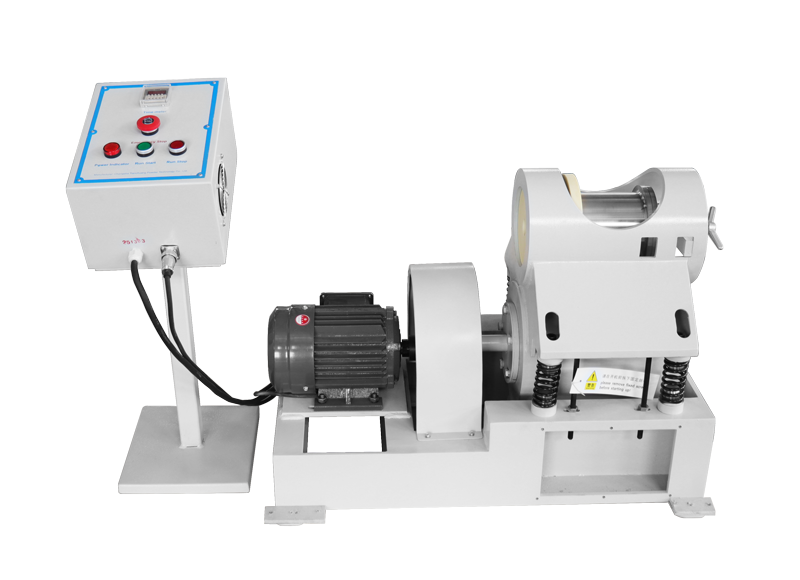
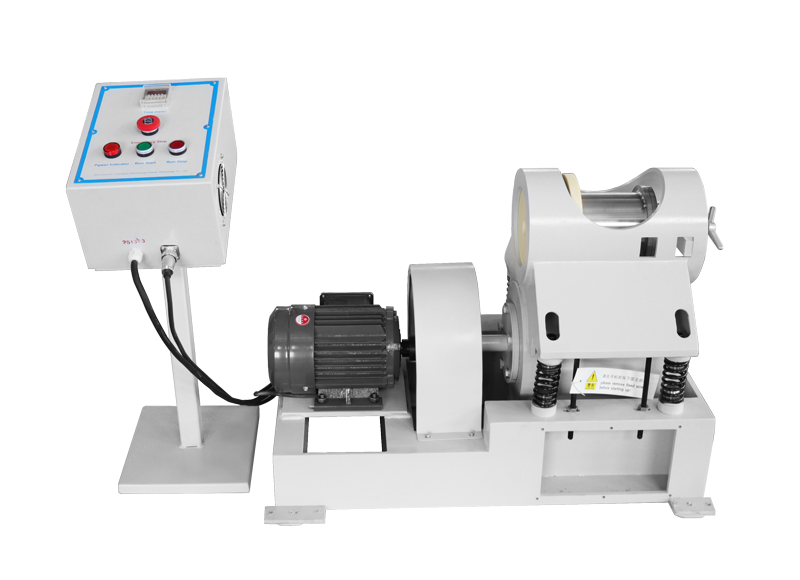
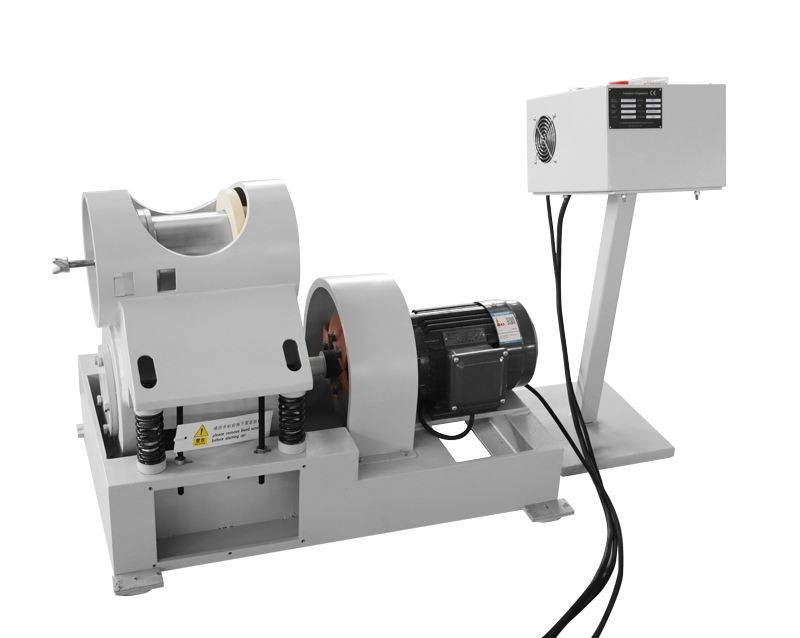
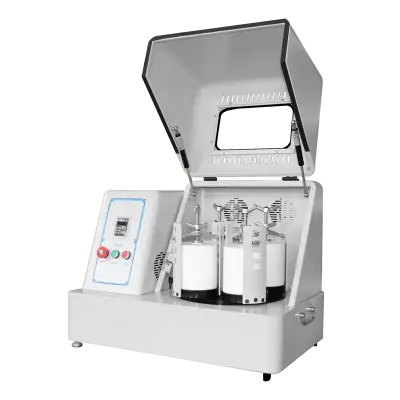
If you want a specific starting point, the TENCAN lab vibration ball mill is designed for laboratory vibration grinding and sample preparation. The product page is the right place to confirm the current chamber options, media choices, electrical configuration, and accessories, because those details depend on the version you choose. It also gives you a clear view of the machine layout before you ask for a quote or a sample test.
It helps to compare the mill against your actual workload. If most of your samples are small, brittle, and varied, a compact vibration mill can be a sensible fit. If you need large batches or continuous production, you should be looking at a different class of equipment. The honest answer is that no single mill is best for every powder. Use the product details to narrow the field, then test your real material. A lab trial is worth more than a page of claims.
You can review the TENCAN lab vibration ball mill here and use the specifications as a checklist for your own requirements. Ask about chamber material, media options, and the recommended working batch size for your sample. Those three answers will tell you more than a long list of headline numbers.
Maintenance and safety habits that pay off
Vibration is hard on fasteners, seals, and mounts. A little routine care prevents most surprises. Clean the chamber after each use, inspect the media, and check that the frame and clamping points are secure. If the sound changes or the machine starts to move more than usual, stop and investigate. A loose component can turn a small issue into a repair job.
Daily habits
Empty and clean the chamber, remove caked powder, and dry the parts before the next run. Check that the chamber is seated correctly and that the lid or clamp is secure. Look at the media for cracks, flats, or heavy wear. Make sure the area around the mill is clear, and wear hearing protection when the machine is running. If your procedure requires a specific atmosphere or a sealed chamber, confirm the seal before you load the sample.
Longer-term care
Inspect seals, flexible mounts, and drive components on a regular schedule. Keep a log of unusual noise, vibration, or overheating. Replace worn parts with the correct items from the manufacturer. Do not improvise with a different media material just because it is close at hand. A small difference in hardness or chemistry can change your results or damage the chamber. Safety is not only about the moving parts; it is also about dust, electrical connections, and the way you handle fine powders.
A quick buyer's checklist
Before you commit, run through the practical questions. The answers will keep you from buying more machine than you need, or less than your work demands.
- What sample types will you run most often, and are they brittle, soft, fibrous, or heat-sensitive?
- What feed size goes in, and what target size do you need out?
- What is a realistic batch size for your daily workload?
- Which chamber and media materials will avoid unacceptable contamination?
- Will you run dry, wet, or in a controlled atmosphere?
- How much noise and heat can your lab tolerate?
- What cleaning routine will the mill need between samples?
- Can the supplier support a trial with your real material?
Those questions are simple, but they expose the difference between a mill that looks good on a spec sheet and one that earns its bench space. If you can, send a sample to the supplier and ask for a test report. Real powder tells you more than a brochure.
Questions people ask before buying
Can it grind wet samples? Many vibration mill setups can handle wet grinding, but the chamber, media, and cleaning routine need to suit the slurry. Wet grinding can control dust and help with heat, but it also adds a drying step and can change the particle-size result. Confirm the configuration before you plan a wet process.
How fine can it go? It depends on the material, the media, the run time, and the machine configuration. No responsible supplier should promise a single number for every powder. Ask for a target range based on your sample, and test it. If your target is extremely fine, you may need a different milling route or a longer, staged process.
Why not use a planetary mill? Planetary mills are well known for high-energy laboratory grinding, and they can be a good fit for some applications. Vibration mills offer a different motion and a different machine layout. The right choice comes down to sample size, target fineness, contamination limits, available space, and the workflow you want. Compare the actual configuration and test results, not just the equipment category.
The lab vibration ball mill is not the biggest machine in the lab, and it is not meant to be. Its value comes from focused, repeatable grinding in a small space: load a sample, energize the media, and get a usable powder without tying up a production line. If your work involves varied materials, small batches, and tight turnaround, that can be a very practical combination. Start with the sample, confirm the configuration, and test before you commit. That is how you get useful data instead of a costly guess.
Related Products
Get In Touch
Our professional team will reply to you within one business day. Please feel free to contact us!