
Laboratory Ball Mills: A Lab Guide

If you work in a materials lab, you've likely seen a laboratory ball mill humming away. It looks simple—a jar, some balls, a motor—but it's a versatile tool for grinding, mixing, and even alloying. Whether you're preparing samples for analysis or making nano-powders, understanding how these mills work helps you get better results with less guesswork.
What Is a Laboratory Ball Mill?
A laboratory ball mill is a compact grinding machine that uses spherical media inside a rotating or vibrating jar. As the jar moves, the balls tumble, collide, and rub against your sample. That impact and friction break particles down to finer sizes. Lab mills are smaller than production mills, but they offer precise control over speed, time, and atmosphere—ideal for research, quality control, and small-batch production.
How Does a Ball Mill Work?
The jar rotates and lifts the grinding balls up the side. When they reach a certain height, they cascade or tumble back down. Your sample gets caught between balls and the jar wall. Every collision chips away at the particles. There's a speed limit called critical speed: if the jar spins too fast, centrifugal force pins the balls to the wall, and grinding stops. Most lab mills run at 60–80% of critical speed.
Impact vs. Attrition
Impact happens when a ball falls and strikes powder. Attrition happens when balls rub and shear particles. Hard, brittle materials break mainly by impact. Softer materials benefit more from attrition, especially in wet milling.
Wet vs. Dry Milling
Dry milling is simple: load powder, seal the jar, run. Wet milling adds a liquid to form a slurry, which disperses particles and often produces finer sizes.
Key Variables You Can Control
- Ball material: Agate, zirconia, stainless steel, tungsten carbide, alumina. Harder balls wear longer but may contaminate your sample.
- Ball size: Bigger balls break large chunks; smaller balls create finer grinding. Many labs use a mix.
- Ball-to-powder ratio: Typical 5:1 to 20:1. Higher ratios grind faster but leave less room for sample.
- Rotation speed: Find the speed where balls cascade instead of sticking.
- Milling time: Longer runs reduce size but add heat and wear. Run a time study.
- Atmosphere: Inert gas or vacuum jars protect oxygen-sensitive powders.
Common Types of Laboratory Ball Mills
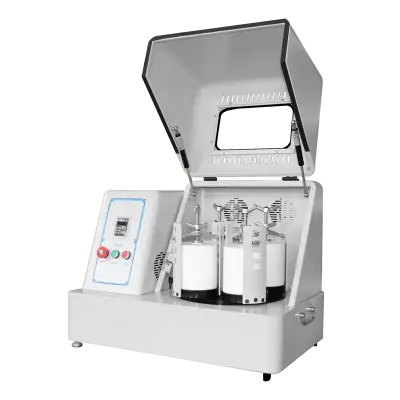
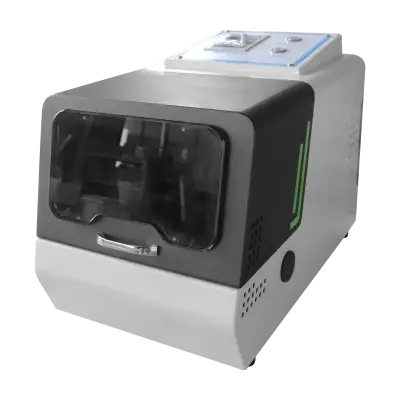
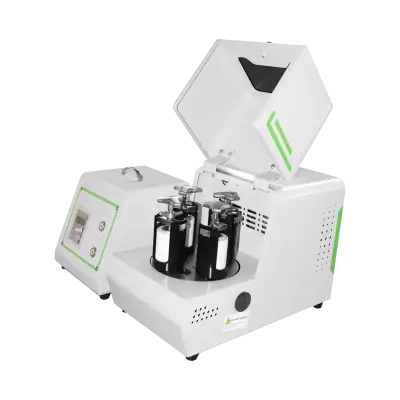
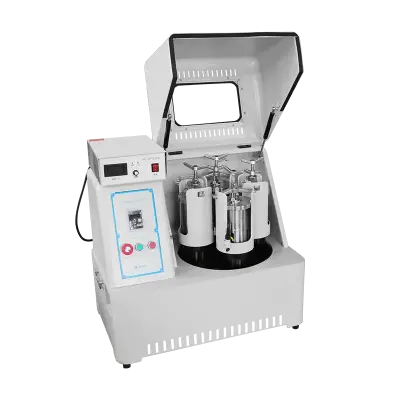
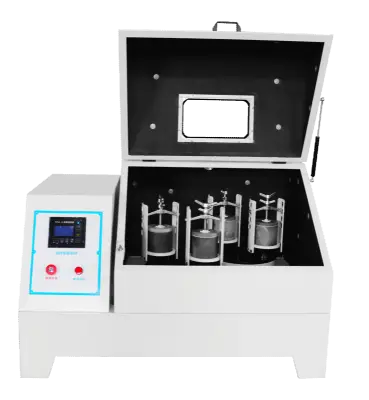
Planetary ball mills are the high-energy champions. Jars rotate around a central axis while spinning on their own. Strong centrifugal forces produce sub-micron or nanometer sizes. Roller ball mills are simpler: jars sit on powered rollers and rotate. They handle larger batches—popular for ceramics and minerals. Mixer mills (shaker mills) move the jar back and forth in a figure-eight pattern. They're fast and aggressive, excellent for small samples.
What Can You Grind?
If it's brittle, a ball mill can likely handle it: rocks, ores, minerals, soils, ceramics, glass, cement, coal, pharmaceuticals, plant tissue, and metal powders. Soft, elastic, or sticky materials are harder—they deform instead of fracture. Cryogenic milling with liquid nitrogen can make them brittle.
How to Choose the Right Mill
- Sample hardness: Use the Mohs scale. Hard materials need harder balls and jars.
- Final particle size: Nanoparticles? Planetary mill. Routine 10–50 microns? Roller or mixer mill.
- Sample amount: Planetary mills handle 0.1–100 g. Roller mills do larger batches.
- Contamination risk: For trace analysis, choose jar and ball materials that won't skew results.
- Dry or wet: Wet often gives finer particles and less dust, but adds drying.
- Budget and space: High-energy mills cost more. Roller mills are compact and affordable.
Ball Mills and Downstream Processing
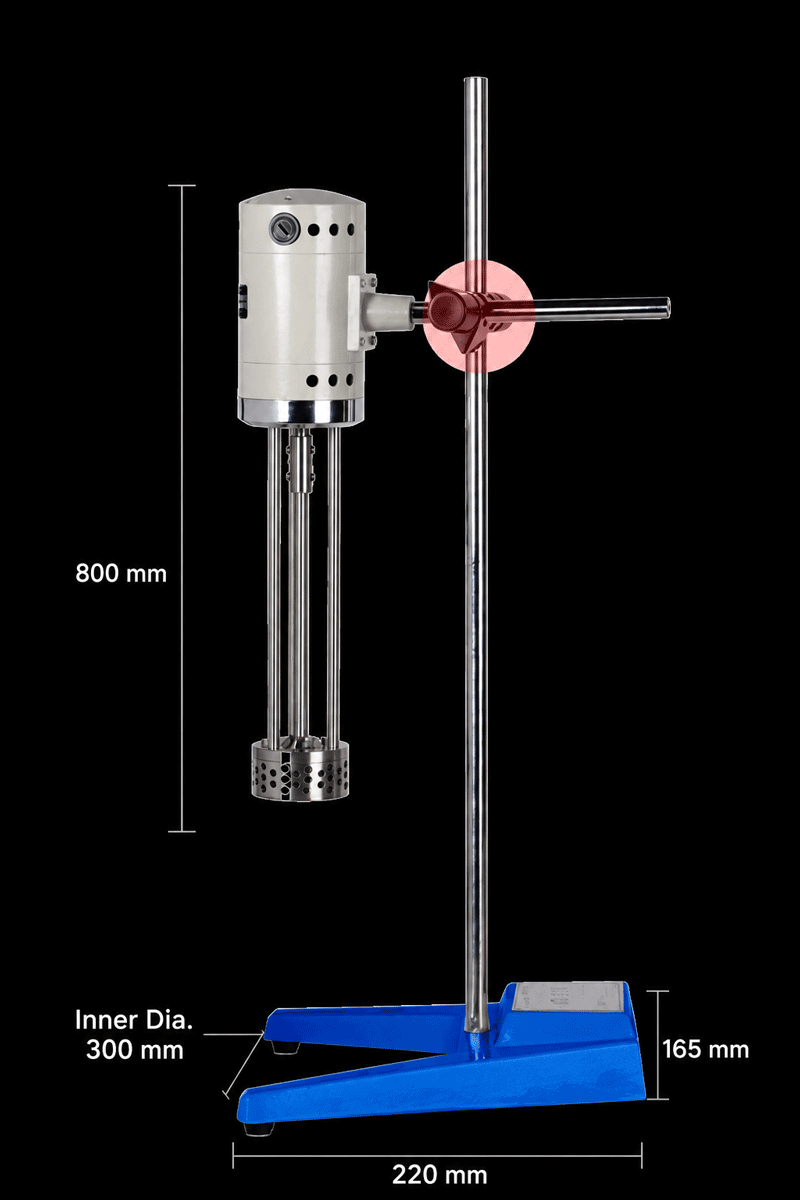
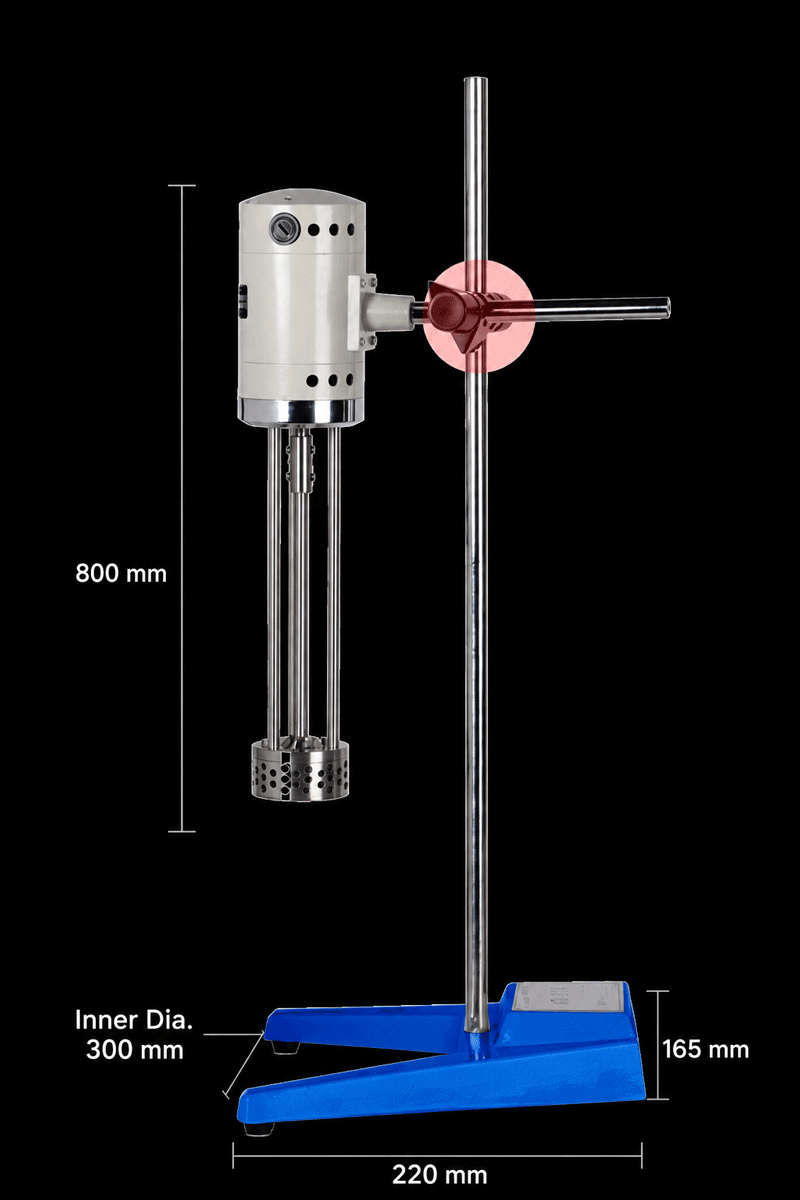
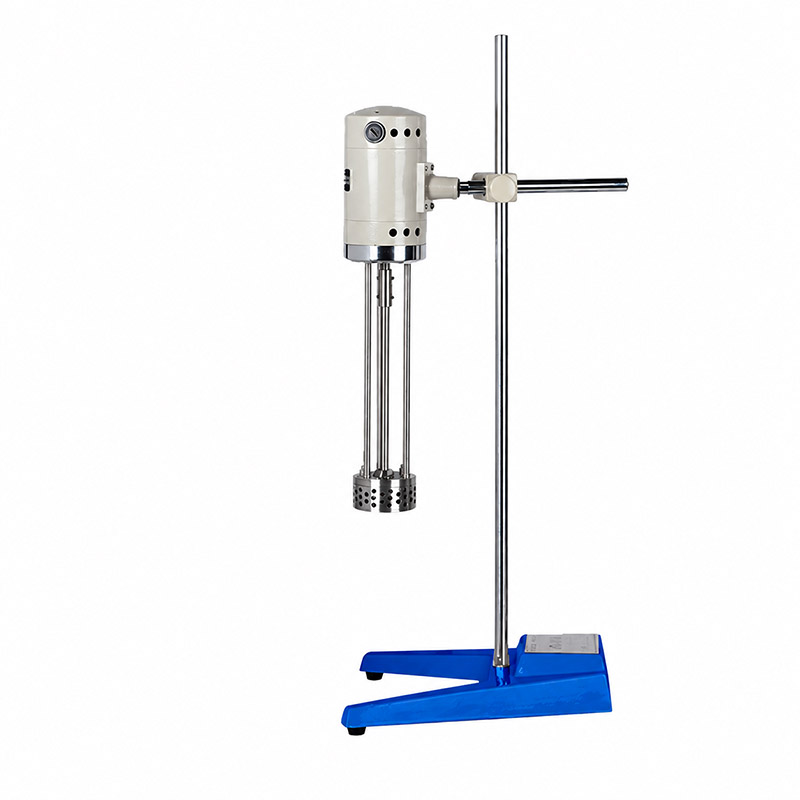
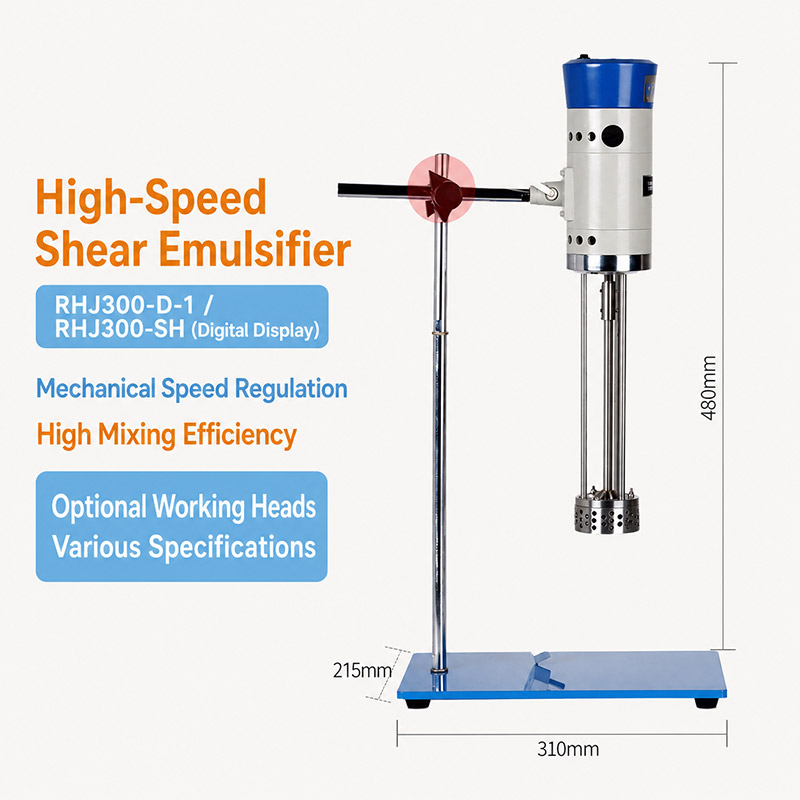
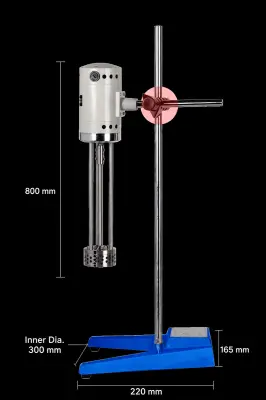
Grinding is often just one step. After milling, you might mix powder into a suspension, cream, or emulsion. A shear emulsifier uses a high-speed rotor and stator to create strong shear forces. It blends liquids, breaks droplets, and forms stable emulsions. TENCAN shear emulsifiers are designed for lab-scale mixing, homogenizing, and emulsifying. If your workflow goes from dry powder to a uniform paste or lotion, pairing a ball mill with a shear emulsifier can improve consistency. See the TENCAN shear emulsifier for details.
Practical Tips for Better Milling
- Don't overload the jar. Leave space for balls to move.
- Start with a test batch. Try different times and speeds. Measure particle size.
- Use a 10:1 ball-to-powder ratio as a starting point.
- Watch temperature. If the jar gets hot, pause or reduce speed.
- Clean between samples. Cross-contamination is a silent error source.
- Control the atmosphere. Use inert gas or vacuum jars for sensitive powders.
Maintenance and Safety
Inspect jars for cracks. Replace worn balls. Keep motor vents dust-free. Wear safety goggles, gloves, and a lab coat. Ball mills can be loud—use hearing protection. Never open a hot or pressurized jar. Follow lockout/tagout procedures when servicing.
Making the Most of Your Lab Mill
A laboratory ball mill is more than a grinder. It can mix, blend, and mechanically alloy. Understand your sample, control the variables, and choose the right mill. If you need help matching a mill to your application, TENCAN offers laboratory ball mills and related equipment. And if your process moves from powder to emulsion, check out the TENCAN shear emulsifier to complete your workflow. With the right tools, you'll get consistent, reproducible results.
Related Products
Get In Touch
Our professional team will reply to you within one business day. Please feel free to contact us!