
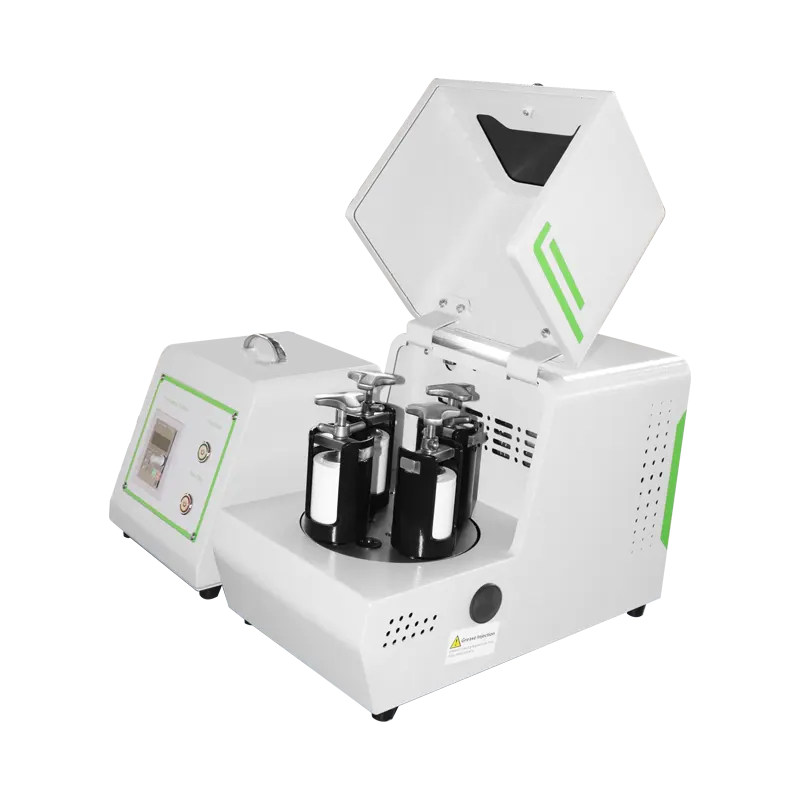
What is a Micro Planetary Ball Mill? A Compact High-Energy Milling Device for Nano-Scale Sample Preparation in Glove Boxes

Introduction
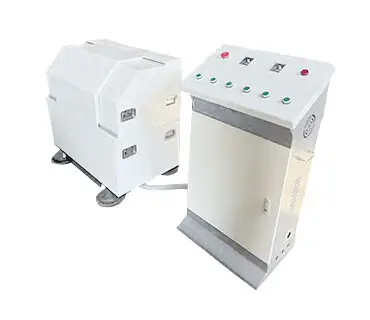
At its core, a micro planetary ball mill is a professional laboratory grinding instrument that researchers and material scientists use to perform ultra-fine grinding, mixing, and mechanical alloying of small quantities of solid materials. Typically designed for volumes ranging from 0.2 liters to a few liters, these compact mills can reduce particle sizes from millimeters down to the submicron or even nanometer range. The designation "micro" refers not only to the small sample capacity but also to the ability to achieve micron- and nano-scale particles. Many models, such as the XQM-0.2S Micro Planetary Ball Mill, are specially designed to fit into a glove box, allowing operation under inert gas or vacuum conditions for air-sensitive materials.
Core Function and Working Principle
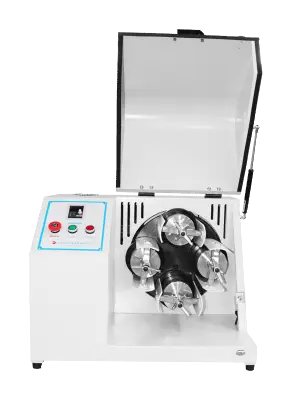
The micro planetary ball mill transforms coarse feed material (typically <5 mm) into finely ground powder through a combination of impact and friction. The device consists of a main rotating disc (the sun wheel) and one or more grinding jars mounted on it. As the sun wheel rotates, the jars rotate around their own axes in the opposite direction, creating a complex planetary motion. This motion generates high centrifugal forces that drive the grinding balls inside the jars to collide with each other and with the jar walls, effectively crushing and shearing the sample.
Key parameters that influence the grinding result include rotation speed, grinding time, ball-to-powder ratio, and the size and material of the grinding balls. Higher speeds produce greater impact energy, which is essential for achieving nano-scale particles. Temperature control is also important; some models incorporate cooling fans or even liquid nitrogen cooling (as in the Liquid Nitrogen Planetary Ball Mill) to prevent thermal degradation of heat-sensitive materials.
Key Components and Technologies
Planetary Motion Mechanism
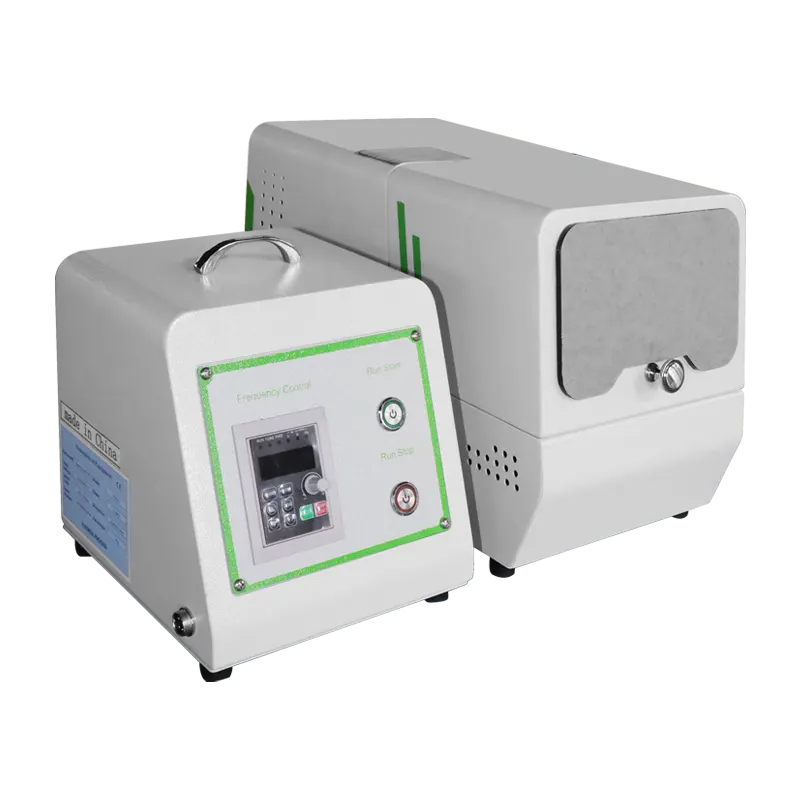
The heart of the micro planetary ball mill is its drive system, which provides precise control over the sun wheel rotation and jar rotation. Most models use a high-precision servo motor with a variable frequency drive, allowing speeds from 100 to 800 rpm or more. The ratio of sun wheel speed to jar speed is typically fixed at 1:2 or similar, ensuring optimal grinding efficiency.
Grinding Jars and Media
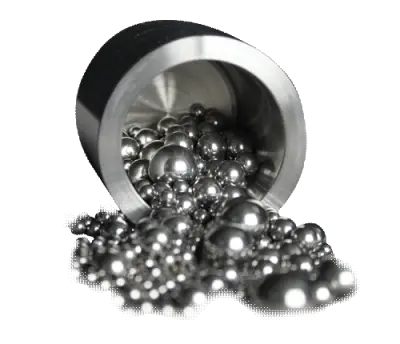
Grinding jars are available in various materials—stainless steel, agate, zirconia, tungsten carbide, nylon, PTFE, and more—to match the sample's hardness and avoid contamination. For example, zirconia jars are ideal for ceramic materials, while agate jars are preferred for silica-free grinding. The glove box special edition often comes with vacuum-compatible jars that can be sealed and transferred into the glove box without exposing the sample to air.
Vacuum and Inert Gas Capability
Many micro planetary ball mills can be equipped with vacuum jars or gas-tight sealed jars. This is crucial for materials that oxidize easily, such as metal powders, lithium battery materials, or certain pharmaceuticals. The ability to perform milling under argon or nitrogen atmosphere directly inside a glove box ensures that the sample remains uncontaminated throughout the process.
Key Performance Indicators and Selection Criteria
When selecting a micro planetary ball mill, users should consider the following factors:
- Sample Capacity: Typical capacities range from 0.2L to 2L per jar. For preliminary research, a 0.2L model like the XQM-0.2 series is sufficient. For larger batches, consider the Vertical Production Planetary Ball Mill.
- Final Particle Size: Most micro planetary ball mills can achieve D50 below 1 micron, and with extended milling time, particles as small as 0.1 micron are possible. The actual result depends on material properties and milling parameters.
- Speed Range and Control: A wider speed range allows flexibility for different materials. Programmable touch-screen controllers (e.g., Micro-computerized Touch Screen Planetary Ball Mill) enable precise setting of speed, time, and pause cycles.
- Noise Level: Laboratory environments require quiet operation. Modern micro planetary ball mills are designed with noise-reducing enclosures to keep sound levels below 65 dB.
- Maintenance and Cleaning: Easy access to the jars and quick-release clamps simplify cleaning and sample changeover. Some models feature lock clamps for secure jar mounting.
Application Fields and Selection Advice
Micro planetary ball mills are widely used in geology, mining, metallurgy, electronics, ceramics, chemical engineering, medicine, and environmental protection. Typical applications include:
- Battery Materials: Grinding of cathode and anode materials (e.g., LiFePO4, graphite) for lithium-ion batteries.
- Nanomaterials: Mechanical alloying of metal oxides, carbon nanotubes, and quantum dots.
- Pharmaceuticals: Micronization of active pharmaceutical ingredients (APIs) for improved bioavailability.
- Ceramics and Glass: Fine grinding of raw materials for advanced ceramics and glass frits.
For research laboratories that require processing of air-sensitive materials, the glove-box-compatible micro planetary ball mill is the ideal choice. For general-purpose nano-grinding with larger batch sizes, a standard lab-scale planetary ball mill with multiple jar stations may be more suitable. Always consider the material's hardness, abrasiveness, and potential contamination requirements when selecting jar and ball materials.
References
Related Products
Get In Touch
Our professional team will reply to you within one business day. Please feel free to contact us!