

What Is a Micro Planetary Ball Mill? A Glove Box Grinder for Reactive Powders
What Is a Micro Planetary Ball Mill? A Clear Definition
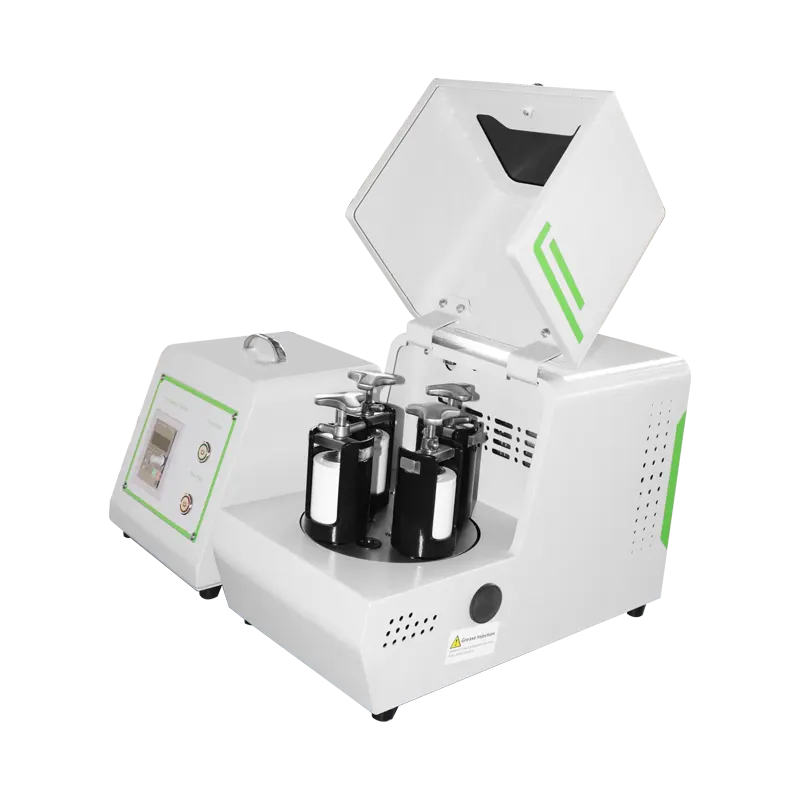
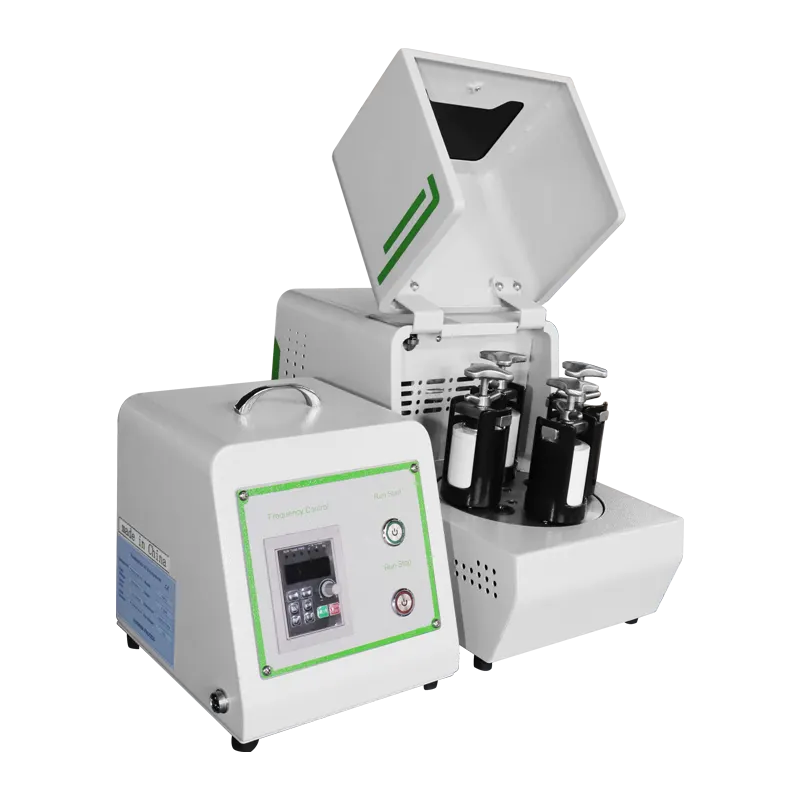
From its core, a micro planetary ball mill is a compact, high-energy grinding instrument that uses rotating jars to reduce small samples of solid material into fine or ultrafine powders. It is used in laboratories and pilot plants to prepare powders for analysis, synthesis, battery research, catalysis, and advanced materials development. Unlike a conventional ball mill, which often relies on a large horizontal drum, a planetary ball mill places small grinding jars on a rotating sun wheel. Each jar also spins around its own axis in the opposite direction. This dual motion creates strong centrifugal forces, causing grinding balls inside the jar to impact and shear the sample at high energy.
The term “micro” refers to the small working scale. Micro planetary ball mills are designed for limited sample volumes, making them suitable for precious materials, expensive precursors, toxic substances, or rare samples. The term “glove box special edition” refers to an integrated configuration in which the mill operates inside a sealed glove box. This arrangement is important for reactive powders that must be handled under inert gas, such as argon or nitrogen, because exposure to air can cause oxidation, hydrolysis, or loss of functional properties.
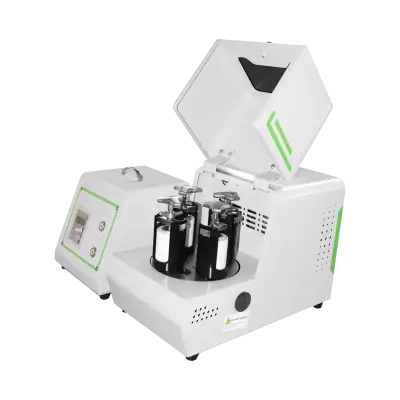
TENCAN’s Micro Planetary Ball Mill is an example of this product category. It is presented as a glove box special edition, meaning that the grinding process can be carried out in a controlled atmosphere rather than in open air. For researchers working with air-sensitive powders, this feature can be the difference between a successful experiment and a compromised sample.
Core Functions and Working Principle
The basic function of a micro planetary ball mill is to convert a solid sample from a coarse or intermediate state into a fine powder. This size reduction is achieved through mechanical energy: the mill transfers rotational energy to grinding jars, and the jars transfer that energy to grinding balls. The balls then collide with the sample and with each other, breaking particles apart through impact, compression, and friction. In many cases, the process also mixes components at the same time, which is useful for preparing homogeneous powder blends or composite materials.
From Coarse Particles to Fine Powders
When a sample is loaded into the grinding jar, it may consist of small granules, crystals, flakes, or irregular chunks. The grinding balls inside the jar occupy a significant portion of the jar volume. As the jar rotates, the balls are lifted along the jar wall and then thrown or rolled back down. The sample particles are trapped between colliding balls or between a ball and the jar wall. Repeated collisions reduce particle size and increase surface area. Over time, the powder can reach micron or submicron dimensions, depending on the material, the grinding time, the ball size, and the rotation speed.
Because the process is mechanical rather than chemical, it can be used for brittle materials, crystalline solids, ceramics, metals, and some polymers. However, soft or ductile materials may deform rather than fracture, so they often require different milling strategies, such as cryogenic grinding or the use of process control agents. The micro scale of the equipment also means that the grinding energy is concentrated in a small volume, which can be advantageous for achieving fine particles quickly, but it also requires careful control to avoid excessive heating or contamination.
The Planetary Motion Mechanism
The name “planetary” comes from the motion of the grinding jars. In a planetary ball mill, the jars are mounted on a rotating disk called the sun wheel. As the sun wheel turns, each jar rotates around the central axis of the mill. At the same time, gears or belts cause each jar to rotate around its own axis in the opposite direction. This counter-rotation is the key to the mill’s high energy. The centrifugal forces generated by the two rotations combine and alternate, so the grinding balls do not simply slide along the jar wall. Instead, they are repeatedly lifted, thrown, and impacted against the opposite side of the jar. The result is a highly dynamic grinding environment with strong impact and shear forces.
The speed of the sun wheel and the speed of the jars can be adjusted on most modern mills. Higher speeds generally increase impact energy and reduce grinding time, but they also raise the temperature inside the jar and can accelerate wear on the jar and balls. Lower speeds are gentler and may be preferred for heat-sensitive materials or for achieving a narrower particle size distribution. The ratio between the two rotations, sometimes called the speed ratio, also influences the motion pattern of the balls. A well-designed mill allows the operator to tune these parameters for different materials and target particle sizes.
The Role of the Glove Box Atmosphere
In a standard planetary ball mill, the grinding jar is sealed, but the sample is usually loaded and unloaded in ambient air. For many materials, brief air exposure is acceptable. For reactive powders, however, even a short exposure to oxygen or moisture can cause oxidation, hydrolysis, or contamination. This is where the glove box special edition becomes valuable. The mill is placed inside an enclosed glove box, and the operator uses gloves attached to the box to handle the jars and samples. The internal atmosphere is controlled, typically filled with high-purity argon or nitrogen. An ante-chamber or transfer port allows materials to be moved in and out without breaking the main atmosphere.
The glove box also protects the operator. Some powders are toxic, radioactive, or irritating. By keeping the sample enclosed, the risk of inhalation or skin contact is reduced. In addition, the glove box can include gas purification systems that remove oxygen and moisture continuously. This creates a stable low-oxygen, low-moisture environment for grinding, weighing, and sample storage. The combination of planetary grinding and glove box containment therefore addresses two problems at once: it provides the mechanical energy needed for size reduction and the atmospheric control needed for reactive materials.
Core Components and Key Technologies
Although a micro planetary ball mill may look compact, it contains several critical subsystems. Each component affects grinding performance, sample purity, and operational safety. Understanding these parts helps users evaluate different models and configure the mill for specific applications.
Grinding Jars and Grinding Balls
The grinding jar is the chamber where size reduction takes place. It must be strong enough to withstand repeated impacts and chemically compatible with the sample. Common jar materials include stainless steel, agate, zirconia, corundum, tungsten carbide, nylon, PTFE, and polyurethane. Each material has different hardness, wear resistance, and contamination characteristics. For example, zirconia jars are hard and dense, making them suitable for many ceramic and mineral samples, while agate jars are relatively inert and can reduce metal contamination. Stainless steel jars are durable but may introduce iron or chromium into the sample.
Grinding balls are the actual media that do the work. They are typically spheres made from the same or similar materials as the jars. The size and number of balls determine the number and energy of collisions. Larger balls have greater mass and produce stronger impacts, which is useful for breaking down coarse particles. Smaller balls create more contact points and can be more effective for fine grinding and homogenization. The fill ratio of balls to jar volume also matters: too few balls reduce grinding efficiency, while too many balls may restrict movement and cause excessive wear. In practice, operators often use a mixture of ball sizes to balance impact and shear.
Planetary Drive and Control System
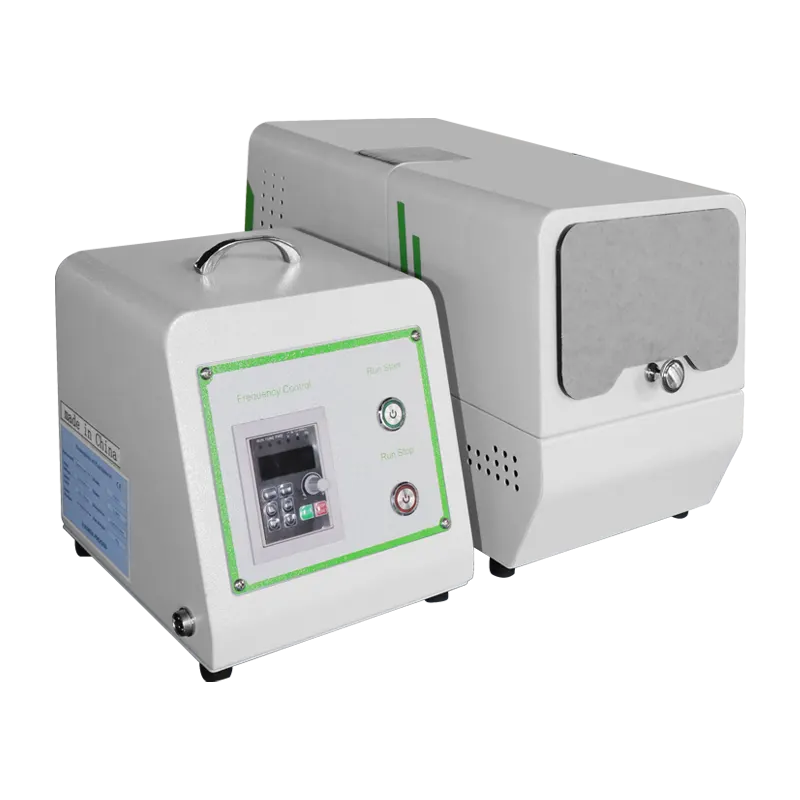
The drive system consists of a motor, a sun wheel, jar holders, and a transmission mechanism. The motor turns the sun wheel, and the transmission ensures that the jars rotate in the required planetary motion. A well-engineered drive system runs smoothly and quietly, with minimal vibration. Vibration can reduce grinding efficiency and increase noise, so balance and rigidity are important design considerations. The control system allows the user to set rotation speed, grinding time, and sometimes direction reversal, pause intervals, and programmed cycles. Digital displays and touch screens are common on modern laboratory mills.
Programmability is especially useful for reproducible research. A saved program can be used for multiple samples, ensuring that each sample receives the same energy input. For glove box models, the control interface may be placed outside the glove box or designed for use with gloves. Remote controls or feed-through connectors can also be used so that the operator does not need to open the box to adjust settings.
Glove Box, Ante-Chamber, and Gas Purification
The glove box is a sealed enclosure with a transparent window and a pair of gloves. It maintains a controlled atmosphere and protects both the sample and the operator. A typical glove box for ball milling includes a main chamber, an ante-chamber for transferring materials, and a gas purification unit. The purification unit circulates the internal gas through a catalyst or adsorbent to remove oxygen and moisture. Sensors monitor oxygen and moisture levels, often in the parts-per-million range. When the levels rise above a set point, the purification system regenerates or alerts the operator.
The ante-chamber is important because it allows jars, tools, and samples to enter and exit without exposing the main chamber to air. The operator places items in the ante-chamber, seals it, evacuates it, and then refills it with inert gas. After one or more cycles, the inner door can be opened, and the items can be moved into the main chamber. This procedure takes time, so efficient glove box design includes enough internal space for storing jars, balls, and tools.
Types and Configurations of Micro Planetary Ball Mills
Micro planetary ball mills are available in several configurations, depending on the application and the level of atmospheric control required. The reference product in this article is a glove box special edition, but it is helpful to understand the broader landscape of planetary milling equipment.
Standard Micro Planetary Ball Mills
A standard micro planetary ball mill is designed for benchtop operation in ambient air. It is usually smaller than a full-size planetary mill and holds one or more small jars. It is suitable for samples that are not sensitive to oxygen or moisture. Typical uses include grinding minerals, ceramics, pigments, and some organic materials. The standard version is easier to load and unload, takes up less space, and costs less than a glove box integrated system. It is often the first choice for general laboratory sample preparation.
Glove Box Integrated Models
A glove box integrated model combines the mill with a sealed glove box. The mill may be placed entirely inside the box or designed as a feed-through unit with the motor outside and the jars inside. The goal is to maintain a controlled atmosphere throughout the grinding process. This type is used for lithium battery materials, metal hydrides, catalysts, organometallic compounds, and other air-sensitive substances. The glove box may be equipped with a gas purification system, oxygen and moisture sensors, and a pressure control system. Because the mill operates inside the box, the design must consider heat dissipation, vibration, and access for maintenance. The Micro Planetary Ball Mill glove box special edition is an example of this approach.
Low-Temperature and High-Energy Variants
Some planetary ball mills are designed for cryogenic grinding or low-temperature operation. These models may include a cooling jacket, liquid nitrogen feed, or a temperature-controlled chamber. They are useful for heat-sensitive materials, polymers, and biological samples that would degrade at elevated temperatures. High-energy variants use higher rotation speeds, larger ball-to-powder ratios, or specialized jar designs to achieve finer particles or mechanochemical reactions. Too much energy can cause amorphization, decomposition, or unwanted chemical reactions, while too little energy may not reach the target particle size.
Key Performance Indicators and Selection Criteria
Choosing the right micro planetary ball mill involves more than comparing prices. The following performance indicators help users evaluate whether a mill will meet their technical and operational needs.
Grinding Capacity and Jar Volume
The first consideration is scale. Micro planetary ball mills typically use small jars, ranging from a few milliliters to a few hundred milliliters. The capacity determines how much sample can be processed in one run. For research and development, small jars are often sufficient and allow the use of expensive or scarce materials. For pilot-scale work, larger jars or multiple jars may be needed. The number of grinding stations also matters: a single-station mill processes one sample at a time, while a multi-station mill can run several jars simultaneously. This increases throughput but also requires more power and space.
Speed, Energy, and Particle Size Control
Rotation speed is a key parameter for controlling particle size. Higher speeds increase the kinetic energy of the grinding balls, leading to faster size reduction and finer particles. However, high speeds also generate more heat and can cause excessive wear or contamination. The optimal speed depends on the material’s hardness, brittleness, and thermal stability. A variable-speed drive allows the operator to adjust the energy input. Some mills also allow direction reversal, which can improve mixing and prevent the sample from sticking to the jar wall. Grinding time is another important variable: longer grinding usually produces finer particles, but there is a practical limit beyond which agglomeration or contamination may occur.
Atmosphere Control and Leak Integrity
For reactive powders, atmosphere control is critical. The glove box must maintain low oxygen and moisture levels, and the mill must not introduce leaks or contamination. Look for a glove box with a reliable sealing system, a sensitive oxygen analyzer, and an effective gas purification unit. The ante-chamber should be large enough for the jars and tools used. It is also helpful to have a pressure control system that prevents the box from becoming over-pressurized or under-pressurized. In some cases, a vacuum pump and inert gas supply are included to facilitate rapid cycling of the ante-chamber.
Material Compatibility and Contamination
The choice of jar and ball material affects both grinding performance and sample purity. Hard, dense materials such as tungsten carbide and zirconia are effective for breaking down hard particles, but they may introduce wear debris. Soft materials such as PTFE and nylon reduce contamination but are less effective for hard samples. Agate is a good compromise for many applications because it is relatively hard and chemically inert. Stainless steel is durable but can contaminate samples with iron, chromium, or nickel. Users should consider the acceptable level of contamination and choose the jar and ball material accordingly. In some cases, a protective coating or a different grinding method may be required.
Automation, Programmability, and Maintenance
Modern mills often include programmable controls that allow the user to set speed, time, and cycles. This improves reproducibility and reduces operator error. For glove box models, the control interface should be easy to use with gloves, or it should be accessible from outside the box. Maintenance is another important factor. Grinding jars and balls wear over time and need to be replaced. The mill should be designed for easy access to the jars, belts, and seals. The glove box requires regular checks of the gloves, window seals, and purification system. A well-designed system will have clear maintenance procedures and readily available spare parts.
Applications and Selection Advice
Micro planetary ball mills with glove box integration are used in a wide range of research and industrial laboratories. Their ability to grind small samples under controlled atmosphere makes them valuable for advanced materials and sensitive chemicals.
Typical Application Areas
One major application is lithium-ion battery research. Cathode and anode materials, such as lithium metal oxides, silicon, and graphite, are sensitive to moisture and oxygen. Grinding them in a glove box prevents oxidation and allows researchers to study their properties accurately. Another application is catalyst preparation. Many catalysts, including organometallic complexes and supported metal nanoparticles, are air-sensitive. Planetary ball milling can be used to mix, reduce, or modify catalysts without exposing them to air. Metal powders, such as aluminum, magnesium, and titanium, are also often processed under inert atmosphere because they can oxidize rapidly or even become pyrophoric.
Other applications include the preparation of metal-organic frameworks (MOFs), perovskites, and other crystalline materials that are sensitive to moisture. In the pharmaceutical industry, ball milling is used for particle size reduction and polymorph screening, and a glove box can protect hygroscopic drugs. Micro planetary ball mills can also be used for mechanical alloying, where repeated impact and fracture create new alloys or composite powders. The controlled atmosphere ensures that the alloying process is not affected by oxygen or nitrogen from the air.
How to Choose the Right Setup
The first step is to define the sample. Is it air-sensitive? Is it toxic? What is the target particle size? How much sample is available? If the material reacts with oxygen or moisture, a glove box integrated mill is strongly recommended. If the material is stable in air, a standard micro planetary mill may be sufficient. The second step is to choose the jar and ball material. Consider hardness, density, chemical compatibility, and contamination tolerance. The third step is to determine the required capacity and number of grinding stations. For small research batches, a single-station mill with a small jar may be enough. For higher throughput, a multi-station mill or multiple jars can be used.
The fourth step is to evaluate the glove box specifications. Check the oxygen and moisture levels, the purification system, the ante-chamber size, and the available workspace. Consider the ergonomics: can the operator comfortably reach the mill and change jars while wearing gloves? Is the control panel accessible? Is there enough space for tools and sample storage? Finally, consider service and support. A supplier with experience in both planetary milling and glove box technology can help with installation, training, and maintenance. TENCAN’s Micro Planetary Ball Mill glove box special edition is designed to address these considerations, combining a compact planetary mill with a controlled atmosphere enclosure.
Conclusion
A micro planetary ball mill is a specialized grinding instrument that uses planetary motion to reduce small samples to fine powders. When integrated with a glove box, it becomes a powerful tool for processing reactive, toxic, or air-sensitive materials. The combination of high-energy grinding and controlled atmosphere allows researchers to work with materials that would otherwise be difficult or dangerous to handle. By understanding the working principle, key components, performance indicators, and selection criteria, users can choose a system that matches their sample requirements and laboratory workflow. Whether the goal is battery research, catalyst development, or advanced materials synthesis, a micro planetary ball mill with glove box integration offers a controlled and reproducible approach to powder processing.
Related Products
Get In Touch
Our professional team will reply to you within one business day. Please feel free to contact us!