
What is a Tempered Nylon Planetary Mill Jar? A Wear-Resistant Grinding Container for Contamination-Free Fine Milling

What is a Tempered Nylon Planetary Mill Jar?
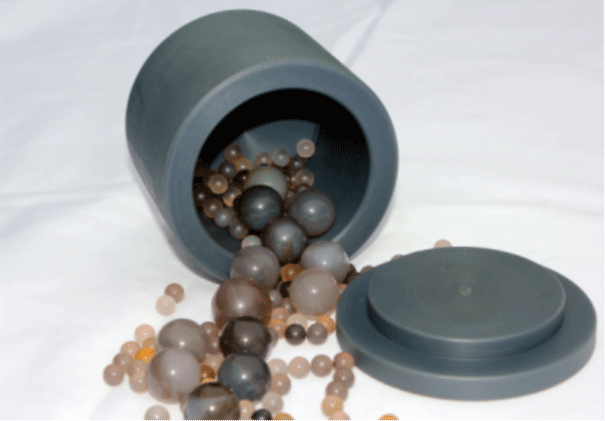
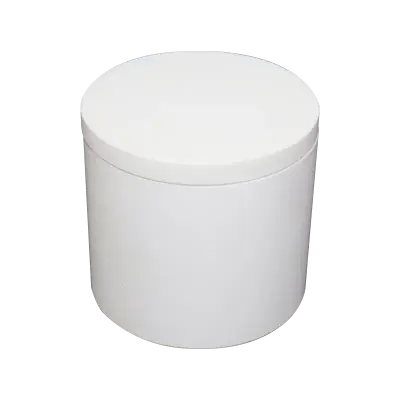
At its core, a tempered nylon planetary mill jar is a high-performance grinding container designed for use with planetary ball mills. It is a specialized vessel that holds the grinding media and the material to be milled, and it is subjected to the high-speed planetary motion of the mill. The jar is made from a specially processed nylon (polyamide) that has been tempered (heat-treated) to enhance its mechanical strength, wear resistance, and dimensional stability. Researchers and engineers use it primarily for fine grinding, mixing, and mechanical alloying of materials where metal contamination must be strictly avoided, such as in the preparation of advanced ceramics, electronic materials, pharmaceuticals, and polymer composites.
Core Function and Working Principle
The tempered nylon jar functions as the reaction chamber in a planetary ball mill. The mill operates by rotating the jar on its own axis while simultaneously rotating the entire support platform around a central axis (the sun wheel). This dual rotation creates a high-energy centrifugal force that drives the grinding balls inside the jar to impact and shear the material. The jar's inner walls endure constant friction and impact from the grinding media, which is why the material of the jar is critical.
Tempered nylon offers a unique combination of properties: it is tough, wear-resistant, and self-lubricating. Unlike metal jars, nylon does not introduce metallic ions into the powder, which can alter the chemical properties of sensitive materials. The self-lubricating nature of nylon also reduces the friction between the grinding media and the jar wall, minimizing heat generation and extending the service life of both the jar and the milling process. The jar can be used for both dry and wet grinding, and it is compatible with a variety of grinding media such as zirconia, agate, or even nylon balls.
Comparison with Other Planetary Mill Jar Materials
Choosing the right jar material is a key decision in planetary milling. Tempered nylon occupies a unique niche compared to other common materials:
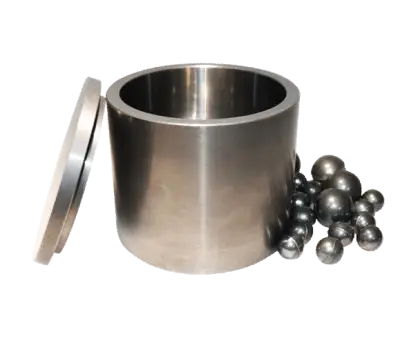
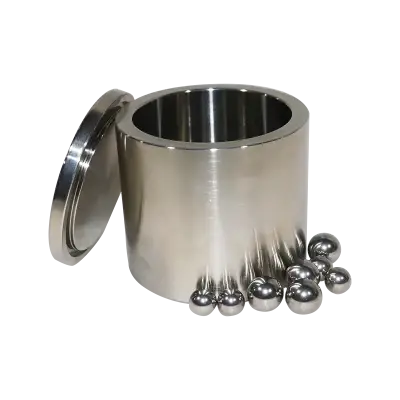
- Stainless Steel (304 SS): Extremely durable and high impact resistance, but can introduce iron, chromium, and nickel contamination. Suitable for hard materials but not for contamination-sensitive applications.
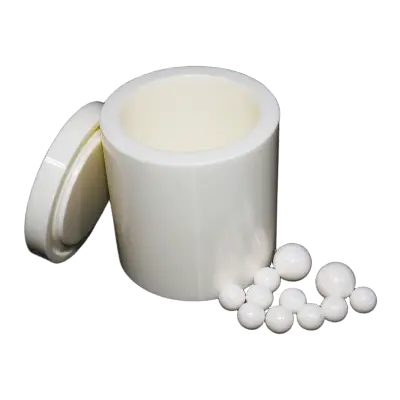
- Zirconia (ZrO₂): Very hard and wear-resistant, ideal for high-purity grinding of ceramics. However, it is expensive and brittle. Zirconia is the top choice when maximum hardness and zero metallic contamination are required.
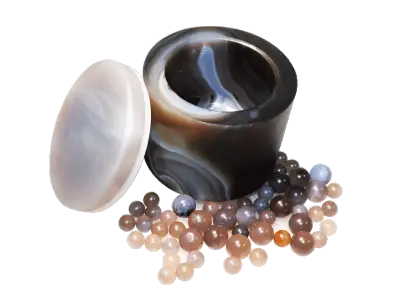
- Agate (SiO₂): Excellent for soft to medium-hard materials and provides high-purity silica environment. But it is very fragile and cannot withstand high-energy impacts.
- PU (Polyurethane): Good wear resistance and elasticity, but lower temperature tolerance and may introduce organic contaminants.
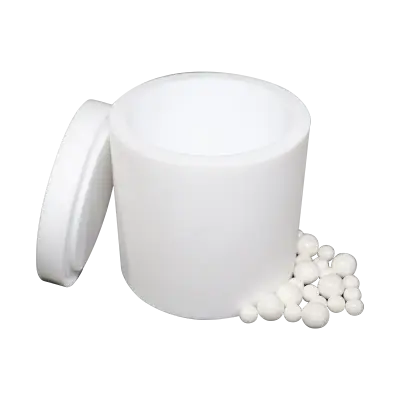
- PTFE (Teflon): Chemically inert and non-stick, but very soft and wears quickly, leading to contamination.
- Tempered Nylon: Offers a balanced performance: good wear resistance, high impact toughness, self-lubrication, and zero metal contamination. It is more affordable than zirconia and agate, and more durable than PTFE and PU. The main limitation is its lower temperature resistance (max ~150°C continuous) compared to ceramic or metal jars.
Key Performance Indicators and Selection Guide
When selecting a tempered nylon planetary mill jar, consider the following factors:
- Capacity: Available in standard sizes from 50 mL to 500 mL. Choose a size that matches your batch volume and mill model.
- Wear Resistance: Tempered nylon has significantly improved abrasion resistance over standard nylon. Look for jars with a high density and smooth inner surface to minimize particle adhesion.
- Sealing Performance: A good lid and sealing gasket (often made of silicone or PTFE) are essential to prevent leakage, especially during wet grinding or vacuum operation. Tempered nylon jars can be fitted with vacuum seals for inert atmosphere milling.
- Compatibility with Grinding Media: To maintain the contamination-free advantage, pair the jar with non-metallic grinding balls such as zirconia, agate, or nylon. Metal balls would quickly wear the nylon and cause contamination.
- Temperature Range: Tempered nylon can typically withstand temperatures up to 150°C. For prolonged high-energy milling that generates heat, consider using a cooling system or intermittent operation.
- Cleanability: Nylon is relatively easy to clean with solvents or mild detergents, but avoid strong acids or bases that could degrade the polymer.
Applications and Recommendations
The tempered nylon planetary mill jar is widely used in:
- Advanced Ceramics: Grinding of alumina, silicon nitride, and other ceramic precursors without metal pickup.
- Battery Materials: Milling of lithium-ion battery cathode/anode powders (e.g., LiCoO₂, graphite) to avoid iron contamination.
- Polymers and Composites: Cryogenic or ambient grinding of polymer powders, pigments, and fillers.
- Pharmaceuticals: Fine milling of active pharmaceutical ingredients (APIs) where purity is critical.
- Electronics: Preparation of dielectric powders, ferrites, and semiconductor materials.
For users who require high throughput and durability without compromising purity, the tempered nylon jar is an excellent middle-ground solution. It is particularly recommended for laboratories that work with a variety of materials and need a versatile, cost-effective jar that can handle medium-hardness substances. If your application involves extremely hard materials (e.g., silicon carbide, tungsten carbide), a zirconia or tungsten carbide jar would be more suitable despite higher cost.
References
Related Products
Get In Touch
Our professional team will reply to you within one business day. Please feel free to contact us!