
What is a 304 Stainless Steel Grinding Ball? A Corrosion-Resistant Grinding Media for Fine Powder Processing

What is a 304 Stainless Steel Grinding Ball?
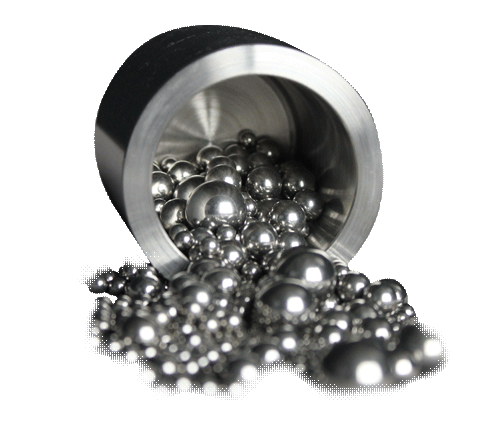
At its core, a 304 stainless steel grinding ball is a high-quality grinding media specifically designed for use in ball mills, planetary ball mills, stirred mills, and vibration mills. It is used to effectively mill, grind, and disperse a wide range of materials into fine powders. Made from AISI 304 stainless steel, these balls combine excellent corrosion resistance with good mechanical strength, making them a popular choice in industries where contamination from rust or chemical reaction must be minimized.
Core Function and Working Principle
The primary function of a 304 stainless steel grinding ball is to act as an impact and friction medium inside a rotating mill. When the mill cylinder rotates, the balls are lifted by centrifugal force and then cascade down, crushing the material trapped between them. The combination of impact (from falling balls) and attrition (from sliding and rolling) reduces particle size efficiently.
304 stainless steel balls are particularly valued for their moderate hardness (typically HRC 25–39) and toughness, which allow them to withstand repeated impacts without fracturing. Their corrosion resistance comes from the chromium-nickel composition (18% Cr, 8% Ni), which forms a passive oxide layer that protects against rust and chemical attack. This makes them ideal for grinding materials that are slightly acidic or require a clean, metal-free environment.
Key process parameters that influence grinding efficiency include ball diameter (available from 0.5 mm to 250 mm), ball-to-powder weight ratio, mill speed, and grinding time. The selection of ball size directly affects the final particle size: smaller balls provide finer grinding through increased surface area, while larger balls are better for breaking down coarse particles.
Types and Specifications
304 stainless steel grinding balls are available in several grades and finishes to meet different application needs:
By Material Grade
- AISI 304 / 304L: Standard grade for general-purpose grinding. 304L has lower carbon content, reducing the risk of intergranular corrosion in welded or high-temperature applications.
- AISI 316 / 316L: Enhanced corrosion resistance against chlorides and acids, suitable for seawater or pharmaceutical environments.
- AISI 420 / 440C: Martensitic grades offering higher hardness (up to HRC 60) for wear-resistant applications, but with lower corrosion resistance.
By Precision Grade
According to standards like GB/T 308 or ISO 3290, ball precision grades range from G10 to G1000. G10 balls have extremely tight tolerances on diameter and sphericity, making them suitable for high-precision bearings. For grinding media applications, G100–G1000 is usually sufficient, balancing cost and performance.
By Surface Finish
Balls can be supplied as polished, ground, or as-rolled. Polished balls have a smooth, bright surface that reduces friction and wear, while ground balls offer better dimensional accuracy. The choice depends on whether the grinding process requires minimal contamination or specific surface characteristics.
Key Performance Indicators and Selection Criteria
When selecting 304 stainless steel grinding balls, consider the following factors:
- Hardness and Wear Resistance: Hardness of HRC 25–39 is adequate for most non-abrasive materials. For harder materials, consider 440C or tungsten carbide balls.
- Corrosion Resistance: 304 stainless steel resists oxidation and many chemicals, but for highly corrosive environments, 316L or zirconia balls may be necessary.
- Size and Uniformity: Consistent ball diameter ensures even grinding and predictable performance. Check the manufacturer’s size tolerance.
- Density: Stainless steel has a density of ~7.9 g/cm³, providing sufficient momentum for efficient impact milling.
- Cost-Effectiveness: Compared to zirconia or agate, 304 stainless steel offers a good balance of performance and price, making it the workhorse of many laboratories and production lines.
- Automation Compatibility: These balls work seamlessly with automated ball mills and can be added via feeders for continuous operation.
Application Areas and Selection Advice
304 stainless steel grinding balls are widely used in:
- Food and Pharmaceutical Processing: Grinding spices, herbs, and active ingredients where metal contamination must be avoided.
- Chemical and Pigment Industry: Milling pigments, dyes, and catalyst materials that are sensitive to corrosion.
- Mineral and Ceramic Processing: Grinding feldspar, quartz, and clay in ball mills.
- Environmental and Battery Materials: Preparing electrode materials and recycling waste.
Selection advice: For routine grinding where iron contamination is acceptable, 304 stainless steel balls are the first choice. If your material requires ultra-high purity (e.g., electronic ceramics), consider zirconia grinding balls or agate balls. For heavy-duty, high-wear applications, tungsten carbide mill balls may be more suitable. Always match ball size to your mill type and target fineness.
References
Related Products
Get In Touch
Our professional team will reply to you within one business day. Please feel free to contact us!