

What is a 304 Stainless Steel Planetary Mill Jar? A Durable Grinding Vessel for High-Purity Planetary Ball Mill Applications
What is a 304 Stainless Steel Planetary Mill Jar?
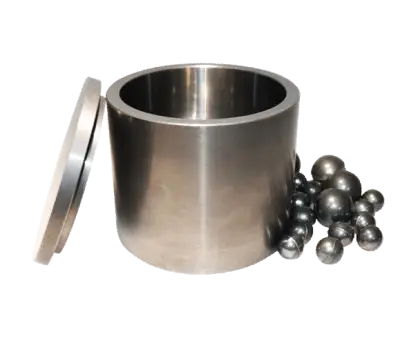
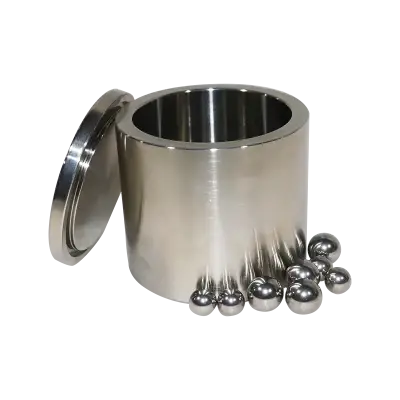
At its core, a 304 stainless steel planetary mill jar is a specialized grinding vessel designed for use with planetary ball mills. Laboratories and small-scale production facilities use it to grind, mix, and homogenize a wide range of materials—from hard and brittle solids to tough metallic powders—under controlled conditions. Made from high-quality SUS 304 stainless steel, this jar offers excellent corrosion resistance, high-temperature tolerance, and mechanical durability, making it a reliable choice for demanding grinding applications.
Core Function and Working Principle
The 304 stainless steel planetary mill jar serves as the container where the actual grinding process occurs. In a planetary ball mill, the jar is mounted on a rotating sun wheel and simultaneously rotates around its own axis in the opposite direction. This planetary motion generates high centrifugal forces that drive the grinding balls inside the jar to impact and shear the material, reducing it from coarse particles down to micron or even nanometer sizes.
Key parameters influencing the grinding result include the rotation speed (typically 50–450 rpm for the main disk and 100–900 rpm for the jar), the size and material of the grinding balls, the ball-to-powder ratio, and the grinding duration. The stainless steel construction ensures that the jar can withstand the high-energy impacts and frictional heat generated during operation, while the smooth interior surface minimizes material adhesion and facilitates easy cleaning.
Key Components and Technical Features
While the 304 stainless steel mill jar is a single product type, it incorporates several critical design elements:
- Material Integrity: SUS 304 stainless steel provides a dense, non-porous surface that resists chemical attack from acidic or alkaline samples, ensuring long service life.
- Vacuum Sealing Option: Many models include a threaded lid with a vacuum seal, allowing grinding under inert gas or vacuum conditions to prevent oxidation or contamination.
- High Temperature Resistance: The jar can withstand temperatures up to 300°C, making it suitable for applications involving heat generation or requiring elevated temperature processing.
- Compatibility: Designed to fit standard planetary ball mills, the jar is available in various capacities (e.g., 0.4L, 1L, 2L, 5L, etc.) and can be used with matching grinding balls of the same or different material.
These features make the 304 stainless steel jar a versatile option for laboratories that need a balance between cost, durability, and purity.
Key Performance Indicators and Selection Criteria
When selecting a 304 stainless steel planetary mill jar, consider the following parameters:
- Capacity: Choose from 0.4L to 16L based on sample volume. Small jars (0.4L–1L) are ideal for preliminary tests, while larger ones (2L–16L) suit batch production or pilot-scale work.
- Grinding Efficiency: The jar's design and material directly affect energy transfer. Stainless steel offers good impact resistance and moderate wear, suitable for most hard to medium-hard materials.
- Contamination Control: For high-purity applications, ensure the jar is made from high-grade 304 stainless steel with a polished inner surface to minimize metal contamination. Alternatively, consider a zirconia-lined stainless steel jar for even lower contamination.
- Maintenance: Stainless steel is easy to clean with standard solvents and resistant to rust, reducing downtime.
- Safety: Look for jars with secure locking mechanisms and proper sealing to prevent leaks during high-speed operation.
Applications and Selection Advice
The 304 stainless steel planetary mill jar is widely used in materials research, mineral processing, geology, chemistry, pharmaceuticals, and food analysis. It is particularly effective for grinding ores, metals, ceramics, pigments, and electronic materials. For users who frequently handle corrosive or abrasive samples, the stainless steel jar offers a cost-effective alternative to more expensive materials like zirconia or tungsten carbide. If your priority is the highest purity and you are working with very hard materials, consider upgrading to a zirconia planetary mill jar or a tungsten carbide jar. For routine grinding of non-contaminating samples, the 304 stainless steel jar delivers excellent performance at a reasonable price.
Always pair the jar with appropriate 304 stainless steel grinding balls to achieve optimal grinding results and avoid cross-material wear.
References
- Product page: 304 Stainless Steel Planetary Mill Jar
- Related products: Zirconia Planetary Mill Jar, Vacuum Planetary Mill Jar
Related Products
Get In Touch
Our professional team will reply to you within one business day. Please feel free to contact us!