
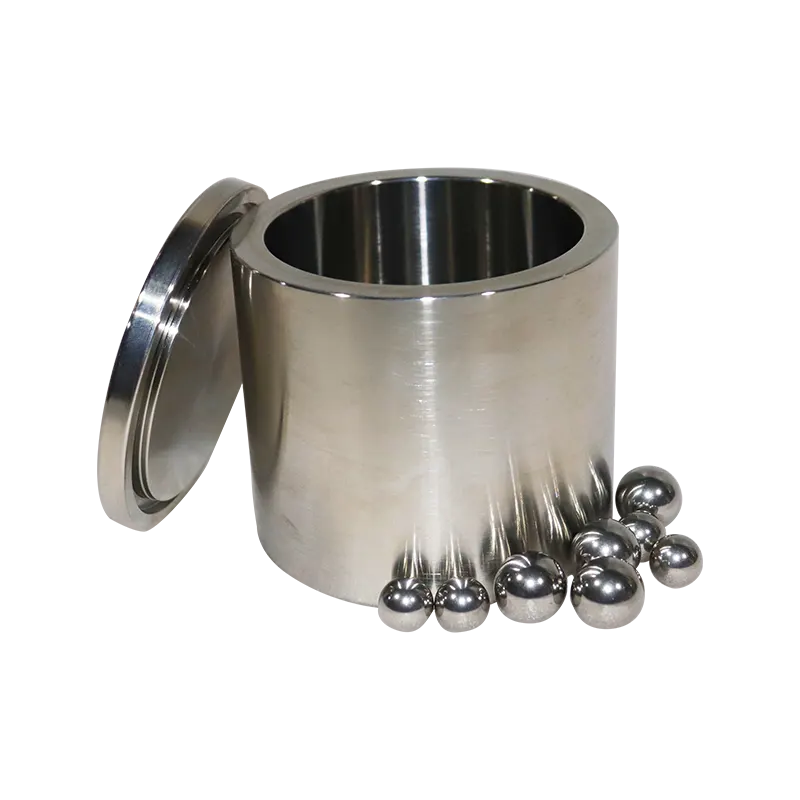
What is a 304 Stainless Steel Planetary Mill Jar? A High-Purity Grinding Vessel for Contamination-Sensitive Laboratory Applications

What is a 304 Stainless Steel Planetary Mill Jar? A High-Purity Grinding Vessel for Contamination-Sensitive Laboratory Applications
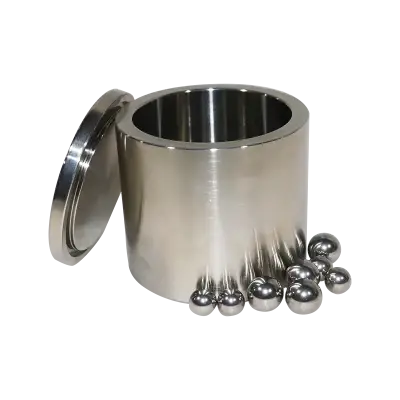
At its core, a 304 stainless steel planetary mill jar is a specialized grinding container designed for use with planetary ball mills. Laboratories and industries use it to mill, mix, and homogenize materials under controlled conditions, particularly when high purity and freedom from cross-contamination are critical. The jar is constructed from high-purity SUS 304 stainless steel, offering excellent corrosion resistance and durability, making it the preferred choice for processing pharmaceuticals, chemicals, food ingredients, and other sensitive materials.
Core Function and Working Principle
Like all planetary ball mill jars, the 304 stainless steel jar works in conjunction with a planetary ball mill. The mill's sun wheel rotates, causing the jar to revolve around its own axis while simultaneously rotating around the central axis. This dual motion generates high centrifugal forces, driving the grinding balls inside the jar to impact and shear the material, reducing it from coarse particles to fine powders, often down to the submicron or nanometer range.
What sets the 304 stainless steel jar apart is its ability to maintain a vacuum or inert atmosphere during grinding. A specially designed vacuum seal ensures that the internal environment is isolated from the outside air, preventing oxidation, moisture absorption, or contamination. This is crucial for processing reactive metals, air-sensitive compounds, or materials that must be kept dry. The vacuum-sealed design also minimizes the risk of dust leakage, ensuring a clean laboratory environment.
Key process parameters such as grinding speed, ball-to-powder ratio, and milling time directly influence the final particle size and distribution. The 304 stainless steel jar's robust construction allows it to withstand high rotational speeds and aggressive milling conditions without deformation or leakage.
Key Features and Technical Advantages
While the 304 stainless steel jar may appear similar to other planetary mill jars, its specific features make it uniquely suited for demanding applications:
- High-Purity Material: Made from SUS 304 stainless steel, it provides approximately 30% better corrosion resistance than standard stainless steel models, ensuring no metal ion leaching into the sample.
- Vacuum Sealing Capability: The threaded ports and secure vacuum lid allow for rapid setup—about 50% faster than traditional ball mill jars—and maintain a reliable seal throughout the grinding process.
- Reduced Contamination Risk: Compared to open systems, the vacuum-sealed design lowers contamination risk by up to 40%, making it ideal for pharmaceutical and food-grade applications.
- Versatile Compatibility: Available in standard capacities (e.g., 500ml) and can be used with various planetary ball mill models, including those from RETSCH, TENCAN, and other manufacturers.
- Durable Construction: The thick stainless steel walls withstand high impact forces and repeated use, while the smooth interior surface facilitates easy cleaning and prevents material buildup.
Key Performance Indicators and Selection Criteria
When selecting a 304 stainless steel planetary mill jar, consider the following performance metrics:
- Capacity: Common sizes range from 100 ml to 500 ml. Choose based on your batch volume requirements. For labs processing small quantities, 100-250 ml jars are sufficient; for larger-scale R&D, 500 ml jars are preferred.
- Vacuum Tightness: Verify the jar's ability to maintain vacuum (typically down to 10⁻³ Pa). A well-sealed jar can hold vacuum for hours, essential for long-duration milling.
- Maximum Rotational Speed: The jar must withstand the high speeds of planetary ball mills (up to 800 rpm or more). Ensure the jar is rated for the mill's maximum speed.
- Temperature Resistance: SUS 304 stainless steel can withstand temperatures up to 870°C, but during grinding, heat generation is usually moderate. However, if you plan to use the jar in a heated environment, check its thermal limits.
- Ease of Cleaning: The jar should be easy to disassemble and clean to avoid cross-contamination between batches. Many 304 stainless steel jars have smooth interiors and removable seals.
- Certification: For pharmaceutical or food applications, ensure the jar meets relevant standards (e.g., FDA, EU food contact). High-quality jars often come with material certificates.
Applications and Selection Recommendations
The 304 stainless steel planetary mill jar is widely used in:
- Pharmaceutical Research: Grinding active pharmaceutical ingredients (APIs) and excipients without contamination.
- Chemical Industry: Milling catalysts, pigments, and other reactive compounds under inert atmosphere.
- Food Science: Processing food powders, spices, and additives where metal contamination is unacceptable.
- Materials Science: Mechanical alloying, synthesis of nano-materials, and preparation of composite powders.
- Environmental Analysis: Grinding soil, sediment, or plant tissue samples for trace element analysis.
For users who require maximum purity and corrosion resistance, the 304 stainless steel jar is an excellent choice. If your application involves highly abrasive materials (e.g., silica, zirconia), consider a zirconia planetary mill jar instead. For extreme corrosion resistance or ultra-high purity, a tungsten carbide jar may be appropriate. However, for most general-purpose, high-purity milling tasks, the 304 stainless steel jar offers the best balance of performance, durability, and cost-effectiveness.
References
Related Products
Get In Touch
Our professional team will reply to you within one business day. Please feel free to contact us!