
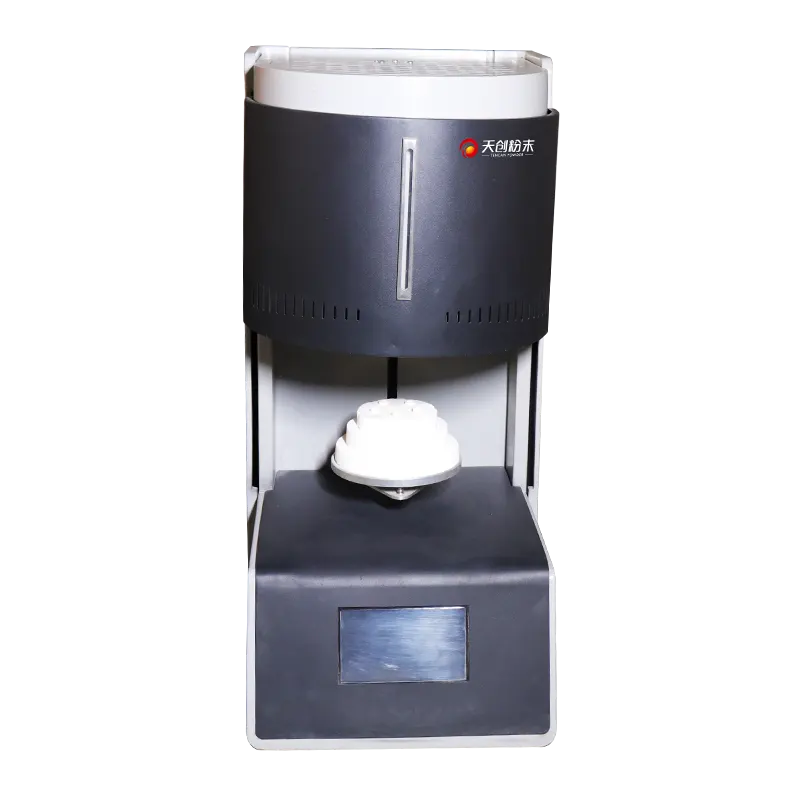
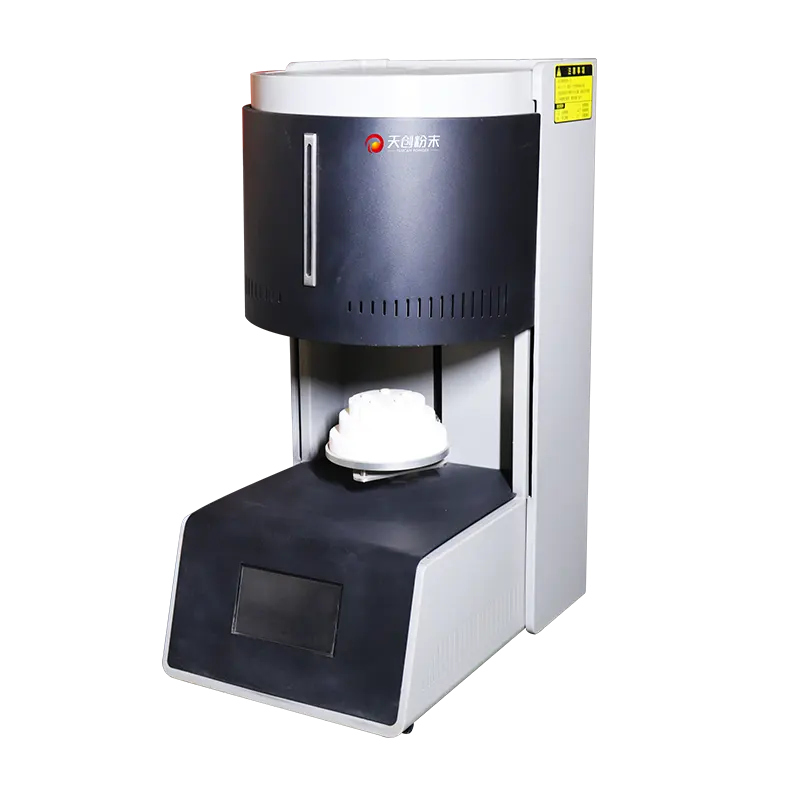
T-Bright Plus Sintering Furnace: A Practical Guide to Powder Sintering Processes

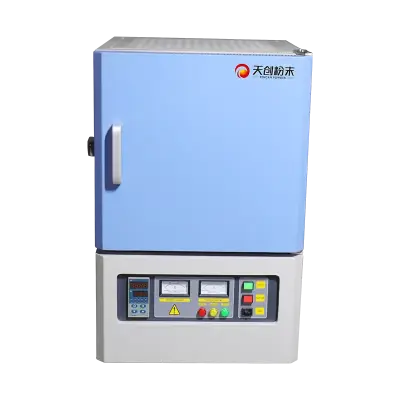
Sintering looks simple from the outside. You load parts, close the door, choose a program, and wait. Inside the chamber, though, several things are happening at once: powder particles are forming necks, pores are shrinking or changing shape, and the compact is trying to become a solid part without turning into a puddle. A sintering furnace is the equipment that keeps that transformation under control. TENCAN's T-Bright Plus Sintering Furnace sits in this part of the powder-processing chain, and it is a useful reference point while we walk through the fundamentals.
If you are shopping for a furnace, or if you already run one and want fewer surprises, the useful question is not just “how hot does it get?” It is “how well does it control the whole cycle?” Temperature, atmosphere, heating rate, cooling rate, load placement, and cleanliness all affect the result. Get those under control and sintering becomes repeatable. Ignore them and the furnace turns into a very expensive source of scrap.
What a sintering furnace actually does
Sintering is a heat treatment, not a melting operation. We heat a powder compact to a temperature below the material’s melting point, and the particles bond where they touch. Those contact points grow into necks. Open pores become rounder, some close up, and the compact gains strength and density. The part is still solid, but its microstructure has changed.
The furnace has three jobs. It delivers heat evenly, it holds the part at the right temperature for the right time, and it controls the atmosphere around the part. A fourth job matters just as much: it cools the load in a controlled way. A furnace that heats beautifully but cools like a dropped brick can still crack parts or produce the wrong microstructure.
It helps to separate sintering from its neighbours. Drying removes moisture. Debinding removes the organic binder that gave a compact its green strength. Annealing changes the microstructure of a material that is already solid. Sintering is the step where powder particles become a connected solid body. In many powder routes, it is the last high-temperature step before finishing, and it often decides whether the part meets its density, strength, and dimensional targets.
Why use the powder route at all? Because it lets you make shapes that are awkward to cast or machine, tune porosity on purpose, and mix materials that do not like to sit in a melt. The trade-off is that every step has to be understood. A sintering furnace cannot rescue a bad compact, a contaminated powder, or a binder removal cycle that cracked the part before sintering even started.
From loose powder to a finished part
A sintering furnace is only one link in the chain. If we want the furnace to do its job, we need to look at what arrives at its door. The compact is not a miniature solid yet. It is a network of particles with gaps between them, held together by mechanical interlocking, a binder, or both.
Powder and forming
Particle size, shape, and size distribution affect how the powder packs and how it sinters. Fine powder has more surface energy, which can help bonding, but it also tends to agglomerate and may need more binder. Irregular particles interlock well, while spherical particles flow nicely for injection molding or additive manufacturing. The forming method matters too: pressing, slip casting, tape casting, injection molding, and printing all leave different green densities and different binder contents.
What the furnace sees is the result of those choices. A compact with uneven density will sinter unevenly. A compact with too much binder may blister or crack during heating. A compact with lubricant that was not removed cleanly can leave carbon or other residues behind. Before we blame the furnace, we should check the incoming part.
Binder removal
Most compacts need a slow, careful heating stage before the real sintering hold. Binder and lubricant have to leave the part without building pressure inside it. If the heating rate is too aggressive, the outside of the part can seal before the inside has finished releasing volatiles. The result is cracks, blisters, or a skin that looks fine until you cut it open.
Atmosphere matters here as well. The gas flow has to carry vapours away from the load, but it should not cool the part unevenly or create a draft that disturbs fragile parts. Exhaust design is not a detail to ignore, especially when binders or additives produce condensable or flammable species. This is one of those places where a furnace with good gas management earns its keep.
The sintering hold
Once the binder is out, the part reaches the sintering temperature. Now the fun starts. Atoms move along particle surfaces and through the lattice. Necks grow. Pores change shape. The compact shrinks as the pores close. At the same time, grains can grow. That is the tension in every sintering cycle: enough heat and time to densify, but not so much that the microstructure coarsens and properties drop.
Temperature is not the only lever. Time at temperature matters. Heating rate affects how the part reaches the hold. Atmosphere affects surface chemistry and can speed up or slow down densification. The load itself matters: a heavy setter or a densely packed batch absorbs heat and changes the real temperature the parts see. A good furnace program accounts for all of this, not just the number on the controller.
Cooling is part of the process
Cooling is not a dead time between sintering and opening the door. It can decide whether the part comes out sound or cracked. Fast cooling creates thermal gradients. Thin sections cool faster than thick sections, and the resulting stress can be enough to fracture a part that looked perfect at temperature. Phase changes during cooling can also change hardness, toughness, or electrical properties.
Atmosphere control usually needs to continue during cooling. If you open the door or switch to air too early, an oxygen-sensitive material can oxidize before it is cool enough to protect. A controlled cool-down, with the right gas and the right ramp, is part of the recipe, not an optional extra.
Why atmosphere matters as much as temperature
Air is a reactive gas. At sintering temperatures, many metals will oxidize, decarburize, or pick up unwanted elements if they see air. That is why sintering furnaces are built around atmosphere control. The atmosphere can be inert, reducing, vacuum, or in some cases air or oxygen, depending on the material. The furnace has to deliver that atmosphere evenly and keep it clean.
Matching atmosphere to material
The right atmosphere depends on what you are sintering. Metals usually need oxygen kept away. Some oxides need a controlled oxygen level to avoid reduction or decomposition. Reducing atmospheres can help remove surface oxides, but they can also attack heating elements or insulation if the furnace is not designed for them. Vacuum is excellent for outgassing and for avoiding certain reactions, but it is not a universal answer; some materials volatilize in vacuum, and some processes need positive gas flow to carry away reaction products.
This is why “what atmosphere does this furnace support?” is a better question than “what is its maximum temperature?” A furnace that reaches a high temperature in air may be useless for a metal that needs a protective gas. A furnace with beautiful gas plumbing may still disappoint if the hot zone, elements, and insulation are not compatible with that gas.
Flow, sealing and safety
Gas flow is not a case where more is always better. Too little flow and reaction products linger near the load. Too much flow and you can cool the load unevenly, waste gas, or disturb fine parts. The chamber needs to seal properly, the exhaust needs to be routed safely, and the gas handling needs to match the process. Leaks are not just a quality problem; they can be a safety problem.
Binder removal adds another layer. The exhaust stream may contain organic vapours, and some of them can condense in cold spots or form flammable mixtures. A furnace used for debinding needs appropriate venting and safety controls. If you are switching between processes, make sure the furnace is cleaned and the atmosphere is suitable before the next batch goes in.
What to look for in a sintering furnace
A sensible shortlist comes from your process, not from a brochure headline. You want a furnace that can repeat your cycle, protect your material, and fit your production rhythm. Here are the areas that deserve a close look.
Temperature uniformity and control
Uniformity is the quiet hero of sintering. If the top of the load sees a different temperature from the bottom, the parts will not shrink the same way, and your dimensional spread will grow. Look at how the hot zone is designed, how many temperature sensors are used, and how the controller handles ramps, holds, and cooling. A controller with recipe storage and data logging is not a luxury when you need to compare batches.
Repeatability matters more than a single impressive number. Ask yourself whether the furnace can run the same profile next week and next month. That depends on element condition, sensor placement, insulation health, and the control strategy. A well-designed furnace makes it easier to notice drift before it ruins a batch.
Heating elements and insulation
Heating elements are consumables, but they are not all the same. Different element materials tolerate different atmospheres and different operating temperatures, and they can interact with the load or with contaminants. Insulation can absorb vapours and later release them into a subsequent run. If you switch materials often, cleanliness and compatibility become especially important.
Replacement cost and lead time belong in the decision as well. A furnace that is cheap to buy but expensive to keep running is not a bargain. Ask how easy it is to inspect the elements, replace insulation, and check the hot zone without dismantling half the machine.
Atmosphere and sealing
Look at the gas inlet, the exhaust, the seals, and the way the chamber is purged. If vacuum is part of your process, look at the pump set and the pressure control. If you need a reducing atmosphere, make sure the entire hot zone is compatible, not just the chamber shell. A leak-tight chamber with well-placed gas flow is worth more than a long list of atmosphere options that do not fit your material.
Loading, fixturing and throughput
The biggest furnace is not always the best furnace. A large chamber with a small load can waste energy and make uniformity harder. A small chamber that is always full may bottleneck production. Think about the setters, boats, trays, and fixtures you will use. They take up space, absorb heat, and can sag or react with the load. The usable hot zone is what matters, not the outside footprint.
Cooling and cycle time
Cycle time is often limited by cooling, not heating. A furnace that can cool under controlled atmosphere may shorten the cycle without sacrificing quality. But faster cooling is not automatically better. You need a cooling profile that matches the material and the part geometry. Ask how the cooling is controlled and whether the atmosphere remains protective throughout the cool-down.
Controls, data and maintenance
Modern furnaces can record temperature, atmosphere, and alarm history. That data is useful when a batch goes wrong. It also helps with quality systems and customer audits. Beyond the controller, look at the practical side: how do you access the chamber, replace a sensor, clean the hot zone, and check the seals? A furnace that is hard to maintain will drift out of condition.
Mistakes that cost you a batch
Most sintering problems are not mysterious. They come from a few common habits.
- Buying on maximum temperature alone. The top temperature is easy to advertise, but uniformity, atmosphere control, and cooling often decide whether the furnace works for your parts.
- Overloading the chamber. A full chamber can look efficient, but poor gas flow and uneven heating can ruin the batch. Leave room for the atmosphere to do its job.
- Rushing binder removal. Cracked parts often fail before sintering. A slower, well-vented debinding stage is cheaper than scrap.
- Ignoring furnace cleanliness. Residue from previous runs can contaminate the next batch. Elements, insulation, and fixtures all need attention.
- Assuming the atmosphere is fine because the gauge says so. Leaks, poor purging, and bad exhaust routing can leave oxygen or reaction products where you do not want them.
- Skipping a small trial. A new powder, binder, or fixture should be tested with a small load before it goes into full production.
- Keeping no records. Without a record of the profile, atmosphere, and load, you cannot learn from a good batch or fix a bad one.
Matching the furnace to your powder and part
Different powder routes ask different things of a furnace. A press-and-sinter metal part may care most about atmosphere and temperature uniformity. A metal injection molded part may need a careful debinding stage and clean exhaust. A technical ceramic may be sensitive to oxygen partial pressure and cooling rate. A research lab may need flexibility and fast changeover, while a production line may need repeatability and uptime.
It also helps to separate batch work from continuous work. Batch furnaces give you flexibility and clear traceability by load. Continuous furnaces can suit a narrow, high-volume product, but they are less forgiving when the process changes. Neither is automatically better; the right choice depends on how often you change materials, how large your batches are, and how much flexibility you need.
Questions to settle before you compare models
Before you look at specific furnaces, write down the answers to these practical points. They will narrow the field quickly.
- What material are you sintering, and what atmosphere does it need?
- What is the largest load you expect, including fixtures and clearance?
- What heating and cooling rates does your process require?
- Do you need vacuum, gas flow, or both?
- What data do you need to record for quality control?
- How much floor space, power, and services are available?
- Who will maintain the furnace, and how quickly can parts be replaced?
These questions keep the conversation honest. They also stop you from paying for a feature that does not affect your parts, or from missing a detail that will cost you every week.
A practical way to evaluate a sintering furnace
The best evaluation is a trial with your own material. Prepare compacts the way you would in production, run a representative cycle, and measure what matters: density, strength, dimensions, surface condition, and repeatability. Cut a part open and look at the microstructure if you can. Run a second batch to see whether the result holds. A furnace that performs once can be lucky; a furnace that performs repeatedly is worth considering.
During the trial, watch how the furnace behaves between holds. Does the temperature overshoot? Does the atmosphere recover quickly after loading? Does the cooling follow the program? Do the alarms and interlocks work? These details tell you more about daily life with the furnace than a single test coupon.
When a model catches your eye, use its product page to confirm the current working envelope, atmosphere configuration, and control package against your process. Do not assume that a feature you need is included; check it. Do not assume that a feature you do not need is harmless either, because extra complexity can add maintenance and cost.
Where TENCAN fits
TENCAN supplies powder-processing equipment, and sintering is one of the steps where equipment choices show up quickly in part quality. The sintering furnace is part of that picture, and it is worth reviewing if you are building or upgrading a powder-processing line. The useful move is to compare it against your material, load, atmosphere, and data requirements rather than against a generic wish list.
A sintering furnace is a long-term tool. It will run many cycles, see different powders, and collect dust, vapours, and wear. The best choice is not the one with the longest feature list. It is the one that fits your process, is easy to keep clean, and gives you repeatable results you can trust.
Sintering rewards discipline. Control the powder, remove the binder gently, protect the part during heating and cooling, and keep records. Do that, and the furnace becomes a reliable part of your process instead of a black box that sometimes works.
Related Products
Get In Touch
Our professional team will reply to you within one business day. Please feel free to contact us!