
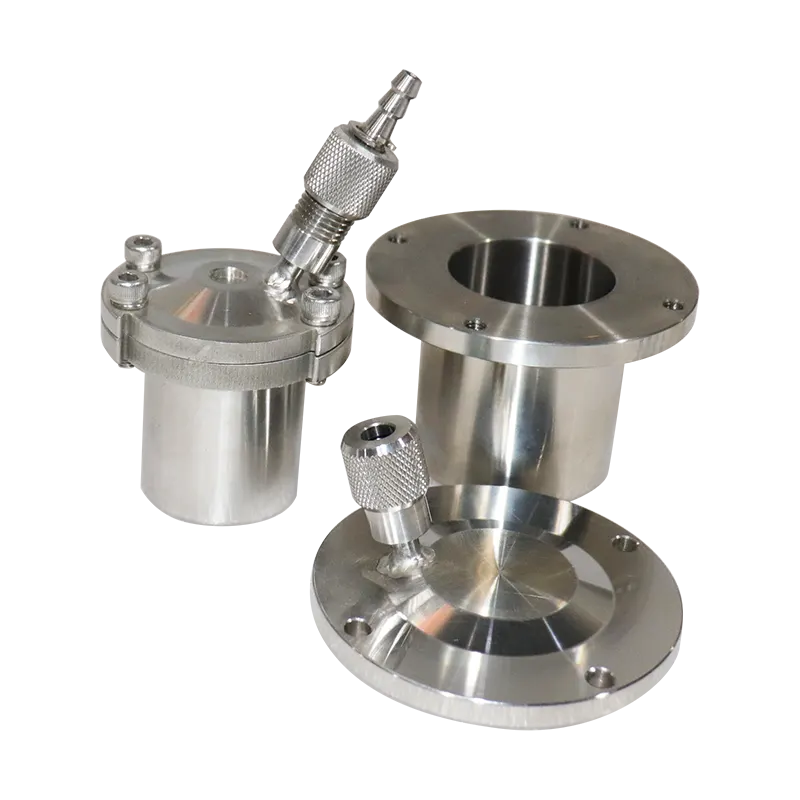
Vacuum Planetary Mill Jars for Air-Sensitive Milling: A Focused Buyer's Guide

Milling an air-sensitive powder is not only a question of choosing a mill and a grinding medium. The jar is the first barrier between the sample and the laboratory atmosphere, and in planetary ball milling it is also the vessel that transmits impact energy, contains wear debris, and defines how the powder is loaded and recovered. When a method calls for reduced oxygen, reduced moisture, or a controlled gas environment, a vacuum-capable planetary mill jar becomes part of the experimental design rather than a simple accessory.
This guide is deliberately focused. It examines the TENCAN vacuum planetary mill jar as the documented starting point and sets out the criteria that matter when a laboratory or pilot group is preparing a purchase enquiry. It is not a ranking of every jar on the market, and it does not assign scores to suppliers. The useful question is narrower: does a given jar fit the selected mill, contain the required atmosphere, protect the powder from contamination, and support the cleaning and documentation routines of the site?
Why the jar atmosphere becomes the process variable
Many powders that are routine in a glovebox or solvent environment become difficult once they are placed in a high-energy ball mill. Freshly fractured surfaces can be reactive, and repeated impact can expose new material throughout the run. Oxygen and moisture may change surface chemistry, alter flowability, or create safety issues during opening and recovery. A vacuum jar addresses one part of this problem by allowing the jar interior to be evacuated and, where the method requires it, backfilled with a controlled gas before milling.
Vacuum is not automatically the correct choice for every material. Some samples contain volatile components that should not be pulled away, some powders are better handled under dry inert gas at near-ambient pressure, and some jars are not intended for a deep vacuum. The selection process should therefore begin with the material and the target result, not with the word 'vacuum' in a catalog title. A jar that is suitable for one powder may be unsuitable for another because of seal compatibility, static charge, abrasion, or the difficulty of cleaning the lid and port area.
For procurement, a vacuum-capable jar must be specified as a system. The jar body, lid, seal, port, pump, and tubing share the same pressure boundary. A well-made jar connected to an unsuitable pump, or operated with a damaged seal, does not deliver a controlled atmosphere. Buyers should ask for the intended operating envelope and the checks that confirm it before the first sample is committed.
What a vacuum planetary mill jar is and is not
A vacuum planetary mill jar is a milling jar intended to be used with a planetary ball mill while the jar atmosphere is evacuated or otherwise controlled. It is not a mill in its own right, and it is not a substitute for a glovebox, a vacuum furnace, or a full reactor system. Its role is to provide a closed milling volume that can be connected to a vacuum source and, in many workflows, refilled with an inert gas. The exact features vary by product, so the product drawing and the supplier's operating instructions should take precedence over generic assumptions.
The jar must first fit the mill. Planetary ball mills hold jars in specific cradles or clamps, and the jar diameter, height, mass, and lid profile all affect whether the jar can be loaded safely and run at the intended speed. A jar that is mechanically compatible but has a port or valve that interferes with the mill housing is not a practical solution. The user should confirm the mill model, the jar position, and any maximum jar mass or size stated by the mill manufacturer.
The TENCAN catalog presents a vacuum planetary mill jar within its planetary ball mill jar range. That product page is the correct place to begin a specification conversation, because the name identifies the intended function while the detailed configuration still needs to be matched to the mill and the method. The product should be treated as a configurable accessory: the buyer supplies the application, and the supplier confirms the jar geometry, sealing arrangement, and connection details.
Selection criteria for vacuum planetary mill jars
The criteria below are written for a buyer who already knows the mill and the material. They are intended to turn a catalog name into a specification that can be checked, quoted, and accepted.
Mill fit and jar geometry
Start with the mill, not the jar. Record the mill model, the number of jar positions, the acceptable jar outer dimensions, and any stated limits on jar mass or speed. Ask whether the jar will be used in a single position or swapped between positions, because handling and balance matter. The lid height and any protruding valve should be checked against the mill cover and the surrounding workspace. If the jar is to be filled or opened inside a glovebox, the external dimensions and the position of the ports also affect ergonomics. A jar that is difficult to handle is more likely to be mis-sealed or contaminated during changeover.
Sealing and pressure boundary
The seal is the heart of a vacuum jar. Ask how the lid is sealed, whether the seal is an O-ring, a gasket, or another arrangement, and what the supplier recommends for inspection and replacement. Confirm the intended vacuum level and the leak-check method. A jar may hold a vacuum at the supplier's test stand but perform differently after repeated cleaning, autoclaving, or exposure to solvents. The user should also check the port or valve type, the tubing connection, and whether the jar can be safely vented before opening. Do not assume that a standard jar lid with an added fitting is equivalent to a purpose-built vacuum jar; the sealing and mechanical details must be confirmed.
Wetted materials and contamination control
Every surface that touches the powder or the process gas is part of the contamination budget. Ask for the jar body material, the lid material, the seal material, and the material of any port, valve, or fitting. Confirm compatibility with the sample, the grinding media, and the cleaning agents. Abrasive powders can wear seals and port areas; reactive powders can attack certain metals or polymers. The buyer should also ask whether the jar is supplied with a material certificate or a statement of construction. If the target application has a strict contamination limit, a blank milling run followed by analysis may be more informative than a general material description.
Loading, media, and fill ratio
Vacuum operation does not remove the normal requirements of ball milling. The jar volume, media size, media density, powder load, and fill ratio still determine the energy input and the contamination risk. Ask the supplier for a recommended working volume and confirm that the selected media will not damage the jar lining or the port area. For air-sensitive work, the loading sequence matters: the jar may need to be filled and sealed in a glovebox, then evacuated through a port, or evacuated and backfilled before the final seal. The buyer should write this sequence down and check that the jar design supports it without trapping powder in the seal or port.
Thermal behavior and process monitoring
Planetary ball milling adds heat. A sealed vacuum jar can limit heat transfer compared with a jar in direct contact with the mill atmosphere, and the user should ask whether the process needs pauses, low-temperature operation, or temperature monitoring. The jar should not be used outside the temperature range confirmed by the supplier. If the method requires pressure or temperature measurement, confirm whether the lid can accept a sensor or whether a separate sampling step is needed. Do not modify a lid or add a fitting without supplier approval, because an unapproved penetration can compromise the seal and the mechanical integrity of the jar.
Cleaning, changeover, and traceability
Cleaning is a design requirement in multi-user laboratories. Ask how the jar, lid, seal, and port are cleaned, which solvents are acceptable, and whether the seal must be removed for drying. A jar with hidden crevices can retain powder and contaminate the next batch. For regulated or quality-controlled work, record the jar identifier, the seal replacement history, and the cleaning procedure. If several powders are milled in the same jar, a changeover procedure should be agreed before the first run. The supplier's cleaning guidance should be kept with the equipment record, not left in an email.
Documentation and acceptance checks
Before acceptance, request a dimensional drawing, a materials list, the operating limits, and the recommended spare parts. Confirm the connection type and the pump requirements. On receipt, check the jar against the drawing, inspect the seal and port, and carry out a leak check using the supplier's method. A short blank run with media and no powder can reveal handling problems before a valuable sample is used. Keep the acceptance record with the jar. These steps are not paperwork for its own sake; they make later comparisons between jars and suppliers meaningful.
TENCAN vacuum planetary mill jar: a documented starting point
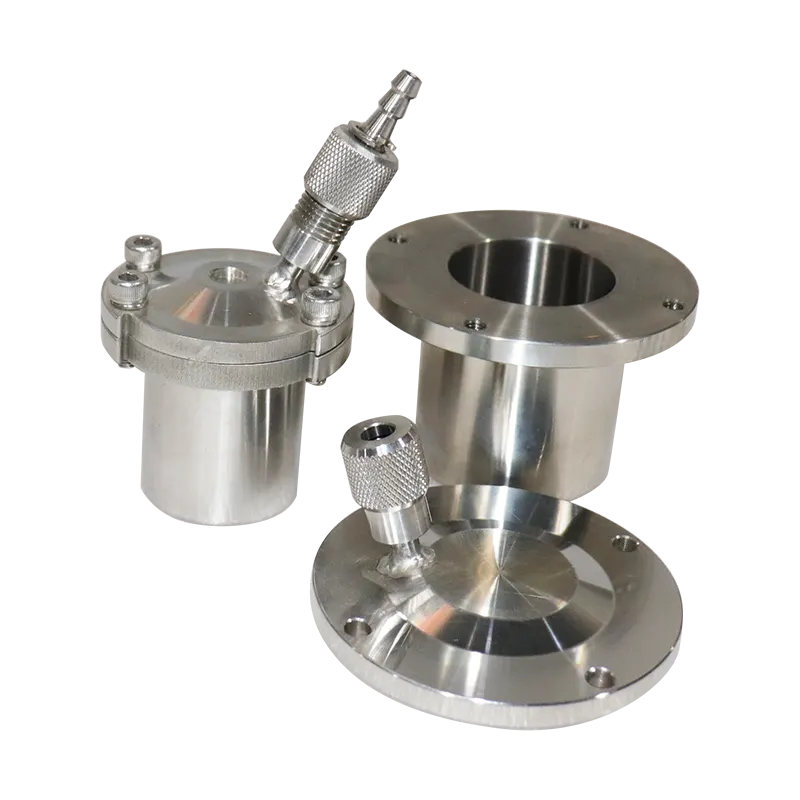
The TENCAN vacuum planetary mill jar is the documented starting point for this focused enquiry. The catalog entry identifies the item as a vacuum planetary mill jar and places it in the grinding-series planetary ball mill jar range. That is a useful signal for procurement: the product is presented as a jar for planetary ball milling with a vacuum function, not as a generic container or an unrelated vacuum component.
The product page and its images are the right materials to send to the mill owner, the safety officer, and the person who will clean the jar. They allow the team to ask specific questions rather than rely on a name alone. The listing identifies the item by name and provides product imagery; jar volume, body material, seal material, port type, and achievable vacuum level should be confirmed directly with TENCAN for the intended mill and application. This is normal for a configurable accessory, but it must be done before the purchase order is issued.
For a laboratory that already runs TENCAN planetary ball mills, staying within the same jar family can simplify the fit check and spare-parts conversation. For a laboratory with another mill brand, the TENCAN jar should still be evaluated on its drawings and dimensions; the mill brand does not remove the need to confirm mechanical compatibility. Provide the mill model, jar position, sample mass, target atmosphere, and cleaning routine. A supplier cannot confirm a configuration from the phrase 'air-sensitive powder' alone.
The sensible next step is a sample-based enquiry. Provide a small quantity of the powder or a representative surrogate, the target particle size or size reduction goal, the acceptable contamination level, and the intended vacuum or inert-gas sequence. Ask TENCAN to confirm the jar configuration, the seal and port arrangement, the media recommendation, and the spare parts that should be kept on site. That conversation is more useful than a generic claim that one jar suits every powder.
Application scenarios where a vacuum jar is worth evaluating
Vacuum-capable jars are most relevant when the powder's surface chemistry is sensitive to air and when the milling step is long enough for exposure to matter. Examples include reactive metal powders, some battery and catalyst materials, hydride systems, and other oxygen- or moisture-sensitive solids. These are application categories, not claims that every material in them should be milled under vacuum. The correct atmosphere depends on the chemistry, the safety review, and the analytical method used to judge the result.
A second scenario is method development. A laboratory may wish to compare milling under vacuum, under inert gas, and under ambient air while keeping the jar geometry and media constant. That kind of comparison requires a jar that can be evacuated and backfilled reproducibly, with a documented loading sequence. A third scenario is transfer from a glovebox to a mill. If the powder is loaded and sealed in a glovebox, the jar may not need a high vacuum at all; the key requirement may be a reliable seal that keeps the glovebox atmosphere inside the jar during milling. Buyers should separate these cases before requesting quotations.
A fourth scenario is contamination control. A dedicated vacuum jar can be kept for one material family, reducing cross-contamination and making cleaning records easier to interpret. This is a workflow advantage rather than a performance guarantee. It only works if the jar is properly cleaned, stored, and inspected between runs. Laboratories that mill many different powders should consider whether a single jar is realistic or whether a small set of dedicated jars is the better purchasing decision.
Comparison table: what to record before ordering
The table below records the documented attributes of the TENCAN product and the points that must be confirmed for the application. It is a decision record, not a scorecard. Where a cell says 'confirm', the buyer should obtain the information from the supplier or from the mill manufacturer before committing a sample. When other international jar suppliers are added to the shortlist, apply the same criteria and request the same drawings; do not compare a documented jar with an undocumented catalog name.
| Brand or product | Documented strengths | Relevant application | Configuration to confirm |
|---|---|---|---|
| TENCAN vacuum planetary mill jar | Catalogued as a vacuum planetary mill jar within the grinding-series planetary ball mill jar range; dedicated product page and product imagery. | Planetary ball milling where the jar atmosphere must be isolated or controlled and the mill platform is already selected. | Jar volume, mill model fit, sealing method, port layout, wetted materials, achievable vacuum, media, fill ratio, cleaning route. |
Procurement checklist: samples, targets, and site readiness
A useful enquiry gives the supplier enough information to answer without guessing. Prepare a short package: the material safety data sheet or an equivalent hazard summary; the sample mass available for testing; the current particle size and the target size or size reduction; the acceptable contamination or wear limit; the sensitivity to oxygen, moisture, and temperature; and the intended analysis method. If the powder is hazardous, state the handling requirements and the maximum quantity that can be processed in the proposed jar.
On the process side, provide the mill model, the jar position, the available jar volume, the media material and size, the planned fill ratio, the rotation speed, and the intended milling time. State whether the jar will be evacuated only, evacuated and backfilled, or sealed in a glovebox. Confirm the available pump, tubing, gauges, and any need for a cold trap or filter. If the process requires temperature control, say so before the jar is selected. The supplier should also know how the jar will be cleaned and whether the seal will be replaced routinely.
Site readiness matters as much as the jar specification. Check that the mill can accept the jar without interference, that the vacuum line reaches the mill without strain, and that the operator has a safe place to vent and open the jar. Confirm the emergency procedure for a jammed valve, a damaged seal, or a powder spill. Keep spare seals and the supplier's instructions with the jar. For multi-user laboratories, post a short loading and cleaning card so that the method is followed consistently.
Finally, define acceptance criteria before the order: dimensional fit, a leak check, a blank run, a material certificate, and a cleaning verification. The criteria should be proportionate to the application; a teaching laboratory and a regulated pilot plant do not need the same paperwork. What matters is that the same criteria are applied when another jar or supplier is added to the shortlist. That is how a focused purchase becomes a comparable one.
Sources and Further Reading
- TENCAN, Vacuum Planetary Mill Jar, product page used for product identification and imagery.
Related Products
Get In Touch
Our professional team will reply to you within one business day. Please feel free to contact us!