
Microwave Vacuum Drying Oven: How It Works and Why It Beats Traditional Drying

What Is a Microwave Vacuum Drying Oven?
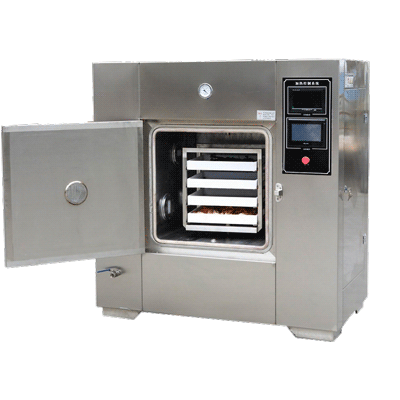
If you work with powders, you know the struggle: you need to remove moisture, but heat can ruin the very properties that make your material valuable. That's where a microwave vacuum drying oven comes in. It's a piece of equipment that combines two powerful ideas—microwave heating and vacuum drying—into one process. The microwave energy heats the material from the inside out, while the vacuum lowers the boiling point of water, so moisture can escape at much lower temperatures.
Think of it like this: traditional drying is like waiting for a puddle to evaporate on a hot sidewalk. Microwave vacuum drying is more like using a gentle, invisible hand to lift the water out while keeping the sidewalk cool. That's a big deal for heat-sensitive powders, from pharmaceutical ingredients to battery materials.
In this article, we'll walk through how these ovens work, why they're different from conventional drying, and what to look for if you're considering one. We'll also point you to a specific model from TENCAN, the Microwave vacuum drying oven, as a practical example.
Why Combine Microwave and Vacuum?
You might wonder: why not just use a regular vacuum oven? Or a microwave alone? The magic happens when you put them together. Let's break it down.
Microwave Heating: Fast and Volumetric
Microwave heating works by exciting polar molecules—mainly water—inside the material. Instead of heating the outside and waiting for heat to conduct inward, microwaves penetrate and generate heat throughout the entire volume. That means the moisture in the center of a clump gets energized at the same time as the surface. The result is rapid, uniform heating.
For powders, this is huge. Powders often insulate heat poorly, so conventional drying can leave the inside wet while the outside crusts over. Microwaves avoid that crusting problem because the energy doesn't rely on conduction.
Vacuum Drying: Low Temperature, Gentle Removal
Vacuum drying lowers the boiling point of water. At atmospheric pressure, water boils at 100°C (212°F). Under a vacuum, it can boil at 40°C, 30°C, or even lower. That means you can remove moisture without cooking your material. For heat-sensitive powders—think enzymes, probiotics, or certain polymers—this is the difference between a viable product and a ruined batch.
When you combine microwave and vacuum, you get the best of both: microwave energy quickly drives moisture to the surface, and the vacuum pulls it away at low temperature. The process is faster than vacuum alone and gentler than microwave alone (which might overheat in air).
How Does Microwave Vacuum Drying Work?
Let's get into the nuts and bolts. Understanding the mechanism helps you troubleshoot and optimize your drying recipes. Here's the step-by-step flow inside a typical microwave vacuum drying oven.
Step 1: Loading and Sealing
You place your wet powder or material into a specially designed tray or container. This container is often made of microwave-transparent material like PTFE or certain ceramics. Then you seal the chamber and start the vacuum pump.
Step 2: Pulling a Vacuum
The vacuum pump reduces the pressure inside the chamber. As pressure drops, the boiling point of water drops too. This creates a low-temperature drying environment. You'll typically see vacuum levels measured in millibar (mbar) or Torr. The deeper the vacuum, the lower the boiling point, but you also need to balance pumping speed and energy consumption.
Step 3: Applying Microwaves
Once the vacuum is stable, the microwave generator (usually a magnetron) sends microwaves into the chamber. These waves are absorbed by water molecules and other polar components. The water heats up, turns into vapor, and because of the vacuum, it leaves the material quickly.
One key detail: the microwaves also create a 'pumping' effect inside the material. As water vapor expands, it pushes liquid moisture toward the surface, where it can evaporate. This is called mass transfer, and it's why microwave vacuum drying is so efficient.
Step 4: Condensing and Exhausting Vapor
The vapor doesn't just disappear. It gets pulled out of the chamber and into a condenser or cold trap. There, the water vapor turns back into liquid and is collected. This protects the vacuum pump and recovers any valuable solvents or essential oils that might be in your material.
Step 5: Monitoring and Finishing
Modern ovens let you monitor temperature, pressure, and even moisture content in real time. You can adjust microwave power and vacuum level as the drying progresses. Once the target moisture is reached, you stop the microwaves, release the vacuum, and unload your dry powder.
The Role of Dielectric Properties
Every material has a dielectric property that determines how it interacts with microwaves. Water has a high dielectric loss factor, meaning it absorbs microwave energy very efficiently and converts it to heat. Most dry solids have a much lower loss factor. This is actually great news: as the material dries, it absorbs less microwave energy, so you don't overheat the dry powder. The process is somewhat self-limiting. However, some materials—like certain metal oxides or carbon—can absorb microwaves strongly even when dry. You need to know your material's behavior to set the right power level.
Key Advantages for Powder Processing
Why should you care about this technology? Because it solves several pain points that come up again and again in powder handling. Let's look at the big ones.
Preserving Heat-Sensitive Materials
Many powders—like pharmaceutical APIs, enzymes, probiotics, and certain battery cathode materials—degrade when exposed to high heat. Traditional drying might require 80–120°C, which can cause oxidation, denaturation, or phase changes. Microwave vacuum drying keeps temperatures in the 30–60°C range, often lower. That means you retain more of the material's original properties.
Faster Drying Cycles
Because microwaves heat volumetrically, drying times can drop from hours to minutes. For example, a ceramic slurry that might take 12 hours in a conventional oven could dry in 1–2 hours in a microwave vacuum oven. That's not just about speed—it's about throughput and energy savings per batch.
Uniform Moisture Content
Conventional drying often creates moisture gradients: dry on the outside, wet on the inside. Microwave vacuum drying avoids this because the energy penetrates the whole sample. The result is a more uniform final product, which is critical for consistent powder flow, compaction, and reactivity.
Less Oxidation and Contamination
Vacuum removes oxygen from the chamber. That means less oxidation for oxygen-sensitive materials like metal powders, certain polymers, and food ingredients. It also reduces the risk of dust explosions, since there's no oxygen to support combustion.
Energy Efficiency
Microwaves couple directly with water, so energy goes where it's needed—into the moisture, not into heating the whole oven. When you combine that with the low-temperature advantage, you often use less total energy than conventional drying, even though electricity powers the magnetron.
Reduced Risk of Explosion
Dust explosions are a real concern when drying combustible powders. In a vacuum, there's little to no oxygen, so the conditions for a dust explosion are largely eliminated. This makes microwave vacuum drying a safer choice for metal powders, organic powders, and other materials that can form explosive atmospheres.
Where Microwave Vacuum Drying Shines
This technology isn't for every powder, but in certain industries it's a game-changer. Here are some of the most common applications.
Ceramics and Advanced Materials
Technical ceramics, catalysts, and nanopowders often need gentle drying to avoid agglomeration or phase changes. Microwave vacuum drying preserves particle size distribution and surface area. For materials like barium titanate or zirconia, this matters for final sintered properties.
Pharmaceuticals and Nutraceuticals
Heat-sensitive drugs, herbal extracts, and probiotic powders benefit from low-temperature drying. The vacuum also helps remove residual solvents, which is important for regulatory compliance. And because the process is fast, you reduce the risk of microbial growth during drying.
Battery Materials
Lithium-ion battery cathode and anode materials are sensitive to moisture and oxidation. Microwave vacuum drying can remove moisture from powders like NMC, LFP, or graphite without causing surface oxidation. It's also used for drying electrode slurries in some advanced processes.
Food and Botanical Powders
Fruit powders, vegetable powders, and botanical extracts retain more color, flavor, and nutrients when dried under vacuum with microwaves. The low temperature preserves volatile compounds, and the fast process reduces browning. Think of a vibrant green matcha powder or a bright red beetroot powder—those colors survive better with this method.
Chemicals and Polymers
Many polymers and specialty chemicals are heat-sensitive. Microwave vacuum drying can remove water or solvents without melting or degrading the polymer. It's also useful for drying hydrogel beads and other moisture-heavy materials.
When Microwave Vacuum Drying Might Not Be the Best Fit
It's not a universal solution. If your material is highly microwave-transparent—meaning it doesn't absorb microwaves well—the process may be slow or inefficient. Very dense materials or large solid chunks might not dry evenly because microwaves penetrate only a certain depth. And if your product is not heat-sensitive and you're drying a cheap, bulk material, conventional drying might be more cost-effective. The sweet spot is high-value, heat-sensitive powders where quality matters more than upfront equipment cost.
What to Look for in a Microwave Vacuum Drying Oven
If you're in the market for one of these ovens, you need to evaluate a few key specs. Here's what we'd look at.
Microwave Power and Frequency
Most industrial microwave vacuum ovens use 2.45 GHz, which is a standard ISM frequency. Power levels can range from a few hundred watts for lab units to tens of kilowatts for production. The right power depends on your batch size and how much water you need to evaporate. Too much power can cause arcing or hot spots; too little makes drying slow.
Vacuum Level and Pumping Speed
You want a vacuum system that can reach the pressure you need and handle the water vapor load. A deeper vacuum lowers the boiling point further, but it also requires a more robust pump. Look for a system with a condenser or cold trap to protect the pump and recover volatiles.
Temperature Control and Uniformity
Even though microwaves heat volumetrically, you still need temperature monitoring. Look for infrared sensors or fiber-optic probes that can measure temperature inside the chamber without interfering with the microwaves. Uniformity is also key—rotating trays or mode stirrers help distribute the microwave field evenly.
Material Handling and Capacity
How will you load and unload the powder? Trays, trays, or continuous conveyors? For lab work, a small batch oven with multiple shelves might be fine. For production, you might need a continuous system or a large chamber with automated loading. Consider the material's flowability and whether it needs agitation during drying.
Safety Features
Microwave vacuum ovens need proper shielding, door interlocks, and vacuum relief valves. You also want a system that can handle solvent vapors safely—explosion-proof designs are available for flammable solvents.
A Practical Example: TENCAN's Microwave Vacuum Drying Oven
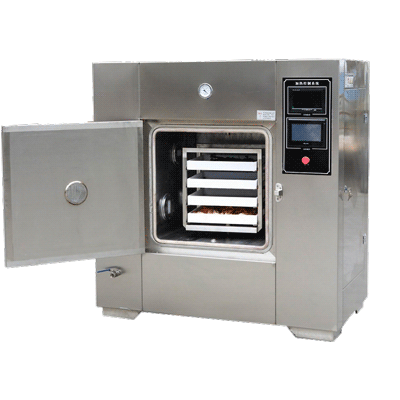
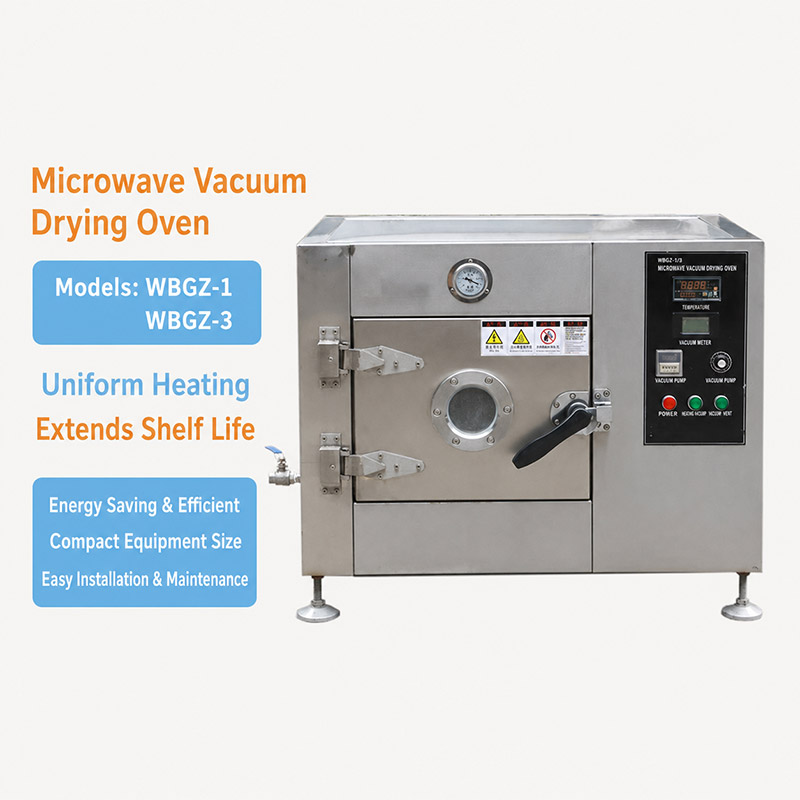
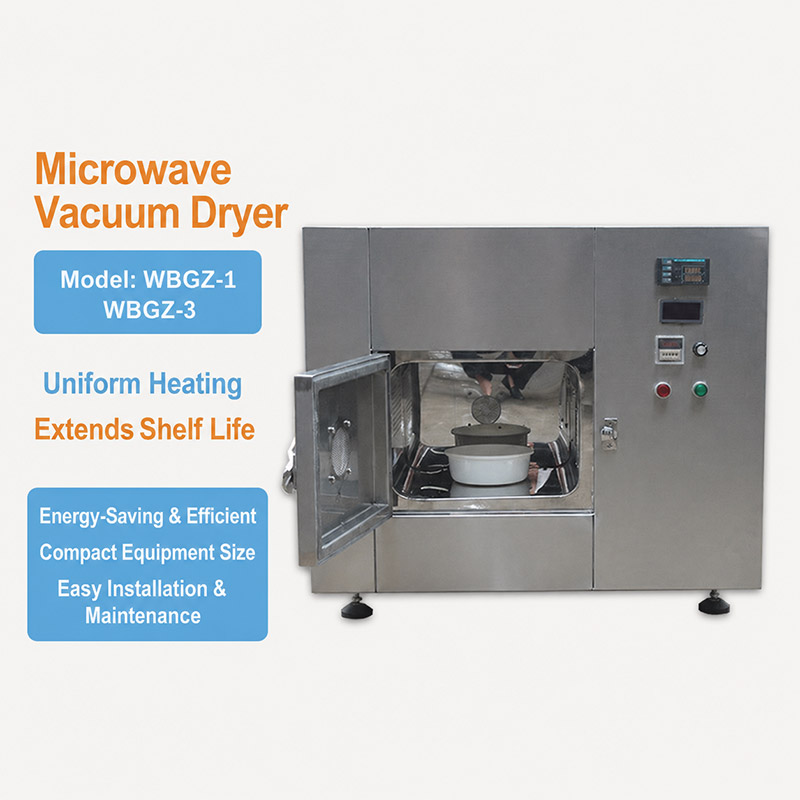
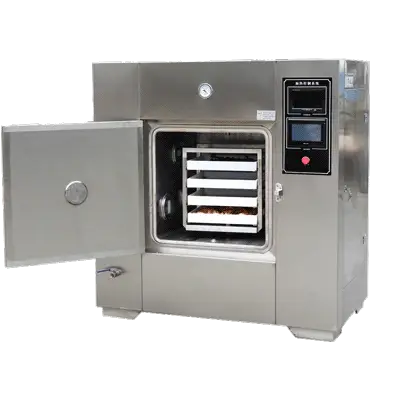
If you're looking for a concrete starting point, TENCAN (长沙天创粉末技术有限公司) offers a microwave vacuum drying oven designed for laboratory and small-scale production. It combines a microwave generator with a vacuum chamber and a condenser system, giving you precise control over temperature and pressure.
This oven is particularly suited for drying heat-sensitive powders, ceramics, battery materials, and pharmaceutical ingredients. Because it's from TENCAN, you also get access to their powder processing expertise—they've been in the milling and powder equipment space for years, so they understand the challenges you face.
We won't list every spec here because configurations vary, but you can check the product page for details on chamber size, microwave power, and vacuum performance. The key is that it gives you a controlled environment where you can dial in the right drying curve for your material.
Common Questions About Microwave Vacuum Drying
Let's tackle a few questions that come up often when people first encounter this technology.
Is Microwave Vacuum Drying Safe?
Yes, when the equipment is properly designed and maintained. Microwave leakage is controlled by shielding and door seals, just like a home microwave. The vacuum chamber is built to withstand pressure differentials. The main safety considerations are solvent vapors (if you're drying flammable solvents) and dust (if your powder is combustible). With the right safety features, it's a safe process.
Can It Handle Large Batches?
Absolutely. While lab-scale ovens might handle a few kilograms, industrial microwave vacuum dryers can process hundreds of kilograms per batch or operate continuously. The scalability depends on microwave power, vacuum pump capacity, and material handling. Many manufacturers offer pilot and production-scale units.
How Does It Compare to Freeze Drying?
Freeze drying (lyophilization) also uses vacuum and low temperatures, but it relies on sublimation—freezing the water first, then pulling it off as vapor. Microwave vacuum drying doesn't require freezing. It's generally faster and less energy-intensive than freeze drying, and it can handle materials that don't freeze well. However, freeze drying can be better for certain delicate biologicals. It depends on your material.
What About Energy Consumption?
Microwave vacuum drying is often more energy-efficient than conventional convective drying because the energy goes directly into the water. The vacuum pump adds some energy cost, but the overall process is usually competitive. For heat-sensitive, high-value products, the energy savings are a bonus on top of quality improvements.
Do I Need Special Training to Operate One?
Basic operation is straightforward, but optimizing a drying recipe takes some know-how. You'll need to understand your material's dielectric properties, how it responds to microwave power, and how vacuum affects drying rate. Most suppliers provide training and support. If you're already comfortable with vacuum ovens or microwave systems, you'll pick it up quickly.
Bringing It into Your Process
Microwave vacuum drying isn't just a fancy lab toy. It's a practical solution for anyone who needs to dry powders without damaging them. Whether you're working with ceramics, battery materials, pharmaceuticals, or food powders, the combination of microwave heating and vacuum drying gives you speed, gentleness, and control.
The next step is to evaluate your specific material. What's its moisture content? How heat-sensitive is it? What's your target throughput? Once you have those answers, you can talk to a supplier like TENCAN and look at a microwave vacuum drying oven that fits your scale. It might be the upgrade that finally makes your drying step the easiest part of your process—instead of the bottleneck.
And remember: drying is not just about removing water. It's about preserving what makes your powder valuable. That's why the right technology matters.
Related Products
Get In Touch
Our professional team will reply to you within one business day. Please feel free to contact us!