
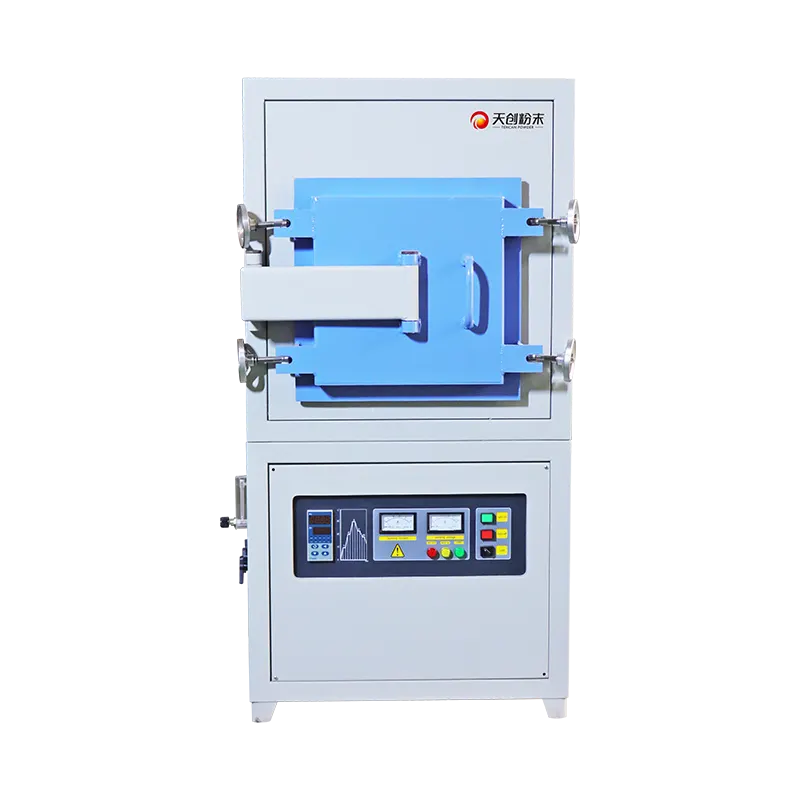
Box-Type Atmosphere Furnace: A Practical Guide for Controlled Heat Treatment

If you work with powders, ceramics, or metal parts, you already know that a furnace is not just a hot box. The atmosphere inside the chamber can decide whether a batch comes out bright and clean or dull, oxidized, and scrap. That is where a Box-Type Atmosphere Furnace earns its place on the shop floor: it gives you a sealed, controllable space where heat and gas work together instead of fighting each other.
This guide is for the person who has to make that control repeatable — the process engineer, lab manager, or production lead who wants fewer surprises and a better handle on what is happening inside the chamber. We will keep the technical terms, but explain them in plain language as we go.
What a Box-Type Atmosphere Furnace Actually Does
At its core, the furnace is a chamber with a door, a heating system, insulation, and a gas-management package. You load the work, close the chamber, and then control two things at once: temperature over time and the composition of the gas around the load. A standard air furnace only controls temperature. An atmosphere furnace controls the chemistry at the surface, too. That difference is why the same alloy can come out bright in one furnace and covered in scale in another.
The “box-type” label describes the chamber shape rather than a single process. You get a work space that is easy to load with trays, fixtures, or small batches, and you can arrange the load to suit the gas flow and the heating pattern. That sounds simple, and mechanically it often is. The hard part is keeping the chamber sealed and the atmosphere stable from the first purge to the final cool-down.
You will see these furnaces in laboratories, pilot lines, and production cells. They handle jobs where the surface matters: sintering, annealing, brazing, debinding, and other heat treatments where oxygen is the enemy. The exact capability depends on the build, so treat the furnace as a system — chamber, gas train, controls, and safety devices — rather than a box with a heater in it.
Why the Atmosphere Matters as Much as the Temperature
Oxygen is patient. At room temperature it may do little. At 800°C or 1,000°C it can react quickly with metal surfaces, forming oxide scale, changing surface carbon, or spoiling the appearance of a part. Moisture makes the problem worse because water vapor can release oxygen at the surface and leave hydrogen to do its own chemistry. Even small leaks can keep a furnace from doing what the recipe says.
The atmosphere also affects how heat moves. A dense gas can transfer heat differently from a low-pressure or vacuum environment. It can help purge volatiles away from the load, or it can carry contaminants toward it if the flow is badly designed. In powder metallurgy, the gas can influence oxide reduction, binder removal, and the final density of the part. In brazing, it can decide whether the filler metal wets the joint or balls up and refuses to flow.
That is why “set it to 900°C and wait” is not a process. You need to know what gas is present, how clean it is, how much moisture it carries, and how the chamber behaves during heating and cooling. A furnace with good temperature control but poor atmosphere control is like a car with a strong engine and no steering wheel: it can make heat, but it cannot reliably take you where you want to go.
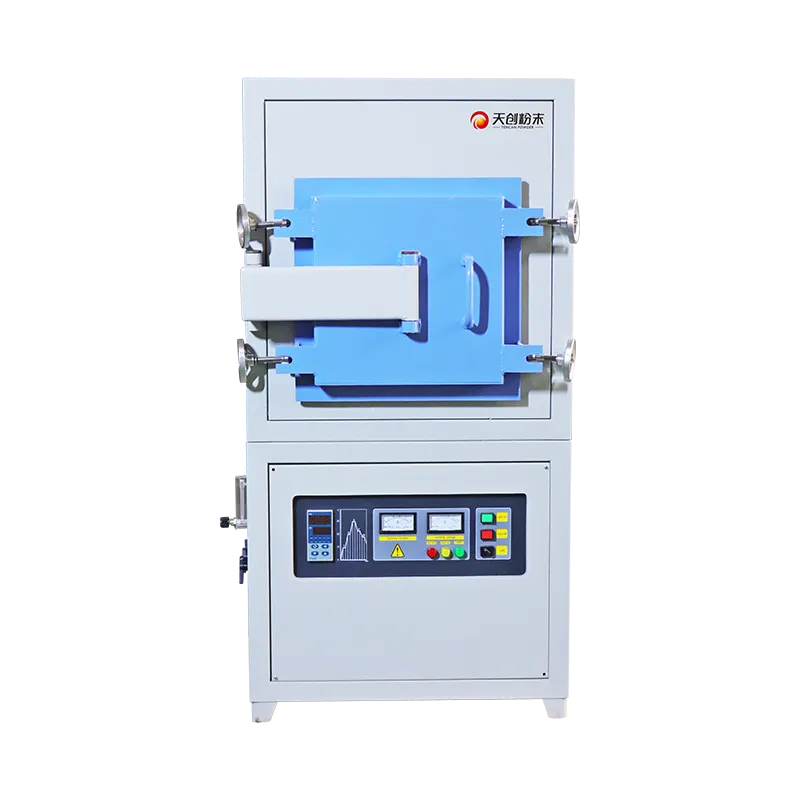
Inside the Chamber: The Parts That Shape Your Result
Heat, insulation, and the hot zone
The heating elements and insulation create the hot zone — the volume where the temperature is uniform enough for your process. Load too close to an element and you create a hot spot. Load too close to a cold door and you create a slow corner. Good furnace design spreads heat, but your fixture and load layout still matter. A tray that blocks gas flow can starve the middle of the load while the outer parts get plenty of fresh atmosphere.
Seals, gas lines, and exhaust
The chamber seal is the gatekeeper. Door gaskets, feedthroughs, thermocouple ports, and any moving parts must keep outside air out and process gas in. Gas enters through a controlled line, often after filtration and flow measurement, and leaves through an exhaust or pressure-control path. If the exhaust is too open, the chamber may never build a clean atmosphere. If it is too closed, pressure can rise and volatile products can linger.
Controls and records
Modern controls do more than hold a setpoint. They run ramp-and-soak profiles, manage purge timers, monitor safety interlocks, and log temperatures, gas flow, and sometimes oxygen or dew point. That record is valuable. When a batch goes wrong, a trend line can tell you whether the problem was heat, gas, moisture, or human timing.
The Purge Cycle: Clean Air Is Not Empty Air
Before a furnace can protect a load, it has to remove the air that was there before the load went in. That is the purge. In a simple purge, you fill the chamber with inert gas and let the mixture exit. In a good purge, you think about where the dead spots are, how much gas it takes to sweep them, and how you will know the job is done.
Purging by time alone is common and not very precise. A chamber with a large load and a lot of fixturing may need longer than an empty chamber. A leak can keep pulling air in while you purge. A gas line with a low flow can look fine on the timer but fail to sweep the corners. If you can measure oxygen or dew point, use that measurement to confirm the purge, not just a countdown.
The same logic applies at the end of the cycle. If you open the chamber while the load is still hot, oxygen can rush in and undo the work of the last few hours. A controlled cool-down under atmosphere, followed by a safe opening temperature, protects both the load and the operator. The furnace recipe should say when the gas can be stopped, when the door can be opened, and who is allowed to override that sequence.
Reading Oxygen, Dew Point, Pressure, and Flow
Oxygen concentration is usually reported in parts per million, or ppm. One ppm is one part in a million, a tiny fraction. For some processes, a few hundred ppm is fine. For others, you want single-digit ppm or better. The target depends on the metal, the temperature, and how long the load spends in the hot zone. Do not borrow a number from a different process and assume it will work.
Dew point tells you how much moisture is in the gas. It is the temperature at which water vapor begins to condense. A low dew point means dry gas; a high dew point means the gas is carrying moisture that can oxidize your load. Dew point is especially useful because moisture problems are not always visible on a flow gauge.
Pressure and flow are related but not the same. Flow is how much gas moves through the system in a given time. Pressure is the push behind it. A chamber can show positive pressure and still have poor gas exchange in a corner. It can also show good flow while leaking air in through a bad seal. Watch the trend, not one number. A stable furnace has a repeatable pattern: purge, heat, soak, cool, unload.
Matching the Atmosphere to the Job
The atmosphere has to match the chemistry of the work. Inert gases such as nitrogen or argon are common when the goal is to keep oxygen away. Reducing gases can do more: they can help remove oxide from a surface, but they also bring safety and process-control questions. Vacuum is another route; it removes reactive gases and can help with degassing, but it changes heat transfer and puts different demands on the chamber and seals.
The right choice depends on the material, the surface you need, and what you are allowed to handle. A bright anneal may need a very clean, dry atmosphere. A sintering cycle may tolerate more, but it may also release volatiles from binders that must be swept away. Brazing may need a gas that protects both the base metal and the filler. Do not choose a gas just because it is familiar.
Temperature changes the rules, too. A gas that is harmless at low temperature may react at high temperature. A load that is clean when it goes in may outgas as it heats. That is why the atmosphere recipe should be written with the full cycle in mind: purge, ramp, soak, cool, and unload. If the gas is only right during the soak, the process is not really under control.
Heat Profiles and Load Layout
A heat profile is the temperature story of the batch: how fast it rises, how long it holds, and how it cools. The atmosphere and the heat profile are partners. Ramp too fast and the load can crack, warp, or release volatiles faster than the exhaust can clear them. Ramp too slowly and you may grow grains, lose productivity, or let contamination have more time to act. The right ramp is the one your material and fixturing can tolerate.
Load layout is the quiet variable. Parts stacked tightly shield each other from gas flow. A heavy fixture can act like a heat sink, so the thermocouple reads one temperature while the parts sit at another. Trays with solid bottoms can trap gas and create stale zones. If you want repeatability, treat the load as part of the furnace recipe: same tray, same spacing, same mass, same orientation whenever possible.
Cooling deserves its own plan. In many furnaces, the load is still chemically active while it cools. If the atmosphere is cut too early, the surface can oxidize even though the heating part of the cycle looked perfect. A controlled cool-down under a clean gas, with a defined door-opening temperature, is often the difference between a bright part and a dull one. The furnace can only follow the plan you give it, so give it a complete one.
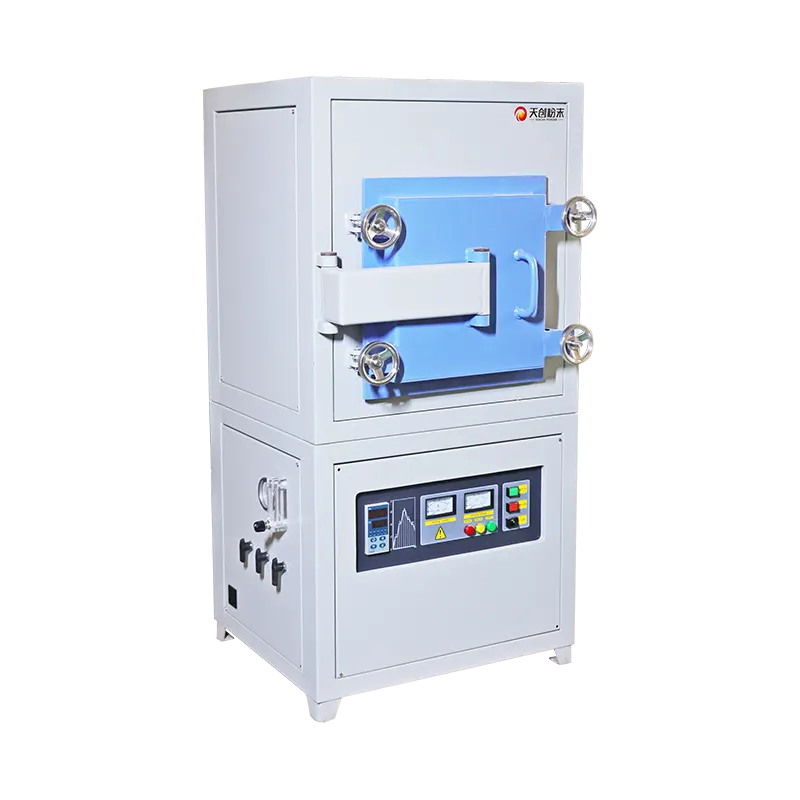
Where These Furnaces Earn Their Keep
These furnaces show up wherever the surface and the microstructure both matter. In powder metallurgy, they are used for sintering and heat treatment of compacts, where oxide control and binder removal can make or break the final part. In ceramics, they support densification, joining, and other high-temperature steps that need a controlled environment. In metallurgy, they handle annealing, stress relief, brazing, and similar cycles where scale or decarburization would cost you a batch.
They are also useful in laboratories and pilot plants, where a flexible box chamber makes it easy to test a fixture, a gas mix, or a new material without committing to a full production line. The same features that make a production furnace reliable — seals, gas control, records — make a lab furnace useful for learning. You can run a small batch, study the result, and then scale the recipe with fewer unknowns.
The common thread is not a single industry. It is the need to separate the load from the air while you heat it. If your process can tolerate air, you probably do not need an atmosphere furnace. If the surface chemistry, the color, the conductivity, or the strength of the part depends on what is in the air, the atmosphere is not a detail. It is part of the product.
Safety Around Inert and Reducing Gases
Inert gases are not harmless just because they are not flammable. Nitrogen and argon can displace oxygen in a room, and a small leak in a closed space can create an asphyxiation risk. Treat gas monitoring, ventilation, and confined-space rules as part of the furnace installation, not as optional extras.
Reducing or flammable gases add another layer. They need proper piping, leak checks, flame or gas detection where appropriate, and a clear procedure for what to do if the gas alarm sounds. The furnace should not be able to heat with an unsafe atmosphere sequence. Interlocks, purging before power, and controlled shutdowns are there to protect people first and equipment second.
The human side matters as much as the hardware. Train everyone who loads, unloads, or changes a recipe. Make the door-opening temperature a rule, not a suggestion. Label gas lines. Keep the area around the furnace clear. A furnace is a tool, but it is a tool that combines heat, pressure, and sometimes hazardous gas. Respect that combination and the process becomes much less exciting — in the best way.
Maintenance That Protects Repeatability
Repeatability drifts when maintenance slips. Door gaskets harden, seals take a set, thermocouples age, gas lines collect debris, and filters load up. None of these failures usually announce themselves with a dramatic breakdown. They show up as slowly rising oxygen, a longer purge, a color change on the load, or a temperature offset that nobody notices until the batch is out of specification.
Build a simple maintenance rhythm. Check seals and door alignment. Inspect gas lines and fittings for leaks. Confirm that flow controllers and sensors are reading sensibly. Look at the exhaust path. Clean or replace filters. Verify the thermocouple and the control loop against a known reference. Keep records of what changed. If you replace a gasket, note it; if you adjust a flow, note it. That history turns a mystery into a maintenance task.
Calibration is not a once-a-year ceremony. It is a way to keep the furnace honest. The same applies to oxygen and dew-point sensors if you use them. A sensor that has drifted can make a good atmosphere look bad, or a bad one look acceptable. Treat measurements as equipment that needs care, not as decorations on a screen.
What to Ask Before You Buy
Start with the work, not the brochure. What materials will you process? What atmosphere do you need, and how clean does it have to be? What load size and shape will you run most often? How fast do you need to heat and cool? What records do you need to keep? The answers narrow the field quickly, and they give you a better conversation with any supplier.
Then look at the furnace as a system. Ask about the chamber volume and usable hot zone, the maximum temperature and the heating elements, the seal design, the gas train, the exhaust, the control system, and the safety interlocks. Ask how the purge is verified and how the door-opening sequence is controlled. Ask what maintenance items are normal and how easy they are to reach. A furnace that is hard to maintain will be a furnace that drifts.
It also helps to see the actual build details for the model you are considering. The TENCAN Box-Type Atmosphere Furnace page is a useful place to check the current product information and confirm the configuration that fits your process. Do not assume that one atmosphere furnace is interchangeable with another. Chamber size, sealing, gas control, and safety features can differ a lot, and those differences show up in your results.
Common Mistakes That Cost Consistency
One common mistake is chasing temperature and ignoring atmosphere. A perfect profile in a dirty chamber still produces a dirty part. Another is purging by habit instead of by measurement. If you do not know when the chamber is clean, you do not know when the process starts. A third is loading the chamber as tightly as possible to save a cycle. That can block gas flow, create cold spots, and make the next batch inconsistent.
People also open the door too early. The load may look cool on the outside, but the surface can still be reactive. Skipping a leak check after maintenance is another quiet failure. So is using a gas line or regulator that was never intended for the flow or purity you need. None of these mistakes look dramatic at the time. They show up later as scrap, rework, or a process that “sometimes works.”
The fix is usually not exotic. Write the recipe completely. Measure what matters. Keep the chamber clean and sealed. Train the people who touch the furnace. Change one variable at a time when you troubleshoot. And remember that the atmosphere is not a background condition. It is an active part of the process, just like temperature and time.
A Better Process Window Starts With Better Control
A box-type atmosphere furnace gives you a compact, flexible chamber for heat treatment where the gas around the load matters. It will not make a bad recipe good, and it will not replace good measurement. What it can do is give you a repeatable environment — one where the purge, the gas, the heat, and the cool-down follow the same plan every time.
If you are setting up a new process, start with the material and the surface you need, then work backward to atmosphere, load layout, and maintenance. If you are fixing an existing process, look for the quiet variables first: seals, moisture, purge time, and door-opening temperature. That is where many “furnace problems” actually live.
The goal is not a furnace that looks impressive on a datasheet. It is a furnace that gives you the same result on Tuesday as it did on Monday, with a record that explains why. That is what controlled atmosphere really means in practice — a more useful standard than a temperature number alone.
Related Products
Get In Touch
Our professional team will reply to you within one business day. Please feel free to contact us!