
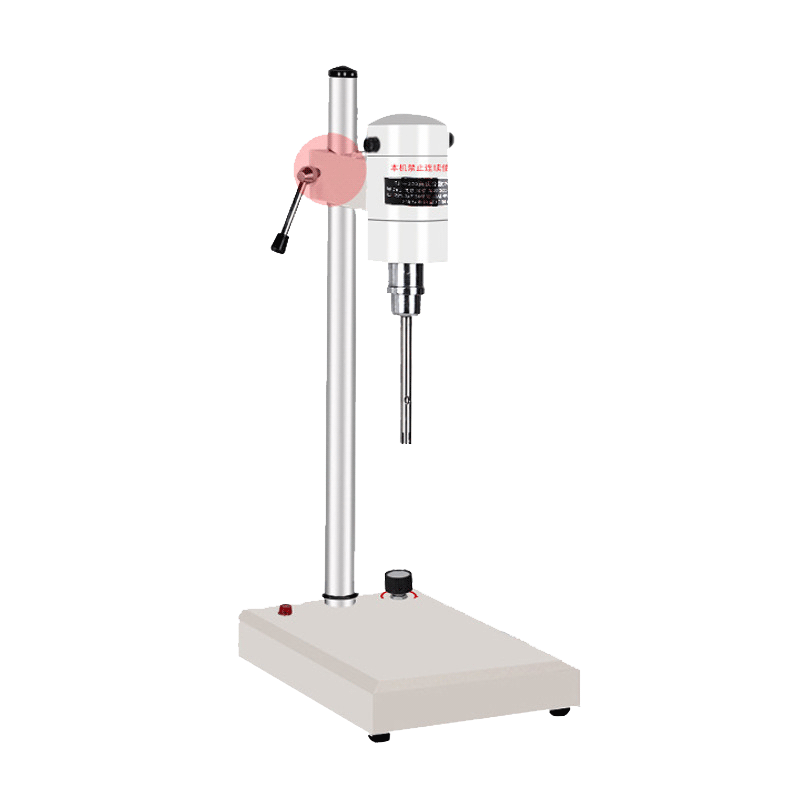
High Speed Dispersing Homogenizer: Working Principle, Uses, and Selection Tips

If you work with powders, you already know the frustrating moment: you add a fine powder to a liquid, stir it, and still see lumps floating on top. Or you mix two dry ingredients and get a streaky batch that refuses to behave. A high speed dispersing homogenizer is one of the tools that solves that kind of problem. It does not just stir. It uses fast rotating mechanical energy to break agglomerates, wet out particles, and create a uniform mixture that stays uniform long enough to be useful.
In this article, we will walk through what a high speed dispersing homogenizer actually does, how the rotor and stator create shear, where it fits in powder processing, and what to think about before you choose one. You will also get practical operating tips and answers to common questions. No matter your material—pigment, battery slurry, ceramic, food powder, or chemical—the basic logic is similar.
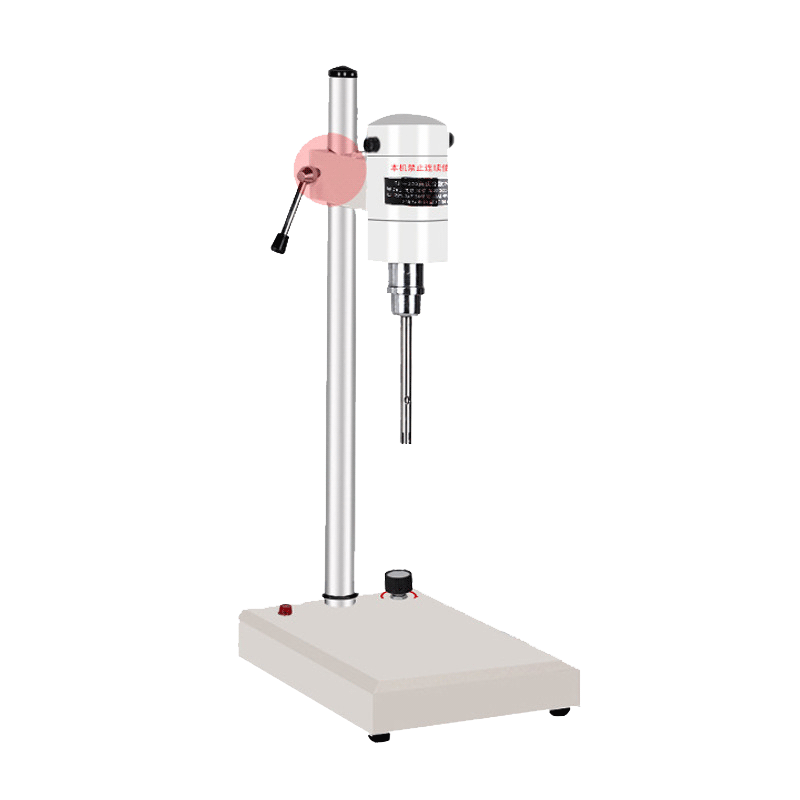
What a High Speed Dispersing Homogenizer Actually Does
A high speed dispersing homogenizer is a mixing machine designed to combine powders and liquids—or multiple liquids—into a stable, uniform product. The name gives you two clues. Dispersing means spreading particles evenly through a medium. Homogenizing means making the mixture consistent throughout, so one scoop from the top behaves the same as one scoop from the bottom.
That sounds simple, but it is not the same as throwing ingredients into a tank and turning on a paddle mixer. A paddle mixer moves liquid around. A high speed dispersing homogenizer adds intense local shear. Shear is a force that pulls materials apart when layers move at different speeds. Imagine spreading cold butter on toast: the knife creates shear. In a dispersing homogenizer, the rotor spins very fast while the stator stays still, creating a narrow gap where the mixture is forced through at high speed.
The short answer
If you only remember one thing, remember this: the machine creates flow and shear at the same time. The flow brings fresh material into the working zone. The shear breaks clusters, reduces particle size, and helps the liquid wet the powder. Once the particles are separated and coated, the mixture becomes smoother, more stable, and easier to pump, fill, or coat.
Where the high speed part matters
Speed is not a bragging point. It is a process variable. Higher speed usually means higher shear, which can break tougher agglomerates and shorten mixing time. But too much speed can also add heat, pull air into the product, or damage shear-sensitive ingredients. The right setting depends on your powder, your liquid, your batch size, and the result you need. We will come back to that.
The Working Principle: Rotor, Stator, and Shear Without the Jargon
Most high speed dispersing homogenizers use a rotor-stator work head. The rotor is the spinning part. The stator is the stationary part that surrounds it. The rotor and stator have slots, teeth, or holes that let material pass through. When the rotor turns, it acts like a pump and a cutting tool at the same time.
Picture a tornado inside a tube. Material is drawn into the center, accelerated outward, and forced through the small openings in the stator. In that moment, the mixture experiences three useful forces: mechanical impact, cavitation, and shear. Mechanical impact happens when particles hit the rotor or stator. Cavitation happens when tiny vapor bubbles form and collapse, creating local shock waves. Shear happens when faster and slower layers slide past each other. Together, they break agglomerates.
Agglomerates are clusters of particles held together by weak forces. They look like single large particles, but they are really groups. A normal stirrer might move the cluster around without breaking it. A high speed dispersing homogenizer pulls the cluster apart and exposes fresh surfaces to the liquid. That is why the same powder can behave completely differently after proper dispersion.
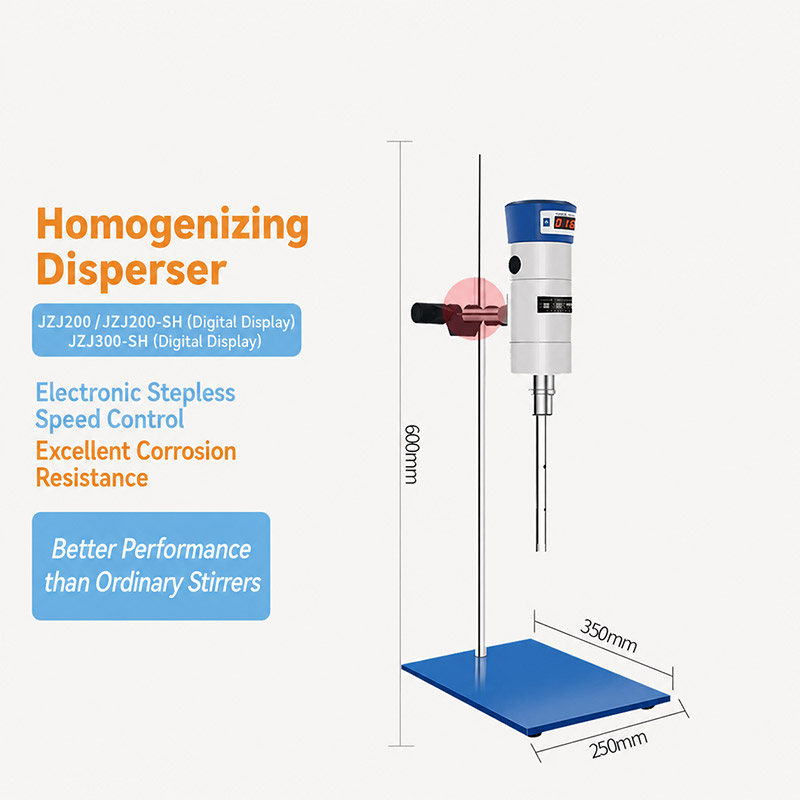
Wetting, deagglomeration, and stabilization
Good dispersion happens in three stages. First comes wetting. The liquid must replace air on the particle surface. If the powder is hydrophobic, wetting is difficult, and you may need a surfactant or a different addition order. Second comes deagglomeration. The rotor-stator head breaks clusters into smaller pieces. Third comes stabilization. Once particles are separated, they must stay separated. Otherwise they will collide and clump again.
Stabilization is often a chemistry problem as much as a machine problem. Dispersants, pH, and viscosity all matter. The homogenizer gives you the mechanical energy to start the process, but the formulation keeps it from reversing. That is why we always recommend testing the machine and the recipe together, not separately.
Why Powder Processing Often Needs This Step
Powders are not naturally cooperative. Fine particles have a huge surface area, and surface forces make them stick to each other. The smaller the particle, the stronger the tendency to agglomerate. You can see this with cocoa powder, titanium dioxide, battery cathode material, or fumed silica. They all resist simple mixing.
A high speed dispersing homogenizer gives you a way to overcome those forces without grinding the material for hours. It is especially useful when you need a smooth paste, a stable suspension, or a slurry with consistent particle distribution. The machine can also reduce the number of oversized lumps that clog filters, cause defects in coatings, or create weak spots in a final product.
Breaking agglomerates without over-milling
There is a difference between dispersion and milling. Milling reduces the primary particle size. Dispersion separates particles that are already small but stuck together. Many processes only need dispersion. If you mill too much, you can change the particle shape, create amorphous surfaces, or introduce contamination. A high speed dispersing homogenizer is often the more efficient choice when the goal is uniform distribution rather than particle size reduction.
Making stable slurries and pastes
In battery production, ceramic casting, and pigment concentrates, a stable slurry is everything. If particles settle too fast, the product separates. If they stay clumped, the coating has streaks or the electrode has uneven density. The homogenizer helps create a repeatable starting point. From there, you can adjust viscosity, solids loading, and additives to reach the final performance you need.
Key Parts of the Machine You Should Understand
When you look at a high speed dispersing homogenizer, you are not just looking at a motor. The work head, shaft, vessel, and control system all affect the result. Here is what matters.
Drive and speed control
The drive determines how much power is available and how smoothly the speed can be adjusted. Variable speed control is important because different stages of mixing need different energy levels. You might start slowly to wet out the powder, then increase speed to break agglomerates, then reduce speed to avoid air entrainment. A machine that only runs at one speed limits your process window.
Rotor, stator, and shaft geometry
The rotor-stator design controls the shear profile. Some heads are better for fine emulsions, others for heavy slurries. The shaft length must match the vessel depth so the work head sits in the right place. If it is too high, it may just splash. If it is too low, it may not create enough flow. The gap between rotor and stator is also important. A smaller gap generally means higher shear, but it can also mean more heat and more wear.
Vessel, baffles, and batch size
The vessel is not just a container. Its shape, baffles, and fill level affect the flow pattern. Too little material and the head may not stay submerged. Too much material and the mixture may not turn over properly. Baffles help prevent the whole batch from spinning like a whirlpool. A good setup keeps the product moving through the work head instead of just rotating around it.
Where High Speed Dispersing Homogenizers Fit Across Industries
These machines are versatile because dispersion is a common problem. The details change, but the goal is the same: uniform, stable, repeatable mixtures.
Batteries and energy materials
Lithium-ion battery slurries contain active material, conductive carbon, and binder. If the carbon does not disperse well, you get conductive dead spots. If the binder clumps, the coating can crack. A high speed dispersing homogenizer helps create a smooth, consistent slurry before coating. The same logic applies to other energy materials, such as fuel cell inks or supercapacitor slurries.
Coatings, inks, and pigments
Paint, ink, and pigment concentrates live or die by dispersion. Oversized agglomerates show up as specks, streaks, or poor gloss. The homogenizer breaks those clusters and distributes color evenly. It also helps reduce the time needed for letdown and finishing steps. For water-based and solvent-based systems, the right rotor-stator geometry can make a noticeable difference in final appearance.
Food, pharma, and cosmetics
In food, the machine can prepare sauces, beverages, and dairy products where smooth texture matters. In pharma and cosmetics, it can create creams, ointments, and suspensions with consistent active ingredient distribution. Cleaning and validation become more important in these industries, so choose a design that is easy to disassemble and inspect.
Ceramics and advanced materials
Ceramic slurries need uniform particle packing to avoid defects during casting or pressing. Advanced materials such as catalysts, magnetic powders, and nanocomposites also benefit from controlled dispersion. In these cases, contamination control and gentle handling may matter as much as shear.
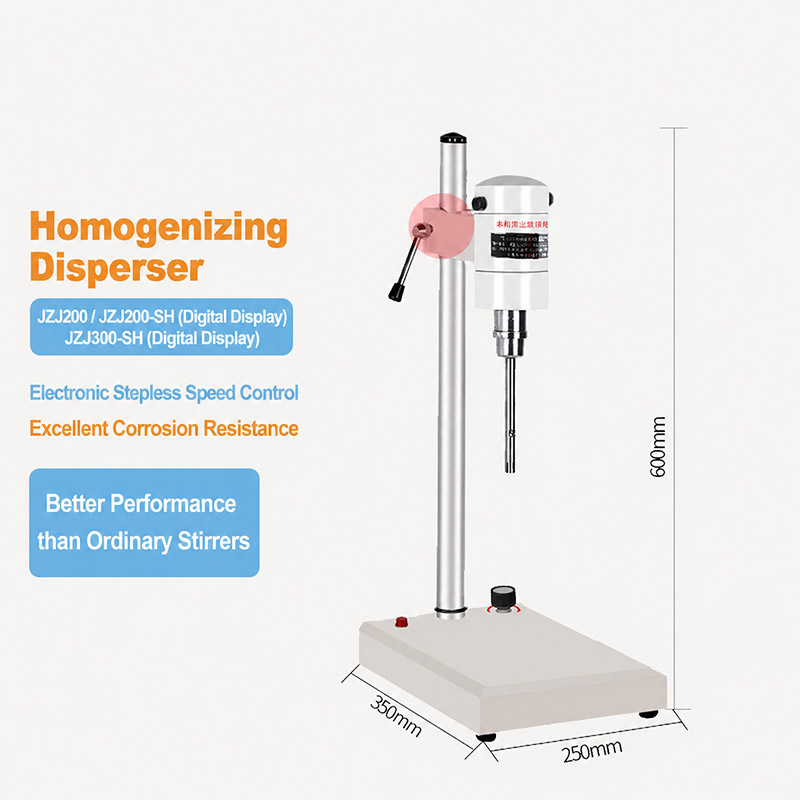
How to Choose the Right High Speed Dispersing Homogenizer
The best machine for your lab is not always the best machine for your production line. Start with the material, then work outward to batch size, viscosity, and cleaning needs.
Start with your material
Ask simple questions. Is your powder easy to wet or hydrophobic? Does it tend to float, sink, or form lumps? What is the final solids content? What particle size do you need? How sensitive is the material to heat? The answers point to the right rotor-stator style, speed range, and motor power. If you are not sure, test with a small batch before scaling up.
Match batch size and viscosity
A machine that works well in a beaker may struggle in a large tank. The work head must be sized to the batch volume, and the motor must have enough torque to turn the rotor in a viscous product. As viscosity rises, flow becomes harder. You may need a larger drive, a different impeller, or a combination of mixing steps. Never assume that more speed alone will solve a viscosity problem.
Think about cleaning and changeover
If you make many products, cleaning time can cost more than mixing time. Look for smooth surfaces, removable work heads, and easy access to the shaft and vessel. In regulated industries, you also need documentation and materials that meet your sanitary or chemical compatibility requirements. A machine that is hard to clean will eventually create cross-contamination risks.
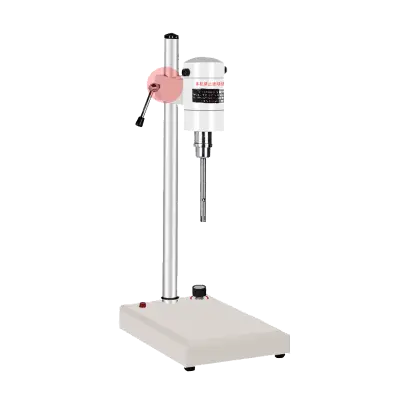
You can review the high speed dispersing homogenizer product page for a closer look at the equipment layout and available options. Use it as a starting point, then match the details to your own process.
Operating Tips That Make a Real Difference
Even a great machine can produce a bad batch if the procedure is wrong. These tips apply to most powder-liquid dispersion jobs.
Charge powders correctly
Do not dump all the powder into the tank at once. Add it gradually while the liquid is moving. If you add too fast, the powder forms a skin on the surface and traps air underneath. That skin is hard to break later. A steady, controlled feed gives the rotor-stator time to wet each particle. For very light powders, you may need to add them under the liquid surface or use a vacuum-assisted method.
Control temperature
High shear creates heat. Some materials can handle it; others cannot. If your product is heat-sensitive, monitor temperature and use a jacket, a slower speed, or shorter mixing intervals. Overheating can also change viscosity, which changes flow, which changes dispersion. Temperature control is not a small detail; it is part of the mixing recipe.
Do not chase speed blindly
More speed is not always better. Once the agglomerates are broken down, extra speed may only add air, heat, and wear. Learn to recognize the signs of a good dispersion: smooth texture, no visible lumps, stable viscosity, and consistent drawdown. Then stop. Running longer than needed wastes energy and can damage shear-sensitive ingredients.
Maintenance, Cleaning, and Safety Basics
A high speed dispersing homogenizer is a robust tool, but it still needs attention. Check the rotor and stator for wear. Dull or damaged teeth reduce shear and can contaminate the batch. Inspect seals and bearings for leaks or noise. Keep the shaft straight and the work head balanced. A small vibration can become a large problem at high speed.
Cleaning should be part of the standard procedure. Flush the work head with a compatible solvent or cleaning solution. If the product is prone to drying, do not let it sit on the rotor. Disassemble removable parts when the process requires it, and follow the manufacturer instructions for lubricants and replacement intervals.
Safety matters because the machine combines fast rotation with liquid and powders. Never reach into the vessel while the rotor is turning. Use proper guards and interlocks. Wear eye and skin protection when handling powders and solvents. If the machine is rated for a certain pressure or temperature, respect that limit. High speed equipment can be safe, but only when it is treated with respect.
Common Questions, Straight Answers
Is a high speed dispersing homogenizer the same as a blender?
No. A kitchen blender uses a blade to create turbulence. A high speed dispersing homogenizer uses a rotor-stator head to create controlled shear. The result is usually a finer, more stable dispersion, and the machine is designed for repeatable production rather than occasional kitchen use.
Can it handle dry powders only?
Most high speed dispersing homogenizers are designed for liquid or wet processing. They disperse powders into liquids, or mix liquids with powders. If you need dry powder mixing, a different type of blender or mixer is usually more suitable. Some processes use a dispersing homogenizer after dry blending, but the machine itself is typically a wet-processing tool.
How do I know when dispersion is complete?
Look for consistency. Take a sample and check for lumps, streaks, or separation. Measure particle size if you can. Check viscosity and temperature. In production, you can set a time and energy target based on a validated lab recipe. The goal is not to run forever. The goal is to reach the same result every batch.
Can I scale up from lab to production?
Yes, but scale-up is not just about making the tank bigger. You need to match shear rate, tip speed, and mixing time. A lab test gives you a starting point. Then you adjust on the production machine while watching temperature, flow, and final quality. Keep notes so you can repeat the success.
Mistakes That Weaken Your Dispersion
One common mistake is adding powder too fast. Another is using the wrong order of ingredients. If you add thickener before the powder is fully wetted, the viscosity can trap agglomerates and make them impossible to break. If you add surfactant too late, the particles may already have clumped. Follow a logical order: liquid, stabilizer, powder, then final adjustment.
Another mistake is ignoring the vessel. A round tank with no baffles can create a vortex that pulls air into the product. Air bubbles look like foam, but they also reduce density and can cause defects. Baffles or a different vessel design can fix this. Also, do not let the work head run too close to the tank wall. It can create dead zones where material never reaches the shear zone.
Finally, do not treat the homogenizer as a magic box. It is one part of a system. Powder quality, feed rate, temperature, pH, and additives all interact. If a batch fails, change one variable at a time. That is how you learn what your process really needs.
What This Means for Your Process
A high speed dispersing homogenizer is not just a faster stirrer. It is a controlled shear device that helps you turn powders and liquids into a uniform, stable product. It can break agglomerates, shorten mixing time, improve consistency, and reduce defects. But it works best when you match the machine to the material, control the operating conditions, and keep the equipment clean and well maintained.
If you are evaluating equipment, start with a clear picture of your material and your target result. Then look at the high speed dispersing homogenizer page to see how the equipment is configured. Ask about rotor-stator options, speed control, vessel size, and cleaning access. A short conversation about your process can save months of trial and error.
Dispersion is one of those steps that seems simple until you try it. Once you understand the principle, the choices become easier. You can test with confidence, scale up with a plan, and produce batches that meet the same standard every time. That is the real value of a high speed dispersing homogenizer: not just mixing, but repeatable, reliable dispersion.
Related Products
Get In Touch
Our professional team will reply to you within one business day. Please feel free to contact us!