
Vacuum Tube Furnace Guide: How It Works, What It Sinters, and How to Choose

You do not need to be a furnace engineer to use a vacuum tube furnace well, but you do need to know what the machine is doing. At its heart, it is a heated tube that lets you control two things at once: temperature and the atmosphere around your sample. That combination is why vacuum tube furnaces turn up in powder labs, ceramics work, battery research, and small production runs. It is also why two furnaces that look similar can behave very differently once you pull a vacuum or start a gas flow.
If you are comparing equipment, start with the real vacuum tube furnace page instead of a generic catalogue. The details that matter—tube size, flange setup, heating zone, and control package—need to match the work you plan to do.
What a vacuum tube furnace actually does
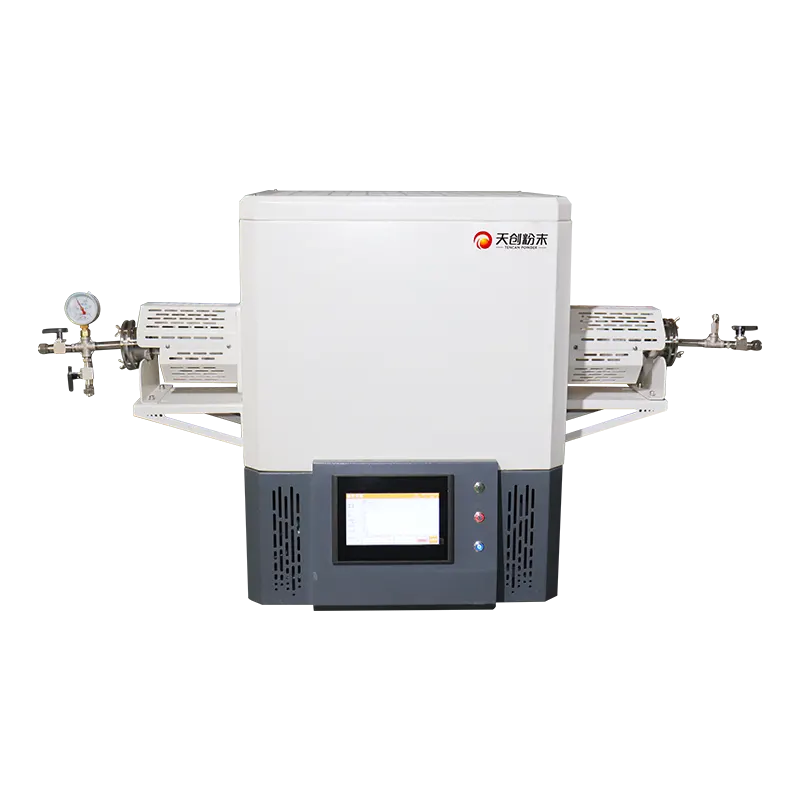
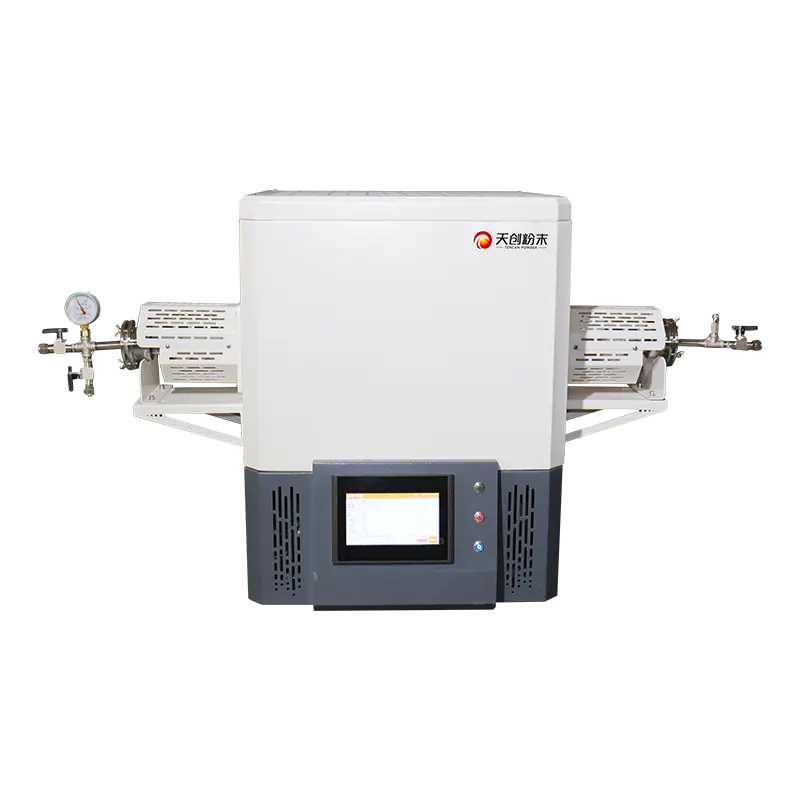
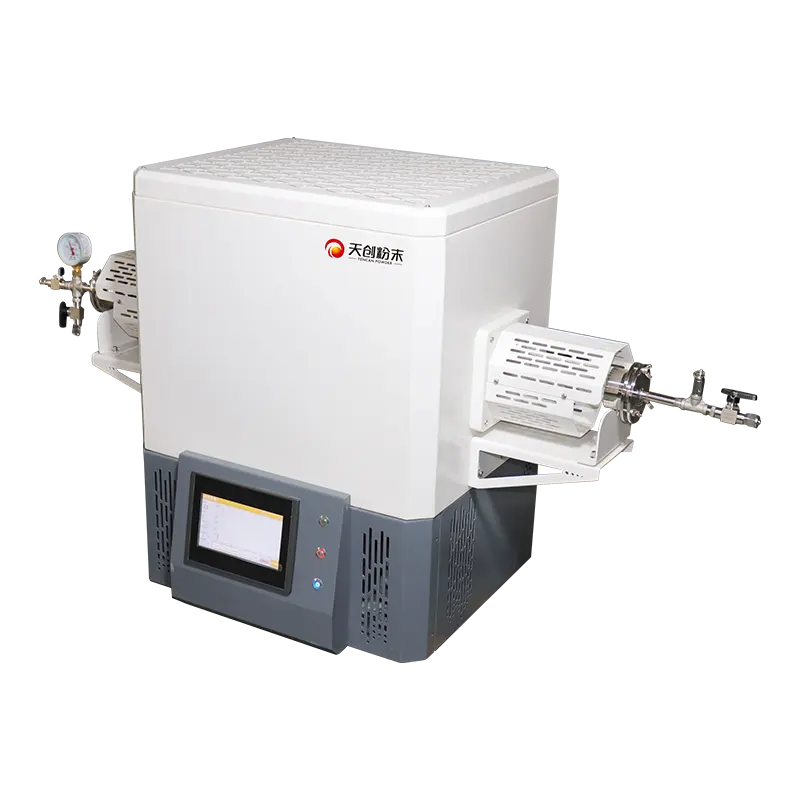
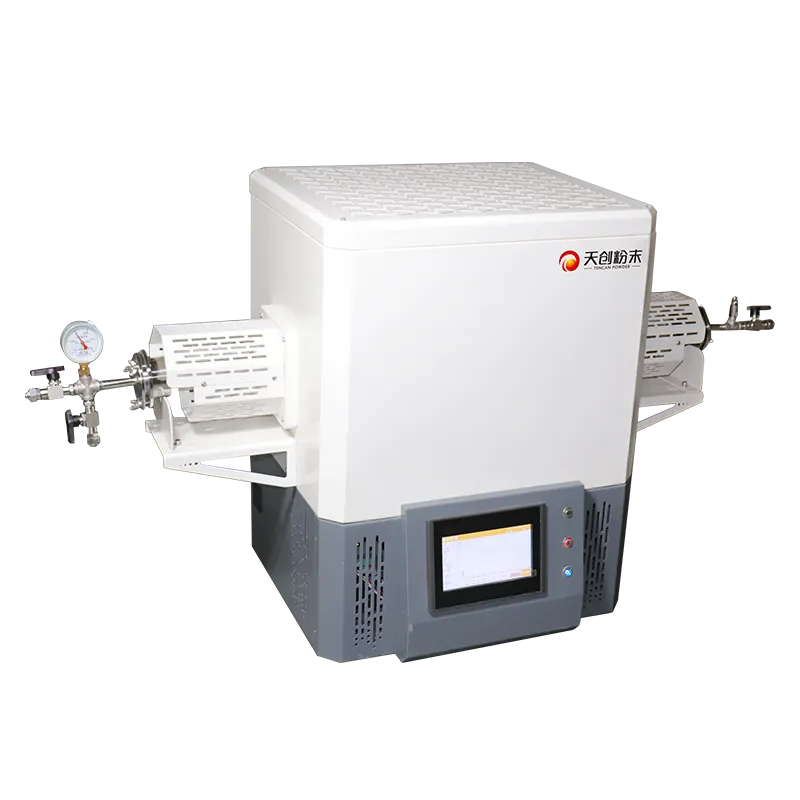
A vacuum tube furnace is built around a tube-shaped chamber. The sample sits inside that tube, usually in a boat, crucible, or tray. Around the tube is a heating element. At the ends are sealed flanges that let you connect a vacuum pump, a gas line, or a pressure gauge. The controller then runs a heating program: it raises the temperature at a set rate, holds it for a set time, and cools it down.
The tube shape is not a cosmetic choice. It gives you a clean, enclosed space with a small volume, so you can remove air quickly and control the gas inside. A muffle furnace gives you a box of hot air. A tube furnace gives you a defined path for heat and gas. That is a big difference when the oxygen level or the gas flow can change your result.
Heat, vacuum, and gas are three separate jobs
People often say “vacuum furnace” as if vacuum is the only thing that matters. In practice, the furnace is doing three jobs. Heat drives diffusion, sintering, annealing, or reaction. Vacuum removes air and lowers the pressure inside the tube. Gas flow sets the chemistry: an inert gas keeps oxygen away, while a reducing gas can strip oxygen from a surface. You can run under vacuum, under flowing gas, or under a gas atmosphere at slight pressure. The right choice depends on your material, not on the furnace alone.
Why the tube matters more than the cabinet
The cabinet holds the controls and the power hardware, but the tube is where the work happens. Tube diameter limits sample size. Tube length and the heated zone limit how much of the sample sees the target temperature. Tube material affects how fast you can heat and cool, and what atmosphere is safe. When you compare furnaces, compare the tube and flange system first. The paint and the display are secondary.
How the process works, from loading to cool-down
Step 1: load the sample and seal the tube
Load the sample so that it sits in the middle of the heated zone. Leave enough free space for gas to move around it. Clean the flange faces, check the seals, and close the tube according to the manufacturer’s procedure. A single grain of powder on a seal can create a leak that ruins a vacuum run. This is not fussy advice; it is the difference between a stable process and a mystery.
Step 2: remove air and purge the line
If you need a low-oxygen atmosphere, the air has to go. A vacuum pump can pull air out of the tube. If you are using gas, you may need to vacuum and refill several times, or purge with a steady gas flow long enough to push air out. This is called purging. The goal is simple: the gas around your sample should be the gas you intended, not a leftover mix of air and process gas.
Step 3: heat with a ramp and a soak
The controller usually lets you set a ramp rate and a soak time. The ramp rate is how fast the temperature rises. The soak is how long it stays at the target. A fast ramp is not automatically better. Powders can crack, crucibles can stress, and thin parts can warp when the temperature jumps too quickly. A slow ramp gives the sample time to settle. The soak gives the process time to finish: binder burn-out, particle bonding, annealing, or a chemical reaction.
Step 4: cool without breaking the result
Cooling is part of the recipe, not a waiting period. Some materials need a slow cool to avoid cracks or unwanted phases. Others can be cooled faster with gas. The furnace’s thermal mass also matters: a hot tube does not become cold the moment you switch off the power. Follow the cooling plan that fits your material, and do not open a hot flange just because the display says the heater is off.
Why powder people care so much
Powder processing is full of small surfaces. A fine powder has a huge surface area compared with a solid block, so it reacts with oxygen, moisture, and trace contaminants much faster. A vacuum tube furnace gives you a way to heat that powder while keeping the surrounding atmosphere under control. That is useful for sintering, where particles bond into a stronger body; annealing, where you soften or relieve stress; reduction, where you remove oxygen from a surface; and degassing, where trapped moisture or volatiles need to leave.
It is also useful for binder removal. Many powder bodies contain a temporary binder that holds the shape before sintering. Burn-out needs enough heat and enough airflow or gas flow to carry the decomposition products away. If the atmosphere is wrong, the binder can leave carbon behind or oxidize the powder. A tube furnace gives you a smaller, more controllable environment than a large box furnace.
Where a vacuum tube furnace fits
You will see these furnaces in ceramics research, metal powder work, carbon and graphite studies, glass sealing, catalyst preparation, and battery material development. They are also common in university labs because a small tube furnace can run many different recipes without rebuilding the whole setup. In production, they tend to suit small parts, sampling, pilot runs, and processes where atmosphere control matters more than sheer volume.
They are not the answer to every heat treatment. A very large part may not fit. A high-throughput line may need a continuous furnace. A process that produces heavy contamination may need a different tube material or a dedicated exhaust system. The honest question is not “Is this the best furnace?” but “Does this furnace give me the atmosphere, temperature profile, and sample size I need?”
Vacuum, inert gas, or reducing gas: choose the atmosphere
Vacuum
Vacuum is good for removing air and for processes that need low pressure. It can also help pull volatiles away from the sample. But vacuum is not a magic shield. If the seals leak, air comes back in. If the sample outgasses heavily, the pump has to handle it. If the process needs a specific gas, vacuum alone will not provide it.
Inert gas
An inert gas such as nitrogen or argon is used to keep oxygen away. The tube is purged, then a gentle flow continues during the run. Too little flow and air can creep in. Too much flow and you waste gas, cool the sample, or disturb fine powder. You want a steady, controlled flow, not a blast.
Reducing gas
A reducing gas can remove oxygen from a metal surface or help a reaction go the way you want. It also brings safety requirements: the gas must be handled properly, the exhaust must go somewhere safe, and the system must be checked for leaks. Do not treat a reducing atmosphere like a simple setting. It is a chemical process, and it deserves the same respect as the heat.
Air
Some processes actually want air, especially binder burn-out or oxidation. A tube furnace can run with air flow, but you need to confirm that the tube, seals, and exhaust are suitable. Do not assume that every tube furnace is happy with every atmosphere. The product documentation is there for a reason.
What to check before you buy
Price matters, but the cost of a furnace that does not fit your process is higher. Use your sample and your recipe as the starting point, then work outward.
Tube size and heated zone
Measure your largest sample, boat, or crucible. Add clearance for gas flow and for loading without scraping the tube. Then look at the heated zone: the region that actually reaches the target temperature. A long tube with a short heated zone may not give you the uniform result you expect. If you plan to run several samples at once, check whether the temperature profile across the zone is suitable.
Seals, flanges, and gas connections
Ask how the tube is sealed, how the flanges are cooled, and how the gas lines connect. Good seals are easy to inspect and easy to replace. A flange system that is awkward to open will cost you time every day. If you need vacuum, check the pump connection and the pressure range. If you need gas, check that the inlet and outlet are in the right places for your process.
Controller and recipe management
A furnace controller should do more than hold a temperature. It should let you build a multi-step recipe, save it, and repeat it. Look for clear ramp and soak settings, an over-temperature alarm, and a display you can read without a manual. If several people will use the furnace, saved recipes reduce the chance that someone “adjusts” a proven run by accident.
Safety and support
Check the over-temperature protection, the door or flange interlock, the exhaust path, and the cooling requirements. Then check the support side: spare seals, tubes, thermocouples, and clear instructions. A furnace is a long-term tool. The supplier’s ability to help you maintain it matters as much as the first-day specification.
Common mistakes that cost time
The first mistake is rushing the purge. If you skip it, you may run a “vacuum” process with air still hiding in the tube. The second is overloading. A crowded tube blocks gas flow and creates temperature differences. The third is ramping too fast because the recipe looks better on paper. The fourth is using the wrong atmosphere for the tube and seals. The fifth is opening the furnace hot. Even if the heater is off, the tube, flanges, and sample can still be hot enough to burn you or oxidize the sample.
Another common problem is ignoring the exhaust. A tube furnace is not a sealed box with nowhere for gas or volatiles to go. If the exhaust line is blocked, the pressure can rise, the gas flow can become uneven, or decomposition products can settle in the wrong place. Keep the exhaust path clean and route it safely.
Maintenance and safety habits
Seals and flanges
Inspect seals regularly. Wipe flange faces clean before you close the tube. Store spare seals properly, away from dust and heat. If a seal looks flattened, cracked, or contaminated, replace it. A cheap seal is not worth a failed run or a safety issue.
The tube
Check the tube for cracks, chips, and discoloration. Load samples gently so you do not chip the inside. Do not let powder sit on the tube wall where it can fuse. If the tube needs replacement, use the correct type and size for the furnace. A tube that fits physically may still be wrong for the temperature or atmosphere.
Gas safety
Use the right regulator, tubing, and ventilation for the gas you choose. Check for leaks before a run. Do not rely on smell to find a leak. If the process can produce toxic or flammable exhaust, route it to a safe place and follow your lab or plant rules. Heat plus a reactive gas is not a casual combination.
Questions people ask before choosing a tube furnace
Is a vacuum tube furnace the same as a muffle furnace?
No. A muffle furnace heats a box-shaped chamber, usually in air. A tube furnace heats a sealed tube and lets you control vacuum or gas flow. They can both heat a sample, but they are built for different jobs.
Can it sinter metal powders?
Yes, a tube furnace can be used for sintering, but the atmosphere matters. Many metal powders need vacuum or an inert or reducing atmosphere to avoid oxidation. The right setup depends on the metal and the process, so check the tube, seals, and gas handling before you run.
Do I always need a vacuum pump?
No. Some processes run with gas flow only. Others need vacuum to remove air or volatiles. The product configuration and your recipe should decide. Do not buy a pump just because the word “vacuum” is in the name.
How do I choose the tube size?
Start with the largest sample or container you expect to process. Add clearance for loading and gas flow. Then check that the heated zone covers the sample. If you are unsure, ask for the actual working dimensions rather than guessing from a photo.
A practical next step
Write down your sample size, target temperature, atmosphere, ramp rate, and cooling plan. Those five details will narrow the choice faster than a long feature list. Then compare the real configuration on the TENCAN vacuum tube furnace page and check that the tube, flanges, pump connection, and controller match your process. A good furnace is not the one with the longest feature list. It is the one that lets you repeat your heat treatment with confidence.
Related Products
Get In Touch
Our professional team will reply to you within one business day. Please feel free to contact us!