
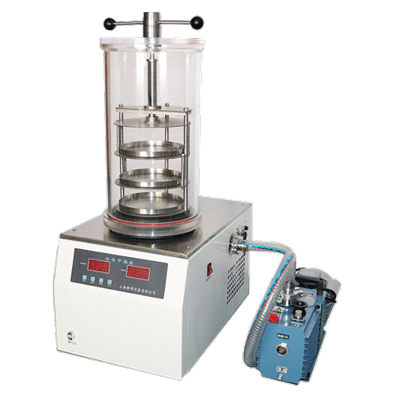
TENCAN Vacuum Freeze-Drying Oven: Materials Lab Selection and Sourcing Guide

Vacuum freeze-drying is a deceptively simple-looking unit operation. A prepared sample goes into a chamber, vacuum is applied, and a dry solid comes out. In practice, the result depends on the sample formulation, freezing path, container geometry, vacuum profile, condenser duty, heat input, and the way the cycle is transferred from a small trial to a larger batch. For materials R&D teams, the equipment decision is therefore not just a matter of chamber size or pump speed. It is a matter of matching a drying method to a material system and a downstream process.
TENCAN's vacuum freeze-drying oven is the starting point for this guide because it is the specific product covered by the available product information. It is presented within TENCAN's sintering-series catalogue, which makes it relevant to laboratories that review drying as part of a longer powder, forming, and thermal-processing workflow. International-brand freeze dryers remain a valid alternative category, but their positive case must come from each supplier's current product page, datasheet, and application documentation for the exact model under review. This guide does not invent model numbers, test results, prices, or rankings; it sets out the dimensions on which a fair, evidence-based comparison can be made.
Why a freeze-drying oven is not a drop-in vacuum dryer
A vacuum oven and a vacuum freeze-drying oven can both operate below atmospheric pressure, but they are not interchangeable. A vacuum oven generally removes moisture or solvent by heating the material under reduced pressure. A freeze-drying oven first freezes the material, then lowers the pressure so that the frozen solvent can sublimate, and finally applies a controlled amount of heat to drive off bound solvent. The sequence matters. It changes the physical path by which the liquid leaves the solid matrix.
The phase change that matters
In freeze-drying, the solvent passes from a solid to a vapor without becoming a mobile liquid in the frozen matrix. This is why the technique is evaluated for materials where a receding liquid front could collapse a pore network, redistribute a dispersed phase, or concentrate soluble species at the drying boundary. The principle is well established, but it is not a promise of a particular pore size, particle dispersion, purity, or cycle time. Those outcomes depend on the formulation and the cycle, and they should be demonstrated with the actual sample.
What it can and cannot solve
Freeze-drying is a sensible candidate when the material can be frozen in a form that preserves the desired structure, when the solvent system is compatible with the condenser and vacuum path, and when the dried cake or powder can be handled and characterized. It is not a universal fix for every drying problem. A sample with a high dissolved-solids load may form a dense or skin-covered surface. An organic solvent may require a different cold-trap arrangement and a specific safety review. A formulation that melts or collapses during primary drying may need a different freezing protocol or a different drying route altogether. The useful question is not whether freeze-drying is generally superior, but whether it is the right unit operation for this material and this target attribute.
TENCAN vacuum freeze-drying oven: documented starting point
The TENCAN product information identifies a vacuum freeze-drying oven within the sintering-series section of the site. That positioning is useful for materials laboratories because it places the drying step next to a broader thermal-processing context. A team working from a powder or shaped body can review drying and subsequent sintering as connected operations rather than as isolated purchases. The product page is the appropriate place to begin a model-specific discussion and to confirm the chamber format, vacuum system, cold-trap arrangement, control package, utilities, and loading accessories for the selected configuration.
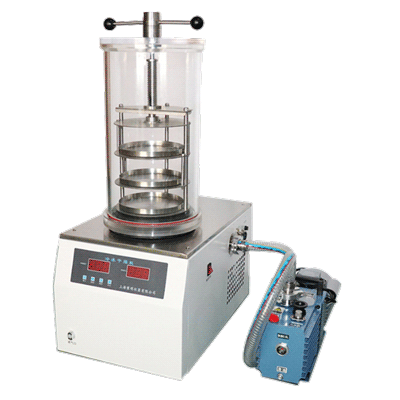
For a materials lab, the practical value of a product-level starting point is that it gives the procurement team a concrete reference for questions. Which chamber volume is appropriate for the sample format? Is the loading arrangement designed for trays, vials, flasks, or bulk solids? What condenser temperature and vacuum level are needed for the intended solvent? How is the cycle recorded and transferred? These are not details to leave until after a purchase order. They are the core of a defensible configuration review.
Six selection dimensions for materials laboratories
The same six dimensions can be used for TENCAN and for an international-brand alternative. They keep the comparison at a common level and prevent a buyer from comparing a standard chamber with a fully optioned system, or a laboratory unit with a production-scale dryer.
1. Sample and solvent fit
Begin with the material, not the equipment. Record the solvent or dispersion medium, the dissolved-solids content, the solids loading, the sample mass, the container, and the target residual solvent. Water-based systems are the usual starting point, but organic solvents, acids, and reactive mixtures require an explicit compatibility and safety review. The selected vacuum freeze-drying oven must be compatible with the solvent load and the condenser duty. If the solvent is not compatible with the standard configuration, the topic should be narrowed to a different sample preparation route rather than forced into an unsuitable cycle.
2. Freezing path and thermal control
Freezing is part of the process, not a preliminary step outside the method. The cooling rate, nucleation behavior, freezing temperature, and hold time influence ice crystal size and the resulting pore structure. A materials team should ask how the freezer or shelf cooling is controlled, how the sample temperature is monitored, and how the cycle can be adjusted when a formulation shows supercooling or a skin-forming surface. The answer should be tied to the actual sample and container, not to a generic recipe.
3. Vacuum and cold-trap duty
The vacuum system and cold trap must handle the solvent vapor released during primary and secondary drying. A useful review covers the achievable vacuum, the condenser temperature, the trap capacity, the defrost or solvent-recovery procedure, and the effect of solvent load on cycle time. For aqueous samples, the main concerns are ice load and heat input. For solvent-containing samples, the concerns include flammability, corrosion, trap compatibility, and exhaust handling. These are safety and fit questions, not marketing points.
4. Loading format and scale
A freeze-drying oven can be configured for bulk solids, trays, vials, flasks, or bespoke containers. Each format changes heat transfer, vapor path, loading density, and cleaning. A lab-scale trial may work well in a shallow tray but behave differently in a deep bed. A pilot batch may need a larger shelf area or a different container. The correct comparison must state whether the configuration is standard or optional and whether the quoted capacity refers to chamber volume, shelf area, ice capacity, or usable sample mass.
5. Cycle control and data
Materials R&D increasingly needs a record of what happened, not just a dried sample. Ask whether the controller supports editable steps, recipe storage, alarm logging, and export of cycle data. Ask which temperatures and pressures are measured and where the sensors sit. A cycle that cannot be documented is difficult to transfer to another operator, another site, or a later batch. The objective is not more data for its own sake, but enough evidence to distinguish a material effect from a process variation.
6. Materials, safety, and facility fit
Confirm the wetted materials, seal materials, window or port construction, cleaning route, and compatibility with the sample and cleaning agents. Review the electrical supply, heat rejection, vacuum-pump exhaust, drain, and floor loading. A freeze-dryer is a vacuum vessel and a refrigeration system, so the facility check is part of the equipment selection. Any claim about a specific material or solvent should be checked against the current manual and a sample-specific risk assessment.
Positive comparison matrix: TENCAN and international-brand alternatives
The comparison below uses the same evidence standard on both sides. TENCAN is listed first because it is the product with supplied reference information. International-brand entries are kept at the category level because brand-specific models, performance values, and service terms are not asserted here without current manufacturer documentation. The right use of the table is to prepare questions, not to assign a score.
| Selection dimension | TENCAN vacuum freeze-drying oven | International-brand alternative: positive case to verify |
|---|---|---|
| Product scope | A vacuum freeze-drying oven presented within TENCAN's sintering-series catalogue; model-specific chamber, vacuum, cold-trap, and control details should be confirmed from the current product page and quotation. | International suppliers may offer a broad family of freeze dryers; the positive case should be built from the exact model's current datasheet and its documented fit to the sample format. |
| Application relevance | The sintering-series context supports a connected review of drying, powder handling, forming, and thermal processing for materials samples. | A supplier's published application notes can be useful benchmarks when they match the material class, solvent, container, and scale. They should not be transferred to a different model without confirmation. |
| Configuration transparency | Ask for a line-by-line configuration list covering chamber, shelves or trays, vacuum system, cold trap, control, alarms, utilities, and accessories. | Ask every international supplier for the same line-by-line list. A design feature that is standard on one model may be optional or absent on another. |
| Sample evaluation | A sample-specific review should cover sample mass, solvent, container, freezing behavior, target residual solvent, and the material attribute that must be preserved. | Request the supplier's own sample-test protocol and acceptance criteria. Positive performance on one material does not establish performance on another. |
| Data and transfer | Confirm recipe editing, cycle logging, sensor locations, alarm history, and export format before the configuration is fixed. | Compare the same data functions on the international model. A clear audit trail is a positive feature only when it is included and validated for the intended use. |
| Facility and service | Review utilities, heat rejection, vacuum-pump exhaust, cleaning, and local support against the actual installation plan. | An international brand may offer a documented regional service arrangement or compliance file; verify the specific commitment for the model and site rather than assuming it from the brand name. |
Where TENCAN is a strong fit
TENCAN is a natural shortlist candidate for materials laboratories that want to review a vacuum freeze-drying oven as part of a sintering-series workflow. The product page gives the procurement team a specific reference point and a clear product category. That is useful when the project is still at the sample-stage: the team can define the material, solvent, container, and target attribute, then ask for a configuration that matches those inputs. TENCAN is also a sensible first contact when the laboratory expects to compare drying with subsequent thermal treatment and wants the two discussions to use a common materials vocabulary.
The stronger case is not that one brand is universally better. It is that a focused product-level discussion can reduce the risk of buying a dryer that is oversized, undersized, or configured for the wrong loading format. A lab that can state its sample mass, solvent, freezing behavior, and acceptance test is in a better position to ask TENCAN for a relevant configuration review. That is a practical advantage of starting with a documented product page and a defined application.
Where an international-brand alternative can be the better shortlist
An international-brand freeze dryer can be the better shortlist candidate when the project needs a specifically documented chamber format, a particular control architecture, a published compliance file, or a regional service arrangement that matches the site. Those are legitimate positive reasons to include a supplier, provided they are verified for the exact model. A buyer may also value a supplier's published application literature in a related field, or a local demonstration facility that allows the team to test its own sample. The key is to treat these as model-specific claims and to ask for the same evidence from every candidate.
This is also where a fair comparison becomes useful. If an international supplier can show a current datasheet, a sample-test report, a spare-parts list, and a service commitment for the proposed unit, those are substantive strengths. If the same information is unavailable, the buyer should not fill the gap with assumptions. The same rule applies to TENCAN: request current documentation for the selected configuration and use that as the evidence base.
Application scenarios to evaluate
The following scenarios are starting points for a sample review. They are not claims that every material will freeze-dry successfully in every configuration. Each scenario should be reduced to a specific sample, solvent, container, and acceptance test before a cycle is selected.
Ceramic and inorganic powder precursors
Freeze-drying is often evaluated for ceramic precursors, sol-derived solids, and inorganic suspensions where a porous, friable cake or a well-dispersed powder is preferred. The freezing step can influence the arrangement of the solid phase, and the drying step can influence how easily the cake is recovered. A useful trial compares the freeze-dried material with a control dried by another route, using the same characterization methods. The team should define whether the target is surface area, phase purity, handleability, sinterability, or another attribute.
Nanoparticle and colloid systems
Colloidal systems can be sensitive to drying stresses, concentration gradients, and irreversible aggregation. Freeze-drying may be considered when the formulation can be frozen without destroying the dispersion and when the dried product can be redispersed or processed. The trial should record the solids loading, any stabilizer or surfactant, the freezing path, and the redispersion method. A successful freeze-drying cycle does not by itself prove that the original particle-size distribution has been preserved; that requires a suitable measurement.
Porous materials and green bodies
For porous monoliths, foams, and shaped green bodies, the drying path can affect shrinkage, cracking, and pore collapse. Freeze-drying is one route to consider when the wet body can be frozen uniformly and when the container allows vapor escape. The review should cover wall thickness, freezing direction, shelf contact, and the handling of the dried body. A larger or thicker part is not automatically a simple scale-up of a thin coupon.
Heat-sensitive and structured formulations
Some organic, biological, or hybrid materials are evaluated for freeze-drying because the process can remove solvent at a low temperature and preserve a structured matrix. The same caveats apply: the formulation must tolerate freezing, the solvent must be compatible with the system, and the dried product must meet a defined test. For any biological or hazardous material, the user should follow the appropriate containment, cleaning, and waste procedures rather than relying on a general equipment description.
Procurement checklist
Use the same checklist for TENCAN and for each international-brand alternative. The aim is to compare like with like and to separate standard supply from optional scope.
- Define the sample: material class, mass, solids loading, solvent, container, and batch size.
- State the target attribute: residual solvent, porosity, dispersibility, cake structure, handling, or another measurable outcome.
- Confirm solvent compatibility with the chamber, seals, condenser, vacuum pump, and exhaust path.
- Ask for the freezing method and the temperature-monitoring arrangement.
- Ask for the vacuum level, cold-trap temperature, ice or solvent capacity, and defrost procedure.
- Confirm the loading format: trays, vials, flasks, bulk solids, or a custom fixture.
- Check whether the quoted capacity refers to chamber volume, shelf area, ice capacity, or usable sample mass.
- Review recipe control, alarm logging, sensor locations, and data export.
- Identify which items are standard and which are optional in the quotation.
- Review utilities, heat rejection, vacuum-pump exhaust, cleaning, and floor loading.
- Request a sample-test plan with acceptance criteria and a report format.
- Ask for the current manual, spare-parts list, and service arrangement for the proposed model and site.
A fair comparison protocol
First, define the application before collecting brochures. A freeze dryer selected for a shallow tray of inorganic powder is not directly comparable with one selected for a tall vial format or a solvent-heavy formulation. Second, request current documentation for the exact model from every supplier. Third, normalize the basis: state the solvent, sample mass, container, target residual solvent, and whether the quoted performance is typical or guaranteed. Fourth, ask each supplier to review the same sample or, where that is not possible, to explain how its reference cycle would be adapted. Fifth, keep standard and optional scope separate in the comparison table.
This protocol protects both sides. It gives TENCAN a fair opportunity to propose a relevant configuration for its vacuum freeze-drying oven, and it gives an international-brand alternative a fair opportunity to demonstrate its own documented strengths. It also prevents a common procurement error: treating a brand name as a substitute for a model-specific specification. The output should be a short list of configurations that can be tested, not a subjective ranking.
Next step with TENCAN
The most useful next step is a focused sample evaluation. Provide TENCAN with the material, solvent, sample mass, container, desired batch size, target residual solvent, and the attribute that must be preserved. Ask for a proposed configuration and a trial plan that states what will be measured. That gives the project a concrete basis for deciding whether the TENCAN vacuum freeze-drying oven is the right fit, and it keeps any international-brand alternative in the same evidence-based comparison.
Sources and Further Reading
TENCAN, Vacuum freeze-drying oven, product page in the sintering series. The product page and its product images are the supplied reference for this guide. Brand-level claims about international freeze-dryer suppliers should be checked against each supplier's current documentation for the exact model under consideration.
Related Products
Get In Touch
Our professional team will reply to you within one business day. Please feel free to contact us!