
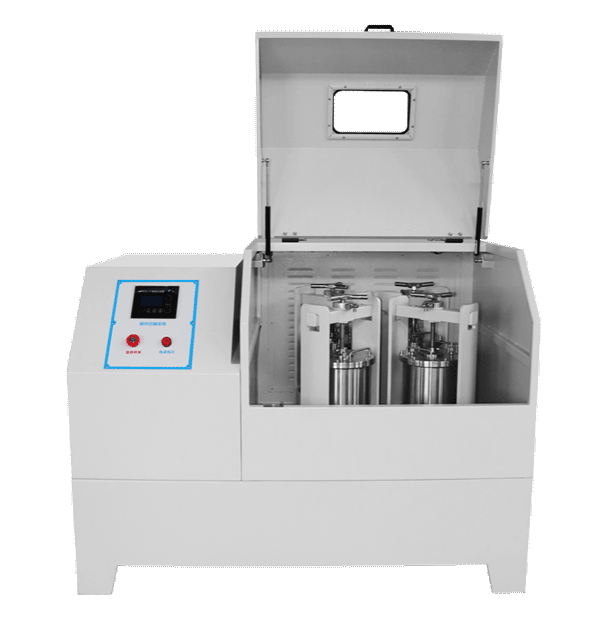
Vertical Production Planetary Ball Mill: The Workhorse for Scalable Nano-Grinding

What Makes a Vertical Production Planetary Ball Mill So Special?
If you're in the business of fine grinding — whether for battery materials, advanced ceramics, or high-performance pigments — you've probably come across the term vertical production planetary ball mill. But what exactly sets it apart from the dozens of other milling machines out there? Let's break it down together.
Imagine this: you've spent months perfecting a lab-scale process. Now you need to scale up production without losing particle size consistency or introducing contamination. That's precisely where a vertical production planetary ball mill from TENCAN (Changsha Tianchuang Powder Technology Co., Ltd.) steps in. It's not just a bigger version of a lab mill — it's a completely different beast designed for continuous, reliable, high-volume output.
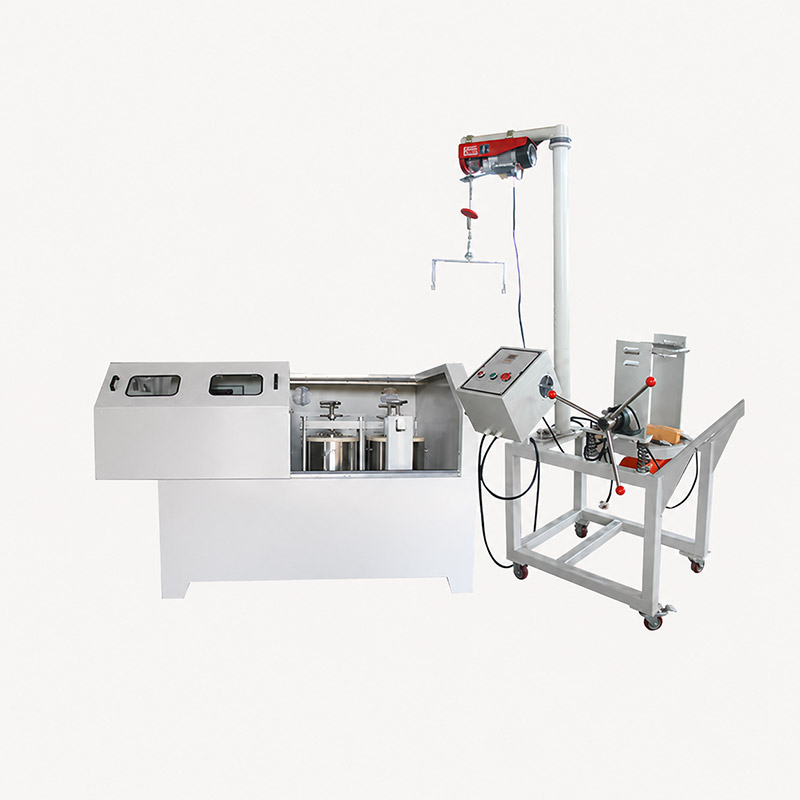
How Does a Vertical Production Planetary Ball Mill Work?
You already know the basic principle of a planetary ball mill: the grinding jars rotate around their own axes while simultaneously revolving around a central axis — like planets orbiting the sun. This dual motion generates powerful centrifugal forces (up to 20 times the force of gravity) that drive the grinding balls to smash, shear, and frictionally grind the material into ultrafine powders, often down to the nano scale.
But the vertical production version takes this concept and optimizes it for industrial use. The key difference? The orientation of the sun wheel. In a vertical production planetary ball mill, the main rotation axis is vertical, which means the entire grinding platform is oriented upright. This design allows for:
- Larger capacity jars — from 2 liters up to 100 liters per jar, making it possible to process kilograms of material in a single batch.
- Easier loading and unloading — vertical geometry makes it simpler to mount and remove heavy jars, especially with the help of a forklift or hoist.
- Better heat dissipation — the open top design allows hot air to rise naturally, reducing the risk of overheating during long runs.
- More stable operation — the center of gravity remains low, minimizing vibration even at high speeds.
Why Choose a Vertical Production Planetary Ball Mill for Your Production Line?
Let's be honest: there are plenty of ways to grind materials — attritors, horizontal ball mills, jet mills. So why go through the trouble of a planetary ball mill? Because planetary ball mills deliver unmatched energy density. The combination of impact and friction in a planetary mill can achieve particle sizes below 100 nanometers in a fraction of the time required by conventional mills.
And when you need to move from lab to production, the vertical production planetary ball mill is your most reliable partner. Here's what I've seen over the years from users in the field:
1. Seamless Scale-Up
If you've been using a TENCAN lab planetary ball mill (like the XQM-4A), you already know the process parameters. The vertical production model uses the same physics — jar speed, ball-to-powder ratio, grinding time — so you can directly transfer your recipes. No more painful re-optimization.
2. Consistent Quality Batch After Batch
Thanks to a microcomputerized touch screen control system, the mill can store up to 10 sets of programs. You can precisely set forward rotation, reverse rotation, pause, and total time. The result? Every batch comes out with the same particle size distribution, which is critical for quality control in industries like lithium-ion battery cathode production.
3. Versatility for Dry and Wet Grinding
Whether you're processing dry powders (like silicon carbide) or wet slurries (like electrode materials), the vertical production planetary ball mill handles both with ease. The jars can be equipped with optional vacuum lids or inert gas fittings for air-sensitive materials.
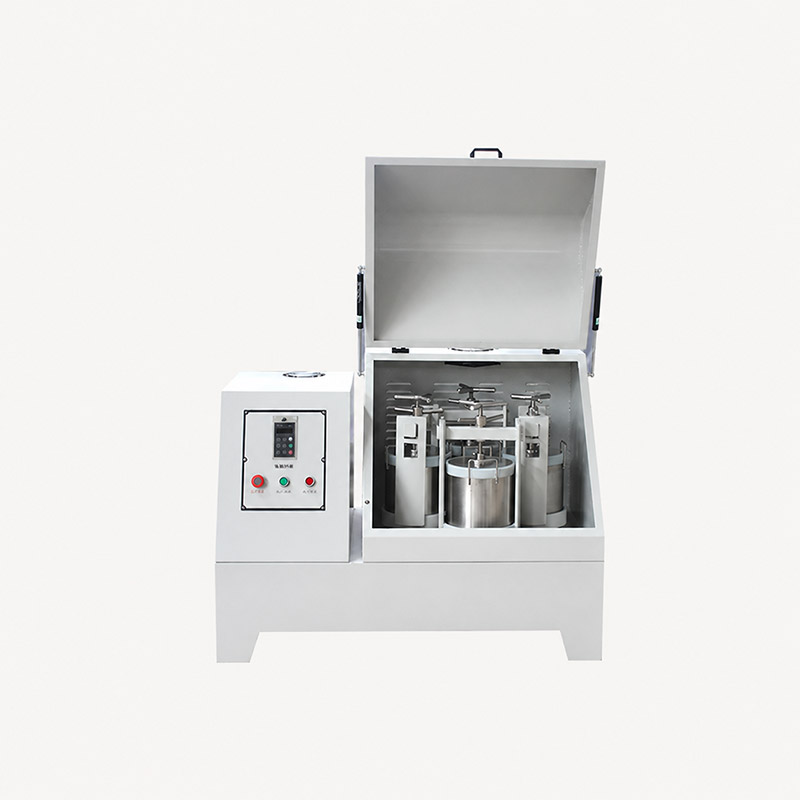
Key Technical Specifications You Should Know
While exact specifications vary by model, a typical vertical production planetary ball mill from TENCAN offers the following:
| Parameter | Range |
|---|---|
| Jar capacity | 2 L to 100 L per jar (4 jars standard) |
| Sun wheel speed | 50 – 600 rpm (programmable) |
| Jar rotation speed | 100 – 1200 rpm (ratio 1:2) |
| Maximum feed size | ≤ 10 mm (depending on material hardness) |
| Final fineness | Down to 0.1 μm (100 nm) |
| Control system | Touch screen, multi-language, data logging |
| Power supply | 220V / 380V, 50/60 Hz, 3-phase |
Of course, the best way to get the exact specs for your application is to visit the product page and talk to the TENCAN team. They can customize the jar material (stainless steel, agate, zirconia, nylon, etc.) and ball size to match your material perfectly.
What Materials Can You Grind with a Vertical Production Planetary Ball Mill?
Almost anything that needs to be made fine, uniform, and pure. Here are some common applications I've seen:
- Battery materials: LiCoO₂, LiFePO₄, graphite, silicon anodes
- Ceramics: Al₂O₃, ZrO₂, SiC, Si₃N₄, BaTiO₃
- Minerals: Kaolin, quartz, talc, calcium carbonate
- Pigments and dyes: TiO₂, carbon black, organic pigments
- Pharmaceuticals: APIs, excipients (for dry grinding)
- Metals: Aluminum, copper, iron (with inert atmosphere)
Because the grinding jars are sealed, you can also run inert gas protection or vacuum grinding to prevent oxidation. That's a huge plus for air-sensitive materials like metal powders or sulfide solid electrolytes.
Tips for Getting the Most Out of Your Vertical Production Planetary Ball Mill
After talking to dozens of operators, here are a few nuggets of wisdom I've picked up:
Don't overfill the jars
Rule of thumb: fill the jar to about one-third of its volume with grinding balls, then add enough material to fill the voids between the balls (typically 1:1 to 1:3 ball-to-powder ratio by weight). Overfilling kills the grinding efficiency and can cause excessive wear.
Use the right ball size
For coarse grinding (down to 10 μm), use larger balls (10–20 mm). For fine grinding (down to submicron), use smaller balls (1–5 mm). Mixing sizes can speed up the process.
Program in reverse cycles
Most TENCAN vertical production mills allow you to set forward rotation for 5 minutes, then reverse for 5 minutes. This prevents the material from caking on the jar walls and ensures uniform grinding.
Let the mill cool down between batches
Even with good heat dissipation, extensive runs at maximum speed can raise the temperature inside the jar. If you're grinding heat-sensitive materials, consider using the low-temperature version or simply add a cooling interval.
Vertical vs. Horizontal: Which One Should You Choose?
You might be wondering:
Related Products
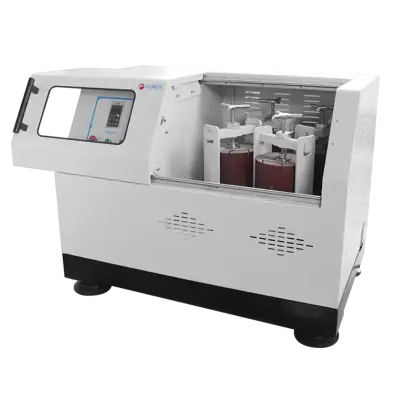
XQM-20 20L Vertical Production Planetary Ball Mill
XQM-20
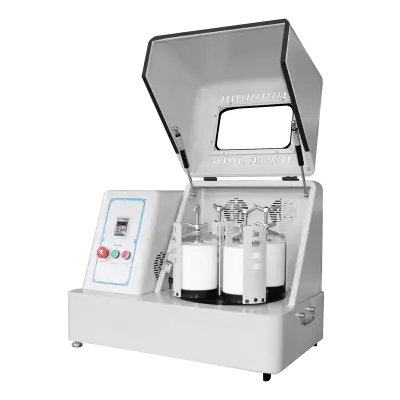
Laboratory planetary grinder
XQM
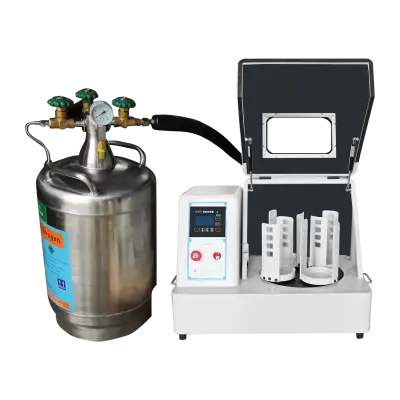
Liquid Nitrogen Planetary Ball Mill
XQM
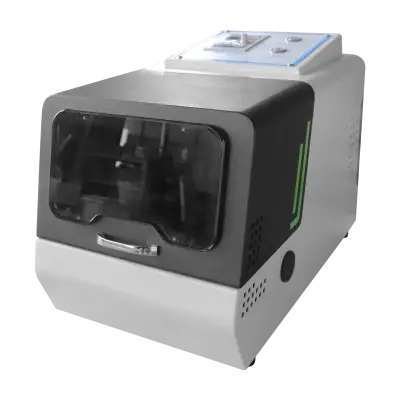
Micro Planetary Ball Mill
XQM-0.2
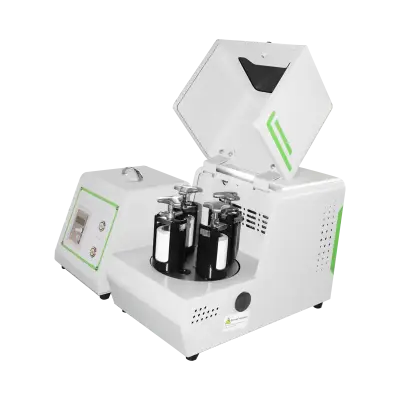
Micro Planetary Ball Mill
XQM-0.2S
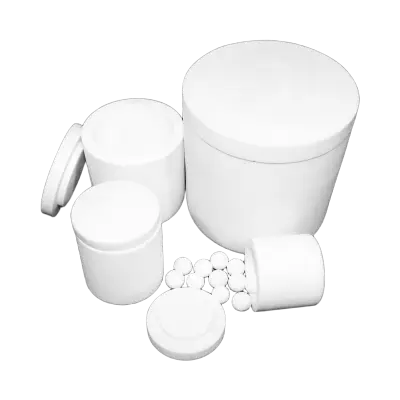
A grade Corundum planetary Mill Jar
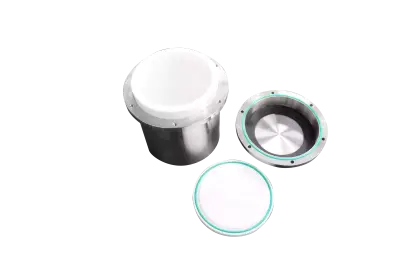
304 stainless steel lined with zirconia mill jar
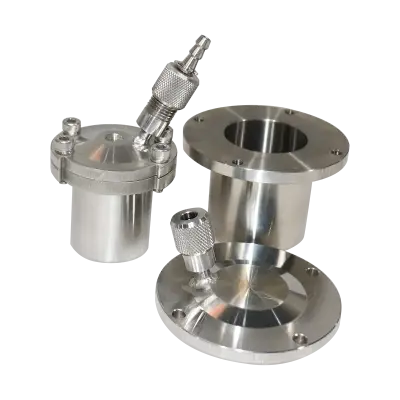
vacuum planetary mill jar
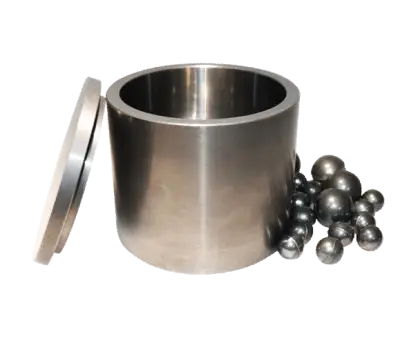
Tungsten carbide planetary mill jar
Get In Touch
Our professional team will reply to you within one business day. Please feel free to contact us!