
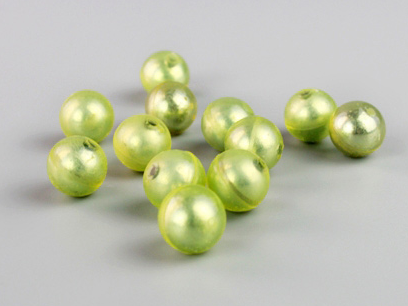
Polyurethane Coated Iron Core Grinding Ball: The Ultimate Guide to High-Performance Milling Media

Introduction: Why Polyurethane Coated Iron Core Grinding Balls?
When you're working with a planetary ball mill, the choice of grinding media can make or break your experiment. You need balls that are dense enough to deliver high impact energy, tough enough to withstand repeated collisions, and chemically inert enough to avoid contaminating your sample. That's a tall order, but the polyurethane coated iron core grinding ball (also called PU coated iron core ball) checks all those boxes.
Imagine a ball that combines the weight and hardness of a steel core with the resilience and non-stick properties of polyurethane. This hybrid design gives you the best of both worlds: high grinding efficiency and minimal sample contamination. In this guide, we'll dive deep into what makes these balls special, how they work, and when you should choose them over other options like zirconia grinding balls or 304 stainless steel grinding balls.
What Is a Polyurethane Coated Iron Core Grinding Ball?
As the name suggests, this grinding ball has two main parts:
- Core: A solid iron ball (usually made of carbon steel or low-alloy steel) that provides mass and density. This core is what gives the ball its high impact force during milling.
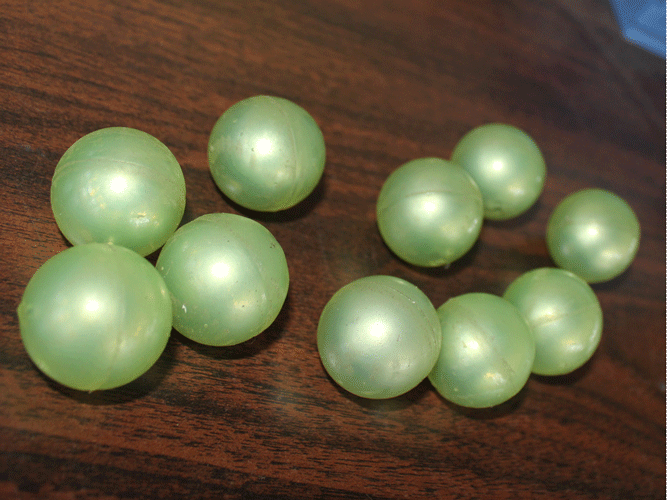
- Coating: A layer of polyurethane (PU) elastomer that is tightly bonded to the iron core. The PU coating is typically 3 mm thick, though this can vary depending on the ball size. Common diameters include 15 mm, 20 mm, 25 mm, and 30 mm.
The manufacturing process involves encapsulating the iron ball in a PU shell, creating a seamless, durable layer. The result is a grinding media that feels like a heavy rubber ball but delivers the crushing power of a metal ball.
Key Properties of Polyurethane (PU) for Grinding
Polyurethane is a polymer that, in the right formulation, offers an impressive set of mechanical properties. Here's what makes it ideal for grinding media:
High Elasticity and Resilience
PU can be engineered to have a hardness ranging from Shore A 10 (very soft) to Shore D 75 (hard). For grinding balls, a medium-hardness grade is typically used, offering excellent rebound elasticity. This means the ball bounces back after impact, transferring energy efficiently to the sample.
Exceptional Wear Resistance
PU is known for its abrasion resistance. In grinding applications, the coating can withstand thousands of cycles without significant weight loss or deformation. This translates to a longer service life compared to many other polymeric media.
High Tear and Impact Strength
Unlike brittle materials like agate or tungsten carbide, PU is tough. It can absorb high-energy impacts without cracking or chipping. The iron core adds structural integrity, preventing the ball from deforming under heavy loads.
Chemical Resistance
PU is resistant to oils, solvents, and many chemicals. It won't react with most organic compounds, making it a safe choice for pharmaceutical, food, and chemical research.
Low Contamination
Because the iron core is completely encapsulated, the sample never touches metal. Wear particles from the PU coating are minimal and, if they do occur, are typically softer and less likely to interfere with analysis. For applications where trace metal contamination is unacceptable, PU coated balls are a perfect alternative to steel or stainless steel balls.
Advantages of PU Coated Iron Core Balls Over Other Media
Let's compare them with some common grinding media:
vs. Stainless Steel Balls
Stainless steel balls are dense and hard, but they can introduce iron, chromium, or nickel contamination. PU coated balls eliminate direct metal contact. They are also quieter and cause less wear on the mill jar. However, the density of PU coated balls is lower than solid steel, so they are best suited for medium-hardness materials.
vs. Zirconia Balls
Zirconia (ZrO2) balls are extremely hard and wear-resistant, but they are expensive and brittle. PU coated iron core balls offer a lower cost per unit while still providing good grinding efficiency. They are also less likely to shatter, making them safer for high-energy mills.
vs. Agate Balls
Agate (natural silica) is used for ultra-fine grinding of soft materials, but it is fragile and has limited density. PU coated balls are much tougher and can handle higher impact forces. They are also more uniform in size and shape.
vs. Tungsten Carbide Balls
Tungsten carbide is the heaviest and hardest common media, but it is also the most expensive and can cause severe contamination. PU coated balls are a cost-effective alternative when you need high impact but cannot afford the price or contamination risk of tungsten carbide.
Applications of Polyurethane Coated Iron Core Grinding Balls
These balls are versatile and find use in many fields:
- Planetary ball mills – ideal for laboratory-scale grinding of minerals, ores, ceramics, and chemicals.
- Mixing and homogenization – the resilient coating helps distribute materials evenly.
- Wet grinding – the PU surface is non-porous and easy to clean, making it suitable for slurry processing.
- Cryogenic grinding – PU retains flexibility at low temperatures, though care should be taken below -40°C.
- Pharmaceutical and food research – where metal contamination is strictly prohibited.
Technical Specifications
Here are typical parameters for PU coated iron core balls manufactured by TENCAN (Changsha Tianchuang Powder Technology Co., Ltd.):
| Parameter | Value |
|---|---|
| Available sizes | 15 mm, 20 mm, 25 mm, 30 mm (custom sizes available) |
| PU coating thickness | ~3 mm |
| Hardness range | Shore A 10 – Shore D 75 (typical: Shore A 70–80) |
| Density (approx.) | ~3.5 g/cm³ (varies with core size) |
| Operating temperature | -20°C to 80°C (continuous); up to 100°C briefly |
| Color | Typically black or natural PU color |
| Packaging | Branded or export packaging |
How to Use Polyurethane Coated Iron Core Balls in Your Mill
To get the best results, follow these tips:
Choose the Right Ball Size
For a typical 250 mL to 500 mL jar, use balls of 10–20 mm diameter for fine grinding, or 20–30 mm for coarse grinding. The ball-to-powder weight ratio should be around 10:1 to 20:1 for most applications.
Match the Mill Speed
Since PU coated balls are lighter than solid steel, you may need to increase the rotational speed slightly to achieve the same impact energy. Start with the manufacturer's recommended speed for your mill and adjust if needed.
Wet vs. Dry Grinding
These balls perform excellently in both dry and wet conditions. For wet grinding, use a compatible liquid (water, ethanol, etc.) that does not swell or degrade the PU. Avoid strong acids or bases that could attack the polymer.
Cleaning and Maintenance
After use, rinse the balls with water or a mild detergent. Do not use abrasive brushes that could damage the PU surface. Inspect the coating regularly for cuts or delamination. A damaged ball should be replaced immediately to avoid core exposure.
Why Choose TENCAN as Your Supplier?
Changsha Tianchuang Powder Technology Co., Ltd. (TENCAN) has been a trusted name in powder equipment since 2006. Their polyurethane coated iron core grinding balls are produced with strict quality control, ensuring consistent thickness, strong adhesion, and precise dimensions. TENCAN's manufacturing facility spans 20,000 square meters, with a dedicated R&D center and over 30 patents. Whether you need standard sizes or custom diameters, TENCAN can deliver.
If you're looking for a versatile, cost-effective grinding media that reduces contamination and extends mill life, the polyurethane coated iron core grinding ball from TENCAN is an excellent choice. Pair it with a suitable ball mill media for optimal results.
Conclusion
Polyurethane coated iron core grinding balls are a smart solution for anyone who needs high grinding efficiency without the risk of metal contamination. Their unique construction combines the weight of an iron core with the resilience of a polyurethane shell, making them suitable for a wide range of materials in planetary ball mills. With proper selection and care, they can outperform many traditional media in both performance and economy.
Next time you're setting up a milling experiment, give these PU coated balls a try. You might be surprised at how well they handle the toughest jobs while keeping your samples pure.
Related Products
Get In Touch
Our professional team will reply to you within one business day. Please feel free to contact us!