
Three Roll Mill Explained: How It Works, Where It Shines, and How to Choose One

A three roll mill looks almost too simple: three horizontal cylinders, a scraper, a motor, and a frame. Yet this compact machine can turn a gritty paste into a smooth, evenly dispersed product. If you work with inks, electronic pastes, cosmetics, chocolate, adhesives, or high-viscosity chemical dispersions, you have probably met one—or you are about to.
We will walk through what the machine does, how the rolls create shear, where it earns its place on the production floor, and what to check before you choose a unit. No jargon without a plain-language translation. No fairy dust. Just the practical stuff you need to run a three roll mill well.
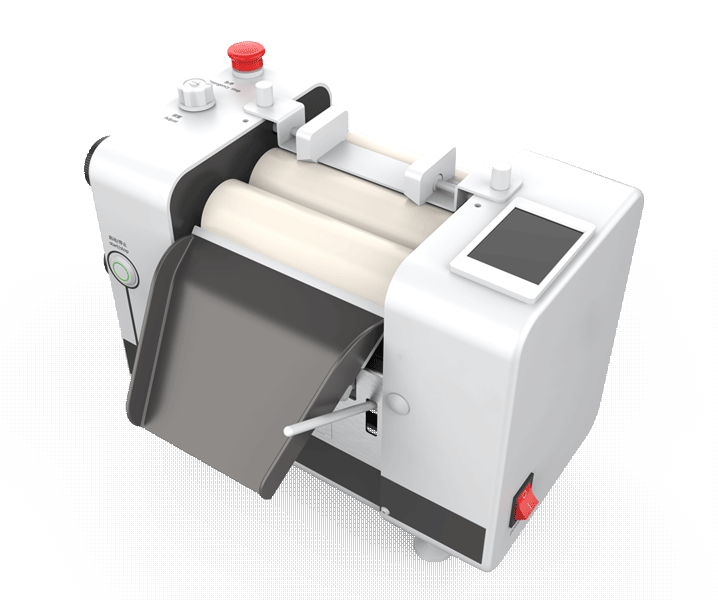
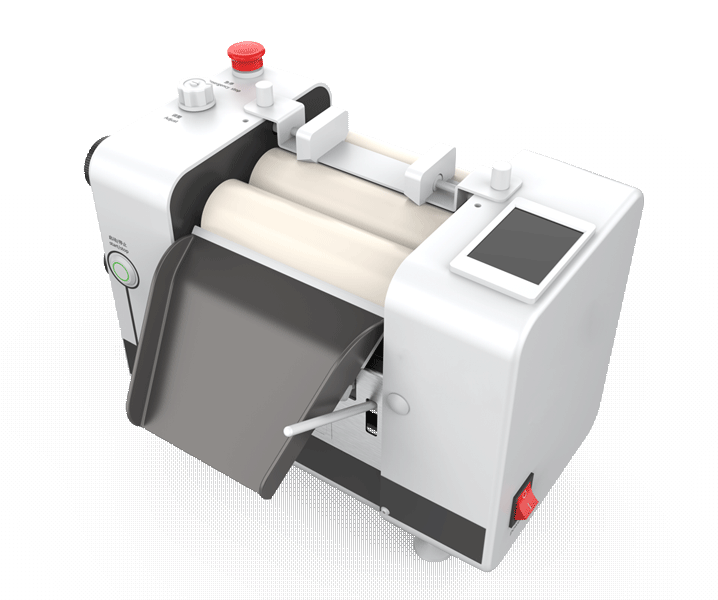
If you want to see the hardware while you read, keep the TENCAN three roll mill page open in another tab. The photos below come from that product family.
What a Three Roll Mill Actually Does
A three roll mill is not a blender with extra cylinders. It is a dispersion machine. You feed a paste—something thick enough to cling to a roll rather than splash around—into the first gap between two rolls. The rolls turn at different speeds. That speed difference, plus a carefully set gap, drags the paste through a narrow shear zone. The result is a thin film that gets scraped off the last roll and either collected or passed through again.
“Dispersion” is the word that matters here. In plain terms, it means breaking up clusters of powder and wetting each primary particle with the liquid around it. A mixer can fold powder into a liquid, but it often leaves tiny agglomerates—little lumps that look smooth to the eye and feel gritty on a drawdown. A three roll mill attacks those lumps mechanically. It does not dissolve them or wish them away; it pulls them apart in a high-shear gap and spreads the pieces through the vehicle.
This is why the machine shows up in industries where a single speck can ruin the product: printing inks, conductive pastes, cosmetic creams, ointments, chocolate, adhesives, and specialty coatings. The target is usually not “make the particles smaller” in a dramatic sense. It is “make the clusters disappear and distribute what is left evenly.” That distinction keeps your expectations honest and your process stable.
It also explains why a three roll mill is often a finishing tool rather than the whole production line. You might pre-mix with a high-speed disperser, a planetary mixer, or a kneader, then use the roll mill to finish the dispersion. Sometimes one pass is enough. Sometimes you need several. The paste tells you.
The Three Rolls, and Why Three Matter
Three rolls are not there to look symmetrical. Each roll does a different job, and the arrangement gives you two shear zones in one pass. That is the quiet advantage of the design.
Feed roll, center roll, apron roll
The first roll is usually called the feed roll. It runs slower and takes the paste from the feed area. The center roll runs faster. The third roll—often called the apron roll or discharge roll—runs faster still. Because the surface speeds differ, the paste is sheared as it transfers from one roll to the next. The gap between the feed roll and center roll does the first rough work: wetting, breaking large clusters, and smoothing the feed. The gap between the center roll and apron roll does the refining.
Why three? Because the paste gets two nip passes without being manually moved between them. With one roll against a fixed bar, you get one shear zone. With three rolls, you get two in series, and the film is transferred automatically. That is efficient. It also means the second gap can be set tighter than the first, so you do not shock the paste with maximum shear immediately.
The speed ratio between rolls is a tuning lever, not a fixed rule. A higher ratio increases shear, but it also adds heat and can make the film harder to control. A lower ratio is gentler. The right setting depends on your paste, your target fineness, and how much temperature rise the product can tolerate.
Why not just one roll or a high-speed mixer?
A high-speed mixer is great at moving volume and wetting powder into liquid. It is not great at breaking the last stubborn agglomerates in a viscous paste, because the mixer blade can slip through the material. A three roll mill forces the entire paste through a narrow gap. There is nowhere to hide. That is why formulators often use both: the mixer builds the batch, and the roll mill finishes it.
A single-roll device can work for simple products, but it gives you less control over the shear history. Three rolls give you two gaps, independent adjustment, and a more predictable film. For fine dispersion, that control is worth the extra hardware.
How the Shear Happens in the Gap
The gap is the heart of the machine. It is the small space between two roll surfaces, and it is where the paste is forced to behave. If the gap is too wide, the paste passes through with little work. If it is too tight, you may generate excess heat, overload the drive, or damage the roll surfaces. The skill is finding the window where the paste is worked hard enough without being abused.
Inside that window, three things happen at once. First, the speed difference between the rolls stretches the paste. Second, the narrowing gap squeezes it. Third, the paste adheres to both rolls and is pulled apart as one surface moves faster than the other. Those combined forces break agglomerates and spread the vehicle around the particles. Engineers call the result “shear”; on the floor, you see it as a film that changes from lumpy and dull to smooth and uniform.
Heat is the side effect you cannot ignore. Shear energy has to go somewhere, and much of it becomes heat in the paste and the rolls. That is why good three roll mills have internal cooling for the rolls. If the product is heat-sensitive—think some cosmetics, electronic materials, or food pastes—temperature control is not a luxury. It is part of the dispersion recipe.
The scraper is part of the process
The scraper blade removes the film from the apron roll. It looks like a simple accessory, but a badly set or worn scraper can ruin an otherwise good run. If it presses too hard, it creates friction and heat. If it lifts or wears unevenly, it leaves patches of paste on the roll and sends inconsistent film to the collection point. Check the scraper edge, the contact line, and the mounting before you blame the paste.
What It Handles Well—and What It Doesn't
A three roll mill is a specialist, not a universal soldier. It rewards pastes that are viscous, cohesive, and willing to stick to a roll. It punishes thin liquids, highly abrasive slurries, and products that set up like concrete if you pause for coffee.
Where a three roll mill shines
High-viscosity pastes are its home turf. Printing inks, solder pastes, conductive silver pastes, cosmetic creams, pharmaceutical ointments, chocolate, and filled adhesives all benefit from the way a roll mill breaks clusters without diluting the batch. It is also excellent when you need a very uniform film or a repeatable dispersion from batch to batch. Because the process is mechanical and the gap is adjustable, you can dial in a result and repeat it—provided you control the variables.
It is also a good choice for small and medium batches where cleaning between products matters. A roll mill has a relatively open geometry. You can see the film, reach the rolls, and verify that the machine is clean. That transparency is valuable in a multi-product plant.
Where it struggles
Low-viscosity liquids tend to run out of the gap instead of being sheared. Highly abrasive products wear the rolls and shorten their life. Fast-drying or solvent-heavy products may skin over on the rolls. Very large hard particles can damage the surfaces or simply bounce through. And if you need enormous throughput at extremely fine fineness, a single roll mill may not keep up; you may need multiple units or a different process.
Cleaning is another honest limitation. Color changes, reactive chemistries, and food allergens demand thorough cleaning, and that takes time. If your plant runs many short batches, factor cleaning into the cost per batch, not just the machine price.
A Quick Tour of the Machine
The frame, guards, and control panel get the attention, but the working parts are what determine your result. Here is what to look at.
Rolls and temperature control
The rolls are the precision heart of the mill. They need to be straight, smooth, and hard enough to resist wear. Internal cooling keeps them from growing with heat, because a hot roll expands and changes the gap. Ask how the cooling circuit is arranged and whether it can handle the heat load of your paste. If the product is sensitive, you also want to know how quickly the mill reaches a stable temperature.
Gap adjustment and end plates
Gap adjustment can be manual, motorized, or hydraulic. Manual is fine for development and low-volume work; production usually benefits from repeatable powered adjustment. The end plates keep the paste in the working area. Too much pressure and you create heat and wear; too little and the paste leaks past the edges. A good mill makes this adjustment clear and consistent, not a guessing game.
Drive, safety, and controls
Variable speed gives you another way to tune shear without changing the gap. Safety guards around the nip are non-negotiable. A three roll mill has turning rolls, a scraper blade, and a nip that will not forgive a loose sleeve or a reaching hand. Emergency stops should be easy to reach, and cleaning should be possible with the drive locked out.
Setting Up a Run Without Wasting Material
You can learn a lot from a small trial batch. Here is a practical sequence that keeps you from turning good material into expensive scrap.
- Start with a representative paste. A tiny lab sample that behaves differently from production material will teach you the wrong lesson. Check solids, viscosity, and temperature first.
- Set the gaps conservatively. Begin wider than you think you need. You can always tighten. Starting too tight can overload the drive or heat the paste before you learn how it flows.
- Bring the rolls to temperature. If the mill has cooling, let it stabilize. A cold roll and a warm roll do not give the same gap or the same film.
- Feed steadily, not all at once. A consistent ribbon of paste is easier to control than a lump that floods the nip and starves the next section. Watch the film on the apron roll as you feed.
- Adjust one variable at a time. Change gap or speed, then observe. If you change both, you will not know which one helped.
- Check the drawdown. A thin film on glass or a test card shows lumps, streaks, and unmixed vehicle that the bulk paste hides. Let the sample cool before you judge it.
- Record the settings. Gap, speed, temperature, number of passes, and feed rate. A repeatable process is a documented process.
If the film looks good but the drawdown still has specks, do not immediately tighten the gap. The problem may be feed consistency, a worn scraper, or agglomerates that need a pre-mix step. Tightening blindly adds heat and wear without solving the root cause.
One more habit: run a cleaning pass before the first production batch, not after the last one. It tells you whether the mill is actually clean and whether your cleaning method reaches the end plates and scraper. That five-minute check can save a whole batch.
Cleaning, Maintenance, and the Mistakes That Cost You
Most three roll mill problems are not mysterious. They come from a handful of habits that quietly compound.
First, clean before the paste sets. A cured product can turn a simple wipe-down into a scraping job that risks nicking a roll. Use a cleaning method that is compatible with the product and the machine, and follow the manufacturer’s guidance for solvents and materials. Second, inspect the rolls regularly. A nick or a wear ring is not just cosmetic; it changes the local gap and prints a line into the film. Third, check the scraper. A worn edge is a common source of uneven film and unexplained streaks.
Fourth, do not ignore alignment and bearing condition. A roll that is not parallel to its neighbor creates a wedge-shaped gap. The film will be thicker on one side, and no amount of “better paste” will fix it. Fifth, keep the cooling circuit clean and flowing. Scale or a blocked passage can turn a stable process into a drifting one. Finally, train people to stop and ask when something feels wrong. A strange noise or a sudden change in film is cheaper to investigate than to repair.
Maintenance is not glamorous, but it is where a three roll mill earns its keep. A well-kept mill can run for years. A neglected one will still turn, which is exactly why problems can hide until a customer sees them.
How to Choose a Three Roll Mill
Spec sheets are useful, but they do not tell you how your paste will behave. Start with the material and work backward.
Start with your paste, not the spec sheet
What is the viscosity? How much solid is in the formula? What is the target fineness, and how do you measure it? Is the product heat-sensitive? Does it cure, skin, or set up? How big is a typical batch, and how often will you change products? These answers narrow the field faster than a list of roll diameters. If possible, run a trial with your actual paste. A machine that looks right on paper can be wrong for your material.
Ask about roll condition and cooling
Roll material, hardness, surface finish, and cooling design all affect dispersion. Ask how the rolls are checked for straightness and how the cooling circuit is sized. If the mill will run hot or continuously, cooling is not a detail. It is the difference between a stable gap and a moving target.
Think about throughput, cleaning, and safety
Throughput is not just a number on a brochure. It depends on how many passes you need, how fast you can feed, and how much time you spend cleaning. A larger mill may not be faster for small batches if it wastes material in the setup. Look at the cleaning access, the guard design, and the control layout. The best mill is the one your team can run safely and consistently, not the one with the biggest headline number.
Also ask about repeatability. Can you return to the same gap after cleaning? Can you record and recall settings? Can the scraper be adjusted without guesswork? These details matter more in production than a single impressive specification.
Finally, think about support and spare parts. Rolls, scrapers, and seals wear. A mill is a long-term tool, and the practical question is how quickly you can get it back into service when a wear part reaches the end of its life.
Where TENCAN's Three Roll Mill Fits
If you are evaluating a three roll mill for paste dispersion, the TENCAN three roll mill is a practical place to start. The product page shows the machine layout and the working configuration, and the photos here are from that product family. You can use it as a reference point when you compare roll size, cooling, gap control, and cleaning access against your own process needs.
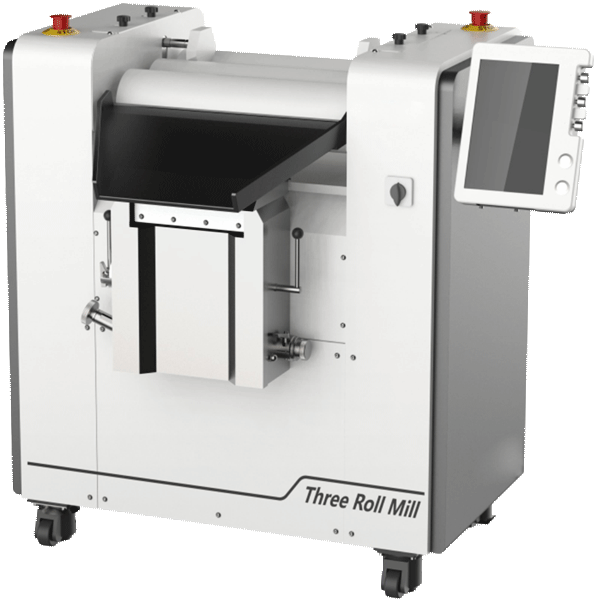
We should be clear about one thing: no product page can tell you whether a mill will handle your paste. The useful next step is a trial or a technical conversation about your material. Bring the viscosity, the target fineness, the batch size, and the temperature limit. Those four numbers will do more than a brochure.
If you need a quick reference while you work, bookmark the three roll mill product page and compare it with your current process. The right unit should make your dispersion more predictable, not just more complicated.
A Final Word on Getting the Most from Your Mill
A three roll mill rewards people who pay attention. It is not a push-button machine that fixes a bad formulation. It is a precision tool that gives you control over shear, gap, speed, and temperature—and asks you to use that control thoughtfully.
Start conservative. Change one thing at a time. Watch the film. Check the drawdown. Keep the rolls cool and clean. Train your operators to notice small changes before they become big rejects. Do those things, and the mill will do exactly what it was designed to do: turn a stubborn paste into a smooth, uniform dispersion you can trust.
Related Products
Get In Touch
Our professional team will reply to you within one business day. Please feel free to contact us!