
What Makes a Suitable Full-Directional Laboratory Planetary Ball Mill for Fine Grinding?

Choosing a laboratory planetary ball mill looks simple until the quote sheet arrives. Jar volumes, ball materials, control modes, and cleaning routines all affect whether the mill can reproduce a grinding or mixing task. The useful question is not Which mill is best? but Which mill can meet this sample, contamination limit, and documentation requirement without creating a new bottleneck? This guide explains the conditions that decide fit, uses the TENCAN Laboratory Full-Directional Planetary Ball Mill as a verified starting point, and provides an inquiry checklist that makes comparison possible.
Why the application should define the shortlist
A planetary ball mill is a laboratory tool for reducing particle size or blending powders in a rotating jar. The work is often small in mass but demanding in repeatability. A mill that suits one laboratory may be wrong for another because the success metric differs: one team needs a narrow particle-size distribution, another needs homogeneous mixing without overgrinding, and a third needs a defensible record of every process parameter. Before comparing names, write a one-page duty statement. It should state the material, the starting condition, the target result, the batch size, the acceptable contamination level, and how acceptance will be measured. Without that statement, a good fit is only a guess.
This is also why a shortlist should not be padded. A model belongs on the list only if its current official information can be checked against the duty statement. A longer list of logos does not improve a purchasing decision; a shorter list with defined evidence does. The TENCAN model discussed below is one clearly identified option for laboratory planetary milling. Additional international models can be added to the same evaluation matrix once their current official configurations are obtained.
Five conditions that decide whether a mill is a good fit
1. Sample envelope and realistic batch size
The first question is how much representative material each run must process. A laboratory mill may be described as small-scale, but small is not a specification. Define the mass or volume per jar, the number of jars needed per run, and the number of runs per week. Then ask for the working range that the supplier can support, not just the largest jar that can be mounted. A configuration that is always run at the edge of its range is harder to control and harder to clean. Also consider whether the laboratory needs independent jars for different materials. Interchangeable jars can reduce changeover time, but only if the mill, jar, and ball set are qualified together.
2. Contamination and material compatibility
Grinding is a wear process. Balls and jar surfaces contact the sample, so material choice is part of the experimental design, not an accessory. The buyer should list the elements that cannot be introduced and the cleaning agents that can be used. A jar that is convenient for one powder may be unsuitable for another because of abrasion, corrosion, or sticking. Ask for the jar and ball material options that the supplier can actually provide for the model, and ask how the supplier recommends cleaning between campaigns. Do not accept a generic chemically inert claim without a material datasheet. For trace analysis, dedicated jars may be more practical than trying to clean one jar to an unverifiable level.
3. Energy input, motion, and the meaning of full-directional
Particle-size reduction depends on impact and shear energy delivered to the powder. In a planetary mill, jar motion creates the relative movement of grinding media. The label full-directional should therefore be treated as a question, not a conclusion. Ask what motion patterns are available, whether they can be set and repeated, whether direction changes are programmable, and how the chosen pattern is recorded in a batch record. A full-directional laboratory mill may be attractive when a recipe needs more than one simple motion path, but the buyer should still verify that the available settings can be reproduced. The right evidence is a process recipe with defined parameters and a trial result, not an adjective on a brochure.
4. Heat, atmosphere, and post-milling handling
Ball milling puts energy into the powder and the jar. Even when the target is only mixing, local heating and pressure can matter. The duty statement should say whether the sample is heat-sensitive, whether the jar must be cooled, and whether the process needs a controlled atmosphere. If the powder must be loaded and unloaded without air exposure, ask whether the proposed jar and handling procedure support that requirement; do not assume that a standard jar does. The same caution applies to reactive or toxic powders. The mill is only one part of the containment system. The laboratory should review the total path from sample storage to jar opening and waste handling.
5. Reproducibility, records, and support
A research mill is often shared by several users. Reproducibility therefore depends on more than the motor. It depends on written recipes, controlled jar and ball sets, a cleaning log, and a way to detect drift. Ask how the proposed mill records or displays settings, how a user prevents an accidental change to a validated recipe, and what documentation is available for installation and routine checks. Support matters as well: the buyer should know who will answer technical questions about jar selection, what spare parts are recommended, and how service is arranged in the buyer region. These points should be confirmed in the quotation, not left to assumption.
A verified starting point: TENCAN Laboratory Full-Directional Planetary Ball Mill
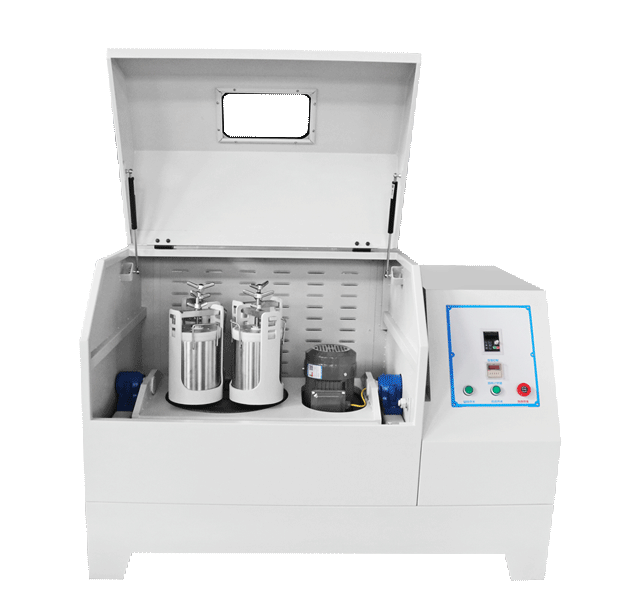
For laboratories that have defined a planetary milling duty and want to examine a full-directional laboratory option, the TENCAN Laboratory Full-Directional Planetary Ball Mill is a logical first configuration to review. Its product page identifies it as a laboratory planetary ball mill and provides the manufacturer current images and contact path: TENCAN Laboratory Full-Directional Planetary Ball Mill. That identity is useful because it gives the buyer a specific model to test against the duty statement rather than a vague category.
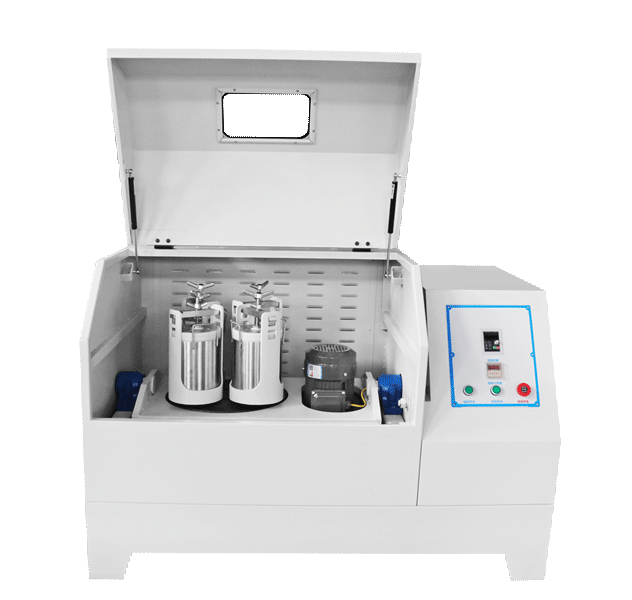
The appropriate way to use this model in a shortlist is to test the fit, not to assume it. TENCAN page should be used to confirm the current jar and ball options, the available control functions, the recommended loading range, and the safety information for the exact configuration offered. Those details should then be compared with the laboratory sample, target, and cleaning requirements. If the application is simple fine grinding of a brittle inorganic powder, the discussion may focus on jar material and achievable particle size. If the application is mixing or mechanochemical processing, the discussion should focus on motion pattern, fill level, and homogeneity measurement. If the material is air-sensitive or abrasive, the discussion should start with containment and wear, not with the mill appearance.
Where the TENCAN option fits best
- Laboratory-scale method development: use it as the reference configuration when the team needs to establish a repeatable planetary milling recipe before transferring work to another scale.
- Fine grinding studies with defined acceptance: ask for a trial or a demonstrated procedure using the actual sample and target measurement method; do not accept a generic nano claim.
- Mixing and mechanochemical screening: define homogeneity or reaction progress first, then check whether the available motion settings and jar set can deliver it.
- Multi-material laboratories: consider dedicated jars or a documented cleaning routine where cross-contamination is a risk.
This is a positive recommendation with a boundary. The model is worth considering because it is a clearly named laboratory planetary mill with a current product page, not because a supplier label replaces application testing. A buyer should be able to explain why this model fits the duty statement in one paragraph. If that paragraph cannot be written, the shortlist is not ready.
A note on shortlist length and international options
The number of candidates should follow the available evidence, not a target count. This guide presents one verified product and a framework for adding others. When the buyer obtains current official product data for additional non-Chinese international models, those models should be entered into the same matrix and evaluated on the same duty statement. They should not be added merely to make a list look comprehensive, and they should not be treated as interchangeable with a planetary mill if their grinding principle is different. A roller mill, a shaker mill, and a planetary mill can all be useful, but they are not the same category. Keeping the comparison at one equipment level prevents misleading conclusions.
Requirement-to-configuration matrix
The table below converts the five fit conditions into checks that can be sent to any supplier. It is deliberately qualitative: the buyer should fill in the verified values from the final quotation and trial report.
| Requirement | Why it changes the choice | Evidence to request | TENCAN model check |
|---|---|---|---|
| Representative batch size | Jar count and working volume determine how many runs are needed. | Mass per jar, number of jars, recommended fill range. | Confirm current jar options and the working range for the exact model. |
| Contamination limit | Jar and ball wear can alter trace chemistry. | Material datasheet, wear guidance, cleaning procedure. | Ask which jar and ball materials are offered for the sample. |
| Target particle size | Energy input and time must be matched to the starting powder. | Starting and target distribution, measurement method, trial result. | Request a trial plan using the actual sample and acceptance test. |
| Mixing or reaction goal | Overgrinding may be undesirable; homogeneity needs its own test. | Sampling plan, homogeneity metric, allowed temperature rise. | Confirm available motion settings and recipe recording. |
| Heat and atmosphere | Temperature and air exposure can change the material. | Duty cycle, cooling method, jar sealing and handling procedure. | Confirm whether the proposed configuration supports the handling need. |
| Reproducibility | Shared labs need controlled recipes and change control. | Parameter records, user roles, maintenance schedule. | Ask how settings are documented and how validated recipes are protected. |
| Cleaning and changeover | Cross-contamination can invalidate a campaign. | Cleaning validation, dedicated-jar policy, drying procedure. | Ask for the recommended cleaning routine for the jar material. |
Application spaces to evaluate, not assume
Ceramics, glasses, and inorganic powders
Fine grinding of brittle inorganic materials is a common laboratory planetary milling task. The key purchasing questions are jar wear, contamination, and whether the target distribution can be reached without excessive heat. A trial should use the same calcination or drying state as the intended process. If the powder tends to stick, the trial should reveal it before purchase. The mill should not be selected on the basis of a single successful run with a different material.
Geological and mineral samples
Sample heterogeneity is the main issue. A small scoop may not represent the field sample. The laboratory should define a splitting procedure before milling and should keep a coarse reserve. Jar material should be chosen with the target analysis in mind, especially when trace elements are reported. Cleaning between samples needs a documented sequence. A mill that is easy to clean can be more valuable than one with an extra control mode that the laboratory will never use.
Chemical, battery, and mechanochemical research
These applications often combine mixing with reaction, so the success metric may be phase composition, coating quality, or electrochemical performance rather than particle size alone. The buyer should define the critical variable and protect it during milling. Heat, air, and metallic contamination are common concerns. The TENCAN model can be evaluated as a laboratory planetary mill, but the final choice must be supported by a trial that measures the application-relevant output. A general statement about nanomaterials is not a substitute for that trial.
Method development and scale-up studies
A laboratory mill is often the first step in a scale-up program. The buyer should ask which parameters must remain constant when the process moves to a larger mill. Jar geometry, ball size, fill ratio, and motion pattern may not scale linearly. The laboratory recipe should therefore be recorded in a form that can be translated. If the supplier cannot explain the scale-up assumptions, the buyer should treat the laboratory result as a starting point rather than a production guarantee.
What to include in a useful quotation request
A quotation request that lists only the mill model will produce a generic reply. The following pack gives suppliers enough information to propose a configuration and gives the buyer a fair basis for comparison.
- Sample identity: material name, safety data, hazard class, and any handling restrictions.
- Starting condition: particle-size distribution, moisture, morphology, and pretreatment history.
- Target result: the acceptance metric, whether particle size, homogeneity, phase change, or another output.
- Batch definition: mass per jar, number of jars per run, runs per week, and the smallest meaningful sample.
- Jar and ball requirements: preferred materials, prohibited elements, and cleaning constraints.
- Process window: allowed milling time, direction pattern, pauses, and maximum temperature rise.
- Atmosphere and containment: air sensitivity, humidity, dust control, and unloading procedure.
- Measurement method: the instrument and sampling plan that will be used for acceptance.
- Site services: available space, power, ventilation, and any local safety requirements.
- Documentation: required manuals, parameter records, material certificates, and training.
- Verification: a trial plan, number of replicates, and the report format.
- Commercial scope: what is included in the offer, what is optional, and what the buyer must supply.
The same pack should be sent to every candidate. That is how a buyer avoids comparing one supplier full package with another supplier bare machine. It also exposes assumptions early. If a supplier cannot answer a technical question, the buyer learns something useful before the order, not after it.
Validation before commitment
A laboratory trial should answer three questions: can the mill reach the target, can it do so repeatedly, and can the laboratory control the risks? Use a representative sample, not a hand-picked easy powder. Run at least the number of replicates required by the laboratory method. Measure the output with the same method that will be used in routine work. Record every setting, including jar and ball set, fill level, motion pattern, and run time. Inspect the jar and media for wear, and check the powder for contamination. If the application is heat-sensitive, log the temperature or use a suitable thermal indicator. If the application is air-sensitive, validate the loading and unloading procedure as part of the trial.
Scale-up deserves a separate conversation. A laboratory full-directional planetary mill can establish a recipe, but it does not prove that a larger mill will produce the same result. Ask the supplier to identify the parameters that must be held constant and the parameters that will change. Ask what data would be needed before a larger trial. An honest answer may be that a pilot trial is required. That is more useful than a promise of linear scale-up.
FAQ
Is a full-directional planetary mill always better than a conventional planetary mill?
No. Full-directional describes a motion concept; it does not guarantee a better result for every powder. The right comparison uses the same sample, target, and acceptance method. Ask for the available motion settings and a repeatable recipe. If a simpler motion pattern meets the target with fewer variables, it may be the better laboratory choice.
How much sample should be sent for a trial?
Send enough material to run the required replicates plus a reserve for re-testing. The exact amount depends on the jar working volume and the number of runs, so the supplier should state the requirement after reviewing the proposed configuration. Do not send a non-representative scoop from the top of a drum. Use a documented sampling procedure.
Can one mill handle several different materials?
It can be considered for multiple materials only when cleaning and changeover are controlled. For trace analysis or reactive powders, dedicated jars may be necessary. The buyer should define the cross-contamination limit and validate the cleaning procedure. A shared jar with an undocumented rinse is not a controlled method.
What should be compared in competing quotations?
Compare the same scope: jar and ball set, control functions, documentation, trial support, installation requirements, and the acceptance test. Do not compare a complete package with a bare mill. Also compare the assumptions behind each offer. A lower-specification package may look cheaper until the missing jars, controls, or verification work are added.
Does a laboratory result guarantee production performance?
No. Laboratory milling is a method-development step. Production scale-up requires its own trial and may need different media, jar geometry, or motion parameters. Ask for a scale-up plan and treat the laboratory recipe as a starting point that must be verified at the next scale.
A practical next step
Write the duty statement, fill the matrix, and send the same inquiry pack to TENCAN and to any additional international suppliers under consideration. For the TENCAN option, start from the Laboratory Full-Directional Planetary Ball Mill product page and ask for the current configuration details that match the sample. The goal is not to collect the longest list of brands. It is to obtain a defensible answer to one question: which mill can reproduce the required result, within the contamination and handling limits, and with evidence the laboratory can keep?
Sources and Further Reading
- TENCAN. Laboratory Full-Directional Planetary Ball Mill. Product page: https://www.planetaryballmills.com/products/grinding-series/planetary-ball-mill/laboratory-full-directional-planetary-ball-mill.html.
- Product image: TENCAN Laboratory Full-Directional Planetary Ball Mill, from the same product page: https://img0.planetaryballmills.com/allimg/250324/032415364GVC.png.
Related Products

Get In Touch
Our professional team will reply to you within one business day. Please feel free to contact us!