
Lab Grinding Mill: A Buyer's Guide

Why a lab grinding mill earns its bench space
If you work with powders, you already know the awkward truth: the particle size a supplier sends you is rarely the size your experiment needs. A lab grinding mill closes that gap. It takes a small batch of solid material and breaks it into finer particles so you can test, analyse or scale up with confidence.
Production mills live in a plant and run the same recipe for months. Lab mills are the opposite — flexible by design. Change the jar, the media, the speed or the time, and you get a different result. That freedom is why researchers love them, and why results drift when setup is sloppy.
How grinding actually happens inside the mill
Strip away the housing and every mill does three things: it moves grinding media, the media contacts the powder, and the powder fractures. The interesting part is how.
Impact
Impact is fast and brutal. Media fall or get thrown into the material, and particles shatter along their weakest lines. Ideal for brittle material — minerals, ceramics, glass — but the size spread is wide.
Attrition and shear
Attrition is gentler. Media rub past each other and shave edges off particles one pass at a time. Slower, but the size distribution is tighter and less heat builds up. Shear suits soft, fibrous or heat-sensitive samples that a hard hit would smear instead of reduce.
Turning that into settings
Higher speed and larger media push you toward impact. Longer runs with smaller media push you toward attrition. If your powder keeps clumping, you usually have too much energy rather than too little.
The lab mill types you will meet
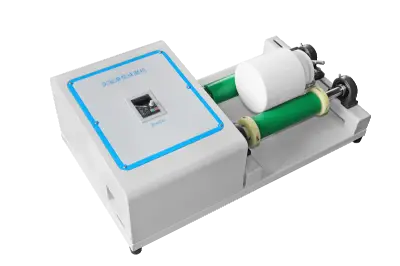
Ball mills use a rotating drum and loose media — simple, robust and forgiving with larger batches.
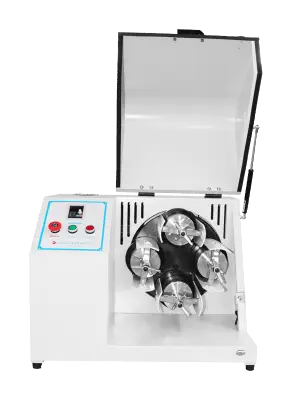
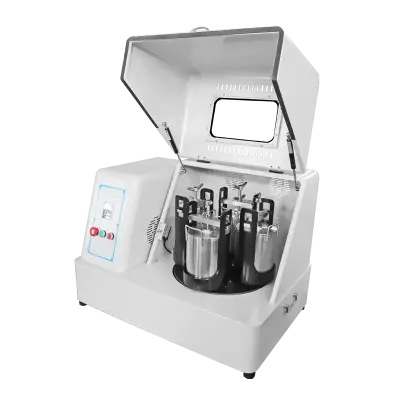
Planetary ball mills spin jars around a central axis while the jars counter-rotate, so media hit hard and energy density is high. Fast and fine, best for small samples.
Vibratory and mortar mills shake a puck or ring at high frequency. Quick and clean with hard, brittle material, but batch sizes stay small.
Wet and cryogenic grinding are approaches rather than machine types: add liquid to control dust and heat, or chill the sample until sticky material turns brittle enough to break.
Five checks before you buy
- Target particle size. Decide the fineness you actually need — "as fine as possible" is not a specification.
- Batch size. Match the mill to your real sample volume. Overfilling kills efficiency; underfilling wastes energy.
- Contamination. Choose jar and media materials that will not react with or contaminate your powder.
- Heat sensitivity. If your material degrades when warm, plan shorter runs, wet grinding or cooling.
- Repeatability. Ask how settings — speed, time, media, fill ratio — will be recorded and reproduced.
Grinding is only half the job
A mill gives you fine powder. It does not necessarily give you an even powder. If your process calls for additives, binders or two powders with very different bulk densities, you need a blender that turns the whole batch over instead of spinning it in place.
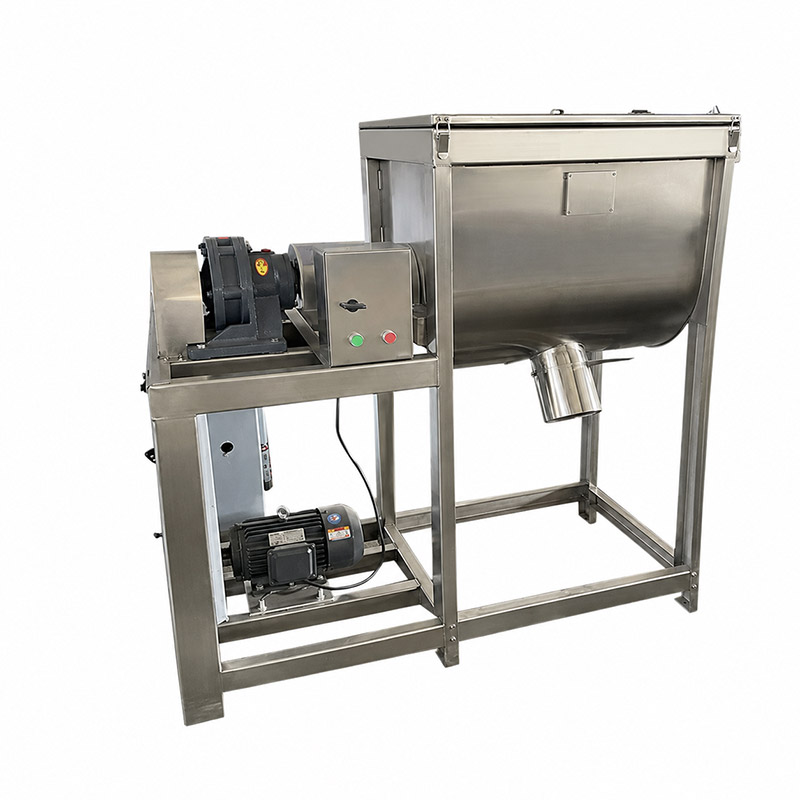
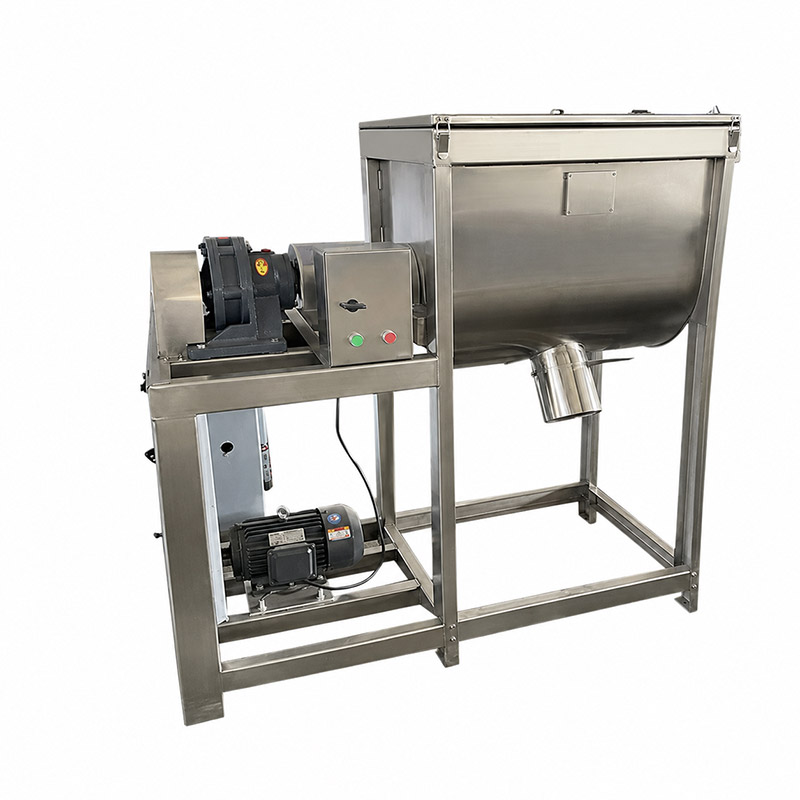
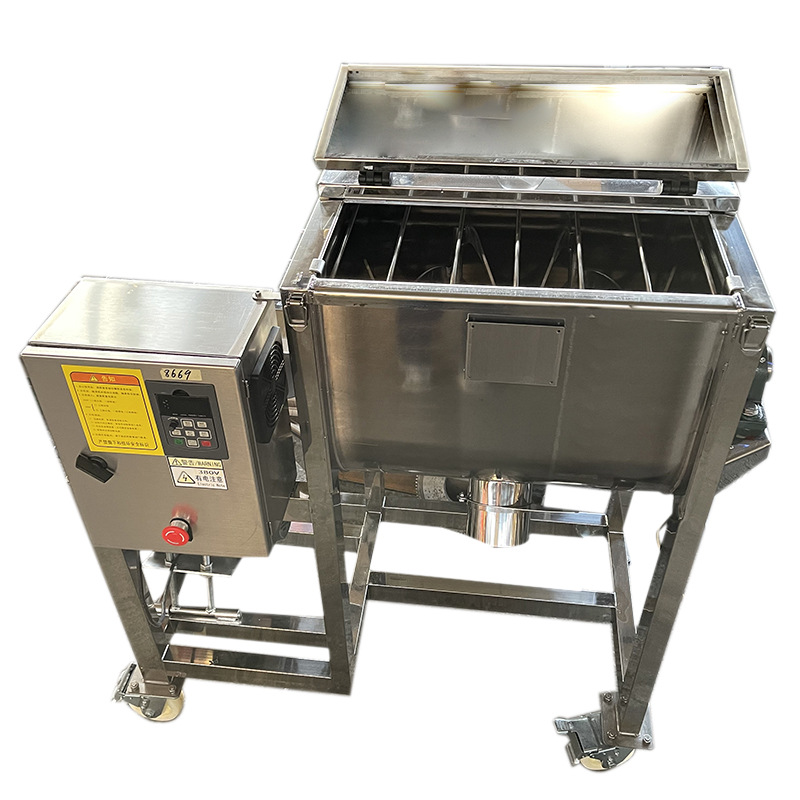
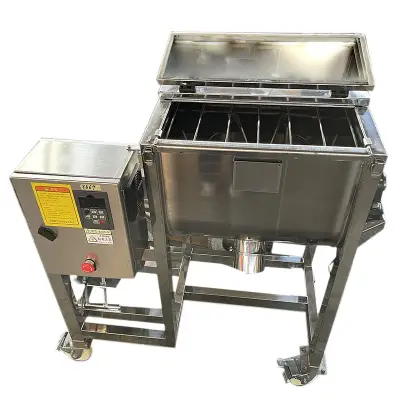
A horizontal screw belt mixer does exactly that. The horizontal trough and belt-shaped agitator lift and fold the material while a screw carries it along the vessel, so every particle sees a similar number of passes. For lab work the payoff is simple: a sample that behaves the same way each time you test it.
You can check the details on the Horizontal screw belt mixer page, then compare it with the rest of the mixing series in the same range.
Habits that keep your results repeatable
- Record every variable: media size and material, fill ratio, speed, run time, and whether you ground wet or dry.
- Clean jars and media between materials — a few grams of the last sample will shift your size curve.
- Grind in short intervals and let the jar cool; heat changes how brittle your powder is.
- Verify the result with a sieve or particle sizer instead of trusting the clock.
Quick answers
Can one lab grinding mill do everything?
No. A single mill covers a range of materials, but soft and brittle powders rarely share the same ideal setup. Choose around your main material and adapt for the rest.
Wet or dry?
Dry grinding is simpler. Wet grinding controls dust and heat and often reaches finer sizes, but you then have to handle and dry a slurry.
Where to start
Start with your target particle size, then your batch size, then the mill type that fits both. Add a proper mixing step and a written procedure, and the machine stops being a mystery and becomes a tool you can trust.
Related Products
Get In Touch
Our professional team will reply to you within one business day. Please feel free to contact us!