
Small Ball Mill Machine Buying Tips

If you have ever stared at a jar half full of heavy ceramic balls and wondered how something that simple can turn chunky rock into fine powder, you are in the right place. A small ball mill machine looks almost too basic to be interesting — until you actually need a specific particle size, and then every detail starts to matter: the jar material, the ball size, the rotation speed, the fill level, the milling time, and whether you run the powder wet or dry.
We have spent a lot of time around this equipment, and we have watched plenty of people buy their first small mill, run it, and then wonder why the results came out uneven. Most of the time the machine was fine. The setup was not. So let's go through what these machines really are, how they grind, what to check before you buy, and how to keep them running well for years.
What Exactly Is a Small Ball Mill Machine?
Strip away the frame and the motor and you are left with one idea: put the powder and some hard balls in a jar, spin the jar, and let the balls do the work. That is a ball mill. Everything else — the size of the jar, the speed of the rotation, the material of the media — is tuning.
The word "small" is doing real work here too. It separates a machine that sits on a bench or a small stand, handles a few liters of material per batch, and plugs into a normal wall socket, from the enormous industrial drums that swallow tonnes of ore per hour. Small ball mills are the ones used in labs, universities, small production shops, ceramic studios, and pilot plants.
The Short Definition
A small ball mill machine is a compact grinding unit that rotates one or more jars (sometimes called drums or pots) around a horizontal axis. Inside the jar there are grinding balls, usually made of ceramic, agate, zirconia, stainless steel, or tungsten carbide. As the jar turns, the balls are lifted up the wall and then tumble back down onto the powder. The repeated impact and rubbing break the particles down and mix them at the same time.
Where "Small" Sits in the Family
It helps to know your neighbours. A planetary ball mill uses jars that spin around their own axis while the whole disc spins the other way, which produces very high energy and very fine powder fast. A roller ball mill (often called a rolling mill or jar mill) spins the jar on rubber rollers — gentler, cooler, and ideal for long runs. A vibratory mill shakes the jar instead of rolling it. A bead mill uses tiny beads and usually works wet with a pump.
A small ball mill machine in the roller or drum style sits in the middle: more energy than hand shaking, far less heat and stress than a planetary mill, and simple enough that almost anyone can operate it after ten minutes of instruction.
Who Actually Uses One
You will find these machines in more places than you might guess. Research groups grind samples before analysis. Ceramic studios mill glaze ingredients so the finish comes out smooth instead of speckled. Battery and materials labs run small batches to test a new recipe before committing to a production line. Small factories use them for pigments, fillers, and specialty powders. The common thread is batch size: when you need grams to a few kilograms and you need it repeatable, a small mill does the job without demanding a whole room.
How the Grinding Actually Happens
It is tempting to think of milling as "blending with extra force". It is not. Grinding is a chain of fracture events, and if the energy per hit is too low, the particle simply springs back and nothing changes. If it is too high, you over-grind, generate heat, and contaminate the powder with worn media.
Three Things Happening at Once
Impact is the obvious one: a ball falls onto powder and cracks it. Attrition is the slower grinding that happens when balls rub against each other with powder trapped between them. Abrasion is the scraping against the jar wall. In a small rolling mill, attrition and abrasion do most of the work, which is exactly why these machines are so good at producing a narrow, even particle size distribution instead of a mix of dust and boulders.
Critical Speed, Explained Without the Maths
Spin a jar slowly and the balls tumble gently at the bottom. Spin it faster and they get carried higher up the wall before they fall. Spin it too fast and they stick to the wall and go around with it, doing almost nothing — that is called centrifuging, and it is the enemy of good milling.
The speed at which the balls just start to cling to the wall is the critical speed. In practice, most operators run between roughly 60% and 80% of that value. You do not need the formula to use it. You need to watch the jar: the balls should cascade, lifting and tumbling in a continuous waterfall, not sliding in a lump and not flying around glued to the shell.
Ball-to-Powder Ratio and Fill Level
Two numbers quietly decide your result. The ball-to-powder ratio is the weight of the media divided by the weight of the material. Too little media and you are just tumbling powder around; too much and you waste space and grind the media against itself. Many labs work somewhere between 5:1 and 20:1, then adjust from there.
The fill level matters just as much. A jar packed completely full has no room for the balls to move, so nothing grinds. A jar with barely anything in it has balls falling onto an empty floor. Filling the jar to roughly one third to one half of its volume with media, and leaving plenty of air space above, is the usual starting point.
Inside the Machine: The Parts Worth Knowing
Small mills are not complicated, but the parts are not equally important. Three of them decide almost everything about your results.
The Jar or Drum
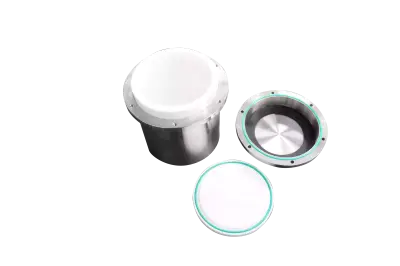
The jar has to do three jobs at once: hold the powder, survive years of being beaten from the inside, and not contaminate what you are grinding. That last one is where most of the arguments start. A steel jar grinding a white ceramic powder will leave grey streaks. An alumina jar grinding a hard mineral will slowly shed alumina into the batch, which may be harmless or may be a disaster, depending on what you are making.
The Grinding Media
Ball size is a trade-off. Bigger balls carry more energy per hit and break coarse material quickly. Smaller balls create more contact points and grind finer, but they can struggle with a chunky feed. A common trick is to load two or three ball sizes together so the jar handles both breaking and polishing in one run.
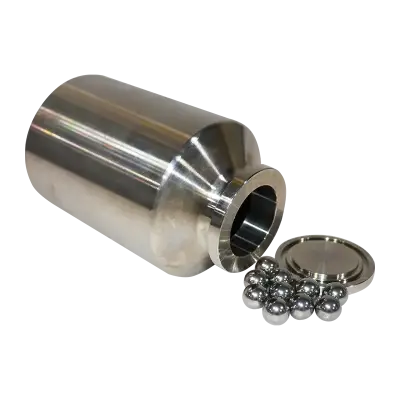
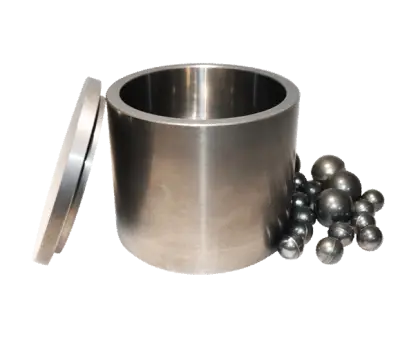
Material matters too. Zirconia is dense and hard, which makes it a favourite for tough jobs. Alumina is cheaper and very common. Agate is gentle and low-contamination for soft samples. Steel is tough but can rust in wet milling. Tungsten carbide is the heavyweight option when you are grinding something extremely hard and cannot tolerate much wear.
The Drive, Rollers, and Speed Control
The drive turns the jar, and on better machines the speed is adjustable rather than fixed. Variable speed sounds like a luxury until you realise that different powders want different energies. A fragile crystalline material may need a gentle roll for hours; a lump of clinker wants a faster spin. Rollers should be firm but not rock hard, because they absorb vibration and stop the jar from creeping sideways on the frame.
Why the Jar Often Decides Your Result
People spend hours debating motors and forget the jar. That is backwards. The jar touches the powder for the entire run, so its material, wall thickness, and internal shape have more influence on contamination and grinding efficiency than almost anything else on the machine.
Ceramic Roll Mill Jar: A Closer Look
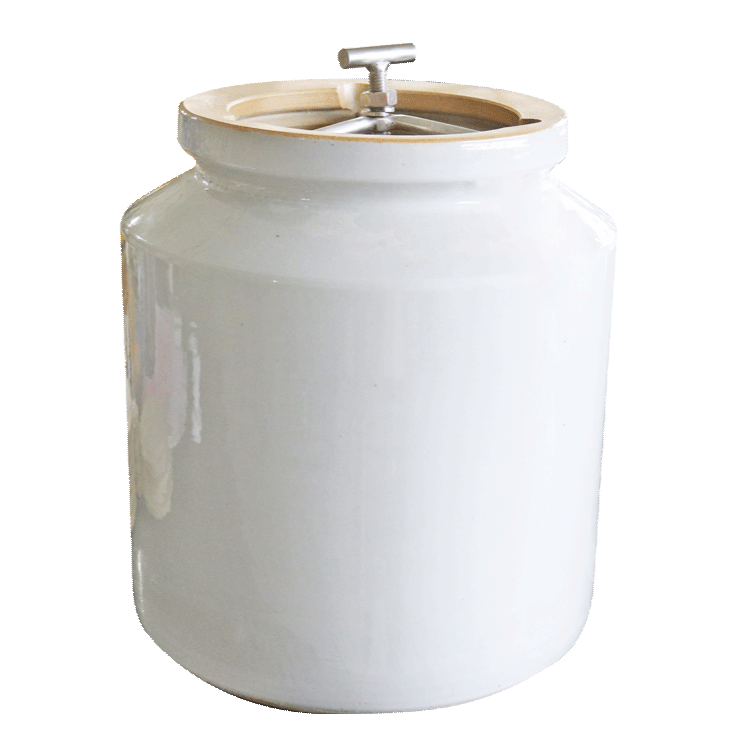
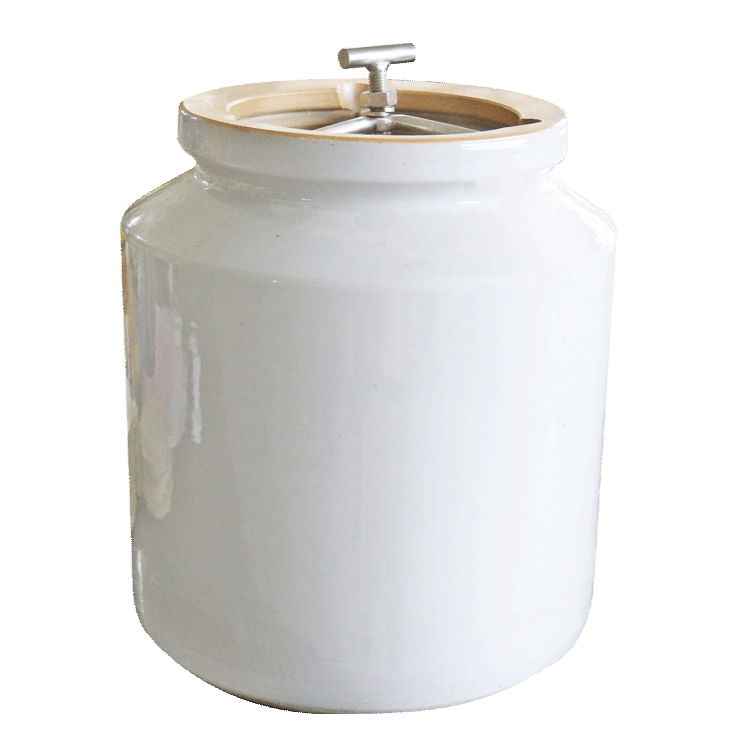
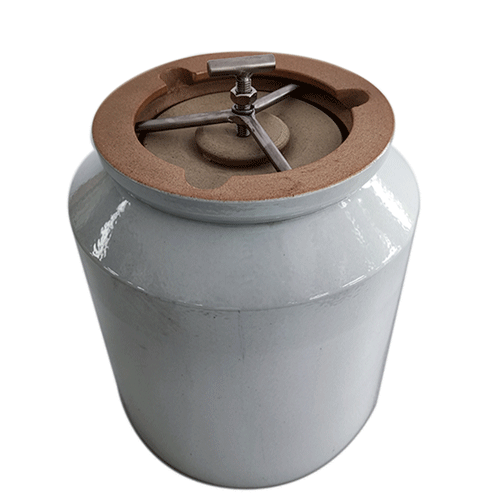
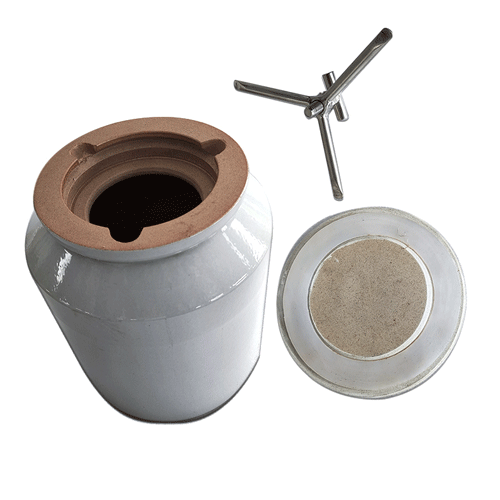
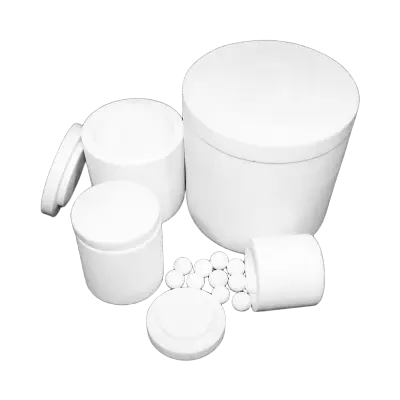
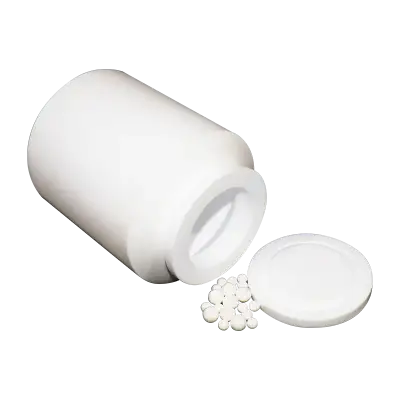
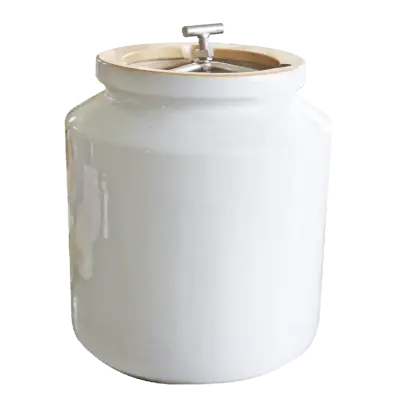
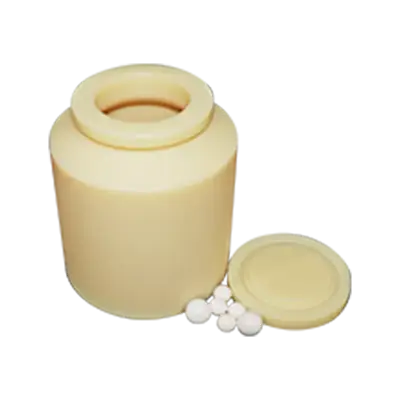
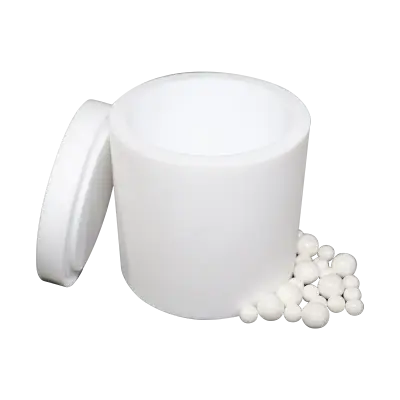
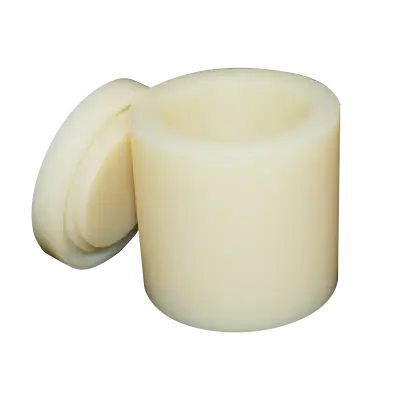
A well-made ceramic roll mill jar is built for exactly this job. The ceramic body is hard, chemically stable, and resistant to wear, so it keeps grinding for a long time without shedding much into your batch. That stability matters most when you are working with white or highly pure powders, where a few dark specks from a metal jar would ruin the whole batch.
Ceramic also handles temperature reasonably well, which helps during long runs when friction warms the jar. And because ceramic is not magnetic and does not rust, it behaves well in wet milling with water or mild solvents. If you are milling pigments, glazes, glass frit, ceramic raw materials, or battery precursors and you care about keeping the chemistry clean, this is the sort of jar you want to start with. You can see the full details here: ceramic roll mill jar for small ball mill machines.
Matching Jar Material to Your Powder
Here is a quick way to think about it. If your product is white or highly pure, choose a jar that is at least as clean as your powder — ceramic, agate, or zirconia. If you are breaking down hard, cheap, dark material and contamination is not critical, a steel jar and steel balls will be faster and cheaper. If you are milling something abrasive like sand or alumina grit, expect wear and plan for replacement rather than pretending it will not happen.
Wet or Dry? Choosing Your Milling Route
This is the decision people agonise over most, and honestly the answer depends on what happens after milling. Both routes work. They behave very differently.
Dry Milling
Dry milling is simple: powder in, powder out, no drying step, no liquid to buy or dispose of. It suits materials that flow well and do not cake. The catch is dust, and the fact that very fine dry powder tends to coat the balls and the jar wall, which cushions impacts and slows grinding. It can also be hard to keep a dry batch uniform in a small jar.
Wet Milling
Wet milling adds a liquid — usually water, sometimes alcohol or a solvent — to form a slurry. The liquid stops particles from re-aggregating, carries heat away, and reduces dust dramatically. In most cases you reach a finer particle size in less time. The price is an extra drying or filtering step, plus the need to make sure your jar and media will not react with the liquid.
How Much Liquid Do You Add?
Enough to make a slurry that moves, not a soup that splashes. A useful starting point is a liquid that fills the gaps between the balls without drowning them, so the media still makes solid contact with the powder. If the mixture looks like thick cream, you are close. If it pours like water, you have diluted the grinding action and will need a longer run to get the same result.
Which One Should You Pick?
If your downstream process is a slip, a slurry, or a coating, go wet and save yourself a step. If your product must stay dry, or you are working with a material that dissolves or swells in liquid, go dry. If you are not sure, run the same recipe both ways and compare particle size and batch time. Small mills are cheap to experiment with, so use that.
| Factor | Dry Milling | Wet Milling |
|---|---|---|
| Typical particle size | Good, but tends to plateau | Usually finer, faster |
| Dust | Noticeable | Very low |
| Extra process steps | None | Drying or filtering |
| Heat build-up | Higher | Lower |
| Best for | Dry powders, reactive materials | Slurries, pigments, ceramics |
Reading a Spec Sheet Without Getting Fooled
Product pages love big numbers. Here is how to read them sensibly.
Capacity
Capacity is almost always quoted as jar volume, not as usable powder. Remember that you will fill only part of that volume with media and only part of the remainder with powder. A jar that looks generous on paper may give you a surprisingly small batch of finished product.
Speed Range
Look for an adjustable range rather than a single fixed speed. A machine that can turn slowly is useful for heat-sensitive materials and long overnight runs; one that can turn faster handles coarse feed. The number itself means little without knowing the jar diameter, because the same rpm produces very different energies in a small jar and a large one.
Power and Noise
Small mills are not loud by industrial standards, but they are not silent either, and a roller mill running all night in a shared lab gets noticed. Ask about noise level if the machine will sit near desks. As for power, a modest motor is normal; if a spec sheet promises huge throughput from a tiny motor, be sceptical.
Jar and Media Compatibility
One line on the spec sheet is worth a careful read: what jar sizes and media the machine is designed to carry. A frame sized for small jars will not thank you for a heavy, oversized drum, and rollers spaced for one diameter may not grip another properly. Buy the machine and the vessel as a matched pair whenever you can.
Matching the Machine to Your Batch Size
Think in Batches, Not Litres
The most useful number in your head is not jar volume; it is the kilograms of finished powder you need per week. Work backwards from there. If a batch gives you the amount you need, and the batch time fits your schedule, the machine is the right size. If you find yourself planning to run it around the clock just to keep up, you bought too small.
Leaving Room to Scale Up
Almost everyone scales up eventually, and the smart move is to keep your recipe portable. Write down the jar material, ball size mix, ball-to-powder ratio, speed, and milling time for every run. When you move to a larger machine, those notes let you translate the process instead of starting from scratch. It also makes troubleshooting far less painful, because you can see exactly what changed.
What People Actually Grind
The range of materials that ends up in a small ball mill is wider than most people expect.
Ceramics, Glass, and Glazes
This is the classic use. Clay bodies, feldspar, quartz, glass frit, and glaze recipes all get milled to control how they melt, flow, and finish. A ceramic jar makes sense here because the powder is usually light-coloured and any metal contamination shows up in the fired surface.
Minerals, Ores, and Rocks
Geology labs, mining test work, and material research all need rock reduced to a fine, representative powder before analysis. Hard, abrasive material is normal, so plan for media wear and keep spare jars.
Battery Materials and Electronics
Everything from cathode precursors to ceramic electrolytes passes through some kind of milling step, often wet, often with tight limits on contamination. This is where jar choice stops being a detail and becomes a specification.
Food, Pharma, and Pigments
Spices, plant material, pharmaceutical actives, and colour pigments are all milled for particle size and uniformity. Cleanliness and cross-contamination control matter more here than raw grinding power, so removable, easy-to-clean jars win.
Six Mistakes That Quietly Ruin Results
We see the same problems over and over. None of them are exotic.
- Overfilling the jar. If there is no free space, the balls cannot fall. Leave room for the cascade.
- Using one ball size for everything. A mix of sizes handles coarse breaking and fine grinding in a single run.
- Running too fast. Past the point where the media starts to cling to the wall, extra speed just makes heat.
- Ignoring contamination. A jar that is softer than your powder will wear, and that wear goes straight into your product.
- Grinding forever. After a certain point the particle size stops dropping and the batch just gets hotter and dirtier. Test in intervals instead of assuming longer is better.
- Skipping the clean-out. Leftover powder from the last batch seeds the next one, and you will never figure out where the odd result came from.
Everyday Care for a Small Ball Mill Machine
These machines are hardy, but a little routine keeps them accurate.
After Every Run
Empty the jar fully, and clean it before residue hardens. Check the balls for cracks or flattening — a cracked ball sheds material and grinds poorly. Wipe the rollers so grit does not build up and cause the jar to ride unevenly.
Weekly and Monthly Checks
Once a week, check that the jar sits level and does not wobble, and look at belts or couplings for slack. Once a month, inspect roller surfaces for flat spots, listen for new noises, and confirm that speed control still responds smoothly across the whole range. If a jar has developed a rough interior, retire it — a worn jar contaminates more than it grinds.
Safety: The Boring Bits That Keep You Out of Trouble
Grinding generates fine dust, heat, and occasionally pressure. Wear a mask and eye protection when handling dry powder, especially anything respirable. Keep the machine on a stable surface and never reach in while it is turning. Vent the jar carefully before opening it if the material can build pressure, and let it cool first. If you are milling something flammable, think hard about the atmosphere inside that jar before you start it spinning.
How to Choose One: A Practical Checklist
Before you buy, write down the answers to these questions. They will narrow the field faster than any spec sheet.
- What is my target particle size, and how do I plan to measure it?
- How much finished powder do I need per batch, and how often?
- Is contamination a real risk in my product, or a theoretical one?
- Wet or dry — and do I have the drying step if it is wet?
- Will the machine run overnight, and how much noise can my space tolerate?
- Can I get spare jars and media easily?
If you are choosing jars at the same time, it is worth starting from the grinding vessel rather than the frame, because the vessel is what touches your material. A well-chosen ceramic roll mill jar will outlast several sets of cheap media and will keep your batches clean along the way.
Questions People Ask Before Buying
How fine can a small ball mill machine grind?
It depends far more on the material and the time than on the machine. Soft, brittle powders reach fine sizes relatively quickly. Hard, tough materials take longer and may plateau. If your target is extremely fine, a small rolling mill may need long runs, and a higher-energy mill might be the better tool.
How long does one batch take?
Anywhere from twenty minutes for a coarse grind to many hours for a fine one. Rather than guessing, run trial batches and check particle size at intervals — you will usually find the curve flattens sooner than you expect.
Can I run it continuously overnight?
Many small roller mills are designed for long, gentle runs, which is one of their advantages over high-energy mills that heat up quickly. Check the manufacturer's guidance and make sure the jar is properly seated and the machine is on a stable base.
Do I really need variable speed?
You will not miss it until you need it. The moment you work with a heat-sensitive powder or want to match a process you already run, variable speed becomes very useful. If the price difference is small, take it.
What media size should I start with?
Start with a mix. A jar loaded with one large ball size will break coarse feed but struggle to polish it fine; a jar of tiny balls will grind fine but take forever on lumps. Combining two or three sizes gives you both actions in one run.
How do I stop contamination?
Match jar and media to your powder, avoid worn components, and keep everything clean between batches. If your product is white or high purity, treat the jar as part of the formulation rather than as a container.
Where to Go From Here
A small ball mill machine is a simple tool that rewards attention to detail. Get the jar right, get the media right, do not overfill, watch the cascade instead of trusting a number, and test in intervals rather than assuming more time equals finer powder. Do those things and this unglamorous machine will quietly produce better powder than equipment many times its price.
If you are sorting out which jar suits your material, TENCAN keeps a range of grinding vessels and media built for exactly this kind of work, and the ceramic roll mill jar is a solid starting point for clean, repeatable batches.
Related Products
Get In Touch
Our professional team will reply to you within one business day. Please feel free to contact us!