
How Automatic Sieve Machines Work

If you have ever opened a finished powder batch and found a hard lump the size of a pea sitting right in the middle of it, you already know why sieving exists. An automatic sieve machine is the equipment that stands between a good batch and an unhappy customer, and it does that job thousands of times a day without getting tired, distracted or bored.
In this article we will walk through what an automatic sieve machine really is, how it separates particles, which designs suit which powders, and what to look at before you spend money on one. We will also talk about the step that comes right before sieving, because milling and sieving are far more connected than most people assume.
What an Automatic Sieve Machine Actually Does
Strip away the steel, the motors and the control panel and the job is simple: separate particles by size. You feed mixed powder in, let it travel across a mesh with a known opening size, and let motion plus gravity do the sorting. Anything smaller than the openings drops through. Anything larger rides across the top and leaves through a separate discharge.
That is it. Everything else on the machine exists to make that sorting fast, repeatable and safe.
The word automatic is doing real work here. A manual sieve is a person with a frame and a mesh, shaking it by hand. An automatic sieve machine replaces the wrist with a motor, replaces judgement with a fixed mesh aperture, and replaces luck with a steady, controlled motion. The result is not just speed. It is consistency, which is what quality systems actually care about.
A few terms are worth pinning down before we go further, because they show up in every specification sheet you will read.
- Mesh or aperture: the actual opening size in the screen, usually described in millimetres or in mesh number. A 100 mesh screen has smaller holes than a 60 mesh screen.
- Oversize: the coarse fraction that stays on top of the mesh. Sometimes it is waste, sometimes it is rework.
- Fines or undersize: the fraction that passes through. This is usually your product.
- Blinding: when particles plug the openings and the screen stops working properly. It is the single most common headache in sieving.
Once you can read those four words, most of the jargon on a datasheet stops being intimidating.
The Core Parts of an Automatic Sieve Machine
Machines differ enormously in size and shape, but almost all of them share the same functional anatomy. Understanding the parts makes it much easier to compare offers from different suppliers.
The vibration source
This is the heart of the machine. Most designs use an electric motor with eccentric weights mounted on the shaft. When the motor spins, the off-centre mass creates a controlled circular or elliptical throw, and that throw is what moves powder across the mesh.
Two numbers matter here. Amplitude is how far the screen moves in each cycle, and frequency is how many cycles happen per second. Low amplitude with high frequency suits fine powders that need gentle coaxing. Higher amplitude suits sticky or fibrous material that needs a firmer push. Getting this balance right is most of what separates a machine that works from one that just vibrates loudly.
The sieve deck and mesh
The deck holds the mesh taut. Tension matters more than most buyers realise: a loose screen flexes, wears out early, and produces inconsistent cuts. Mesh itself comes in woven wire, perforated plate and synthetic fabric, and the right choice depends on abrasiveness, hygiene requirements and the finest cut you need to achieve.
Discharge and dust control
Powders behave like liquids in some ways and like flour in others. Fine material will happily escape through the smallest gap and settle on everything within a few metres. Good machines have sealed discharge chutes, clamped covers and connections for dust extraction. If your product is respirable or hazardous, this is not a nice-to-have, it is the reason you are buying a machine instead of using a hand sieve.
The frame and suspension
Spring mounts isolate the vibration from the floor. That keeps your building quiet and keeps neighbouring equipment from shaking itself loose. On larger units, the frame is also where you will find the access points for cleaning, which is a detail worth checking before purchase rather than after.
Why Powder Producers Switch to Automatic Sieving
Plenty of workshops still sieve by hand, and for a few kilograms a day that is perfectly reasonable. The decision to automate usually arrives from one of four directions.
Throughput and consistency
A manual operator is fast at ten in the morning and slower after lunch. An automatic sieve machine does not care what time it is. It delivers the same motion, the same residence time and the same cut point on every batch, which makes your product specification meaningful instead of optimistic.
Operator safety and dust exposure
Shaking a fine powder by hand puts a person directly in the dust cloud. Enclosed automatic sieving dramatically reduces exposure, and it also removes the repetitive strain that comes with hours of manual shaking.
Quality control and traceability
When oversize material is removed automatically at a fixed aperture, the particle size distribution of your product stops drifting. If you supply customers who audit your process, a defined sieving step is one of the easiest controls to document.
Scalability
Production rarely shrinks. Machines designed with modular decks and standard mesh frames let you scale capacity without redesigning the whole line.
The Main Types of Automatic Sieve Machines
Not every sifter is built the same way, and choosing the wrong one is the fastest route to disappointment. Here is how the common designs differ.
Vibratory sifters
These use a motor-driven out-of-balance weight to create a circular or slightly elliptical motion. They handle a wide range of powders, from coarse granules to moderately fine materials, and they are the workhorses of general production. If someone says automatic sieve machine without further detail, this is usually what they mean.
Rotary and gyratory sifters
Here the screen assembly moves in a gentle horizontal gyratory pattern, mimicking the motion of a hand sieve scaled up. The motion is kinder to fragile materials and tends to produce less attrition, which matters if your product is a crystalline or coated powder that should not be broken down further.
Ultrasonic sieve systems
These add a high-frequency transducer to the mesh itself. The tiny vibration keeps the openings clear, which is a genuine solution for very fine powders that would otherwise blind the screen within minutes. If you are working below roughly 45 microns, ultrasonic assistance is often the difference between a process that runs and a process that stops every hour.
Tumbler screeners
Tumbler designs combine a gentle rocking motion with a long screen path, so particles get many chances to find an opening. They are popular for high-capacity, high-accuracy cuts and for materials that are prone to static or agglomeration.
Inline versus batch units
Beyond the motion type, there is a second big decision: does the machine sit inside a continuous line, or does it handle discrete batches? Inline machines need stable feed rates and are usually paired with a screw feeder or a pneumatic conveying system. Batch machines are simpler and more forgiving, which makes them a common first step into automation.
Where Sieving Sits in a Milling Line
Most powders are not simply sieved. They are milled first, then sieved, and the two steps feed each other in a loop. Grinding reduces particle size; sieving decides whether that reduction has actually worked and pulls out anything that has not.
This is why the grinding media inside your mill affects what happens on your screen. If the media wears too quickly, you get contamination in the product and you also get extra coarse debris that shows up as oversize on the sieve. If the media is too light, milling takes longer, output drops, and the sieve is starved of feed.
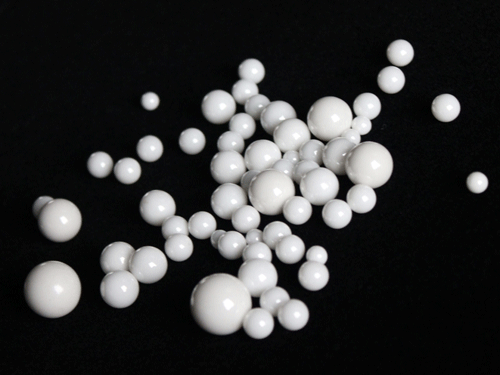
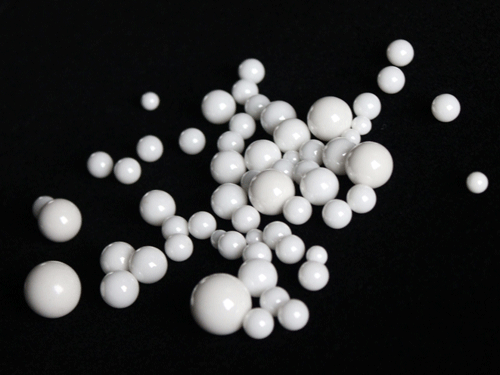
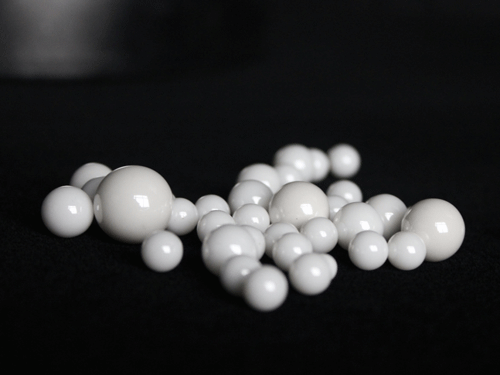
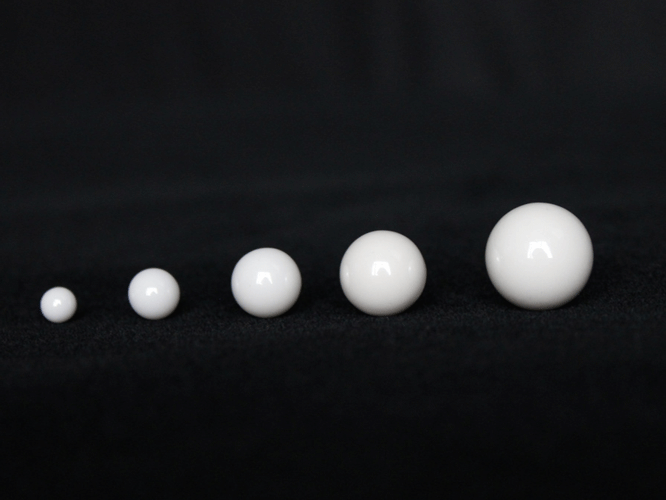
For fine grinding, many producers use ceramic media such as zirconia grinding ball media, which offers a useful combination of high density and good wear resistance. Higher density means more energy delivered per impact, which shortens grinding time, and better wear resistance means less contamination entering the powder that later reaches your screen. Both effects show up as a more stable sieving step downstream.
It is worth thinking about the whole chain rather than the sifter alone. A perfectly specified sieve fed by an unstable mill will still give you an unstable product.
How to Choose the Right Automatic Sieve Machine
Buying a sifter without a clear picture of your powder is like buying shoes without knowing your size. Work through these questions in order and most of the specification writes itself.
Start with the material
What is the bulk density? Is the powder free-flowing, sticky, fibrous, oily or prone to static? Does it have an abrasive character that will chew through standard wire mesh? Is it hazardous, food-grade or pharmaceutical-grade, which brings cleaning and material-of-construction requirements with it? Write the answers down. They will eliminate half the market immediately.
Define the cut point
What is the largest particle you are willing to accept in the finished product, and what is the smallest particle you want to keep? Your mesh aperture is chosen from that answer, not from habit. Be realistic as well: the finer the cut, the more the machine has to work for it, and the more likely blinding becomes.
Match capacity to the real feed rate
Always size for your peak feed rate, not your average. Sieving capacity falls sharply as aperture size decreases, so a machine that happily processes your coarse grade may struggle with your fine grade at the same tonnage. Ask for a test with your actual material if it is at all possible. A short trial tells you more than a page of calculations.
Plan for blinding before it happens
If your powder contains particles close to the mesh size, expect blinding. Options include anti-blinding rings, ball decks, ultrasonic assistance and simply choosing a slightly different cut point. Deciding this at the design stage costs far less than retrofitting it later.
Think about cleaning and changeover
How long does it take to open the machine, remove the mesh, clean everything and reassemble it? In multi-product plants this number often decides whether the line can run profitably. Quick-release clamps and tool-free deck changes are not luxuries; they are the difference between a two-hour changeover and a twenty-minute one.
Check noise, footprint and dust connections
These three are frequently forgotten and always regretted. Measure the actual space you have, including clearance above the machine for lifting. Listen to the unit running under load if you can. Confirm that the dust extraction connection matches what your facility can provide.
Look at the wear parts and service
Ask what wears out, how often, and how much the replacement parts cost. A machine with cheap mesh and widely available bearings is a better long-term partner than one that needs a specialist visit for every small repair.
Common Problems and Straightforward Fixes
Even a well-chosen sifter will have bad days. Here are the issues you will actually meet on the floor.
Mesh blinding
Output drops, oversize increases and the screen looks dusty even after cleaning. Usually the cause is particles near the cut size wedging themselves into the openings, or moisture causing gentle agglomeration. Fixes include reducing feed rate, drying the material, adding anti-blinding devices, or switching to ultrasonic assistance.
Torn or stretched mesh
Sudden contamination appearing in the fines usually means the screen has failed. Check tension first, then look for sharp foreign objects, worn support bars or a discharge path that lets tramp metal reach the mesh.
Static and dusting
Fine dry powders generate static, which makes particles cling to the screen frame and the chute walls. Grounding the machine and controlling humidity normally solves it, and good dust extraction helps the rest.
Inconsistent cut point
If the same mesh gives different results on different days, the suspect list is short: worn mesh, changed feed rate, changed moisture, or a machine that has drifted out of proper tension and motion settings.
Vibration travelling into the building
That is usually tired or incorrectly installed isolation springs. Replacing them is inexpensive and pays back immediately in noise reduction.
A Maintenance Routine That Actually Gets Followed
Machines fail from neglect far more often than from abuse. A simple routine keeps an automatic sieve machine healthy for years.
- Every shift: check for unusual noise, confirm the discharge is clear, and look at the mesh through the inspection point.
- Every week: inspect mesh tension and look for small tears, check clamps and seals, and clean dust build-up from the frame.
- Every month: inspect the vibration motor mounts and eccentric weights, verify isolation springs, and check electrical connections for looseness caused by constant vibration.
- Every year: replace wearing parts on schedule rather than on failure, and re-verify that the cut point still matches your specification.
Keep a log. When something does go wrong, a maintenance record turns a guessing game into a five-minute diagnosis.
Questions We Hear Most Often
Can one machine handle several different powders?
Yes, if it is designed for it. Modular mesh frames and easy-clean construction make multi-product use practical. The limit is usually hygiene requirements and cross-contamination risk, not the hardware.
How fine can an automatic sieve machine go?
Standard vibratory units handle most production cuts comfortably down to moderate fineness. Very fine separations typically need ultrasonic assistance or a gentler machine design, because at that scale the powder fights the screen rather than flowing through it.
Do I really need a test with my own material?
If your powder is unusual, yes. Particle shape, moisture and static all behave in ways that are hard to predict from a datasheet. A small trial run is the cheapest insurance you can buy.
Is sieving the same as classification?
They are cousins. Sieving sorts by physical size through a mesh. Air classification sorts by mass and aerodynamics. Sieving is generally simpler and gives a sharply defined cut, which is why it remains the default for most powders.
Where does sieving stop being practical?
When the required cut is very fine, when the material blinds constantly, or when throughput demands push the machine size beyond what your building can hold. In those cases, a combination of good milling upstream and a well-matched screen often solves more than simply buying a bigger sifter.
Getting the Whole Line Right
An automatic sieve machine is not a standalone gadget. It is the quality gate at the end of a chain that starts with how you grind your material. Get the milling media right, keep the feed stable, and the sieve will quietly do its job, batch after batch, without anyone needing to think about it.
If you are working through that chain, it is worth looking at the consumables upstream as carefully as the machine itself. Well-chosen zirconia grinding ball media from a supplier who understands powder processing, such as TENCAN, keeps grinding times short and contamination low, which in turn keeps your sieving step predictable. That is the quiet advantage nobody puts on the datasheet, and it is usually the one that decides whether your line runs smoothly next year.
Pick your cut point, match the machine to your material, and treat sieving as part of a process rather than an isolated step. Do that, and lumps in the finished product become a story you tell about the old days instead of a problem you handle every week.
Related Products
Get In Touch
Our professional team will reply to you within one business day. Please feel free to contact us!