
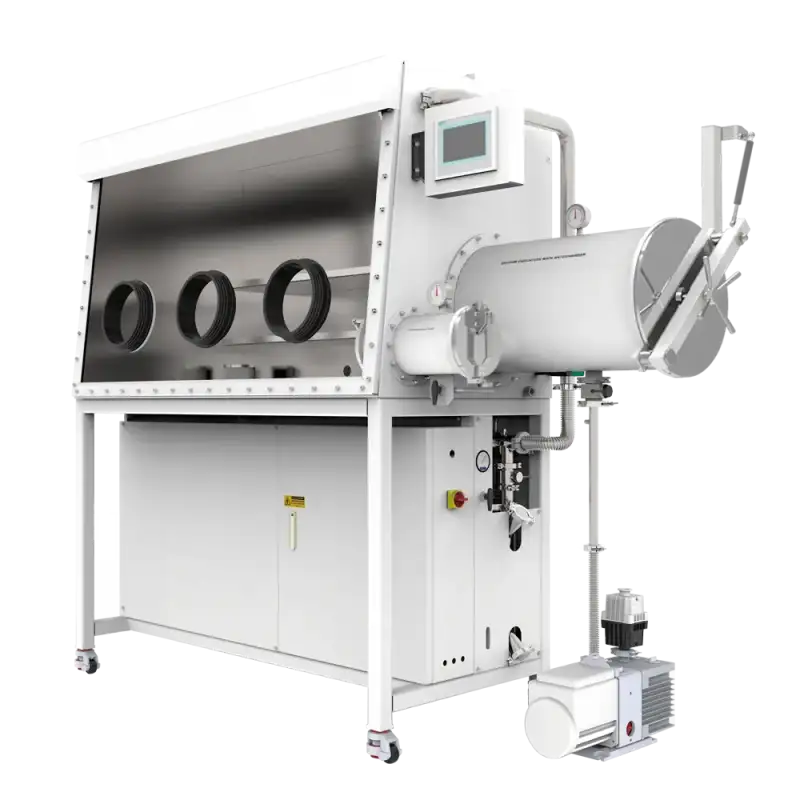
Glove Box With Purification System: Keep Air-Sensitive Powders Clean and Stable

Walk into a powder lab and you can often spot the bench that handles the fussy materials. There is a sealed box, a pair of gloves, and a small antechamber doing the quiet work of keeping the outside world outside. That box is usually a glove box with purification system, and it earns its place by doing something simple but difficult: it lets you work with air-sensitive powders without letting air ruin them.
What a Glove Box With Purification System Actually Does
At its core, this is a sealed chamber filled with a controlled gas, usually nitrogen or argon. You reach in through gloves, pass samples in through an antechamber, and rely on a purification loop to keep oxygen and moisture at very low levels. The box is not a museum case. It is a working space for weighing, mixing, milling, sampling, and packaging, so every design choice has to support real hands doing real tasks.
A dry box can keep things dry-ish. A glove box with purification system goes further. It actively circulates the internal gas through purifying media, measures the result, and brings the atmosphere back after every transfer or task that introduces a little contamination. That closed-loop habit is what makes the difference between a box that feels sealed and a box that stays clean.
Three jobs: isolation, circulation, regeneration
Isolation is the obvious one: a physical barrier, gloves, and sealed ports keep the lab atmosphere away from the powder. Circulation is the second job. Without movement, the gas near your sample would sit there and slowly collect whatever leaks in. Regeneration is the third job, and it is the one people forget. The purifying media eventually becomes saturated or oxidized, and regeneration resets it so the loop can keep working.
Why purification is not just a filter
A particulate filter catches dust. Purification removes molecules. Oxygen and water vapor are tiny compared with powder grains, so you cannot trap them with a standard filter. The purification unit uses materials that chemically or physically hold onto oxygen and moisture, while the circulation fan keeps bringing fresh gas to that media. Think of it as a scrubber in a closed loop, not a sieve at the door.
Oxygen and Moisture Are the Quiet Enemies of Sensitive Powders
Powder is mostly surface. A fine powder can have a huge amount of surface area packed into a small scoop, which means it can react with air far faster than a solid chunk of the same material. That is why a powder that looks stable in a jar can oxidize, clump, or change color the moment it is spread out for weighing.
Oxygen is the troublemaker for metals, hydrides, and many catalysts. It can form oxide layers, kill active sites, or create a surface that no longer behaves like the material you ordered. In some cases, the reaction is slow and easy to miss. In others, a fresh metal powder can heat up or even ignite when exposed to air, which is why handling rules matter as much as the box itself.
Moisture is just as sneaky. Hygroscopic salts pull water out of the air and turn sticky. Water can hydrolyze organometallic compounds, break down battery materials, or create acidic by-products inside a sample. Once that happens, no amount of gentle drying may bring the powder back to its original state. Keeping both oxygen and moisture low is the whole point of a purification system.
Inside the Purification Loop: How the Gas Stays Clean
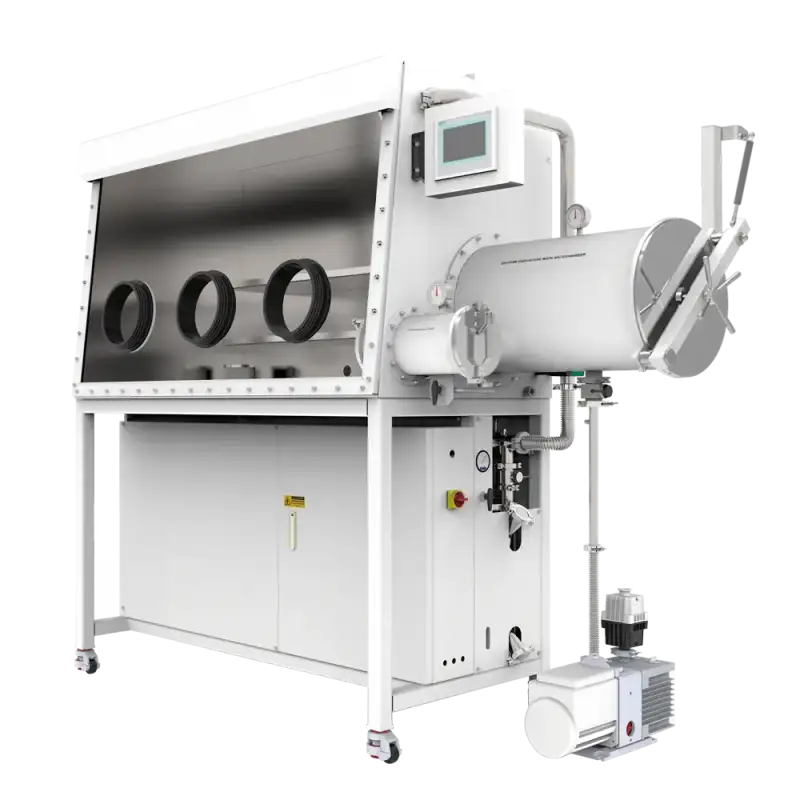
The purification loop is a small gas-handling system wrapped around a big sealed box. Gas leaves the chamber, passes through a purifier, and returns. Sensors watch the oxygen and moisture levels, and the control system decides when to keep circulating and when to regenerate. You do not need to be a plumber to use one, but understanding the loop helps you run it well.
Circulation and pressure control
The blower or fan keeps gas moving through the purifier and around the chamber. Pressure control matters too. A slight positive pressure inside the box helps discourage leaks from dragging lab air inward, while a well-designed antechamber uses vacuum and purge cycles to swap samples without dumping the whole atmosphere. If the pressure creeps or the circulation stalls, the sensors will usually tell you before your powder does.
Regeneration: the behind-the-scenes reset
Regeneration is not a cleaning cycle in the usual sense. It is a planned reset for the purifying media. Depending on the design, the system may heat the purifier and pass a special gas mixture through it to drive off moisture or reduce oxidized media. This is why the manual matters: regeneration has temperatures, gas supplies, and safety steps that are specific to the unit. Treat it like changing the oil in a good engine. Do it on schedule, not after the warning light has been on for a week.
Where This Equipment Earns Its Keep in Powder Work
Glove boxes with purification systems are not only for one industry. They show up anywhere a powder or a small part has to stay clean and dry for a while. In powder processing, they are especially useful when the material is expensive, reactive, or both.
Reactive powders and air-sensitive chemistry
Lithium metal powder, metal hydrides, finely divided catalysts, and many organometallic reagents are obvious candidates. So are some battery cathode and anode materials, phosphors, and specialty ceramics that dislike moisture. Even materials that are not dramatically dangerous can benefit: if surface oxidation changes the color, flow, or sintering behavior, a controlled atmosphere protects the value of the batch.
Milling, sieving, sampling and packing
Milling, sieving, and sampling are common weak points. You can mill a powder under inert gas, but the moment you open the jar in normal air, the fresh surfaces are exposed. A glove box lets you transfer the jar in, open it, sample it, and repackage it without a dramatic reunion with oxygen. The same goes for weighing small batches, filling vials, and sealing samples for shipping.
What to Check Before You Choose a Glove Box With Purification System
Choosing a glove box with purification system is less about finding the biggest box and more about matching the box to your work. The product page is useful, but you should arrive with a short list of questions. The answers will tell you whether the unit will feel like a tool or like a piece of furniture that everyone avoids.
Antechamber and transfer strategy
The antechamber is the airlock. Its size and cycle time decide how much stuff you can move in and out without slowing the day down. A tiny antechamber is fine for vials and small tools, but it becomes a bottleneck if you need to pass in a mill jar or a tray of samples. Ask about vacuum and purge performance, and think about whether you need a second transfer chamber.
Glove port ergonomics and visibility
Glove ports, arm length, and window visibility matter more than they sound. If the ports are too high or the reach is awkward, every weighing session becomes a shoulder workout. If the window fogs or the interior is poorly lit, you will make mistakes. Put your hands where they would be during real work and imagine doing a delicate transfer. Comfort is not a luxury here; it is a quality control feature.
Sensors, alarms and data
Look for oxygen and moisture sensors that are easy to read, easy to calibrate, and backed by alarms. A trend display is more useful than a single number because it shows whether the atmosphere is stable or drifting. Data logging is a bonus if you need batch records or proof that a sensitive sample stayed under control. Also ask how the system behaves during a power cut or a sensor fault.
Material compatibility and cleaning
Powders, solvents, and cleaning agents all meet the gloves, the window, and the internal surfaces. Some solvents attack certain glove materials. Some fine powders cling to everything and make cleaning a chore. A stainless steel interior with smooth corners is easier to wipe down than a maze of ledges. If you plan to use solvents, check the compatibility and ask about solvent traps or a separate small antechamber.
Throughput and recovery time
A box can be technically clean and still be a poor fit if it takes forever to recover after a transfer. Think about how often you open the antechamber, how large your samples are, and how much idle time the purifier needs. A busy lab may value fast recovery and generous transfer space more than a few extra liters of chamber volume. Match the rhythm of the box to the rhythm of your work.
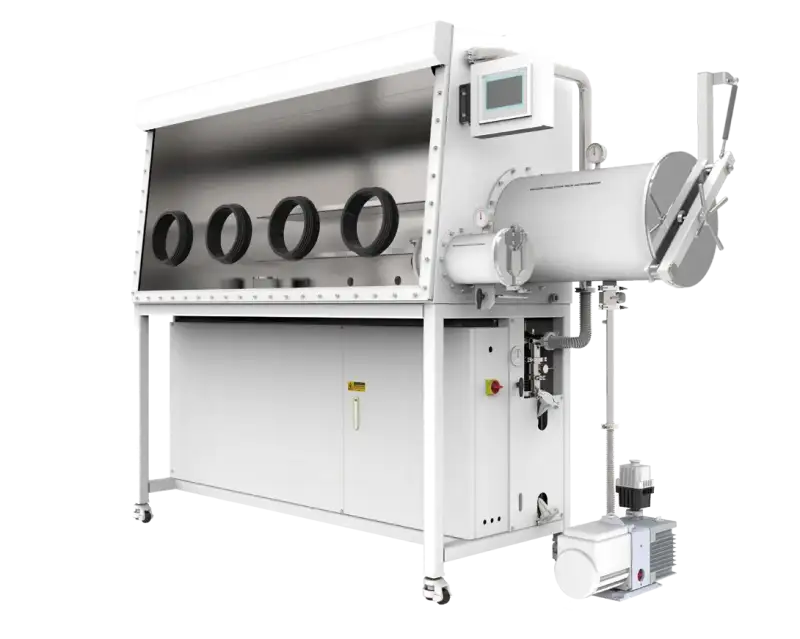
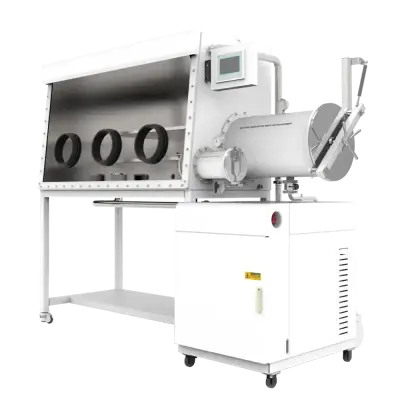
You can review the TENCAN glove box with purification system and its available configuration on the product page before you shortlist it. That is the right place to confirm dimensions, transfer options, sensor features, and utility requirements instead of guessing from a photo.
Nitrogen, Argon, and the Cost of Doing It Right
Most glove boxes run on nitrogen because it is widely available and relatively economical. Argon is denser and can be useful when a process needs a heavier blanket or when nitrogen itself is a problem for the chemistry. Neither gas is magic. The purification system still has to remove oxygen and moisture, and the box still has to be sealed and operated properly. Gas choice is a process decision, not a badge of quality.
When nitrogen is enough
For many powders, nitrogen does the job well. It is a good default for general air-sensitive materials, and it keeps operating costs reasonable. If your main concern is moisture pick-up or oxygen-driven surface oxidation, nitrogen plus a healthy purification loop will often cover the need. The key is to confirm that your specific powder does not react with nitrogen under your process conditions.
When argon earns its keep
Argon may be preferred for materials that need a more inert or denser atmosphere, or for processes where nitrogen could interfere. It costs more and needs the right supply setup, so it should have a clear reason behind it. Do not choose argon just because it sounds more serious. Choose it because your chemistry, your risk assessment, or your customer specification asks for it.
Safety With Reactive Powders: Respect the Quiet Risks
Fine reactive powders deserve respect. A material that is harmless as a solid lump can become pyrophoric when divided into fine particles. Before any powder goes into the box, read the safety data sheet, assess the fire and reactivity hazards, and decide what happens if a glove tears or a sample container tips over. The glove box reduces exposure, but it does not remove the need for a plan.
Keep the interior uncluttered. Loose powder on the floor of the box can become airborne when you move a tray, and a dust cloud inside a confined space is unpleasant at best. Use secondary containers, handle powders gently, and clean up spills before they spread. If the material is sensitive to static, use appropriate grounding and avoid dry wiping that charges the surfaces.
Also plan for the outside of the box. The antechamber, the gloves, and the transfer tools are contact points. Train people on the order of operations, post a short procedure, and make sure everyone knows what a rising moisture reading or a damaged glove looks like. A calm, boring routine is exactly what you want around reactive powders.
Practical Habits That Keep a Glove Box Healthy
A glove box rewards good habits and punishes rushed ones. The atmosphere is a shared resource, and every transfer is a small disturbance. The goal is not to be paranoid; it is to make clean work normal.
- Plan the transfer before you open anything. Put tools, vials, and labels in the antechamber in one go so you are not cycling it five times for forgotten items.
- Keep powders contained. Use trays, secondary containers, and gentle scooping. A dust cloud inside the box is bad for sensors, gloves, and your lungs if a glove ever fails.
- Do not bring in wet or dirty items. Water and grease are contamination. Wipe tools and let them dry before transfer.
- Watch the sensors during work. A slow rise in moisture after a transfer is normal; a steady climb that will not recover means it is time to stop and investigate.
- Log regeneration and maintenance. The purifier has a life cycle, and a simple logbook or digital record helps you spot drift before it ruins a batch.
Also respect the limits. A purification system is not a magic eraser for a badly sealed box, a torn glove, or a solvent that should not be there. If you smell something odd or the sensors misbehave, stop and check the simple things first: glove seals, antechamber doors, and the last thing you put inside.
A Short FAQ From Powder People
Can I use it for powders that are only slightly sensitive?
Yes, and it can still be worthwhile. Slightly hygroscopic powders may not smoke in air, but they can cake, lose flow, or pick up enough moisture to change a later process. The box gives you a repeatable starting point instead of a guess based on the weather.
Does a bigger box mean more purification?
Not automatically. A larger chamber holds more gas and more surface area, but the purification capacity and circulation design determine how well it recovers. Match the box volume to your actual work, then check that the purifier and antechamber can handle your transfer rate.
How do I know the atmosphere is ready?
Use the sensors, the recent trend, and your process limit. If the box has just been loaded or regenerated, give it time to recover. Do not rely on a green light alone if you are working with a very oxygen-sensitive powder; look at the numbers and confirm they are stable before you open the sample container.
A Closer Look at TENCAN's Glove Box With Purification System
TENCAN, or 长沙天创粉末技术有限公司, builds powder-processing equipment for labs and production teams. Its glove box with purification system is aimed at exactly the kind of work we have been talking about: keeping oxygen and moisture away from sensitive powders while you weigh, mill, sample, and pack them.
You can open the TENCAN glove box with purification system product page to review the current configuration and specifications. Look at the chamber dimensions, antechamber volume, glove port size, purification capacity, achievable oxygen and moisture levels, regeneration requirements, and utility needs. Those details are what turn a general idea into a working purchase decision.
The right unit should fit your hands, your sample sizes, and your maintenance routine. If a box is comfortable to use and easy to keep clean, you will use it properly. If it is a struggle, people will find shortcuts, and shortcuts are how sensitive powders get ruined. That is the practical reason to choose carefully: the best glove box is the one that makes the clean procedure the easy procedure.
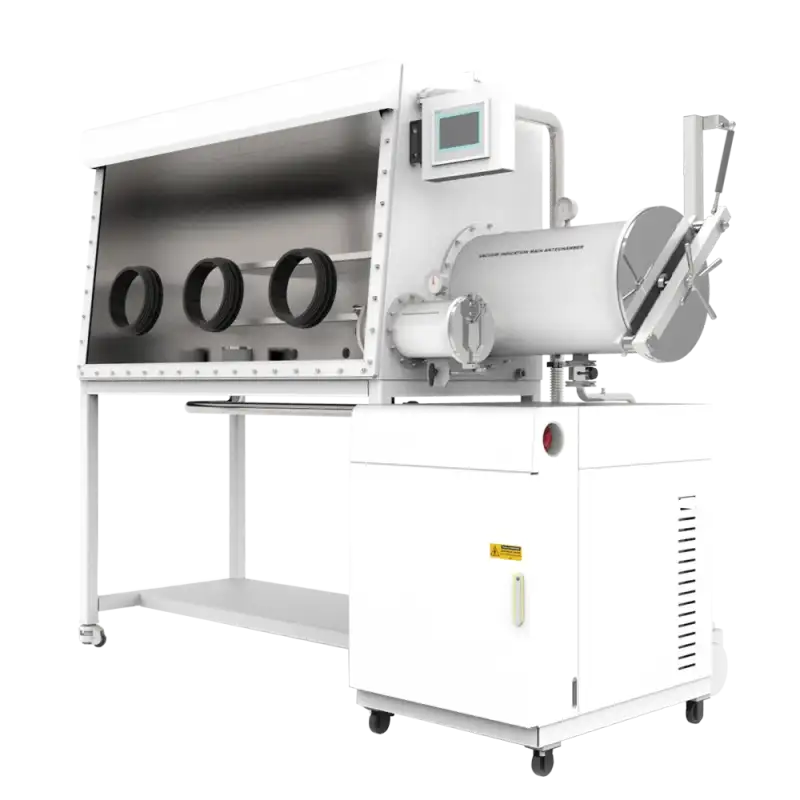
If your powder hates air, give it a better room. A well-matched glove box with purification system gives you cleaner samples, fewer failed batches, and a process you can repeat on a busy Tuesday when nothing else is going right.
Related Products
Get In Touch
Our professional team will reply to you within one business day. Please feel free to contact us!