
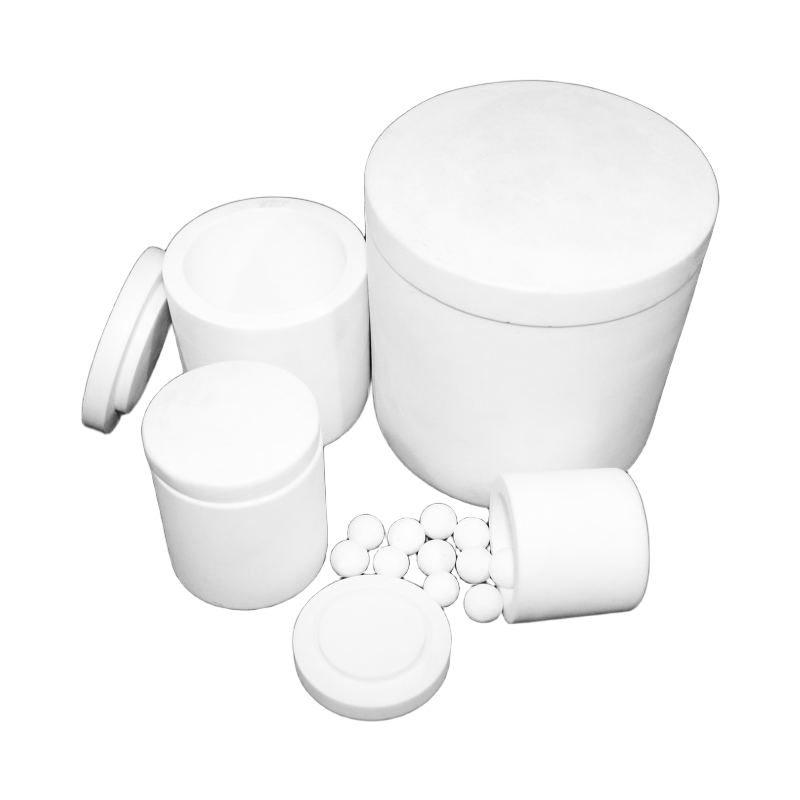
Corundum Planetary Mill Jar: Hard, Inert Grinding for Tough, Abrasive Samples

You know the feeling. A sample arrives that is hard, brittle, and maybe a little precious. The first question is not which mill to use, but which jar can handle it without turning the result into a contamination puzzle. In a planetary ball mill, the jar is not a passive bucket. It is the grinding chamber, the impact surface, and the seal that keeps the whole run honest. Pick the wrong material and you can spend more time explaining stray peaks than interpreting your sample.
Corundum planetary mill jars look simple on a catalogue page. Then you run one, and the details start to matter. The material is hard, the surface is chemically stubborn in a useful way, and the jar can survive many abrasive samples that chew through softer ceramics. It is not a magic bullet. Corundum has a personality, and the better you understand it, the fewer surprises you get.
Why a Corundum Jar Deserves a Place on Your Bench
Think about what a grinding jar actually does. Every revolution throws grinding media against the sample and the jar wall. The wall takes hits, the media takes hits, and the sample gets caught in the middle. If the jar material is too soft, you wear the jar into your sample. If it is chemically reactive, you can change the sample while you are trying to reduce it. Corundum, which is a crystalline form of aluminum oxide, sits in a useful middle ground: hard enough to resist wear, stable enough to handle many solvents, and dense enough to feel like a proper piece of lab hardware.
That combination is why corundum jars show up in labs working with hard minerals, glass, ceramics, and other brittle materials. You are not choosing corundum because it is fashionable. You are choosing it because you want the grinding chamber to stay mostly unchanged while the sample does the changing. That is a small distinction with a big effect on repeatability.
There is also a practical rhythm to these jars. They reward a calm, repeatable routine: same load, same media, same run time, same cleaning steps. Corundum does not need you to baby it, but it does ask you to be consistent. When the jar is consistent, the powder has a better chance of being consistent too.
What the Jar Actually Is
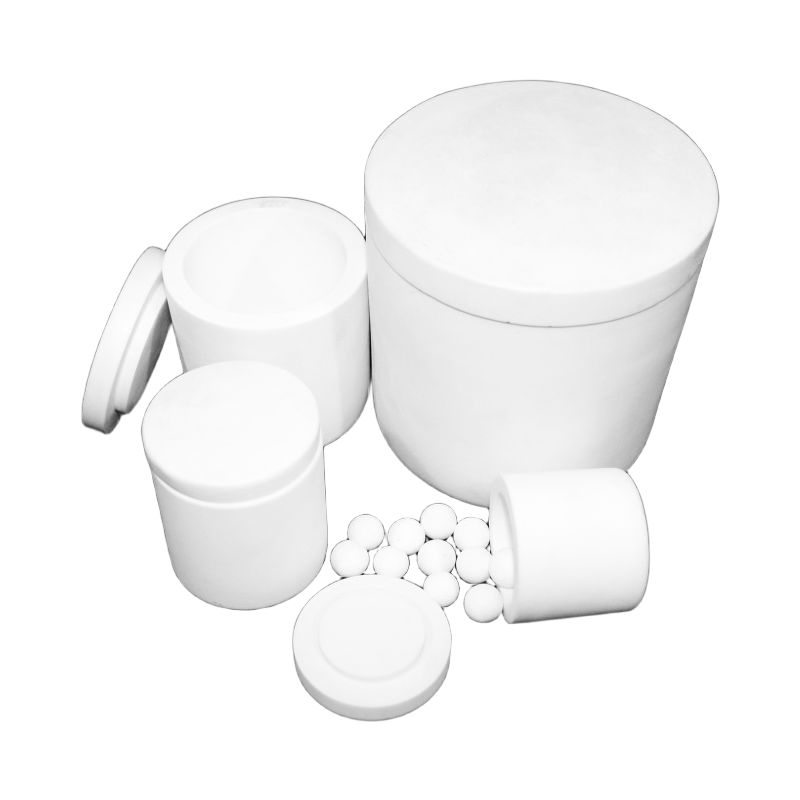
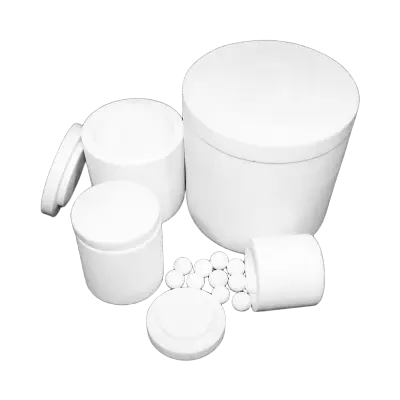
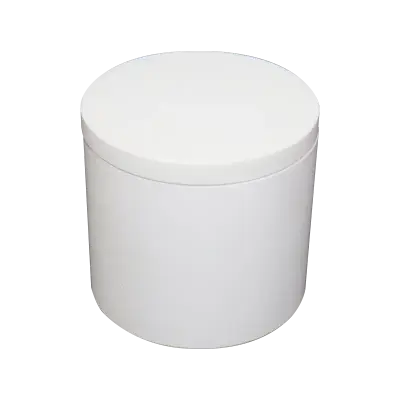
Corundum is the mineral name for aluminum oxide. In a planetary mill jar, that ceramic becomes the grinding bowl, often with a matching lid and sealing arrangement. The product name here is A grade Corundum planetary Mill Jar, and the A grade label is worth paying attention to. Ceramic grades are not all the same. Density, porosity, surface finish, and the exact forming process can vary, so ask for the grade sheet and confirm the material specification for your application rather than assuming every white alumina jar is identical.
You also want to check the practical fit: jar volume, outer dimensions, lid style, and whether the jar is compatible with your planetary mill. Those details belong on the product page or in the supplier's data sheet. Do not guess them from a photo. A jar that looks right but sits poorly in the mill is an expensive way to learn about tolerances.
Sealing is part of the material story too. A hard ceramic jar is only useful if the lid closes cleanly and the gasket does its job. Check the sealing surfaces, keep them clean, and replace worn parts before they fail. A leak does not care how good the alumina is.
Hardness is not the same as toughness
Corundum is hard. That is the headline. But hardness and toughness are different animals. A hard material resists scratching and abrasion; a tough material resists cracking and chipping. Corundum leans toward hardness, which is great for wear resistance and less great for impact abuse. Treat the jar with respect. Do not drop it, do not thermal-shock it, and do not use it as a hammer for stubborn lumps. A chip in the grinding surface is not just cosmetic; it becomes a place for sample to hide and a source of extra contamination.
Inertness is the quiet superpower
Aluminum oxide is chemically stable against many acids, solvents, and common sample types. That matters when you are milling in a liquid or when the sample itself is aggressive. But no jar material is universally inert. Corundum is not the right choice for hydrofluoric acid or hot concentrated alkali, for example. If your process uses a chemistry you are unsure about, run a small compatibility check before you commit a full batch. The quiet superpower only works when you respect its limits.
Where Corundum Earns Its Keep
Corundum jars are not the answer to every grinding problem, but they are a strong fit for a few familiar situations.
When metal pickup is the enemy
If you are used to steel or tungsten carbide jars, you know the trade-off. Metal media are tough and dense, but they can leave iron, cobalt, or tungsten in your sample. For trace analysis, that is a headache. A corundum jar gives you a ceramic grinding surface that avoids metallic pickup. You may still see aluminum in the result, especially after aggressive grinding, so know what your analysis is measuring.
When the sample is abrasive
Hard, abrasive samples are where corundum feels at home. Think of mineral sands, glass frit, technical ceramics, and other brittle materials that wear down softer jars. The corundum surface keeps its shape longer, which means the grinding energy stays more consistent from run to run. That consistency is worth more than a flashy specification on paper.
When cleaning between batches matters
A dense ceramic surface is easier to clean than a porous one. Corundum jars can be rinsed, washed, and dried without turning every batch change into an archaeology project. That does not mean you can skip the cleaning protocol. It means the surface gives you a fair chance to remove residue before it becomes baked-in contamination.
When you want a predictable surface
Some jar materials develop wear patterns that change the grinding environment over time. A well-made corundum jar gives you a stable ceramic surface, provided you do not chip it or scratch it with harsh tools. That predictability helps when you are comparing batches or validating a method. You want the jar to be the boring part of the experiment.
Where Corundum Is Not the Automatic Winner
Now for the honest part. A corundum jar is a tool, not a badge of honor. There are situations where another material will serve you better.
Very high-impact runs
If your protocol depends on brutal impact energy, a brittle ceramic jar may not be the best first choice. Corundum can chip under severe mechanical abuse. For heavy, high-energy work, you want to match the jar to the mill and the media, not simply pick the hardest material on the shelf.
Aggressive chemistries
Corundum handles many solvents and acids well, but it is not immune to everything. Hydrofluoric acid and hot concentrated alkali are the classic no-go zones for alumina ceramics. If your milling liquid is outside the familiar range, check compatibility before the jar goes anywhere near the mill.
Aluminum-sensitive analysis
Every grinding jar contributes something to the sample. Corundum is aluminum oxide, so aluminum is the element to watch. If your analysis is specifically looking at aluminum at trace levels, a corundum jar may add a signal you do not want. In that case, choose a jar material that does not share an element with your target analyte.
Matching Jar, Balls, and Mill
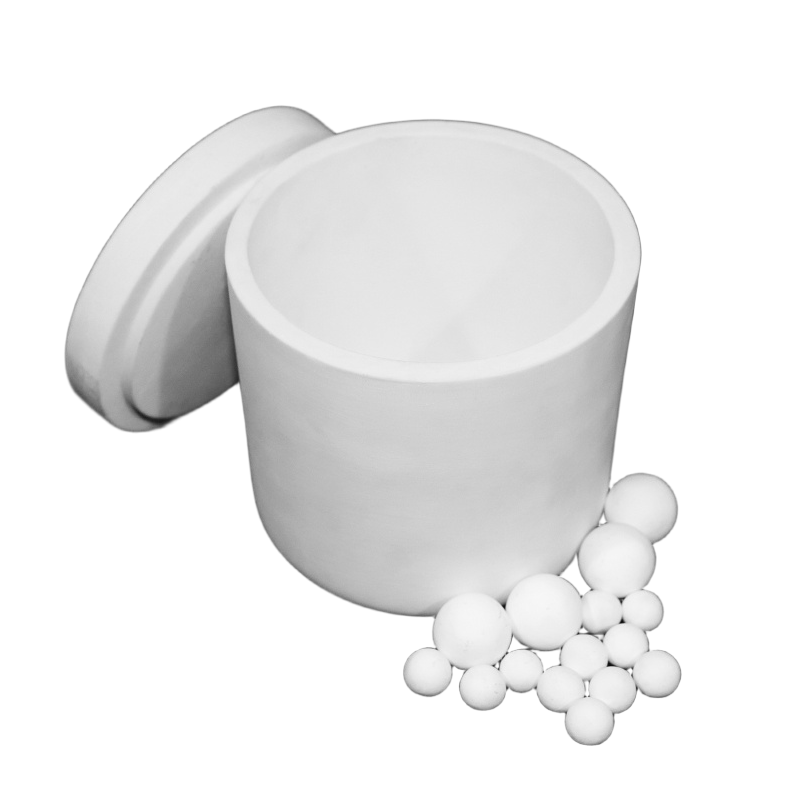
A jar never works alone. The grinding media, the fill level, the sample load, and the mill settings all shape the result. Start with compatibility: the jar must fit your planetary mill, the lid must seal properly, and the media must be suitable for the jar and the sample. Then think about the job. A large jar with tiny media gives you many contacts but less impact. A smaller jar with larger media gives you more impact but fewer contact points. Neither is wrong; they do different work.
Corundum media, where available, keep the grinding system in the same material family. That can simplify contamination thinking, but it is not a free pass. Media wear still happens, and the sample still sees the jar wall. If you are chasing a tight particle size distribution, run a small trial before you scale up. The jar is only one variable, but it is a variable that touches everything else.
Jar size is not just about capacity. A jar that is too large for your sample load wastes media movement and makes it harder to keep the powder in the active grinding zone. A jar that is too small may not give the media enough room to accelerate. Match the jar to the batch you actually run, not the batch you imagine running someday.
Fill level, ball size, and wet or dry
As a practical starting point, do not fill the jar to the brim. You need room for the media to move and for the sample to be caught between them. A jar that is too full turns into a slow, hot, inefficient mixer. A jar that is too empty wastes energy on media collisions that never meet enough powder. Wet milling can help with dispersion and heat, but the liquid must be compatible with the sample and the jar. Dry milling is simpler, but it can generate more dust and heat. Pick the route that matches your material, then adjust based on what the powder actually does.
Loading a Corundum Jar Without Wasting a Run
Loading looks easy until you do it badly. Check the lid, the gasket, and the sealing surfaces first. A tired gasket is a leak waiting to happen, and a leak in a planetary mill is not a small inconvenience. Add the media, then the sample, then any liquid. Leave enough headspace for movement. Wipe the sealing surfaces clean before you close the lid. Grit on a gasket can create a channel, and a channel can turn a careful run into a cleanup job.
Balance matters too. Planetary mills spin jars at speed, so follow the mill manufacturer's loading pattern and counterweight instructions. Do not improvise. Once the jar is closed, give it a gentle check before the run starts. If something feels loose, fix it now. The best time to discover a sealing problem is before the mill reaches speed, not after.
Speed, Time, and Heat
Planetary mills are energetic by design. The jars move fast, the media hit hard, and heat builds up. Corundum is a ceramic, so sudden temperature changes are not its friend. If your protocol runs long, consider a pause to let the jar settle and the heat dissipate. If the sample is heat-sensitive, shorten the run, lower the energy, or use a cooler milling route. Do not simply push the speed higher because the first run looked fine. Grinding is cumulative, and so is wear.
Time is another variable people tend to overdo. Longer milling does not always mean a better result. It can mean more contamination, more agglomeration, and a wider distribution than you wanted. Run a short trial, check the powder, and step up only if you need to. The jar will thank you, and your analysis will be easier to defend.
A simple way to think about it is this: you are not trying to punish the sample. You are trying to break it in a controlled way. That means watching the jar, listening to the mill, and stopping when the powder tells you it is done.
Cleaning and Cross-Contamination
Clean the jar as soon as the run ends. Do not let residue dry into a ceramic surface if you can avoid it. Rinse with a compatible solvent, use a mild cleaning agent where appropriate, and avoid aggressive abrasives that scratch the grinding surface. Skip hydrofluoric acid and hot concentrated alkali. Dry the jar completely before the next use, especially around the lid and gasket. If you work with several sample families, consider dedicating one jar to one family. That is cheaper than chasing a mystery peak for a week.
The gasket deserves its own moment of attention. It is the weakest link in the sealing system, and it is easy to forget until it fails. Inspect it, clean it, and replace it when it shows wear. A spare gasket costs far less than a ruined batch.
The A grade Corundum planetary Mill Jar in a Real Workflow
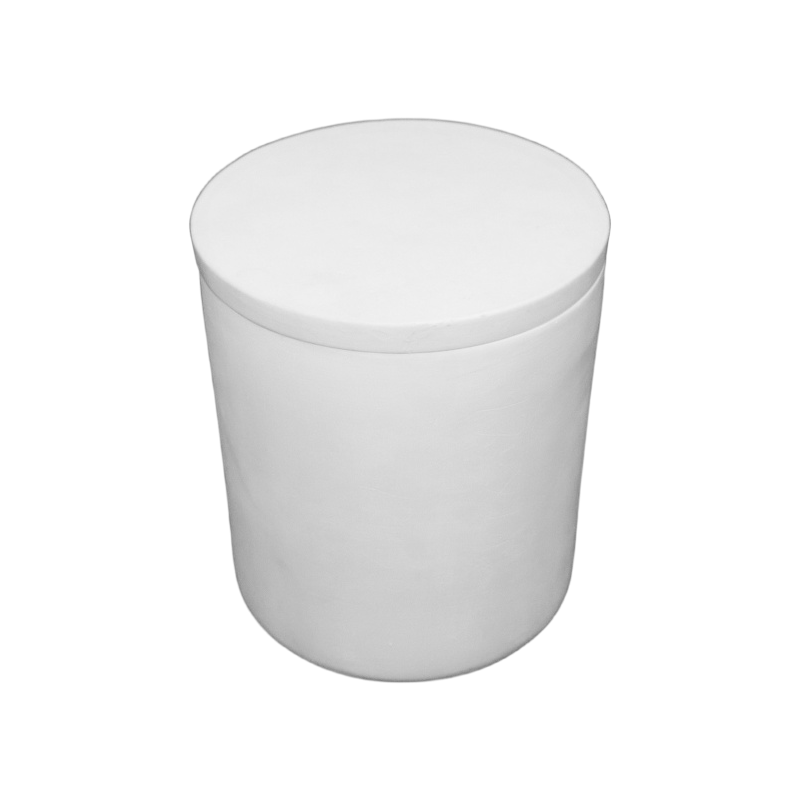
Here is where the product fits. If your sample is hard, brittle, and you want to keep metallic pickup out of the picture, the A grade Corundum planetary Mill Jar is a sensible candidate. It gives you a ceramic grinding chamber that can handle abrasive work and stand up to many common solvents. You still need to confirm the jar size, lid style, and mill compatibility, but the material choice makes sense for a broad range of mineral, glass, and ceramic samples.
The product page is the right place to check the practical details before you order: dimensions, available options, and the exact configuration that matches your mill. Do not treat the product name as a full specification. Use it as the starting point, then confirm the numbers. That is how you avoid buying a jar that is perfect in theory and awkward in practice. You can review the corundum planetary mill jar product page for the current details.
A Practical Checklist Before You Buy
Before you add a corundum jar to your setup, run through the basics:
- Confirm the jar fits your planetary mill and that the lid seals correctly.
- Ask for the material grade sheet and check the specification against your sample.
- Match the grinding media to the jar, the sample, and the energy you need.
- Check chemical compatibility, especially for acids, alkali, and unusual solvents.
- Plan the cleaning route before the first run, not after the first contamination scare.
- Run a small blank or trial batch to see what the jar contributes to the sample.
That last point is the one people skip. A blank run tells you more about real-world contamination than any catalogue claim. It also gives you a baseline for the next batch, which is exactly what you want when the sample is valuable.
What Good Corundum Runs Look Like
A good run is boring in the best way. The jar seals, the media move freely, the powder breaks down as expected, and the cleaning step does not turn into a fight. The particle size distribution is repeatable, the color of the sample stays consistent, and your analysis does not pick up unexpected metallic signals. If something drifts, change one variable at a time: fill level, media size, run time, or speed. Do not change everything at once and call it optimization.
Corundum planetary mill jars are a solid choice when hardness, wear resistance, and chemical stability matter more than raw impact toughness. They are not indestructible, and they are not invisible to analysis. Treat them as part of the experiment, not as a container that sits outside it. Once you do, the jar stops being a catalogue item and becomes a reliable piece of your workflow.
Related Products
Get In Touch
Our professional team will reply to you within one business day. Please feel free to contact us!