
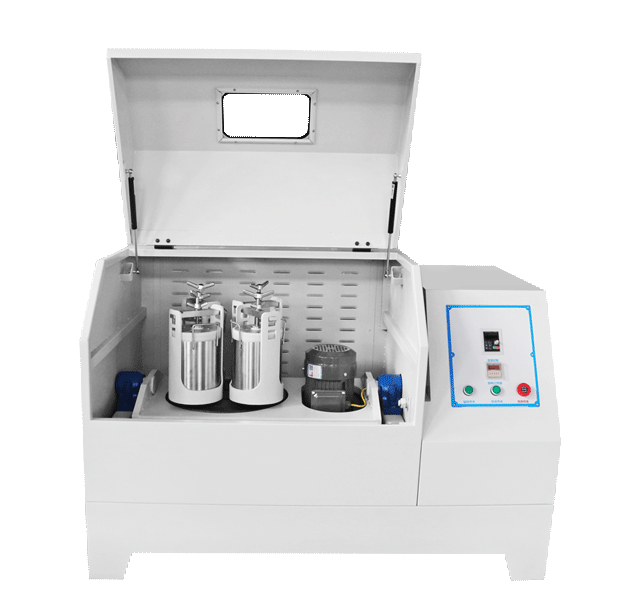
Laboratory Full-Directional Planetary Ball Mill: What It Does and When to Use It

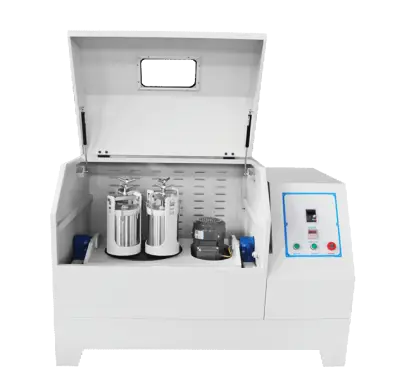
You have a powder that needs to be finer, blended more evenly, or pushed into a reaction, and the bench-top mill that looked simple yesterday now looks like a maze. Jars, balls, speed settings, dry runs, wet runs, cleaning, contamination — there is a lot to get right. The Laboratory Full-Directional Planetary Ball Mill is one of those tools that rewards a little understanding. Treat it like a dumb grinder and it will disappoint you. Treat it like a small process system and it becomes remarkably useful.
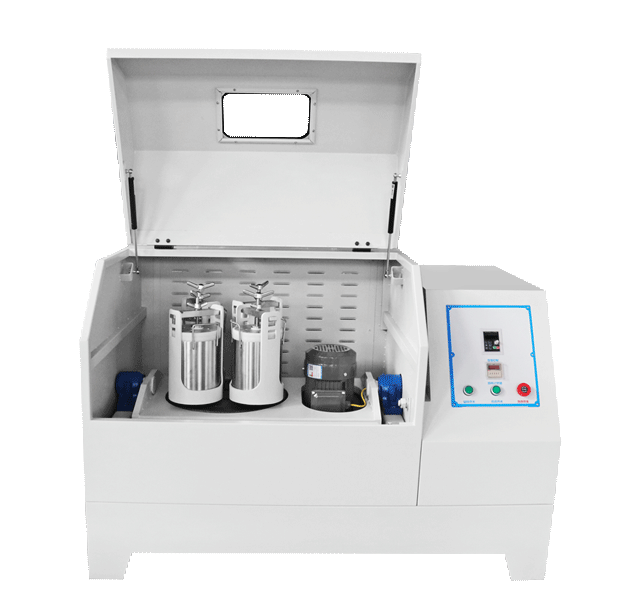
What Full-Directional Motion Changes on the Bench
A conventional planetary ball mill has jars that orbit around a central axis while spinning in the opposite direction. That combined motion gives the grinding balls a lot of energy in a very small package. The balls tumble, slide, and slam into the powder, and the powder gets hit from many angles in a hurry.
A full-directional design takes that idea further by giving the jar a wider range of directional motion. The useful way to think about it is this: instead of relying on one fixed pattern of movement, the mill can work the powder through changing orientations. That helps when a powder wants to sit in one corner, cling to the jar wall, or separate by density. You are not just spinning faster. You are changing how the whole load gets stirred and struck.
That matters more than it sounds. In a small laboratory jar, a stubborn powder can form a dead zone — a pocket where the balls keep missing the material or the material keeps hiding from the balls. More directional motion can reduce those dead zones and make the energy delivery more even. For expensive samples, that can be the difference between a useful run and a wasted afternoon.
It also makes the mill more versatile. You can approach a soft, sticky powder and a hard, brittle one with the same machine, then adjust the jar, the balls, the speed, and the time. The full-directional part is not a magic trick. It is another layer of control.
The Planetary Milling Principle in Plain Language
Grinding in a planetary ball mill is a collision sport played inside a sealed jar. The jar contains grinding balls and your sample. As the jar moves, the balls are thrown against the powder and against each other. The powder is broken down by impact, by friction, and by the shear between moving balls and the jar wall.
The “planetary” name comes from the motion: the jars behave a little like planets on a rotating carrier while also spinning around their own axes. That double motion is what gives the mill its energy. A simple tumbler relies mostly on gravity. A planetary mill uses centrifugal force and a much more aggressive ball path. That is why it can reduce a small sample to fine particles in a relatively short time — and also why it can heat the sample if you push too hard.
Here is the mental model we like: the jar is a tiny, very energetic mixing chamber. Every ball is a hammer and a stirring paddle at the same time. Your job is to give those hammers the right amount of room, the right amount of energy, and the right amount of time. Too little energy and the powder barely changes. Too much energy and you get heat, wear, agglomeration, or a sample that has been contaminated by the jar and balls.
It Is Grinding, but It Is Also Mixing
Planetary mills are often bought for particle size reduction, but they are just as useful for mixing. When two powders have different densities or particle shapes, a normal shaker can leave them segregated. The repeated, chaotic ball movement in a planetary jar can blend them more intimately. That is why you see these mills in labs working on battery materials, ceramics, catalysts, pigments, and small-scale mechanochemistry. The same motion that breaks particles apart can also bring different particles into close contact.
That dual role is worth remembering when you plan a run. If your goal is a uniform blend rather than a fine grind, you do not automatically need maximum speed for a long time. Sometimes a gentler, well-designed cycle gives you a better mixture with less heat and less wear.
Why Labs Choose a Planetary Ball Mill Instead of a Simple Grinder
A coffee grinder or a basic mortar mill is easy to understand: put material in, press start, get powder out. A planetary ball mill asks more from you, but it gives more back. The sealed jar lets you work with small amounts of valuable material, control the atmosphere, use a liquid medium, and keep the sample contained. The energy density is high, so you can often reach fine sizes that a simple grinder would struggle to produce.
The catch is that a planetary mill is a process tool, not a push-button appliance. The jar material, ball size, ball count, fill level, speed, and run time all matter. Change one and the result can shift. That is not a flaw. It is the reason the mill is useful for research. You can dial in a recipe, record it, and repeat it.
For a laboratory, repeatability is often more valuable than raw power. A run that produces a beautiful fine powder once is interesting. A run that produces the same powder next week, in another operator’s hands, is data. The full-directional motion helps here because it gives you more ways to handle awkward powders without immediately resorting to the most aggressive setting.
Where the Laboratory Full-Directional Planetary Ball Mill Earns Its Space
This mill fits best where sample size is small and the value of the material is high. Think of research and development batches, expensive precursors, analytical samples that must be prepared consistently, and pilot formulations that are not yet ready for production scale. You do not need a truckload of powder to learn something useful. You need a few grams, a clean jar, and a process you can trust.
It also fits where a normal mixer leaves you unsatisfied. Powders that differ in density, powders that tend to clump, and powders that need intimate contact for a reaction are all candidates. In mechanochemistry, for example, the mill can supply the mechanical energy that drives a solid-state reaction. In materials research, it can help create fine dispersions or homogeneous blends before the next processing step.
And yes, it fits the everyday job of making a fine powder from a brittle solid. But we would not describe it as a universal “make everything nano” machine. Every material has a practical limit. Soft or ductile materials can smear or cold-weld. Highly reactive materials may need an inert atmosphere. Heat-sensitive materials may need short runs and cooling breaks. The mill gives you control; it does not remove the material’s personality.
The Variables You Actually Control
When a milling run goes wrong, the answer is rarely “the machine is bad.” More often, one of the variables below is fighting you. The good news is that all of them are adjustable.
Jar Material and Contamination
The jar is not just a container. It is a grinding surface. A hard, dense jar can transfer energy efficiently, but it can also wear and leave traces in your sample. A softer or more chemically inert jar may protect purity at the cost of energy. Agate, zirconia, alumina, stainless steel, tungsten carbide, and plastic jars all have their place, and the right choice depends on the sample, the acceptable contamination level, and the energy you need.
Ask yourself what a little jar wear would do to your result. If you are preparing a sample for trace analysis, contamination can ruin the measurement. If you are mixing a robust ceramic body, a small amount of wear may be irrelevant. Be honest about the risk before you choose the jar.
Balls, Size, and Fill
Big balls hit hard. Small balls create more contact points. A jar full of tiny balls can be excellent for fine grinding and mixing, while a jar with larger balls may break down tougher pieces faster. You also need enough balls to do the work, but not so many that they cannot move. The ball-to-powder ratio matters because it controls how often the powder gets hit and how much energy is available per gram of sample.
Do not fill the jar to the brim. The balls need room to move, accelerate, and collide. Leaving some headspace is normal. The exact fill level depends on the jar and the load, but the principle is simple: if everything is packed tight, you have a very expensive shaker, not a ball mill.
Speed and Time
Speed is the accelerator pedal. Higher speed usually means more energy, faster size reduction, and more heat. Time is the distance you travel. A long run at high speed can overheat the sample, increase wear, and encourage agglomeration. A shorter run at a moderate speed, repeated in steps, often gives you more control.
We like pulsed or stepped runs for heat-sensitive materials: grind for a short interval, pause, then grind again. The pause lets heat dissipate and gives you a chance to inspect the powder. It also makes the process easier to reproduce because you are not relying on one long, drifting run.
Dry or Wet
Dry milling is straightforward, but fine powders can become airborne, stick to the jar, or agglomerate. Wet milling uses a liquid medium to improve flow and reduce dust, and it can produce a more uniform slurry. The liquid must be compatible with the sample, the jar, and the balls, and you will need a drying step afterwards.
There is no universal winner here. If your next step needs a dry powder, dry milling may be simpler. If you need a stable dispersion or you are dealing with a dusty, clingy material, wet milling may be worth the extra handling.
Reading Technical Parameters Without Getting Lost
A specification sheet is a map, not a scorecard. The biggest number is not automatically the best number. You want the parameter that matches your sample, your jar, and your workflow. The exact values for the Laboratory Full-Directional Planetary Ball Mill are listed on the product page, but here is how we read the categories that matter.
| What to check | Why it matters to your powder |
|---|---|
| Jar stations and jar capacity | Sets how much sample you can run at once and whether you can run several jars in parallel. |
| Maximum feed size | Tells you how coarse the material can be before milling. Bigger feed usually needs more energy or a pre-crush step. |
| Achievable final fineness | Gives you a realistic target, though the result always depends on the material, jar, balls, and time. |
| Rotation speed and speed ratio | Controls energy input and the ball path. More speed is not always better for heat-sensitive samples. |
| Direction and motion modes | Affects how the load is stirred, especially when powders segregate or cling to the jar. |
| Timer and programmable steps | Makes repeatable cycles possible, including pauses and reversed or stepped motion. |
| Motor power and supply | Must match your lab’s electrical service and the workload you expect, not just the brochure. |
| Safety interlocks and lid design | Protects you when jars are spinning at speed and makes routine loading less stressful. |
If a supplier will not explain what a number means for your application, keep asking. A good specification should help you choose a starting point, not just fill a catalogue page.
A First-Run Plan That Keeps You Out of Trouble
Your first run should answer a question, not prove that the mill can make dust. Write down what you are trying to achieve: a finer particle size, a homogeneous blend, a reacted sample, or a stable slurry. Then work through the basics.
- Start with a small load. You learn more from a modest sample than from a jar packed full. Small loads are easier to inspect and less likely to overload the motor or the jar.
- Choose the jar for the sample, not the other way around. Think about contamination, chemical compatibility, and the energy you need.
- Pick a sensible ball size and count. Do not mix wildly different ball sizes on your first attempt unless you have a reason. Keep the recipe simple so you can understand what changed.
- Run in short increments. Start with a moderate cycle, stop, and look at the powder. You can always run longer. You cannot un-mill an overheated or contaminated sample.
- Record everything. Jar type, ball size, ball count, sample mass, medium, speed, time, and any pauses. A lab notebook is part of the mill.
That last point is not administrative fuss. Milling recipes are sensitive. If you do not record the recipe, you have not really made a process. You have made a one-off event.
Care, Cleaning, and Safety Habits
Planetary mills are compact, but they are not gentle. Jars are heavy when loaded, lids must be secure, and the whole assembly can move with real force. Balance the jars according to the manufacturer’s instructions. Clamp everything properly. Do not open a jar while it is hot or while the mill is still moving. Give the machine time to stop completely.
Cleaning deserves more attention than it usually gets. A trace of the previous sample can ruin the next one, especially when you are working with pigments, catalysts, or analytical standards. Use a cleaning method that suits the jar material, and keep a dedicated jar for sensitive work if you can. Inspect jars and balls for cracks, chips, or heavy wear. A damaged jar is not a shortcut; it is a contamination source with a motor attached.
Wear the usual personal protective equipment when handling powders, and follow the manual for the specific model. If your material is reactive, toxic, or sensitive to air, deal with that before you start milling. The sealed jar is helpful, but it is not a substitute for a proper risk assessment.
Questions That Come Up Again and Again
Can it handle both hard and soft materials?
Often, yes, but not with the same recipe. A hard, brittle material may need dense balls and a more energetic cycle. A soft or sticky material may need a different jar, a gentler motion, or a wet medium. The mill is adaptable; the recipe must adapt with it.
How fine can it go?
Fine enough to be useful, but there is no honest single number that applies to every powder. Final fineness depends on the material’s hardness and toughness, the jar and ball material, the ball size, the energy input, the time, and whether you mill dry or wet. Agglomeration can also make a powder look coarser than the individual particles really are.
Why choose full-directional motion?
Because powders are not always cooperative. Full-directional motion gives you more control over how the load is stirred and struck, which can help with segregation, dead zones, and stubborn materials. It is a practical advantage, not a decorative feature.
Is it only for grinding?
No. It is also a mixing and mechanochemical tool. If your goal is intimate contact between powders, or mechanical energy to drive a solid-state reaction, the same jar-and-ball setup can do that work. You may need a different cycle, but you do not need a different machine.
Can lab results scale straight to production?
Not linearly. A laboratory mill gives you a recipe and a feel for the material, but production equipment has different geometry, energy input, and heat removal. Use the lab run to narrow the possibilities, then expect to adjust during scale-up.
If You Take One Idea Back to the Lab
Treat the Laboratory Full-Directional Planetary Ball Mill as a small process system, not a magic box. Choose the jar and balls with your powder in mind. Start with a modest, recorded recipe. Use the directional motion to solve real problems like segregation and dead zones, not as a reason to skip the basics. Do that, and the mill stops being a mysterious machine on the bench and becomes one of the most useful tools in your lab.
Related Products
Get In Touch
Our professional team will reply to you within one business day. Please feel free to contact us!