
T-Crystal Dental Furnace: A Due-Diligence Guide for Dental Zirconia Sintering

Dental zirconia sintering is one of the quietest steps in a dental laboratory, yet it has an outsized effect on fit, shade, density, and repeatability. A crown or bridge that leaves the milling room within tolerance can still lose its intended shape if the thermal cycle is poorly matched to the material, the chamber load, or the furnace's real-world behavior. That is why furnace selection deserves a structured review rather than a quick comparison of brochure temperatures.
This guide is written for dental laboratory owners, production managers, and procurement engineers who need to evaluate a dedicated dental sintering furnace. It uses TENCAN's T-Crystal Dental Furnace as the documented candidate and sets out the criteria that should be applied to that furnace and to any other international product under consideration. It is not a market-wide ranking, and it does not assign scores. The aim is narrower and more useful: to show what a buyer can verify, what must be confirmed before purchase, and how to compare furnaces on the same technical and workflow basis.
Why Furnace Selection Matters in Dental Zirconia Workflows
Zirconia restorations are produced through a chain that typically includes design, milling or shaping, cleaning, possible staining or glazing, and sintering. The sintering furnace is the point where the material densifies and develops its final mechanical and optical character. A furnace that suits one laboratory's mix of single units, bridges, and implant components may be a poor fit for another laboratory that runs high volumes, handles multiple zirconia generations, or needs tight traceability for every batch.
The purchasing decision is therefore not simply about whether a furnace can reach a stated temperature. It is about whether the furnace can deliver a controlled, repeatable cycle for the actual load, with the right chamber environment, the right programmability, and the right level of documentation. The buyer also needs to know how the furnace is calibrated, how consumables are managed, how the chamber is loaded, and how service and spare parts are handled after installation.
For international buyers, the evaluation becomes broader. Voltage, plug type, documentation language, shipping protection, installation support, and access to technical answers all affect the total cost of ownership. A furnace that looks suitable on a product page may still require a detailed configuration review before it can be accepted into a regulated or quality-conscious dental laboratory.
Scope and Screening Basis
This edition focuses on the dental furnace category and specifically on sintering-stage equipment for dental zirconia. The documented candidate is TENCAN's T-Crystal Dental Furnace, which is listed within TENCAN's sintering series. The product page is the authoritative source for the current configuration, and this guide does not add performance figures that are not present in the available product information.
Other international brands are not named here because current official product documentation for those brands was not part of the evidence used for this edition. That is not a negative judgment on any supplier. It is a deliberate evidence boundary. Naming a brand, model, chamber size, or claim without a verifiable source would create a false shortlist and could lead a buyer to compare unlike products. The comparison framework below is designed so that a laboratory can add other international candidates only after obtaining their official data sheets, manuals, and configuration quotations.
This approach is especially important in dental sintering, where the market includes dedicated dental furnaces, general high-temperature furnaces adapted for dental use, and larger production systems. Those are not interchangeable product classes. A fair comparison must keep the product level consistent: dedicated dental sintering furnace against dedicated dental sintering furnace, with the same load definition, the same cycle requirements, and the same acceptance criteria.
The Selection Criteria That Matter Most
Thermal Profile and Chamber Uniformity
The first technical question is not the maximum temperature but the usable thermal profile. A dental laboratory needs a furnace that can follow the zirconia manufacturer's validated sintering cycle within the intended working zone. Buyers should ask for the heating rate, hold time, cooling behavior, and the method used to establish chamber uniformity. If a supplier cannot explain how uniformity is measured, the buyer cannot compare that furnace with another on a technical basis.
Uniformity should be discussed in relation to the actual load. A small test coupon in an empty chamber is not the same as a full tray of crowns and bridges. The buyer should define the required load pattern and ask how the furnace performs with that load. If the supplier offers a validation report, the report should state the test conditions, sensor locations, and acceptance limits. Without those details, a statement that the chamber is uniform is not sufficiently informative.
Chamber Size, Loading, and Throughput
Chamber dimensions should be translated into a real workload: how many units per cycle, what tray or crucible arrangement is used, and how much clearance is needed around the restorations. A furnace with a nominally large chamber may still have a small usable hot zone once trays, setters, and sintering beads are considered. Conversely, a compact furnace may be adequate for a laboratory that runs small, frequent cycles.
Throughput is not only a function of chamber volume. It also depends on cycle length, loading and unloading time, cooling time, and the laboratory's scheduling pattern. A laboratory that needs overnight cycles has different priorities from one that needs rapid turnover during the day. The buyer should model a typical week, including rush cases, and confirm that the proposed furnace can handle the peak load without compromising the validated cycle.
Program Control, Records, and Traceability
Dental laboratories increasingly need to demonstrate that a restoration was sintered according to a controlled program. The furnace should therefore be evaluated for program storage, access control, cycle logging, alarm history, and the ability to export or retain records. The exact capability must be confirmed for the T-Crystal Dental Furnace and for any alternative, because documentation needs vary by market and by laboratory quality system.
Traceability should be practical, not theoretical. If a cycle is interrupted or a thermocouple is replaced, the laboratory needs a clear record and a defined requalification step. Ask how the furnace handles power loss, over-temperature conditions, and sensor faults. Ask whether the controller reports the actual cycle or only the setpoint. These details matter more than a long list of program slots if the laboratory cannot retrieve the evidence it needs.
Contamination Control and Consumables
Dental zirconia is sensitive to contamination and to unintended interactions with tray materials, crucibles, and furnace furniture. The buyer should confirm the recommended setter and bead system, the cleaning procedure, and any restrictions on placing staining or glazing materials in the same chamber. The furnace's exhaust and ventilation requirements should also be reviewed with the laboratory's safety officer and facility engineer.
Consumables affect repeatability and operating cost. A furnace that requires a specialized tray, high-purity bead bed, or proprietary sensor may be perfectly suitable, but the buyer should know the source, lead time, and replacement interval. Generic consumables should not be assumed to be compatible unless the furnace supplier confirms it in writing.
Installation, Utilities, and Service
International procurement should include a utilities review before the order is placed. Confirm the supply voltage, frequency, phase, current, plug or terminal arrangement, and recommended circuit protection. Confirm the footprint, weight, clearances, and heat rejection. For a dental laboratory, the furnace may be installed in a technical room or within the production area, so noise, odor, and ventilation requirements need early attention.
Serviceability is part of the product. Ask about the warranty terms, spare parts list, thermocouple and heating-element replacement procedure, calibration support, and response path for technical questions. A furnace that is easy to maintain locally may be a better operational fit than a technically impressive unit with a slow service channel. The buyer should obtain these answers in writing and compare them on the same basis.
Documented Candidate: TENCAN T-Crystal Dental Furnace
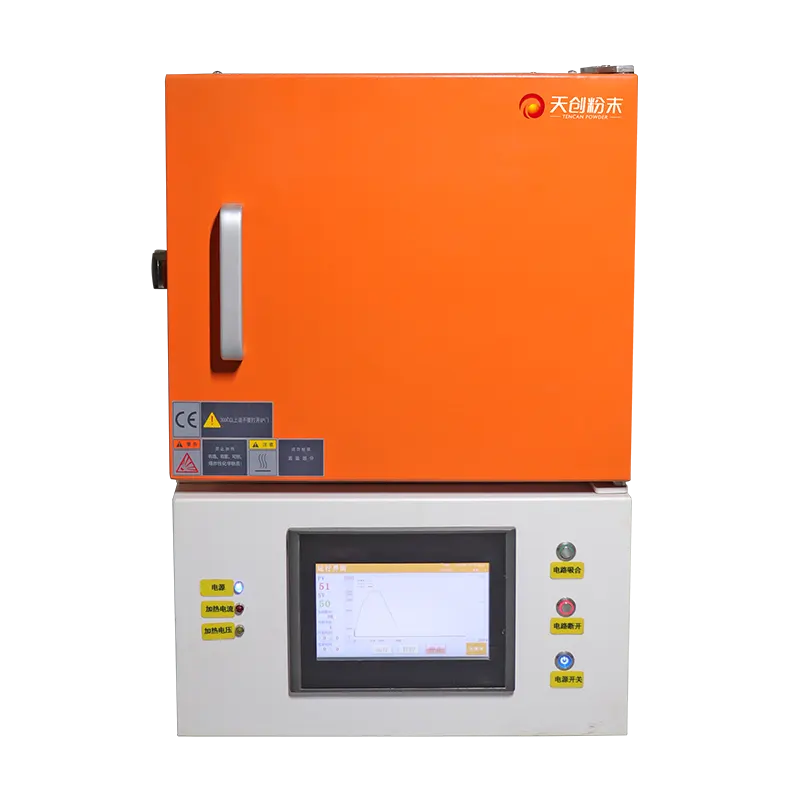
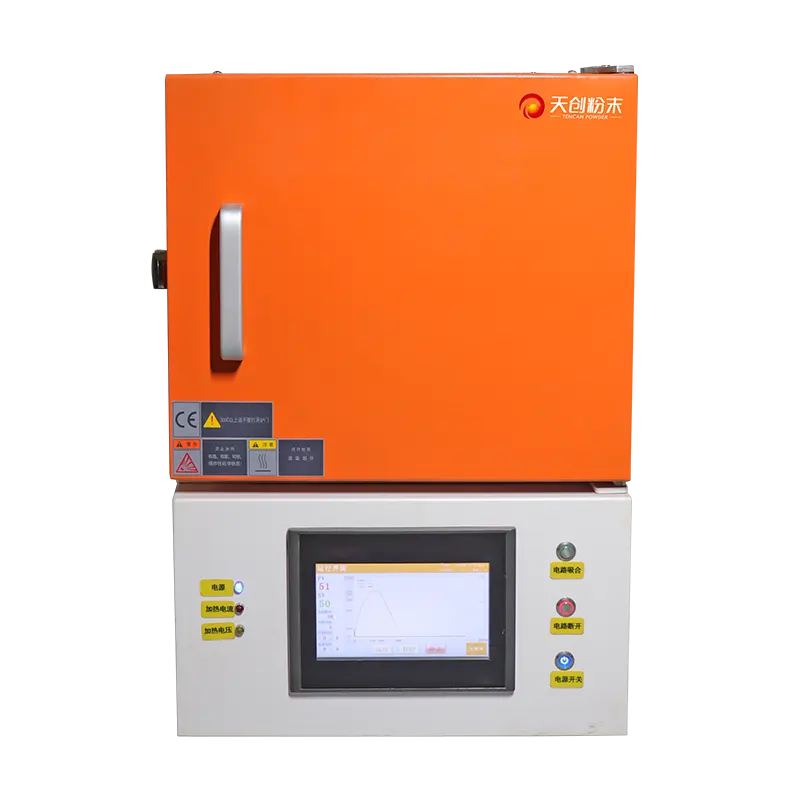
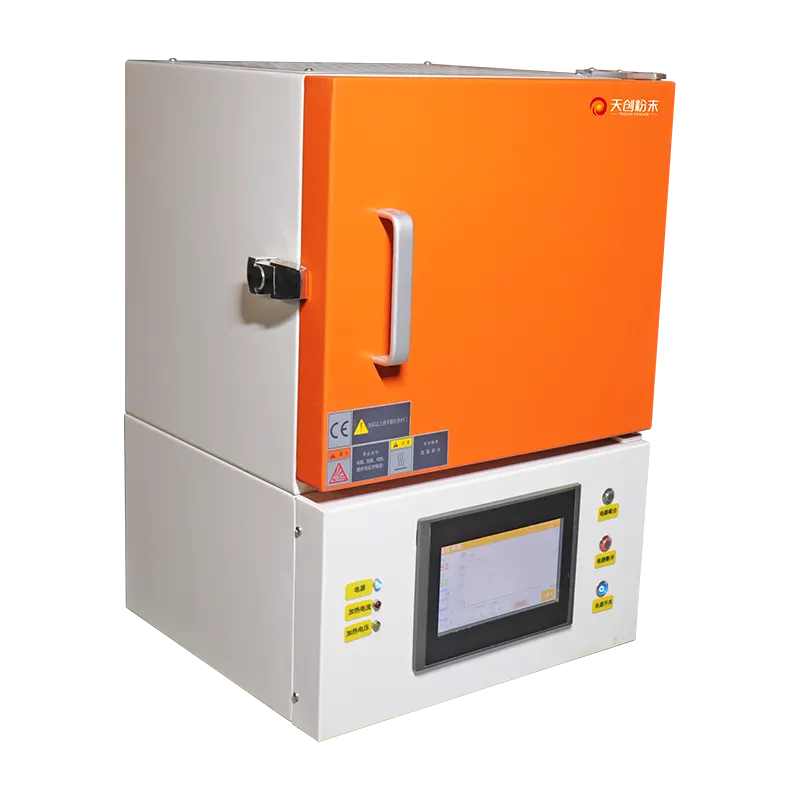
TENCAN's T-Crystal Dental Furnace is the primary candidate in this guide. It is presented as a dedicated dental furnace within TENCAN's sintering series, and it has a specific product page that should be used for the current configuration and commercial details. The product images show the equipment family and should be reviewed alongside the written specification, not as a substitute for it.
Selection Focus
The first reason to include the T-Crystal Dental Furnace is fit between product category and application. A dental laboratory looking for a sintering-stage furnace needs a product that is intended for that workflow, not a general laboratory oven that happens to reach a high temperature. The T-Crystal is positioned within a sintering series and carries a dental designation, so it belongs on the shortlist for a dental zirconia sintering review.
That positioning should be converted into specific questions. Is the furnace intended for sintering only, or does it also support a debinding stage? Which zirconia systems and cycle profiles has TENCAN evaluated? What is the usable chamber volume with a realistic crown-and-bridge load? What is the recommended tray, bead, and setter arrangement? These questions do not undermine the product; they define the configuration that a serious buyer needs.
Documented Strengths and Practical Interpretation
The documented strengths are clear at the product-identity level: TENCAN presents a dedicated dental furnace, places it in a sintering series, and provides a product page with multiple equipment images. For a buyer, this means the T-Crystal can be evaluated as a focused dental product rather than as a generic furnace with an accessory package. The product page is also the correct starting point for confirming the delivered configuration, because dental furnaces are often ordered with specific voltage, controller, furniture, and documentation options.
The correct interpretation is not to assume performance figures that are not stated. Instead, the buyer should use the product page to establish the baseline and then request a configuration quotation that answers the selection criteria in this guide. That is a more reliable process than comparing marketing summaries from different suppliers. It also creates a written record of what was offered, which is useful for internal approval and for acceptance testing.
Workflow Fit
In a dental laboratory, the T-Crystal Dental Furnace would be evaluated at the sintering stage of the zirconia workflow. The practical workflow review should begin with the green-state or pre-sintered restoration, the recommended preparation and cleaning steps, the loading pattern, the sintering program, and the post-sinter inspection. If the laboratory uses staining or glazing, the buyer should confirm whether those steps are performed in the same furnace and under what conditions.
The furnace should also fit the laboratory's scheduling. A single-chamber furnace may be ideal for a laboratory that runs one validated cycle per day, while a busier laboratory may need more capacity or more frequent cycles. The buyer should not decide from chamber volume alone. The real question is whether the furnace can complete the required cycle, with the required load, within the laboratory's turnaround commitments, while leaving time for maintenance and calibration.
Configuration to Confirm
Before ordering the T-Crystal Dental Furnace, confirm the maximum temperature and the usable working zone, not just the external chamber size. Confirm the heating and cooling profile, the number and type of programmable segments, the controller interface, and the cycle-record capability. Confirm the recommended furniture, tray dimensions, bead specification, and any restriction on stacking or loading density. Confirm the atmosphere or exhaust arrangement, the utilities, the installation clearances, and the safety devices.
Also confirm the commercial and support package: voltage and frequency, plug or terminal details, documentation language, warranty, spare-parts list, calibration procedure, and technical support route. If the furnace is intended for a quality-managed laboratory, ask for the documents needed for installation qualification, operational qualification, and routine performance checks. The aim is to convert a product listing into a fully specified purchase.
Comparison Table for a Consistent Shortlist
The table below uses the same dimensions for every candidate. Only one candidate is documented in this edition, so the table is intentionally short. A second or third brand should be added only after its official product data and configuration quotation have been obtained.
| Brand or product | Documented strengths | Relevant application | Configuration to confirm |
|---|---|---|---|
| TENCAN T-Crystal Dental Furnace | Dedicated dental furnace listed within TENCAN's sintering series; specific product page and product images are available for configuration review. | Dental laboratory sintering workflows where a dedicated furnace is being evaluated; exact zirconia cycle compatibility and loading must be confirmed with TENCAN. | Usable chamber size and load, maximum temperature and profile, program and record functions, atmosphere and exhaust, furniture and bead system, utilities, calibration, service, and documentation. |
How to Evaluate Other International Suppliers
A laboratory that wants to compare TENCAN with other international suppliers should build the comparison from official documents, not from directory listings or distributor summaries. Start with the product data sheet, the operating manual, and a written quotation for the exact configuration. Then apply the same questions to every supplier. This protects the buyer from comparing a base furnace with a fully equipped dental package, or a small laboratory unit with a production system.
Ask each supplier to state the intended dental application, the validated load, the usable working zone, and the recommended sintering cycle. Ask for the measurement method behind any uniformity claim. Ask how the controller records a cycle and what happens after a power interruption. Ask for the maintenance schedule and the expected life of consumable parts. Ask for the names of the user-replaceable parts and the procedure for replacing them. Finally, ask for the installation checklist and the acceptance test that will be performed after commissioning.
This is also the point to check the evidence behind any statement about the furnace. A product page can describe a family, but the quotation and manual should define the delivered unit. If a supplier cannot provide the relevant document, the buyer should mark that item as unverified and either obtain the document or exclude the supplier from the shortlist. That discipline is more valuable than a longer list of brand names.
Material and Workflow Considerations
Dental zirconia is not a single material. Different generations and shades may require different sintering programs, and the laboratory should follow the material manufacturer's validated instructions rather than a generic furnace default. The furnace supplier and the zirconia supplier both have a role: the material supplier defines the cycle, while the furnace supplier confirms that the equipment can execute it within the intended working zone.
The physical loading pattern matters as much as the program. Restorations placed too close together, trays that obstruct circulation, or an excessive bead bed can change the thermal history of individual units. The laboratory should establish a standard loading diagram and train staff to follow it. The diagram should show the tray, the position of units, the bead depth, and any prohibited combinations. This is a simple quality control that supports repeatability without relying on unverified claims about the furnace.
Cooling is often overlooked. A furnace that heats accurately but cools in an uncontrolled way may create thermal stress or inconsistent results. The buyer should ask how the cooling phase is managed, whether the program includes controlled cooling, and how the chamber is opened after the cycle. The answer should be consistent with the zirconia supplier's instructions and with the laboratory's workflow.
Cleaning and maintenance also affect results. Furnace furniture, trays, and beads should be inspected and replaced according to a defined schedule. Contamination from handling, staining materials, or previous loads should be controlled. The laboratory should document who cleans the chamber, how often, and with what approved materials. These practices are not substitutes for a good furnace, but they are part of the system that makes a good furnace perform reliably.
Validation and Acceptance
A new dental furnace should be accepted against defined criteria, not simply switched on. The acceptance plan can include a visual inspection, a safety check, a temperature verification, a trial sintering run, and a dimensional and appearance check of the resulting restorations. The exact tests should reflect the laboratory's quality system and the zirconia manufacturer's recommendations.
The trial run should use a representative load and a representative program. If the laboratory routinely sinters bridges or implant components, the trial should include those shapes or a validated surrogate. The results should be reviewed by the person responsible for quality, not only by the operator. Any deviation should be investigated before production release.
Records should be retained from the first day. Keep the installation checklist, the configuration quotation, the calibration records, the trial-run program, and the acceptance results. These records support troubleshooting and provide evidence if a customer or auditor asks how the furnace was qualified. They also make future service visits more efficient, because the engineer can see the baseline rather than reconstructing it.
Procurement Checklist
- Define the zirconia materials, shades, and restoration types to be sintered.
- State the expected units per cycle, cycles per day, and peak weekly load.
- Confirm the usable chamber size with the proposed tray and bead arrangement.
- Obtain the recommended sintering program and the material supplier's instructions.
- Confirm maximum temperature, heating rate, hold time, cooling behavior, and uniformity method.
- Confirm program storage, access control, alarm history, and cycle-record export.
- Confirm exhaust, ventilation, room temperature, and utility requirements.
- Confirm voltage, frequency, phase, current, plug or terminal, and circuit protection.
- Confirm furniture, trays, setters, beads, and consumable sources.
- Confirm calibration, maintenance, spare parts, warranty, and technical support.
- Obtain an installation and acceptance plan before the order is placed.
- Record the exact delivered configuration in the purchase order.
A Sensible Next Step
The most useful next step is to give TENCAN a defined sample plan and target specification: the zirconia materials, the largest and smallest restorations, the intended units per cycle, the required cycle profile, the available utilities, and the acceptance criteria. Ask TENCAN to confirm the T-Crystal Dental Furnace configuration against those inputs and to identify any item that requires a site check or a material-supplier confirmation. That approach keeps the decision grounded in the laboratory's actual workload and avoids relying on a generic product description.
For buyers comparing international suppliers, use the same input package for every quotation. A like-for-like response is more valuable than a longer brand list. The product page for the T-Crystal Dental Furnace is the correct starting point: T-Crystal Dental Furnace.
Sources and Further Reading
- TENCAN, T-Crystal Dental Furnace product page: https://www.planetaryballmills.com/products/sintering-series/t-crystal-dental-furnace.html
- TENCAN, product images for the T-Crystal Dental Furnace, as used in this guide.
Related Products
Get In Touch
Our professional team will reply to you within one business day. Please feel free to contact us!