
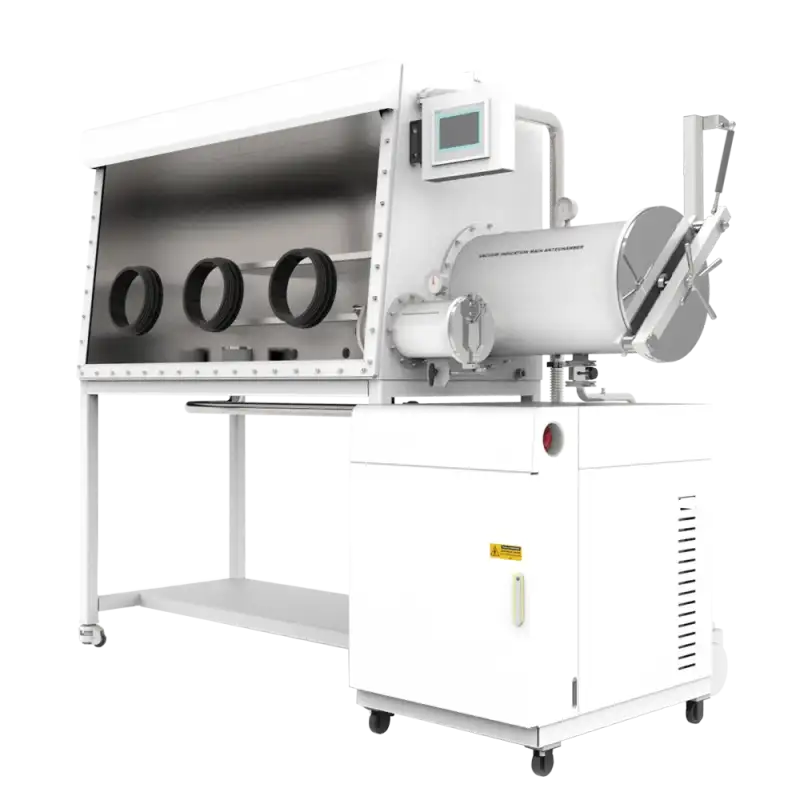
Glove Box With Purification System: Keeping Moisture and Oxygen Under Control

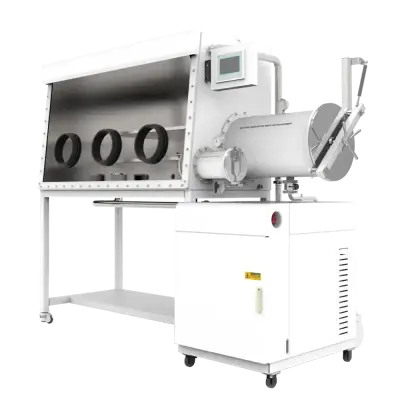
If you handle powders that hate air, a glove box with purification system can feel like a quiet little miracle. The box gives your sample a sealed room; the purification system keeps that room's atmosphere on a short leash. In this guide we'll unpack what the purification loop does, why moisture and oxygen matter so much in powder work, and how to run the setup without accidentally defeating it. You can see the exact product here: glove box with purification system.
What a glove box with purification system actually does
A standard glove box is an enclosed workspace with gloves built into the front. You put your hands in, work through the gloves, and never touch the sample directly. That simple idea keeps dust contained and keeps outside air from rushing in every time you reach for a spatula.
The purification system adds the active part. Instead of relying on a sealed box alone, it circulates the internal atmosphere through a purification loop. The loop pulls moisture and oxygen out of the gas, then sends the cleaned gas back into the chamber. The box is the container; the purifier is the keeper.
People often talk about ppm, short for parts per million. It is a way to describe very small amounts of a substance in the atmosphere. If oxygen is measured at 10 ppm, that means only ten parts of oxygen for every million parts of gas. That is tiny. The lower you go, the better your protection for sensitive materials, but the right target depends on what you handle, so define it before you buy.
A glove box with purification system is not just a sealed cabinet with fancy gloves. A working system needs gas supply, circulation, sensors, regeneration, leak-tight seals, and a procedure people actually follow. Skip any one of those and the atmosphere can drift.
Why moisture and oxygen are the troublemakers
Oxygen: the quiet oxidizer
Oxygen is chemically pushy. It reacts with many metals, polymers, and battery materials. A fresh metal powder can grow an oxide skin; a reactive catalyst can lose activity; a color-sensitive material can shift. For fine powders the effect is amplified because surface area is huge. Every particle offers more surface for oxygen to meet.
In powder handling, oxidation can also change flow. Particles may stick, fuse, or behave differently in a sieve or mill. That is one reason a reading that looks fine on paper may not feel fine in the glove box.
Moisture: the sticky saboteur
Water is the other quiet troublemaker. Many powders are hygroscopic, meaning they pull moisture from the air. Once water gets in, you can see caking, clumping, sluggish flow, corrosion, or hydrolysis, a chemical reaction where water breaks a bond in your material. In a powder, hydrolysis can start at the surface and work inward.
Moisture also teams up with oxygen. Wet surfaces can corrode faster. Water can deactivate catalysts, distort analytical results, and make weighing sticky and frustrating. If your powder cakes in the jar, the glove box atmosphere is one of the first places to check.
Neither problem announces itself with a flashing light. A powder may look the same while its surface chemistry changes. That is why monitoring and good habits matter more than a quick visual check.
Inside the purification loop: from dirty gas to dry, oxygen-lean gas
Think of the purification system as a small, closed-loop refinery. Gas leaves the glove box, passes through purifier media, and returns. The media grabs moisture and oxygen, or converts them into forms that can be removed. When the media gets loaded, regeneration cleans it so the loop can keep working.
Circulation
Circulation keeps the atmosphere mixed. Without it, the gas near your sample could be cleaner or dirtier than the gas near the sensor. A blower or fan moves gas through the loop at a steady rate. The exact flow rate should be confirmed in the product specifications, because the right number depends on chamber volume and workload.
Moisture removal
Moisture removal usually relies on a desiccant or a regenerable drying medium. The gas passes over or through the medium, water sticks, and dry gas goes back. Regeneration heats the medium and drives the collected water out, usually with a sweep gas. In plain words, the purifier takes a wet sponge, dries it, and puts it back to work.
Oxygen removal
Oxygen removal is often done with a reactive getter or catalyst that binds oxygen or converts it to a removable compound. The chemistry depends on the design, so follow the manufacturer's procedure for gas type and regeneration. Do not assume any inert gas works exactly the same way; nitrogen and argon behave differently in density and heat transfer, and the system should be set up for the gas you actually use.
Regeneration
Regeneration is maintenance, not a sign of failure. The purifier has a capacity limit. When it approaches that limit, regeneration resets it. If you ignore the schedule, oxygen and moisture can creep up even though the box looks closed. A good routine includes watching readings, logging regeneration, and checking that the cycle completes before you start sensitive work.
One more habit: don't treat the purification loop as a magic eraser. It cleans the gas; it does not clean a wet sample, a dirty glove, or a solvent-soaked wipe. Those put the load back into the loop, and the loop has to catch up.
The antechamber: small room, big job
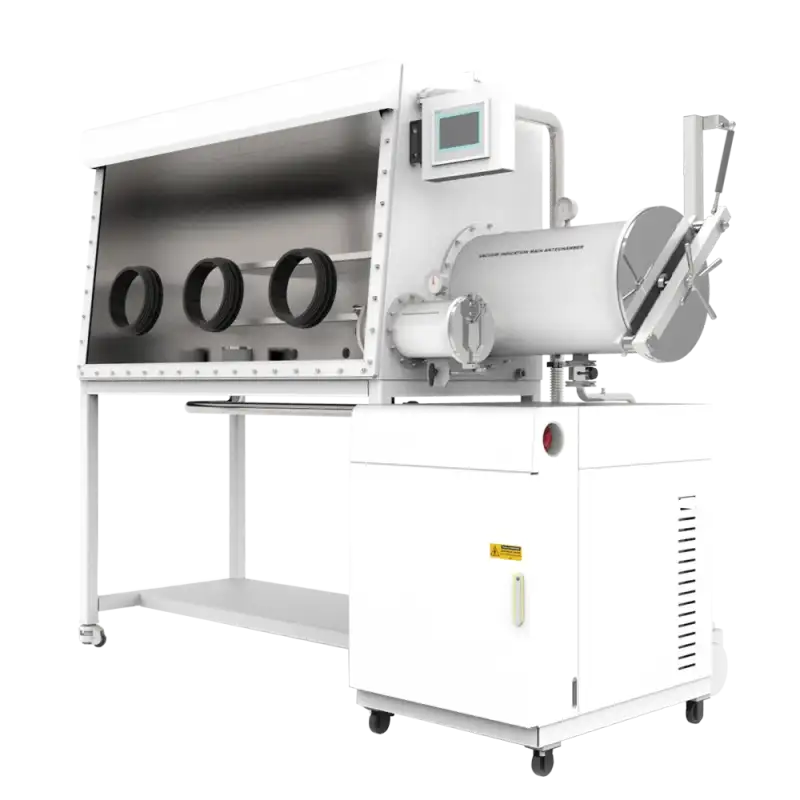
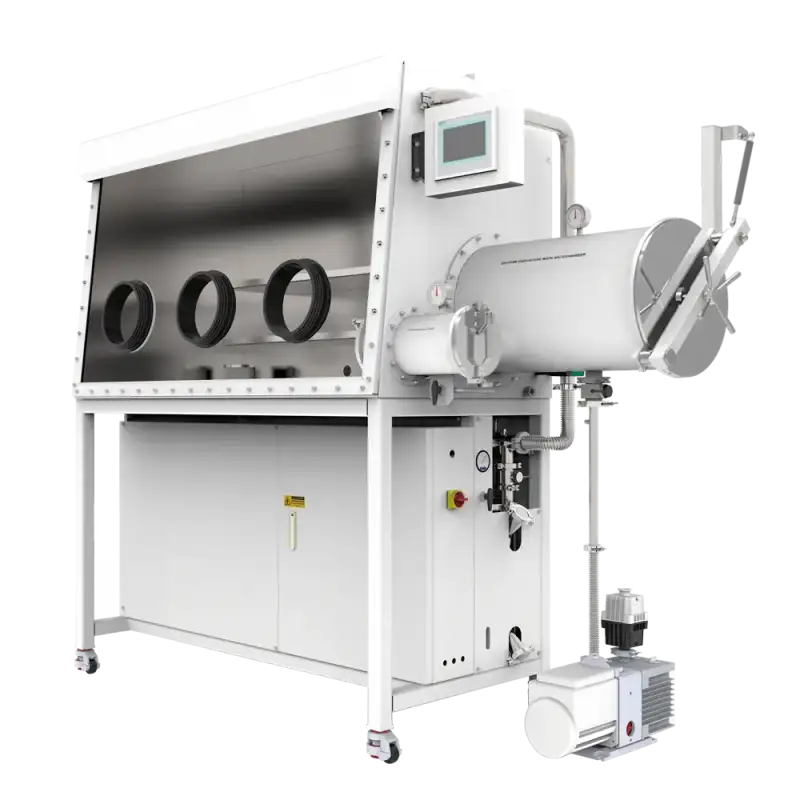
The antechamber is the small airlock-style chamber on the side of the glove box. You put tools, sample jars, or small equipment in, close the outer door, and use vacuum or gas exchange cycles to bring the chamber closer to the main atmosphere before opening the inner door. It is the difference between walking through a cleanroom air shower and propping the front door open.
People underestimate the antechamber. If you skip cycles, you dump moisture and oxygen straight into the box. If you overload it, gas cannot move around the load well. If you open the inner door too soon, the box pays for it.
A practical transfer routine looks like this: wipe down items outside, make sure they are dry and compatible with the atmosphere, load the antechamber without blocking ports, run the required evacuation and refill cycles, then open the inner door only when the cycle is complete. For powders, use closed jars or bags and handle them inside the box. A little dust on a glove is annoying; dust on a sealing surface is a leak waiting to happen.
Make the antechamber part of your workflow, not an afterthought. It is the main doorway between your normal lab air and the controlled atmosphere.
Where powder people feel the difference
Glove boxes with purification systems show up anywhere a powder is sensitive to air or water. You might be weighing a hygroscopic salt, sieving a metal powder, sampling a catalyst, preparing a battery material, or packaging a small batch for shipping. The common thread is simple: the surface of the powder is where the action happens, and the atmosphere decides what that surface meets.
Let's make that concrete. A metal powder with a fresh surface can oxidize; the oxide layer may change sintering behavior or electrical performance. A hygroscopic powder can pick up water, cake, and stop flowing. A catalyst can lose active sites. An air-sensitive pigment can shift color. Even a material that is not dramatically reactive can give you more consistent results when moisture and oxygen are held steady.
Powder work also creates practical annoyances. Fine particles and static can make a sample cling to a spatula, a jar, or the glove. Moisture makes that worse. A dry, controlled atmosphere can reduce clumping and make weighing and transferring cleaner, though it does not replace good technique.
Here is a quick way to think about the fit:
- Very sensitive: reactive metals, some battery materials, catalysts, and oxygen-scavenging powders. These usually need tight targets, careful transfer, and frequent monitoring.
- Moisture-sensitive: hygroscopic salts, fine chemicals, and powders that cake or hydrolyze. These benefit from dry gas and disciplined antechamber use.
- Dust-sensitive: toxic or irritating powders. A glove box contains dust and protects the operator, but you still need cleaning and waste procedures.
Your exact target should come from your material, your process, and your quality system. Do not borrow a number from someone else's process just because it sounds impressive.
Common mistakes that quietly ruin a good atmosphere
Most glove box problems are not dramatic. They are small habits repeated until the readings drift.
- Trusting the seal and ignoring the gloves. Gloves wear, pinhole, and get contaminated. Inspect them and replace them on a schedule.
- Skipping antechamber cycles. Every shortcut imports air. The loop can recover, but your sample may not.
- Putting wet items inside. A damp wipe, a water-rinsed tool, or a solvent-soaked part adds load. Dry and prepare items outside whenever possible.
- Overloading the purifier. Large spills, open solvents, and dusty transfers all ask the purifier to do more. Clean up promptly.
- Ignoring regeneration. Regeneration is part of the rhythm. Put it on the calendar and log it.
- Watching one sensor only. Oxygen and moisture are different problems. Check both, and make sure the sensors are calibrated and in date.
- Poor powder handling. Open containers, loose lids, and aggressive pouring create dust that settles everywhere, including sealing surfaces.
A glove box is a bit like a good kitchen: the tools matter, but the cook's habits matter more. You can have a beautiful chamber and still make a mess of the atmosphere by rushing a transfer.
Training deserves a mention. People who use the box once a month need a refresher. People who use it daily can get casual. A short checklist on the wall — gloves checked, antechamber cycled, sample closed, readings logged — prevents a lot of quiet damage.
How to choose and use one without guessing
Specifications should follow the work, not the other way around. Before you compare a glove box with purification system, write down what you handle, how much you handle, how often, and what atmosphere you need. Then use that list to judge the system.
Here is a practical checklist:
| What to confirm | Why it matters |
|---|---|
| Chamber size and working height | Enough room for your balance, tools, and sample containers without crowding the gloves. |
| Glove port layout and glove material | Comfort, reach, and chemical compatibility affect daily use and leak risk. |
| Antechamber size and cycle options | Large or frequent items need a transfer path that does not bottleneck the work. |
| Purifier capacity and regeneration method | The loop must match your workload and the way your team maintains equipment. |
| Oxygen and moisture monitoring | You need to see the atmosphere, not guess it. Confirm sensor type and calibration needs. |
| Gas compatibility | Nitrogen, argon, or another inert gas changes density, purging, and heat behavior. |
| Utilities and footprint | Power, gas supply, exhaust, and floor space are easy to forget until delivery day. |
Those are the questions worth asking before a purchase. The exact values for a given model belong in its product documentation, not in a generic guide. You can review the glove box with purification system product page here: glove box with purification system specifications. That page is the right place to confirm the build details, available options, and current specifications for the unit you are considering.
When the box arrives, commission it properly. Leak-check the chamber, confirm the gas supply, run the purifier through its startup routine, and verify the sensors. Then write a simple standard operating procedure: what goes in, how it is cleaned, which antechamber cycle to use, what readings trigger a pause, and who signs off on maintenance. A good SOP is boring in the best way.
A simple routine that keeps the loop on your side
Routines beat heroics. The best glove box is not the one with the most impressive certificate on the wall; it is the one that gets a steady, unglamorous check every day.
Before you start
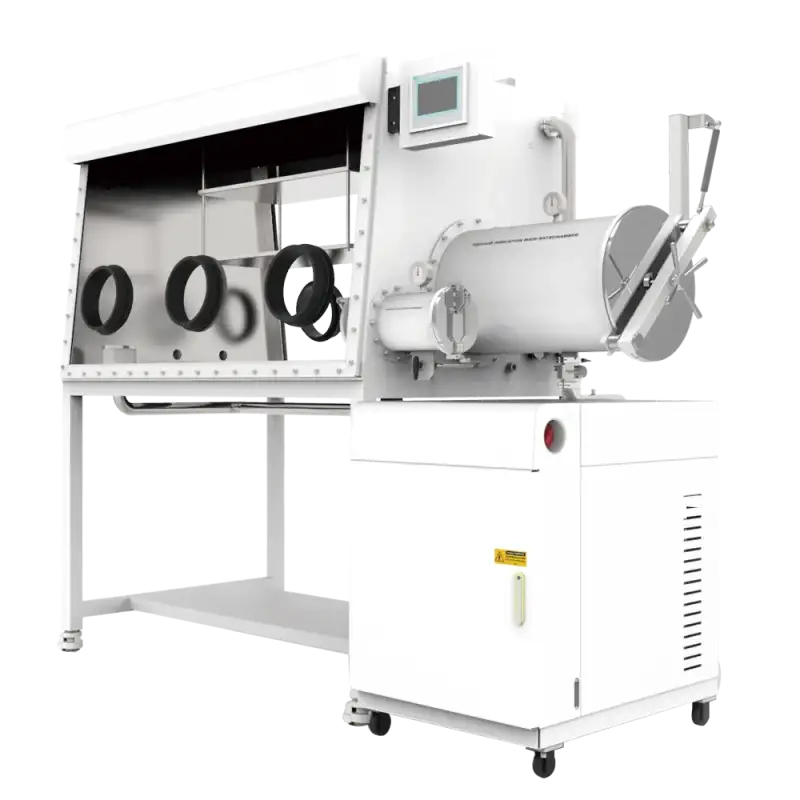
Look at the gloves. A quick visual pass for cracks, discoloration, or stiffness takes seconds. Check the antechamber doors and sealing surfaces. Confirm the oxygen and moisture readings are where you expect them. If something is drifting, stop and find out why before you open a sensitive sample. A sample that waits ten minutes is fine; a sample that meets a bad atmosphere may be scrap.
While you work
Keep containers closed when you are not using them. Move powders gently. Use a tray or secondary container so a spill stays small. Do not block the antechamber ports with a tall bottle. Do not lean on the gloves or drag sharp tools across them. If you see a spill, clean it before it becomes a dust cloud. And keep your hands relaxed — tense hands make clumsy transfers.
After you finish
Close samples, clean the work area, remove waste through the correct route, and log anything unusual. If you ran a regeneration or changed a gas cylinder, note it. If a reading moved, note that too. The next person should not have to guess what happened.
Every week and every month
Weekly checks might include glove inspection, door seals, and a look at the sensor history. Monthly checks might include calibration checks, leak checks, and a review of regeneration logs. The exact interval should come from your equipment manual and your quality system, of course. The point is to make maintenance visible. A calendar entry and a signature do more than a vague promise to keep an eye on it.
One more routine: train new users on the box, not just the procedure. Show them where the purge valve is, how the antechamber sounds when it seals, and what a normal reading looks like. Confidence without understanding is how good atmospheres get wasted.
Quick answers to the questions people actually ask
Is a glove box with purification system the same as a fume hood?
No. A fume hood pulls air away from the operator to remove vapors and dust. A glove box with purification system controls the atmosphere inside a sealed chamber. They solve different problems, and one does not replace the other. If you need both operator protection and a controlled atmosphere, plan the workflow carefully.
Can I use it for powders?
Yes, powders are a common reason to want one. But powder work needs discipline: closed containers, gentle transfers, regular cleaning, and a check that dust has not contaminated gloves or seals. If the powder is toxic or very fine, include it in your risk assessment and waste plan.
Why does the purifier need regeneration?
Because the purification media has a limited capacity. It collects moisture and oxygen until it is loaded. Regeneration resets that capacity. Skip it and the readings can rise even while the box is closed and quiet.
How do I know the atmosphere is actually good?
Use calibrated oxygen and moisture instruments, log the readings, and watch for drift. A visual check is not enough; many sensitive powders look unchanged at the moment their surface chemistry is already shifting. Pair the instruments with leak checks and good transfer habits.
What if my process changes?
Then revisit the specification. A box sized for occasional sample weighing may not suit daily powder production. A system that worked for dry powders may struggle with solvents or heavy particulate load. Talk to the supplier before you push the system beyond its intended use.
At TENCAN (长沙天创粉末技术有限公司), we like a simple rule: match the atmosphere to the material, and match the maintenance to the reality of your schedule. A glove box with purification system is a long-term tool. Buy for the work you will actually do, then run it with the same care you give your balance or your mill.
Related Products
Get In Touch
Our professional team will reply to you within one business day. Please feel free to contact us!