
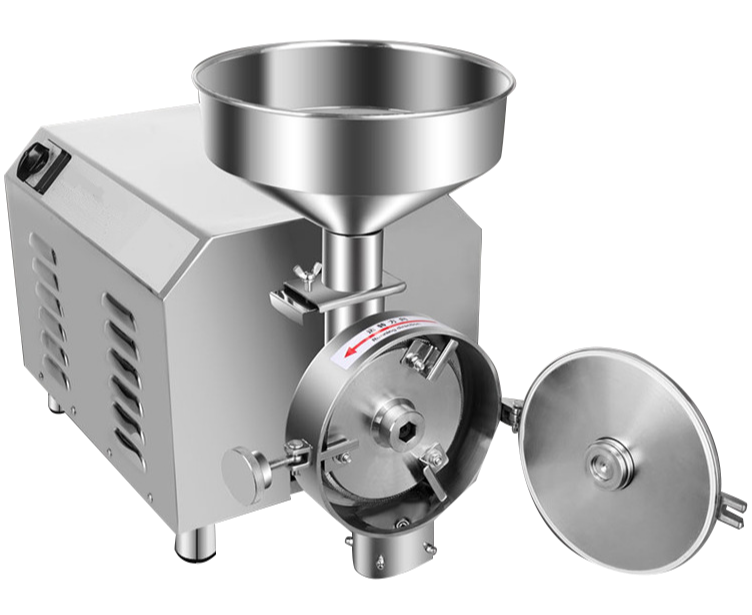
Small Grinder Guide: How Compact Mills Improve Powder Processing Efficiency

A small grinder looks almost harmless on a lab bench. It takes up less space than a laptop dock, often runs from a standard outlet, and promises to turn a handful of material into fine powder. Then you use one, and you realize the little machine is doing something serious: it is breaking solid particles apart, creating fresh surfaces, and changing how the powder behaves in every step that follows.
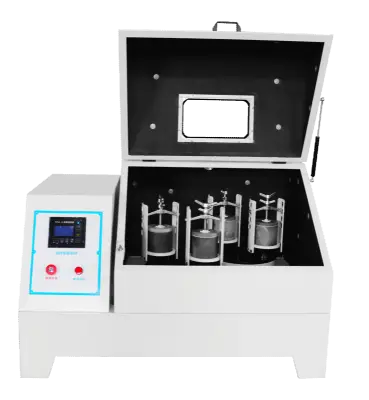
That is why choosing a small grinder is less about finding the smallest machine and more about finding the right grinding action for your material, batch size, and quality target. We will walk through what a small grinder does, where it fits in powder processing, how to choose one, and how to get repeatable results without turning your bench into a dust cloud. You can keep the TENCAN small grinder product page open as a reference while we go.
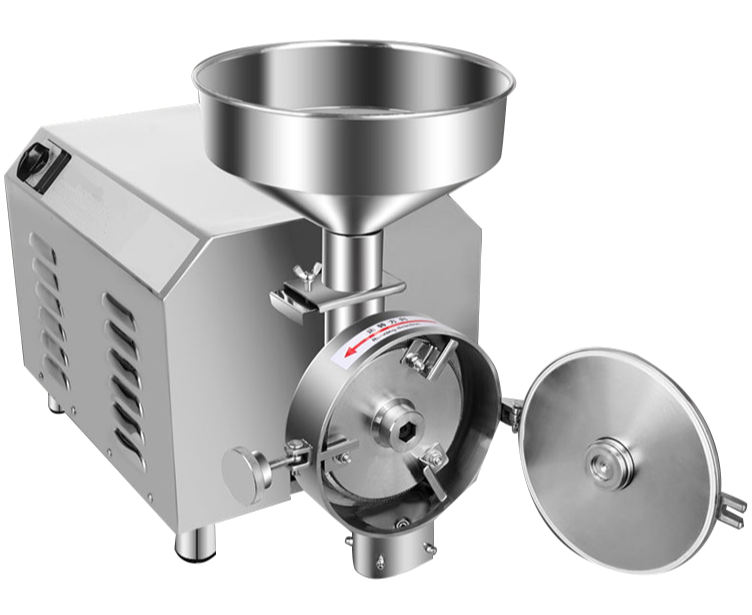
What a Small Grinder Actually Does in Powder Processing
A small grinder is a compact size-reduction machine. You feed it coarse particles, it applies mechanical force, and it discharges smaller particles. That sounds simple, but the word “grinder” covers a wide family of designs. The grinding action may come from a fast rotor, a set of blades, a hammer arrangement, or another mechanical element, depending on the model. The common thread is controlled particle breakage in a chamber that is small enough for bench work, sample preparation, or low-volume production.
In powder processing, the goal is rarely “as fine as possible.” The goal is a particle size range that fits your next step. A powder that is too coarse may settle quickly, feel gritty, or fail to mix evenly. A powder that is too fine may clump, stick to surfaces, trap air, or become difficult to wet. A small grinder gives you a way to move the particle size distribution toward the window you need, then check the result before you scale up.
Size reduction is not just making particles smaller
When a particle breaks, new surface area appears. That fresh surface changes the powder’s behavior. It can make the material more reactive, improve dissolution, alter flow, increase dustiness, or give you better packing in a mold. It can also make the powder more prone to oxidation or moisture pickup. So when we talk about grinding, we are really talking about surface engineering. The machine is a tool for changing physical behavior, not just a machine for making a pile of powder look finer.
This is why a small grinder earns its place in laboratories, quality control rooms, and small production cells. It lets you run a batch, inspect the result, and adjust before committing to a larger run. If you are testing a new formulation, a compact unit is often the difference between a promising idea and a practical process.
How a Small Grinder Works Without the Engineering Jargon
Grinding is a battle between force and heat. The machine introduces energy into the material. Some of that energy creates new surfaces by breaking particles. Some of it turns into heat, noise, and vibration. A good grinding process puts enough energy into the right place to break particles, but not so much that the material overheats, smears, or changes in ways you did not intend.
In a typical compact grinder, a motor drives a grinding element inside a chamber. Material enters the active zone and is caught between moving and stationary surfaces. Particles collide, rub, shear, or compress against one another. When the local stress is high enough, cracks spread and the particle splits. The broken pieces may be further reduced if they stay in the chamber long enough. The final result depends on the material’s hardness, toughness, moisture content, feed size, and the time it spends in the grinding zone.
Impact, shear, and compression do different jobs
Impact is good at breaking brittle materials into smaller pieces. Shear is useful when you need to tear or smear material apart, and compression works well for crushing. Most real grinders combine these actions, but the balance matters. A machine that leans heavily on impact may produce a broad particle size distribution with some fines. A machine that leans on shear may handle softer or more fibrous material differently. If you are choosing a small grinder, ask what kind of action the design emphasizes, then compare that with your material.
Heat is the hidden variable. Small chambers have less surface area for heat to escape, and a small batch can warm up faster than you expect. Heat can soften the material, drive off moisture, change crystal structure, or make sticky powders coat the chamber. That does not mean small grinders are unsuitable for heat-sensitive materials. It means you should run short trials, check the temperature, and avoid assuming that a fast result is a good result.
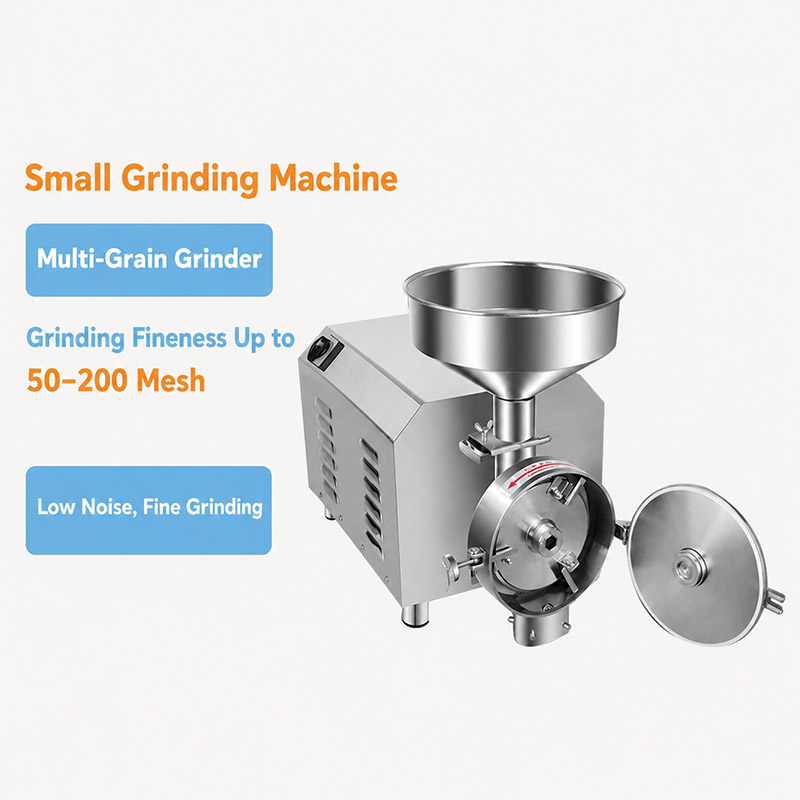
Why Small Grinders Matter for Powder Quality
Powder quality is a chain of small decisions. The grinder is one link, but it influences everything downstream: flow, mixing, compaction, dispersion, reaction rate, and appearance. A compact grinder makes those decisions easier to test because you can run small batches and compare them without producing a warehouse of material.
Particle size distribution is more important than one number
When someone says a powder is “200 mesh” or “50 microns,” they are usually giving you a single number. Real powders contain a range of sizes. That range, called the particle size distribution, affects how the powder packs, flows, and reacts. A narrow distribution can give more predictable behavior. A broad distribution may pack more efficiently because smaller particles fill the gaps between larger ones. A small grinder lets you experiment with grinding time and feed conditions to move that distribution in a controlled way.
Consistency is the real product
For a lab, consistency means a sample you can trust. For production, it means a batch that behaves the same way next week. A small grinder supports consistency when it is easy to clean, easy to set, and easy to repeat. If every run depends on a different operator’s feel for the machine, you do not have a process; you have a performance. Look for simple controls, clear chamber access, and a design that lets you document what you did.
Choosing a Small Grinder: A Practical Checklist
A small grinder can be a wonderful tool or a source of frustration. The difference usually comes down to fit. Before you compare prices, define the job. Then use the checklist below to ask better questions.
1. Define the material and the target
Start with the material, not the machine. Is it brittle, fibrous, sticky, oily, crystalline, or heat-sensitive? What feed size will you start with, and what particle size range do you need? A small grinder that works beautifully on a dry, brittle mineral may struggle with a waxy or moist material. Write down the material behavior you already know, then ask whether the grinding action is suited to it.
2. Match the grinding action to the job
If your goal is rapid size reduction of a brittle sample, an impact-style action may be a good place to start. If your material tends to smear or needs gentler treatment, a different action may be better. The key is to avoid buying a machine simply because it is small and affordable. The grinding mechanism should match the material and the result you need.
3. Think in batches, not just chamber size
A large chamber is not automatically better. You need a batch size that gives you enough material for testing without wasting expensive feedstock. Consider how much powder you need per test, how many tests you plan to run, and how much cleaning time each batch requires. A small grinder that fits your real batch size is more useful than a larger unit that sits idle because every run feels like a production event.
4. Check containment, cleaning, and changeover
Powder gets everywhere. A good small grinder should be designed so you can load, unload, and clean it without chasing dust across the lab. Look for accessible chambers, smooth surfaces, and a sensible disassembly routine. If you plan to grind different materials, changeover matters as much as grinding speed. Cross-contamination can ruin a sample long before the particle size is wrong.
5. Ask about heat and dwell time
Because small batches heat quickly, you should know how the machine behaves in a short run. Can you run it in intervals? Is there a way to monitor temperature? Does the design avoid unnecessary friction? You do not need a laboratory-grade thermal model to make a decision, but you do need to know whether heat will be a problem for your material.
6. Look at contact materials and wear parts
The parts that touch your powder should be suitable for your application. Wear parts are not a sign of bad design; they are a normal part of grinding. What matters is whether they are accessible, replaceable, and made from materials that will not contaminate your product. Ask what wears, how often it should be checked, and how replacement affects alignment or performance.
7. Prioritize repeatability over features
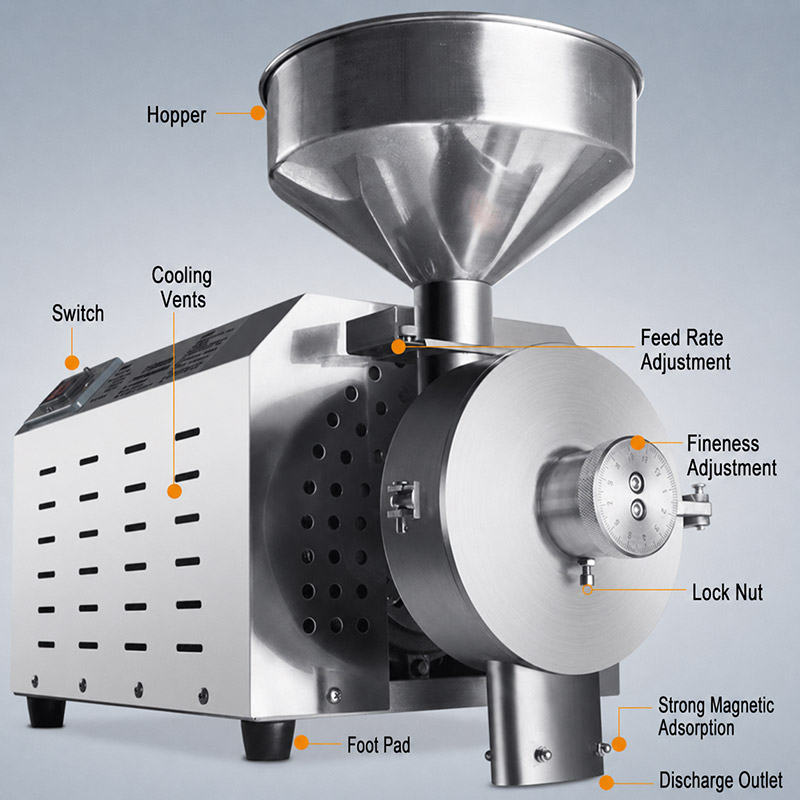
A long feature list can be impressive, but repeatability wins. Simple speed settings, clear markings, and a stable base often matter more than a digital display with menus nobody uses. If your team needs to run the same method across different operators, choose the machine that makes the method easy to follow.
8. Consider the whole workspace
Noise, vibration, footprint, and power requirements are part of the choice. A compact grinder should fit the bench and the workflow. If it is too loud, people will avoid using it. If it vibrates across the bench, samples may spill. If the controls are awkward, the machine will collect dust—and not the kind you want. The TENCAN small grinder product page is a useful place to review the current product details and confirm what fits your setup.
Small Grinder Setup and Operation Tips
Once the machine is on your bench, good habits matter more than heroic effort. These tips apply to most compact grinding work, even when the material and machine details differ.
Start with a representative sample
A grinder can only work with what you feed it. If your sample is not representative of the batch, the result will not be representative either. Mix the sample before dividing it, and avoid testing only the biggest or driest pieces. For powders, moisture can vary from one scoop to the next, so keep the sample handling consistent.
Do not fill the chamber just because it fits
A crowded chamber has less room for particles to move, collide, and break. It can also put extra load on the motor and generate more heat. Start with a modest load, run a short trial, and inspect the result. You can always add more material or time. It is harder to undo overgrinding or a chamber packed so tightly that nothing moves well.
Run short trials, then inspect
Grinding is a process, not a single button press. Run a short interval, stop, and check the powder. Look at the particle size, feel, flow, color, and temperature. If the material is not where you want it, adjust one variable at a time. Changing speed, time, and load all at once makes it impossible to know what helped.
Watch for heat, noise, and vibration
Your senses are useful instruments. A new rattle, a change in pitch, or a chamber that feels warmer than usual deserves attention. Stop the machine and investigate. Small grinders are compact, but they still contain moving parts and stored energy. Follow the manufacturer’s safety guidance, keep hands away from moving parts, and never bypass guards or interlocks.
Clean between materials
Cleaning is not glamorous, but it protects your results. Use a method that removes residue without scratching critical surfaces. Dry residues may need brushing, while sticky residues may need a compatible solvent and a careful drying step. If you switch from one material to another, clean until a visual inspection and a wipe test show no carryover.
Common Mistakes with Small Grinders
Most disappointing grinding results come from a few familiar mistakes. Here are the ones we see most often.
- Buying by size alone. A small footprint is convenient, but the grinding action and chamber design must fit the material.
- Ignoring feed size. A grinder that is expected to turn large chunks into fine powder in one pass may need a pre-crushing step or a different approach.
- Overfilling the chamber. More material does not mean more output. It can mean less movement, more heat, and a wider particle size distribution.
- Grinding wet or sticky material without a plan. Moisture can cause caking, coating, and blocked surfaces. Dry or pre-treat the material if the process allows.
- Using one setting for every material. Speed and time should follow the material, not habit.
- Skipping a baseline. Without a record of the starting material and the finished result, you cannot tell whether the process is improving.
None of these mistakes is unusual. The good news is that each one is easy to correct once you know where to look.
Maintenance: The Quiet Secret Behind Repeatable Powder Results
A small grinder is a simple machine, but simple does not mean maintenance-free. Wear parts change shape, seals age, and residue builds up in places that are hard to see. A little attention keeps the machine predictable.
Start with the manufacturer’s manual. It will tell you which checks are required, which parts are consumables, and which adjustments should be left alone. Then build a short routine: inspect the chamber, check the grinding element for wear, clean contact surfaces, confirm that fasteners are secure, and listen for changes during a test run. Keep a simple log. If a batch behaves differently, the log may show that a wear part has been drifting out of specification for weeks.
Do not overlook the power and safety side. Cables, switches, and interlocks should be in good condition. If the machine has a guard, use it. If it has a lid interlock, do not defeat it. A compact grinder can still cause injury or create a dust hazard. Safe operation is part of good powder processing, not an optional extra.
Small Grinder vs Other Grinding Options
A small grinder is not the right answer for every job. At one end of the scale, a mortar and pestle is simple, inexpensive, and easy to clean, but it is slow and operator-dependent. At the other end, a production mill can deliver high throughput and tight control, but it may be expensive, power-hungry, and difficult to justify for small batches.
A compact grinder sits in the useful middle. It is more controlled than hand grinding and more accessible than a full production line. It fits sample preparation, formulation work, quality checks, and small-scale production. If you need very fine particles with tight distribution, a different class of mill may be more appropriate. If you need fast, repeatable size reduction on a bench scale, a small grinder can be the practical choice.
The decision should follow the process, not the other way around. Define the material, the target, and the batch size. Then choose the smallest machine that can do the job reliably. That is a better strategy than choosing a machine first and forcing the process to fit.
What to Ask Before You Buy a Small Grinder
When you contact a supplier, ask questions that reveal how the machine will behave in your workflow. Here is a short list you can adapt.
- What grinding action does this model use, and what materials is it designed for?
- What is the recommended feed size, and what batch size is practical?
- How is the chamber accessed for cleaning and inspection?
- Which parts wear, and how do I know when to replace them?
- How is heat managed during a typical run?
- What safety features are included, and what training is recommended?
- What information do I need to record so I can repeat a result?
If you are comparing options, put the answers side by side. A lower price is not a saving if the machine cannot hold your target particle size or if every changeover takes an hour. For a compact option, review the small grinder details and match them against your answers. The product page is the right place to confirm current specifications rather than relying on assumptions.
Bringing It Back to Your Bench
A small grinder is one of those tools that rewards clear thinking. Know your material. Know the particle size range you need. Keep batches modest, run short trials, and write down what worked. Clean the machine, watch for heat and wear, and treat repeatability as a feature you build into the process.
Do that, and a compact grinder becomes more than a small machine on the bench. It becomes a reliable way to test ideas, tighten quality, and move powder projects forward without a full-scale production run. If you are ready to compare details, start with the small grinder product page and bring your material questions to the conversation.
Related Products
Get In Touch
Our professional team will reply to you within one business day. Please feel free to contact us!