
Rotary Ball Mill: A Practical Guide

A rotary ball mill is one of those machines that looks simple from the outside but hides a lot of useful detail inside. You put powder and grinding media into a drum, close the lid, and let the drum turn. After a while, the powder comes out finer than it went in. That is the short version, but the real story is about how the movement inside the drum turns coarse particles into fine ones, and why small changes in speed, media, fill level, and material can change the result so much.
If you work with ceramics, minerals, chemicals, pigments, batteries, or any powder that needs size reduction, a rotary ball mill can be a reliable workhorse. It is not always the fastest option, and it is not always the right one. But when the job fits, it is hard to beat for simplicity, repeatability, and gentle, long-run grinding. Let us walk through what it does, how it works, and how to get better results from one.
What a Rotary Ball Mill Actually Does
At its core, a rotary ball mill is a hollow cylinder that rotates around a horizontal or near-horizontal axis. Inside the cylinder, you find grinding media, usually balls made of steel, ceramic, agate, zirconia, or another hard material. The cylinder is partly filled with the material you want to grind. When the mill turns, the media and the powder are lifted by the drum wall, then they fall, roll, and slide back down. That constant motion creates many small collisions and rubbing events. Each one chips away at the particles.
The machine does not cut particles with a blade. It does not smash them with a single hammer. Instead, it relies on thousands of repeated contacts. Imagine a room full of hard marbles tumbling down a gentle slope. The marbles keep bumping into each other and into the walls. If you place a brittle lump of sugar in that room, it will slowly break into smaller pieces. A rotary ball mill works in a similar way, but with much more control and much more energy.
The basic motion inside the drum
When the drum rotates slowly, the media charge slides and rolls. This is called cascading. The balls do not fly through the air. They stay close to the powder bed and rub against each other. Cascading is gentle. It produces a lot of attrition, which means particles are worn down by friction and shear. This mode is useful when you want fine grinding without breaking the media or overheating the powder.
As the speed increases, the media are lifted higher before they fall. At some point, the balls leave the wall and travel through the air in a curved path before crashing back into the charge. This is called cataracting. Cataracting creates strong impact forces. It is good for breaking hard, coarse particles quickly. Push the speed too far, however, and the media stick to the drum wall and rotate with it. That is centrifugation, and at that point grinding almost stops because the balls are no longer tumbling relative to the powder.
Why rotation matters so much
The rotation speed controls the balance between impact and attrition. It also controls how often the media meet the powder and how much energy each contact carries. A rotary ball mill is therefore not a single fixed process. It is a flexible platform. You can run it gently for delicate materials, or you can push it harder for tough ones. You can run it wet or dry, batch or continuous, with small media for fine grinding or large media for coarse breaking.
That flexibility is why rotary ball mills appear in so many industries. They are used for laboratory sample preparation, pilot-scale testing, and full production. They grind ores, clays, feldspar, quartz, cement clinker, glass, ceramics, chemicals, and more. They can also blend powders and coat particles, even when size reduction is not the main goal.
Inside the Drum: Key Parts of a Rotary Ball Mill
You do not need to be a mechanical engineer to operate a rotary ball mill, but knowing the main parts helps you troubleshoot and optimize. The drum, also called the jar or cylinder, is the chamber where grinding happens. Its size, shape, and internal surface matter. A smooth drum lets media slide more. A drum with lifters or ribs can raise the media higher and change the motion pattern.
The jar or drum
The drum must be strong enough to handle the weight of the media and the centrifugal forces from rotation. It also needs to resist wear from the abrasive powder and media. Common drum materials include stainless steel, carbon steel, ceramic, and polymer-lined steel. The choice depends on contamination limits, corrosion, and the hardness of the feed. For example, if you are grinding a white ceramic powder, you do not want iron contamination from a steel drum. A ceramic-lined drum or a ceramic jar may be a better fit.
The drum also needs a good seal. In dry grinding, fine powder can leak through gaps and create dust. In wet grinding, liquid can escape and make a mess. A proper gasket and a secure lid are simple but critical details. If the seal fails, you lose material and you may expose operators to dust or solvent vapor.
Grinding media
The media are the working tools of the mill. They transfer energy from the rotating drum to the powder. Media come in many materials: steel, stainless steel, chrome steel, ceramic, zirconia, alumina, agate, and more. Each material has a different density, hardness, and wear resistance. Dense media carry more energy per impact, which can speed up coarse grinding. Hard, low-wear media last longer and reduce contamination.
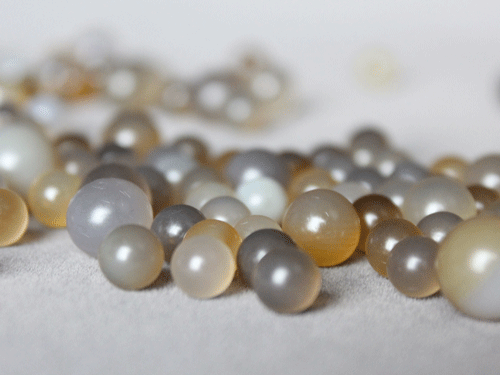
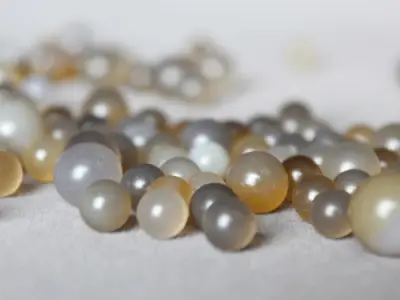
Agate balls are a popular choice when contamination is a concern. Agate is a natural form of silica with good hardness and excellent chemical resistance. It is less dense than steel or zirconia, so it is not the best choice for very coarse, very hard feed. But for fine grinding, mixing, and applications where iron or heavy-metal contamination must be avoided, agate media can be very useful. You can see an example here: agate ball.
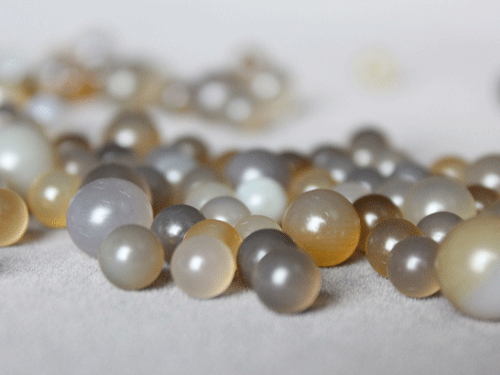
Media shape also matters. Spheres are the most common because they roll smoothly and wear evenly. Cylinders, rods, and irregular shapes are used in some mills, but spheres give the most predictable motion. If you change from spheres to rods, you change the entire grinding mechanism. Rods tend to produce more line contact and less impact, which can be useful for certain ores but is not a direct swap for ball media.
Liners and lifters
Many production mills use replaceable liners on the inside of the drum. Liners protect the drum shell from wear and can be made of manganese steel, rubber, ceramic, or composite materials. Rubber liners are quieter and absorb impact, while steel liners are tough and handle large media. Some liners have ribs or lifters that raise the media higher before they fall. This can increase impact forces without increasing rotation speed.
Lifters are a tuning tool. If your mill is cascading too gently and grinding is slow, a lifter bar can change the motion to a more cataracting pattern. If your media are already impacting too hard and breaking, a smoother liner can soften the action. The right liner depends on the feed, the media, and the product you want.
How Grinding Happens: Impact, Attrition, and Friction
Size reduction in a rotary ball mill comes from three main mechanisms. They happen at the same time, but their balance changes with speed, media size, and material properties. Understanding them helps you choose the right settings instead of guessing.
Impact
Impact happens when a moving ball hits a particle or a group of particles. The energy of the ball is transferred into the powder in a very short time. If the particle is brittle and the impact is strong enough, cracks form and the particle breaks. Impact is excellent for coarse grinding. It can turn large chunks into smaller pieces quickly. But impact also creates heat, noise, and wear. It can break delicate crystals or cause unwanted phase changes in sensitive materials.
To increase impact, you can use larger or denser media, increase rotation speed, or add lifters. To reduce impact, you can use smaller or lighter media, slow the mill down, or switch to a smoother liner. The goal is to match the impact energy to the material. Too little energy, and the particle does not break. Too much energy, and you may create defects, amorphization, or excessive contamination.
Attrition
Attrition is the wearing down of particles by rubbing and shear. It happens when media slide against each other and against the drum wall, with powder trapped in between. Attrition is slower than impact, but it can produce very fine particles with a narrower size distribution. It is also gentler on the crystal structure. For many advanced materials, attrition is the preferred mechanism because it reduces the risk of damage.
Attrition is dominant at lower speeds and with smaller media. It is also stronger in wet grinding because the liquid helps particles stay in contact with the media. If you need submicron particles, attrition will likely do more of the work than impact. That is why fine grinding often uses small media, high media loading, and long milling times.
Friction and chipping
Friction is the sliding resistance between surfaces. In a ball mill, friction contributes to heat and wear, but it also helps remove sharp edges and surface layers from particles. Chipping is a form of wear where small pieces break off from larger particles. It is common in brittle materials and can help round off irregular shapes. Friction and chipping are less dramatic than impact, but they affect particle shape and surface quality.
If you want round, smooth particles, friction and attrition are your friends. If you want sharp, angular particles, you should minimize friction and use controlled impact. This is why the same mill can produce very different powders depending on how it is run.
Wet or Dry? Choosing the Right Milling Mode
A rotary ball mill can run dry or wet. Each mode has advantages and trade-offs. The choice depends on the material, the desired particle size, and the downstream process.
Dry milling
Dry milling is simple. You load dry powder and media, run the mill, and discharge dry product. There is no liquid to remove, no slurry to filter, and no drying cost. Dry milling is common for cement, ceramics, minerals, and many chemicals. It is also easier to scale up when the product must remain a powder.
But dry milling has challenges. Fine dry powders tend to coat the media and the drum wall. This coating cushions impacts and slows grinding. It can also cause dust, which is a health and safety concern. Some materials become sticky or static-charged, making discharge difficult. In those cases, a small amount of processing aid or a switch to wet milling can help.
Wet milling
Wet milling uses a liquid, usually water or a solvent, to form a slurry with the powder. The liquid helps disperse particles, reduces dust, and keeps the media clean. It also promotes attrition and can produce finer particles more efficiently. Wet milling is common for ores, pigments, ceramics, and battery materials. It also makes pumping and continuous processing easier.
The downside is the extra step. After wet milling, you must separate the liquid from the solid. That means filtering, centering, or drying, which adds cost and time. Some materials also react with water or solvents, so you must choose the liquid carefully. If the product is water-sensitive, wet milling may not be an option.
In many labs, wet milling is preferred for fine grinding because it gives better results in less time. In production, the decision often comes down to the cost of drying versus the benefit of faster, finer grinding.
Media Selection: The Small Choices That Change Everything
If you remember one thing about rotary ball milling, remember this: the media are not just filler. They are the tools that do the work. The right media can double your output. The wrong media can waste energy, contaminate your product, or damage the mill.
Media material
Steel media are dense and tough. They are good for hard, coarse feed and high-impact grinding. But steel can contaminate the product with iron, which is a problem for white ceramics, electronic materials, and battery powders. Stainless steel reduces rust but still contains iron and nickel. Chrome steel is harder and more wear-resistant, but it is still metallic.
Ceramic media, such as alumina, zirconia, and agate, are non-metallic and chemically stable. They reduce contamination and resist corrosion. Zirconia is very dense and hard, making it a strong performer for fine grinding. Alumina is economical and widely used. Agate is a natural material with good hardness and excellent chemical resistance. It is often chosen for laboratory work and for materials that cannot tolerate metal contamination. You can read more about agate ball media and see how it fits into a milling setup.
Media size and density
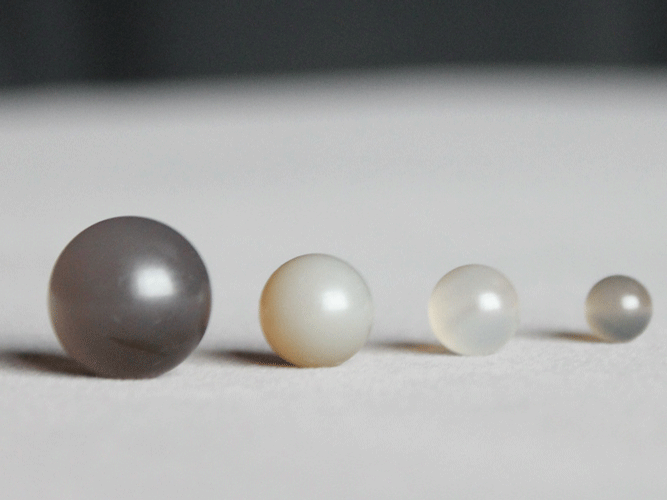
Large, dense media create strong impacts. They break coarse particles quickly. Small, light media create more contact points and more attrition. They are better for fine grinding and for materials that are already relatively fine. A good rule is to start with media that are large enough to break the largest feed particles, then switch to smaller media for the final fineness.
Density affects energy transfer. A dense ball carries more kinetic energy at the same speed. That means it can do more work per impact. But dense media also wear the drum faster and can cause more heat. Light media are gentler but may need more time. The best choice is a balance between grinding efficiency and product quality.
Media fill level
The amount of media in the drum is called the fill level. If you use too little media, you get fewer contacts and slow grinding. If you use too much, the media have less room to move, and the motion becomes crowded. The mill may also draw more power and generate more heat. A common starting point is to fill the drum about one-third to one-half full with media, but the ideal level depends on the drum size, media size, and material.
You also need space for the powder. If the drum is packed too tightly, the media cannot tumble freely. The powder may also be squeezed into dead zones where it does not get ground. Leave enough void space for the charge to move.
Media wear and replacement
All media wear over time. They get smaller, rounder, or even break. Worn media change the grinding performance. If you notice that grinding time is increasing, the product is getting coarser, or the media look visibly smaller, it may be time to add or replace media. Keep a log of media weight and size so you can track wear.
Media wear also contributes to contamination. If you are grinding a high-purity product, choose a media material that matches the product chemistry. For example, agate media are silica-based, so they are a better fit for silica-based powders than steel media would be.
Rotation Speed and Critical Speed
Speed is the most visible variable on a rotary ball mill. It is also one of the most important. The speed determines whether the media cascade, cataract, or centrifuge. Each regime gives a different grinding result.
What critical speed means
Critical speed is the speed at which the media stick to the drum wall and rotate with it instead of tumbling. At that point, the centrifugal force is strong enough to overcome gravity, so the balls no longer fall. Grinding almost stops. In practice, you want to run below critical speed, usually at a percentage of it that gives the motion you need.
If you run too slow, the media slide gently and grinding is slow. If you run too fast, the media centrifuge and you waste energy. The sweet spot is usually a range where the media are lifted and then fall in a controlled way. For coarse grinding, a higher speed with more cataracting can be helpful. For fine grinding, a lower speed with more cascading can be better.
Cascading versus cataracting
Cascading is the rolling, sliding motion. The media stay in contact with the charge and with each other. It produces attrition and is gentle on the material. Cataracting is the tumbling, flying motion. The media are thrown into the air and fall back with impact. It produces strong breaking forces.
You can often see the difference through a transparent drum or by the sound of the mill. A cascading mill has a steady, rolling rumble. A cataracting mill has a more irregular, impacting sound. If the mill is very quiet and the product is not getting finer, the speed may be too low. If the mill is very loud and the media are breaking, the speed may be too high.
Feed Material: What You Can Mill and What You Should Not
Not every material behaves the same in a rotary ball mill. Hardness, brittleness, moisture, and particle size all affect how the powder breaks and how the mill runs.
Hardness and brittleness
Hard, brittle materials break well by impact and attrition. Examples include quartz, feldspar, glass, ceramics, and many minerals. Soft, ductile materials are different. They tend to flatten, smear, or cold-weld instead of breaking. Metals, polymers, and some organic materials can be difficult to grind dry because they deform rather than fracture. In those cases, you may need cryogenic milling or a different mill type.
Hardness also affects media wear. If the feed is harder than the media, the media will wear quickly and contaminate the product. Always choose media that are harder than the feed. If the feed is very hard, use dense ceramic or steel media that can handle the load.
Feed particle size
The size of the feed going into the mill matters. If the feed is too coarse, large media are needed to break it. If the feed is already fine, small media can be used for finishing. A common approach is to crush or pre-grind the feed to a manageable size before ball milling. That reduces the load on the mill and improves efficiency.
The ratio of feed size to media size is important. If the particles are much smaller than the media, they may sit in the voids between balls and avoid impact. If the particles are too large, they may not fit between the media. Matching feed size to media size helps ensure that particles are actually caught and broken.
Moisture and stickiness
Moisture can make dry grinding difficult. Wet powder sticks to the media and the drum, forming a coating that cushions impacts. It can also cause caking and blockages. If your feed is moist, you may need to dry it first or switch to wet milling. In wet milling, the liquid is part of the process, so moisture is controlled rather than a problem.
Some materials are naturally sticky or static-prone. They may need a dispersant, a grinding aid, or a different milling environment. A small amount of additive can sometimes make a big difference in flow and grindability.
Process Variables You Can Control
Once the mill is running, you still have several levers to adjust. These variables determine the final particle size, size distribution, and product quality.
Milling time
Time is the simplest variable. Longer milling usually means finer particles, but the relationship is not linear. At first, particle size drops quickly. Later, the rate slows down, and you may reach a practical limit. Grinding for too long can also cause excessive wear, contamination, and heat. It can even cause particles to re-agglomerate in dry milling.
The right time depends on the feed, media, speed, and target size. Run a few trials and measure the particle size at intervals. You will often find a point where extra time gives little benefit. That is your practical endpoint.
Media-to-powder ratio
The ratio of media weight to powder weight is another key variable. More media means more contact points and faster grinding, but it also means less room for powder and more wear. Less media means more powder per batch, but slower grinding. A common starting ratio is around 5:1 to 10:1 media to powder by weight, but this varies widely.
If you increase the media load, you may need to reduce the powder load to keep the mill from overloading. You may also need to adjust speed to maintain good motion.
Temperature
Grinding generates heat. In a rotary ball mill, the temperature inside the drum can rise significantly, especially at high speed or with dense media. Heat can affect the material, the media, and the mill itself. Some materials degrade, oxidize, or change phase when they get hot. Others become sticky or reactive.
You can manage temperature by running slower, using less media, or adding cooling. Some mills have water jackets or air cooling. In wet milling, the liquid helps carry heat away. In dry milling, short runs with cooling pauses can help.
Atmosphere
For sensitive materials, the atmosphere inside the drum matters. Oxygen can oxidize metal powders or reactive chemicals. Moisture can cause hydrolysis or corrosion. In those cases, you can run the mill under an inert gas such as nitrogen or argon. You can also use a vacuum or a sealed glovebox. The goal is to keep the powder in a controlled environment.
Atmosphere control adds complexity and cost, but it is often necessary for advanced materials. If your product is sensitive, plan for it early rather than trying to fix it later.
Common Problems and Practical Fixes
Even a well-designed rotary ball mill can run into trouble. Here are some common issues and what you can do about them.
Grinding is too slow
If the product is not getting finer, check the basics first. Is the speed too low? Are the media too small or too light? Is the fill level too low? Is the feed too moist or too coarse? Sometimes the fix is as simple as adding more media or running longer. Other times, you need a different media material or size.
You can also check for coating. If the media and drum are coated with powder, the grinding energy is being absorbed by the coating instead of the particles. Stop the mill and inspect. If coating is heavy, try dry milling with a grinding aid, reduce the moisture, or switch to wet milling.
Contamination
Contamination comes from media wear, drum wear, and the feed itself. If you see a color change or detect unwanted elements, identify the source. Steel media in a ceramic powder will leave iron. A steel drum will wear and add iron. A ceramic-lined drum with ceramic media will reduce contamination.
Choose media and drum materials that match your product chemistry. For high-purity work, use agate, zirconia, or high-purity alumina. You can learn more about clean grinding options here: agate ball media.
Overheating
If the mill gets too hot, reduce speed, reduce media load, or shorten the run. Check that the drum is not overfilled. Ensure that the cooling system, if any, is working. In wet milling, check the liquid level and circulation. In dry milling, consider running in intervals with cooling breaks.
Overheating can also cause the media to wear faster and the product to degrade. If you cannot control the temperature, you may need a different mill design or a different grinding strategy.
Clogging and discharge issues
Fine powders can clog screens, valves, and discharge ports. In dry milling, static and moisture can make powder stick. In wet milling, thick slurry can be difficult to pump. Keep the discharge path clear and use the right equipment for the material. If clogging is frequent, consider a different discharge design or a different milling mode.
Comparing Rotary Ball Mills with Other Mills
A rotary ball mill is not the only way to grind powder. Knowing how it compares with other mills helps you choose the right tool.
Planetary ball mill
A planetary ball mill uses rotating jars that also revolve around a central axis. The motion is much more energetic, with high impact and shear. Planetary mills can reach very fine sizes quickly and are common in laboratories. They are excellent for small samples and advanced materials. However, they are usually batch machines with limited capacity, and they can be more expensive to scale up. A rotary ball mill is better for larger batches and continuous production.
Vibratory mill
A vibratory mill shakes a tube or drum at high frequency. The media inside vibrate and impact the powder. Vibratory mills are compact and can grind quickly, but they are also noisy and have limited volume. They are often used for small batches and specialized applications. Rotary mills are gentler and better for large-scale grinding.
Attritor mill
An attritor uses a vertical vessel with a rotating shaft and arms. The arms stir the media and create intense shear. Attritors are good for fine grinding and can handle high solids loading. They are often used in wet grinding. A rotary ball mill is simpler and has fewer moving parts inside the drum, which can mean lower maintenance in some applications.
Each mill type has strengths. The best choice depends on your capacity, target size, material, and budget.
When a Rotary Ball Mill Is the Right Choice
A rotary ball mill is a strong candidate when you need medium to fine grinding, large batch capacity, and reliable long-run operation. It is also a good choice when you want a simple process with few adjustments and easy maintenance. If your material is brittle and not too heat-sensitive, a rotary mill can run for hours with little attention.
It is less ideal when you need ultra-fine nanoparticles in minutes, when your material is soft and ductile, or when you need very tight particle size distribution in a single pass. In those cases, a planetary mill, vibratory mill, or attritor may be better. But for many everyday grinding jobs, the rotary ball mill is the practical answer.
It is also a good choice for mixing and blending. The tumbling action can homogenize powders, coat particles, and break up agglomerates. If you need both grinding and blending, a rotary mill can do both in one step.
Safety and Maintenance
Rotary ball mills are generally safe when operated correctly, but they involve rotating equipment, heavy media, and fine dust. Take the basics seriously.
Safety basics
Always lock out the mill before opening the drum or reaching inside. The media and powder can be heavy, and the drum can still be under load. Wear proper personal protective equipment, including safety glasses, gloves, and a dust mask if needed. If you are working with reactive or toxic materials, use appropriate containment and ventilation.
Do not overload the mill. Too much media or powder can cause excessive vibration, motor strain, and even structural damage. Follow the manufacturer's guidelines for maximum load and speed. Keep the area around the mill clean and free of obstacles.
Maintenance schedule
Check the drum, liners, gaskets, and media regularly. Look for cracks, excessive wear, and loose bolts. Replace worn parts before they fail. Lubricate bearings and drive components according to the manual. Monitor motor current and temperature. A sudden change in power draw or sound can indicate a problem.
Keep records of operating hours, media additions, and maintenance actions. This helps you predict wear and plan replacements. It also helps you troubleshoot if grinding performance changes.
Practical Tips for Better Rotary Ball Milling
Here are some field-tested habits that can improve your results. They are simple, but they make a difference.
- Start with a small trial. Change one variable at a time so you know what worked.
- Measure particle size at intervals. Do not rely on time alone.
- Keep the media clean. Coated media grind poorly.
- Match media size to feed size. Too large or too small both waste energy.
- Use the right fill level. More media is not always better.
- Watch the sound. A healthy mill has a steady, consistent tone.
- Record everything. Speed, time, media, load, and results.
- Choose media that match your contamination limits. Clean product starts with clean tools.
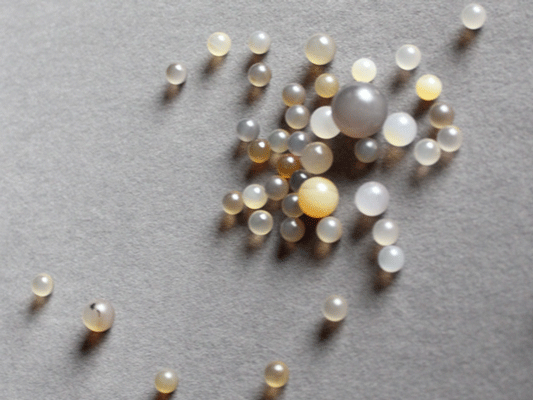
If you are grinding a high-value material, do not cut corners on media quality. A small amount of contamination can ruin an entire batch. Agate media are a good example of a clean, chemically stable option. You can explore agate ball media for applications where metal contamination is a concern.
Questions People Ask About Rotary Ball Mills
How long should I mill my powder?
There is no single answer. It depends on the feed, media, speed, and target size. Start with a short run and measure. Increase time gradually until the particle size stops improving. In many cases, most of the size reduction happens in the first few hours, and further milling gives diminishing returns.
Can I use a rotary ball mill for wet and dry grinding?
Yes. Many mills can run both ways, but you may need different liners, seals, and discharge systems. Wet grinding usually needs a slurry pump and a way to separate the liquid. Dry grinding needs dust control and a good seal. Check the mill design before switching modes.
What media should I use for fine grinding?
Small, dense, hard media are usually best for fine grinding. Zirconia, alumina, and agate are common choices. If contamination is a concern, choose a media material that matches your product chemistry. Agate is a good option for many laboratory and clean applications.
Why is my mill not grinding?
Check the speed. If it is too low, the media may just be sliding. If it is too high, the media may be centrifuging. Check the media load and size. Check the feed moisture and particle size. Also look for coating on the media and drum. Often, the problem is one of these simple factors.
How do I reduce contamination?
Use wear-resistant media and liners that match your product. Avoid steel if you need a white or high-purity powder. Use agate, zirconia, or high-purity ceramic media. Keep the mill clean and replace worn parts. Monitor the product for unexpected elements.
Putting It All Together
A rotary ball mill is a straightforward machine with a lot of depth. The drum turns, the media tumble, and the powder breaks down through impact, attrition, and friction. The results depend on the choices you make: media material, media size, fill level, rotation speed, milling time, and wet or dry operation. Get those right, and the mill becomes a reliable, repeatable tool. Get them wrong, and you get slow grinding, contamination, or excessive wear.
The best way to learn is to run trials. Start with a reasonable setup, change one variable at a time, and measure the result. Keep notes. Over time, you will develop a feel for what your material needs. And if you are working with sensitive powders, remember that clean media matter. Agate balls are one option worth considering when you want to avoid metal contamination and keep the process simple. With a little care, a rotary ball mill can serve you for years.
Related Products
Get In Touch
Our professional team will reply to you within one business day. Please feel free to contact us!