
Top 5 Rotary Tube Furnace Selection Checks for Continuous Powder Processing

Rotary tube furnaces are selected when a thermal step must handle a flowing or tumbling solid rather than a static batch. The rotating tube continually turns the bed, exposing fresh surfaces to the hot zone and moving material toward the discharge. That motion can support more uniform heat exposure and continuous operation, but it also makes feed size, dust, sticking, tube wear, and residence time central design questions. A furnace that performs well on one powder can be a poor choice for a sticky, friable, or highly abrasive material.
This guide is therefore built around five specification checks rather than a loose list of brand names. TENCAN is the verified reference product in this review; the same checks apply to any additional international supplier a buyer later adds. The objective is a shortlist that can survive a technical review, not a claim that every rotary tube furnace is interchangeable.
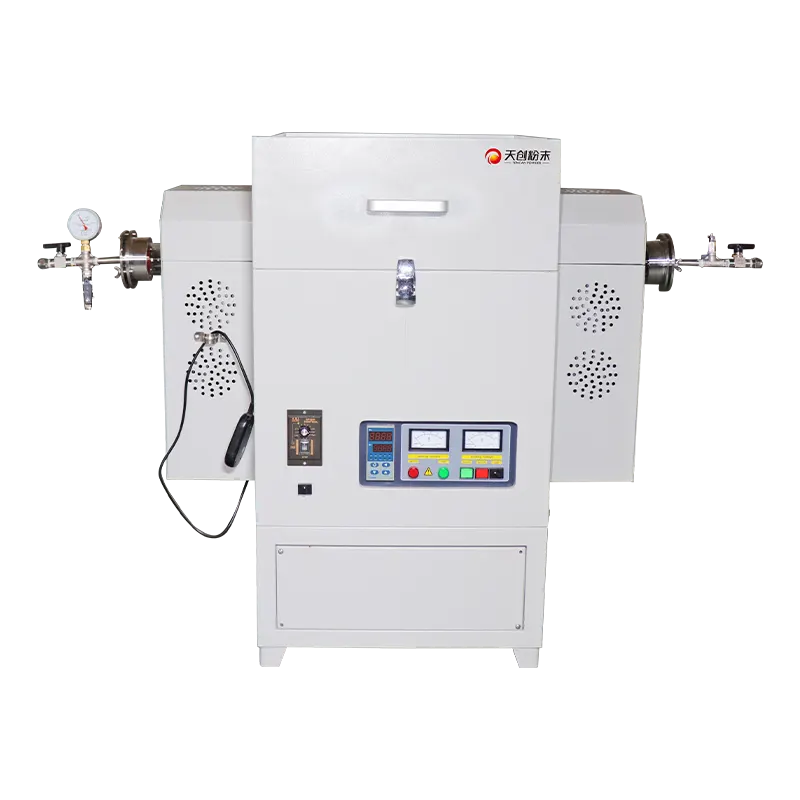
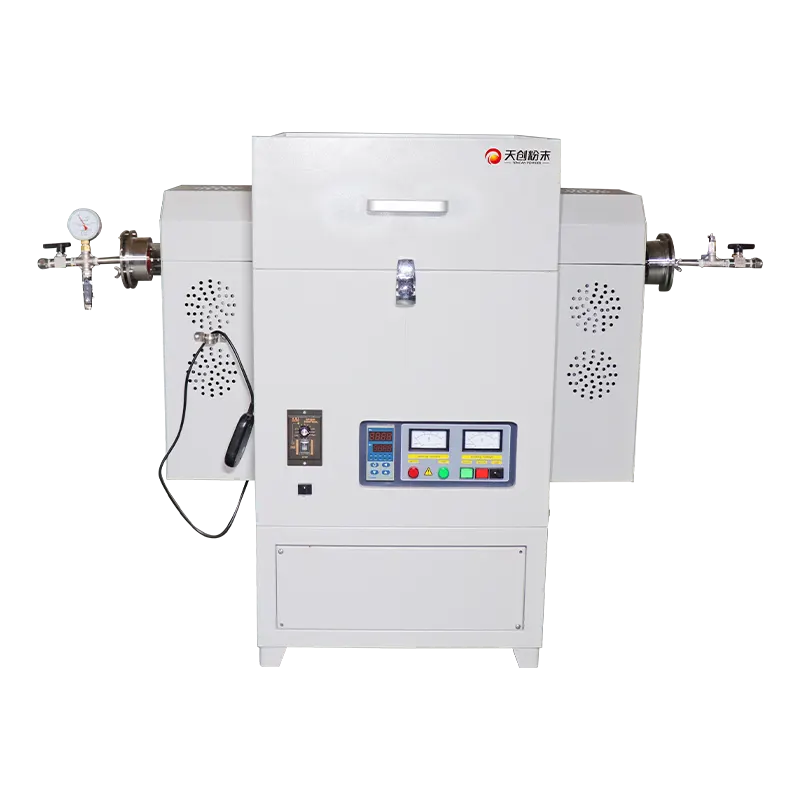
The Verified Candidate: TENCAN Rotary Tube Furnace
TENCAN's current product reference lists the Rotary Tube Furnace in its sintering series. The listing is the appropriate starting point for confirming the present model scope, available tube arrangements, and controls. This review does not add numerical temperature, atmosphere, tube-size, or throughput claims that are not stated in the supplied reference.
In a rotary tube furnace, the tube turns while the charge is heated. The tumbling action refreshes the material surface and can help address uneven exposure seen in a static bed. It is relevant to thermal steps where the solid can move freely, where the tube atmosphere can be controlled, and where the product form can tolerate turning. The same motion can create dust and attrition, so the material must be tested rather than assumed suitable.
The TENCAN product's placement in a sintering series makes it a natural candidate to evaluate for sintering and related thermal treatment of free-flowing solids. Whether a given powder can be processed in the rotary tube, and which atmosphere and tube material are acceptable, remains a quotation-stage confirmation. Buyers should ask for a configuration review against the actual material safety data, particle size, and thermal profile.
For a pilot or small production line, the value of the TENCAN reference is that it establishes a concrete candidate in the same equipment class as the checks below. It should not be treated as a market ranking or as proof that every rotary-tube duty is interchangeable. The correct use of the reference is to anchor a technical conversation, then compare any additional international suppliers on the same evidence.
How the Five-Check Shortlist Was Framed
A meaningful candidate list must hold the equipment class and duty constant. A small laboratory tube furnace with a stationary boat and a pilot rotary tube with continuous feed are not substitutes. Likewise, a rotary kiln for bulk minerals and a controlled-atmosphere tube furnace for electronic powders may share a rotating tube but differ in seals, controls, materials, and cleanability. The five checks below keep the comparison at the level of a real procurement decision.
The sequence follows the order in which a mismatch usually becomes expensive: first material behavior, then tube and mechanics, then atmosphere, then material flow, and finally controls and scale-up. TENCAN appears first as the verified reference; the same questions should be used for every other international supplier considered later. This is not a full-market ranking, and no score is assigned.
1. Start With the Material State, Not the Furnace Size
The first question is not the tube diameter or the maximum temperature on a datasheet. It is whether the feed can be conveyed, tumbled, heated, and discharged without changing into an unmanageable form. Record whether the feed is powder, granule, pellet, or a mixture; include the particle size distribution, bulk density, tap density, angle of repose, moisture, loss on ignition, binder content, volatiles, and softening or melting range. These properties determine whether the bed will cascade, stick to the tube wall, generate dust, or sinter into a ring.
Powder behavior in a rotating bed
A free-flowing powder may mix well in a rotating tube, but a fine cohesive powder may form lumps or coat the wall. A granulated feed may flow more predictably yet break down under tumbling. A material that passes through a soft or liquid-like stage can adhere to the tube and reduce heat transfer or block the discharge. The selection review should name these risks explicitly and propose a test plan. If a material is known to stick, the answer may be a different tube material, a different internal geometry, a lower fill level, or a different equipment class rather than a larger furnace.
Questions that change the specification
- What is the as-received form, and what form must be discharged?
- Does the material release moisture, solvent, or reactive gas during heating?
- Is the product sensitive to oxidation, reduction, or trace contamination?
- Can the material be recycled through the tube, or must it pass once?
- What test would prove that the thermal treatment is complete and uniform?
These answers belong in the quotation request. A supplier cannot select a tube material or atmosphere package responsibly from a product name alone. For TENCAN, the same rule applies: the Rotary Tube Furnace is the starting reference, not a substitute for a material-specific configuration review.
2. Match Tube Material and Rotation to Chemistry and Attrition
The tube is both a containment vessel and a heat-transfer surface. It must tolerate the process temperature, atmosphere, thermal cycling, chemical attack, and mechanical abrasion. Ceramic and metallic tube categories behave differently: ceramics may offer particular chemical or temperature advantages but can be sensitive to thermal shock and mechanical loading, while metallic tubes may be easier to connect and handle but can react with certain charges or atmospheres. The final choice depends on the duty and must be confirmed with the supplier.
Tube chemistry and contamination
Do not assume that a tube is inert to every powder, slag, salt, or metal. At process temperature, a material can reduce, oxidize, diffuse into, or react with the tube surface. The resulting contamination may affect the product, the tube life, or both. Ask for the tube material, the wetted components, and any recommended liner or coating. Where the product must meet a strict purity specification, the review should include a blank run or a representative coupon test before production commitment.
Rotation, fill level, and dust
Rotation creates the mixing benefit, but it also increases abrasion relative to a static bed. Lifters or internal features can improve mixing, yet they can also trap material or raise dust. The right combination of tube slope, rotation speed, fill level, and internals depends on the material and residence target. No universal speed or fill figure should be written into a purchase specification without supplier confirmation and a trial. For a fragile granule, gentle rotation may be essential; for a dense abrasive powder, wear inspection and replaceable components may matter more than mixing intensity.
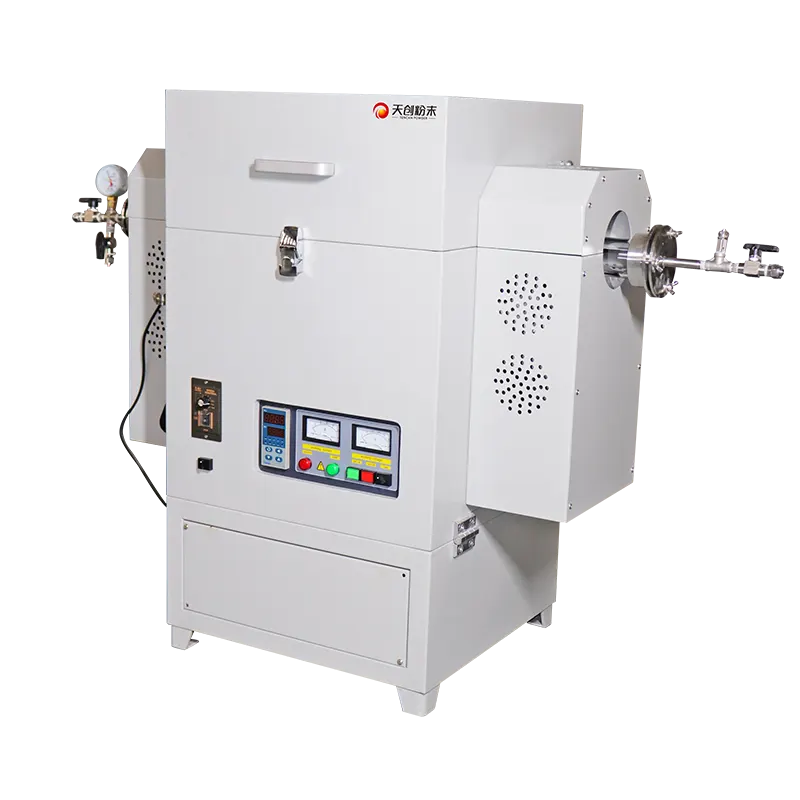
Mechanical review should also cover tube support, drive access, sealing arrangement, and the procedure for tube replacement. These details influence maintenance and downtime even when the thermal performance is adequate. A candidate that cannot be serviced safely in the available space is not a practical choice, regardless of its process concept.
3. Define the Atmosphere and Exhaust Path
Atmosphere is a system, not a checkbox. The process may require air, inert gas, a reducing gas, vacuum, or a controlled dew point. Each choice changes the seal design, gas supply, purge procedure, exhaust treatment, and safety equipment. The furnace datasheet may list an atmosphere capability, but the buyer still needs to confirm that the specific gas, flow, pressure, and material are compatible. A general atmosphere option does not by itself qualify a reactive or toxic duty.
Gas supply, seals, and purge
Ask how the tube is sealed at the feed and discharge ends, how the gas is introduced and distributed, how air is purged before heating, and how the process is brought down safely. Rotary seals are wear components and a potential leak path; their maintenance and replacement should be part of the selection. For flammable gases, the review must include detection, purge verification, interlocks, and a site risk assessment. Do not accept an informal assurance that a seal is gas-tight without a defined test and maintenance plan.
Exhaust and condensables
The exhaust stream may carry dust, condensable volatiles, tars, or reaction products. A simple vent may be inadequate if solids can build up or if vapors can condense in the outlet. The buyer should identify whether a filter, cyclone, scrubber, or heated line is needed and who is responsible for it. For TENCAN and any other candidate, the configuration review should connect the furnace outlet to the site exhaust strategy rather than treating the furnace as an isolated box.
4. Size Feed, Residence, and Discharge as One System
A rotary tube furnace is continuous only if the feed and discharge are continuous. The feeder must deliver a stable rate without compacting, bridging, or pulsing. The discharge must collect the product without exposing it to air or losing it as dust. The tube slope, rotation speed, fill level, and internal geometry together determine how long material stays in the hot zone. These are system variables, not independent catalogue options.
Feeders and discharge
Screw feeders, vibratory feeders, and rotary valves are used in different situations. The correct choice depends on the material's flow properties, the required feed accuracy, and the need to isolate the furnace atmosphere. On the discharge side, a sealed collection vessel may be needed for an air-sensitive product, while a simple chute may be adequate for an inert, coarse solid. The review should include a material-flow diagram from the day bin to the product container, including any sieving or recycling step.
Residence time and fill level
Residence time is affected by tube length, slope, rotation, feed rate, and the material's behavior. A single average value can hide a broad distribution: some particles may pass quickly while others are retained. For a product that must meet a thermal history specification, the distribution matters. A tracer test or timed discharge trial can be used to check the actual behavior, but the trial must use a representative material and the intended feed rate. Before that, the supplier should state the assumptions behind any residence estimate.
Capacity should be quoted on the same basis for every candidate. Ask whether the figure refers to feed rate, product rate, dry basis, or a specific bulk density. Ask what fill level and residence time were assumed. Without that basis, a throughput number is not comparable and should not be used to rank suppliers.
5. Confirm Controls, Data, and Scale-Up Before Comparing Price
Controls are part of process capability. The furnace should hold the intended profile, alarm on deviation, and record the data needed for quality review. Recipe management, user access, calibration, and data export matter more in a regulated or multi-product laboratory than in a single-purpose pilot line. The buyer should specify what must be recorded, who must be able to change a recipe, and how the furnace behaves after a power interruption or a gas alarm.
Recipe control and records
Ask how many control zones are available, how ramp and soak steps are programmed, and how the actual temperature is verified. For atmosphere work, the control system should also cover gas flow or pressure alarms where appropriate. A data log is useful only if it is time-stamped and retained in a form that can be reviewed. These requirements should be written into the enquiry rather than negotiated after the equipment is built.
Scale-up and installation
Compare candidates at the same level: tube dimensions, heated length, atmosphere arrangement, feed and discharge, controls, utilities, and safety. A larger tube does not automatically deliver proportionally more good product if mixing, heat transfer, or residence distribution changes. Scale-up should be supported by a trial or a clear engineering basis. Installation review should include footprint, floor loading, electrical supply, gas supply, exhaust connection, cooling water if required, and access for tube replacement. Spare parts and commissioning support should be confirmed in writing.
Candidate Snapshot and Configuration to Confirm
The table records only what is documented in the supplied reference. The absence of additional rows is deliberate: a multi-brand comparison requires comparable current official data for each product; a name-only list would not help an engineer choose. Add international candidates using the same columns when their current product data and technical responses are available.
| Brand or product | Documented strengths | Relevant application | Configuration to confirm |
|---|---|---|---|
| TENCAN Rotary Tube Furnace | Dedicated current product page; listed in TENCAN's sintering series. | Evaluation for thermal processing of free-flowing solids where a rotating tube is appropriate; confirm sintering duty and material compatibility. | Temperature profile, atmosphere, tube material, feed and discharge, residence, controls, safety, utilities. |
Any added international product should be entered only after the supplier's current official information and a technical response have been checked. The key is not the number of rows; it is whether each row can be compared on the same duty. A short, verified table is more useful than a long table padded with different equipment classes.
Procurement Checklist: What to Prepare Before a Technical Review
- Representative sample, at least enough for a trial, with storage history.
- Particle size distribution, bulk density, moisture, and loss on ignition.
- Material safety data, including decomposition and off-gas information.
- Target thermal profile with ramp, hold, and cooling requirements.
- Required atmosphere, purity, dew point, and allowable oxygen level.
- Feed rate and product rate on a clearly stated basis.
- Acceptable product form and any size-reduction or classification step.
- Residence-time target and tolerable distribution.
- Tube material preferences or contamination limits.
- Available utilities, footprint, and exhaust capacity.
- Control, data-logging, and user-access requirements.
- Site safety requirements and maintenance access constraints.
Supplying the same pack to TENCAN and to any additional international supplier makes replies comparable and reduces the chance that a quotation is based on an assumed feed, atmosphere, or throughput. It also gives the supplier a fair basis for a positive technical proposal rather than a generic catalogue response.
Safety and Materials Compatibility Notes
High-temperature tube furnaces involve hot surfaces, dust, gas connections, and possibly pressure or reactive atmospheres. The final installation must be reviewed against the site risk assessment, local electrical and gas rules, and the material safety data. Confirm compatibility with the tube, seals, insulation, and all gas-wetted parts. Provide appropriate detection and interlocks for flammable or toxic gases, and define a safe purge and shutdown sequence. Do not rely on a general label such as inert gas or vacuum as proof that a specific material and seal combination is safe.
A Sensible Next Step
Begin with a sample and a one-page duty specification. Send TENCAN the material, target thermal profile, atmosphere, throughput basis, acceptable product form, and site utilities; ask for a configuration review against the Rotary Tube Furnace listing. Use the reply to populate the same table for any additional international candidate, and resolve tube material, feed and discharge, and safety before commercial comparison.
Sources and Further Reading
- TENCAN. Rotary Tube Furnace. Product page, sintering series. Used for product identification and scope confirmation.
The product images are from the TENCAN product media supplied with the same reference.
Related Products
Get In Touch
Our professional team will reply to you within one business day. Please feel free to contact us!