
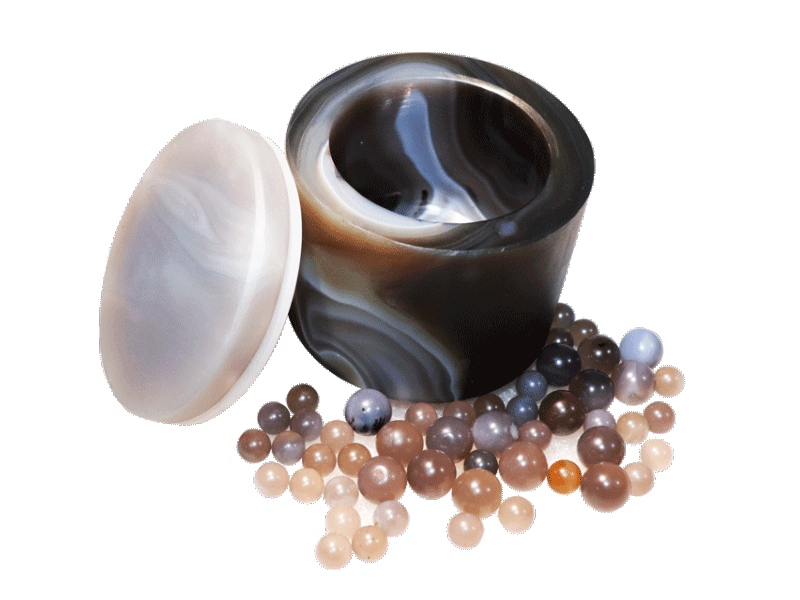
Agate Planetary Mill Jar: A Practical Guide to Clean, Low-Contamination Milling

An agate planetary mill jar looks simple: a small, smooth bowl with a lid. In a planetary mill, though, it is where almost everything important happens. The jar spins around the sun wheel while turning in the opposite direction, and that double motion sends grinding balls tumbling, sliding and impacting against your sample. Change the jar material, volume or internal finish, and the result can shift from a clean, repeatable powder to a contaminated mess. That is why it is worth choosing the jar as carefully as you choose the mill. If you are looking at the agate planetary mill jar, this guide walks through what it is good for, how to run it sensibly and how to keep it working.
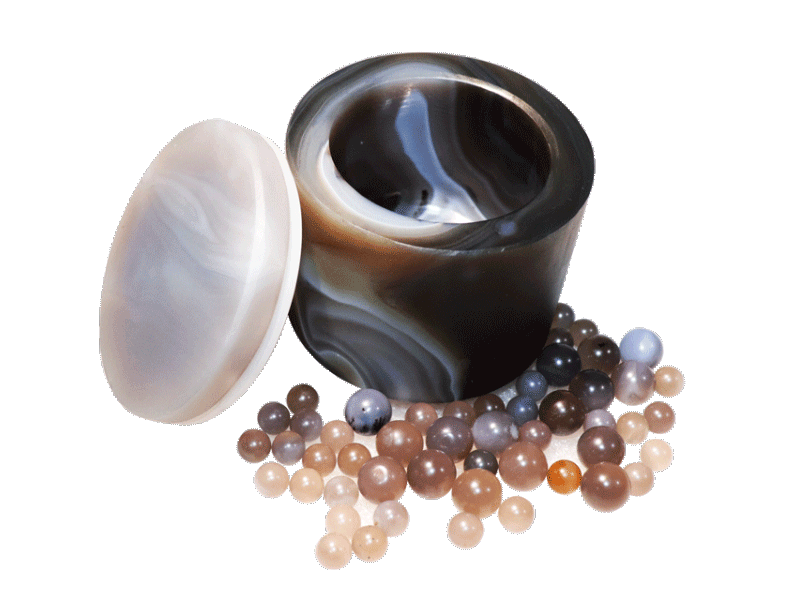
What an Agate Planetary Mill Jar Actually Does
Planetary mills get their name from the way the jars move. The main disc turns one way; each jar turns the other way on its own axis. The result is a fast, repeating cycle of acceleration and deceleration inside the jar. Grinding balls are thrown against the wall, roll back through the sample and collide with each other. The powder is caught in all that motion and is broken down by impact, friction and shear.
A jar is not a passive bucket. Its internal shape, volume and surface condition decide how the balls move. A smooth, well-matched jar lets the charge circulate; a badly loaded or badly matched jar lets the balls slide in a lump. The lid is just as important. It has to seal well enough to keep the sample inside and the atmosphere out, but it also has to come off without a fight at the end of the run.
The motion in plain language
The easiest picture is a set of balls inside a spinning drum that is also being carried around a circle. The balls do not simply sit in the bottom. They are lifted, thrown and rolled back into the sample, over and over. That is why a planetary mill can grind so quickly, and why the load has to be right. Too little movement and you wait forever; too much and you generate heat, wear and noise.
Why agate gets picked
Agate is a naturally hard, dense form of chalcedony. In a milling jar, its practical appeal is low contamination: it does not bring the iron or heavy metals that a steel jar can introduce. That matters in trace analysis, precious samples and any method where a small shift in chemistry changes the answer. Agate is also brittle. It does not like impact, thermal shock or being dropped. Treat it as a precision material, not a hammer.
Where Agate Jars Make Sense and Where They Do Not
An agate jar is a good match when the job values cleanliness more than brute force.
- Trace and ultra-trace work where metal contamination is a real risk.
- Brittle or medium-hard samples such as minerals, glass, ceramics, pigments and catalysts.
- Small batches, method development and pilot runs where a few grams matter.
- Dry or wet milling with a liquid that is compatible with silica-based agate.
Think twice when the sample is tough, fibrous or elastic. Those materials tend to smear, bounce or clog instead of fracturing, and agate may struggle to give you the fine, narrow particle size distribution you want. The same goes for large production batches. A small jar is built for careful work, not bulk output, and pushing it beyond its intended load is a quick way to shorten its life.
- High-impact jobs that need heavy media and aggressive conditions.
- Hydrofluoric acid or other chemistries that attack silica. That is a compatibility question, not a cleaning problem.
- Any run where the jar has to absorb abuse, heat shock or constant dropping.
None of this makes agate best. It makes it suitable for a particular job. If your priority is impact energy, a different jar material may be the smarter choice. If your priority is keeping the sample clean and the method repeatable, agate deserves a close look.
How to Read the Product Page Without Guessing
The page for the agate planetary mill jar is the right place to confirm the details that matter before you order. Start with nominal volume and usable volume, because they are not the same thing. The number printed in a product name is a size label; the useful batch size depends on the ball charge, the sample and the room the charge needs to move.
Then check the outside dimensions and clamp compatibility. A jar that does not fit the mill clamp is an expensive ornament. Look at the lid and gasket design as well. A good seal keeps fine powder inside, but it should still be practical to open, clean and reassemble. If the jar uses a separate clamping ring or sealing ring, find out whether spares are available.
Grinding media are often a separate choice, so do not assume the jar arrives ready to run with the exact balls you need. Confirm the recommended media material, size range and whether the supplier offers agate balls to match. Finally, check the finish and the stated material grade. Agate is natural, so color and pattern vary; that is normal. What you care about is a sound, chip-free milling surface and a lid that fits properly.
Exact numbers belong on the product page or in the current specification sheet. Do not guess a volume, a diameter or a compatible mill model from a photograph. A five-minute check before ordering saves a week of frustration later.
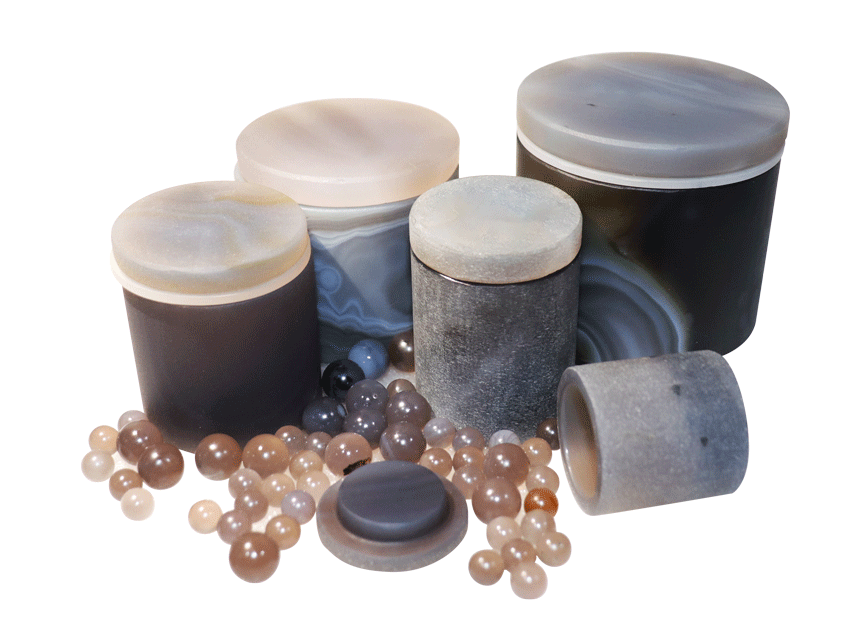
Matching Jar Size, Ball Charge and Sample Load
A jar can be the right material and still give poor results if the load is wrong. Milling is a system: jar volume, ball size, ball count, sample mass, liquid and mill speed all pull on each other. Change one and the others may need a small adjustment.
Fill level: leave room for motion
Do not fill the jar to the brim. The media need space to lift, fall and roll; if the jar is packed, the charge simply slides. Leave a working gap, then follow the jar maker's recommendation for your batch. As a habit, aim for a charge that moves freely when the mill is running, not one that sounds like a bag of stones being dragged around.
Ball size and count
Larger balls deliver bigger impacts, which helps break coarse pieces. Smaller balls create more contact points and usually give a finer finish. A mixed charge can bridge the two, but keep the sizes sensible and use media that is compatible with the jar and sample. Hardness matters too: very hard balls in a brittle agate jar can shorten the jar's life if the load is too aggressive.
Sample load
Jar volume is not a license to fill it with sample. The real batch size depends on the ball-to-powder ratio, the target fineness and the room the charge needs to move. A small batch in a large jar can waste energy; a large batch in a small jar can stall the motion. Start smaller than you think you need, then scale up once the recipe is repeatable.
Running the Jar Without Asking for Trouble
Start at a moderate speed and let the sound tell you what is happening. A healthy run has a steady, busy rhythm. If you hear repeated hard slaps, the media may be too large or the jar too lightly loaded. If you hear nothing much at all, the charge may be sliding instead of tumbling. Every mill has its own limits, so use the mill manual as the final word on speed and run time.
Heat is the quiet enemy of agate. The jar is brittle, and repeated heating and cooling adds stress. Long runs can warm the jar more than you expect, especially with high energy and a tight ball charge. Run in intervals if the mill allows it, and let the jar settle between cycles. Do not take a hot jar straight to a cold rinse. That is a classic way to turn a small thermal difference into a crack.
Dry versus wet milling
Dry milling is convenient, but fine powder can cake on the walls and stay there. Wet milling can improve dispersion and reduce dust, but the liquid has to be compatible with the sample, the media and the jar. More liquid is not automatically better: too much cushions the balls and slows the grind. Use enough to keep the slurry mobile, then adjust based on what you see. With silica-based agate, check chemical compatibility before you try an unfamiliar solvent, especially anything aggressive.
Cleaning and Care That Pays You Back
Clean the jar soon after the run, before the sample has a chance to dry into a hard film. A soft brush, warm water and a mild detergent are usually enough. Avoid abrasive scouring pads, sharp scrapers and strong cleaners that could dull the surface or attack the lid seal. Rinse well and dry thoroughly, including the lid and gasket area.
Never use thermal shock as a shortcut. A hot jar goes on a room-temperature bench or a drying rack, not into cold water. When you handle it, remember that agate chips rather than bends. A knock against a steel sink can create a flaw that only shows up later, in the middle of a valuable run.
Check the lid gasket for cuts, flattening and embedded powder. A tired gasket is a common cause of leaks and hard-to-open lids. Replace it when it stops sealing cleanly. Store the jar with the lid off or loosely fitted so air can move and odors do not build up. Before each use, look inside for chips, cracks or a polished patch that has turned rough. If the milling surface is damaged, stop using the jar for critical work.
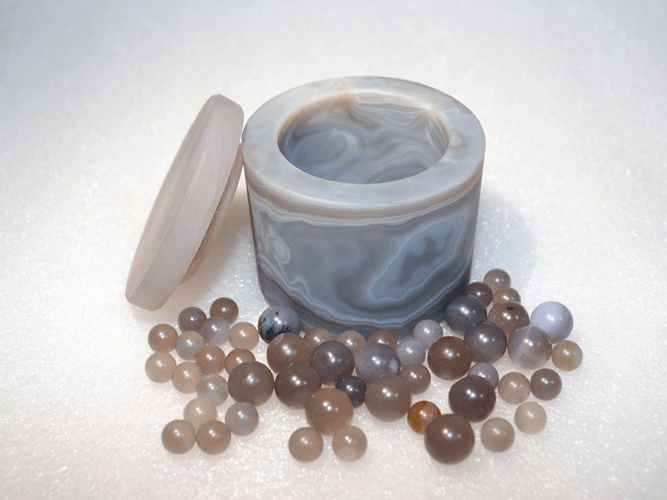
Troubleshooting the Small Annoyances
Powder caked on the walls
This usually means the charge is too sticky, too wet or too lightly loaded. Reduce the liquid, add a little more media or shorten the run and check the powder before it bakes onto the surface. A small amount of caking is normal; a thick ring that never mixes is not.
The lid is hard to open
Fine powder can work into the seal, and a little suction can do the rest. Clean the rim and gasket, dry both properly and avoid overtightening. If the lid still fights you, inspect the gasket before you force anything. Agate does not appreciate brute force.
The sample looks contaminated
Look at the whole path, not just the jar. Dirty media, a worn gasket, a reused brush or an unclean lid can all add contamination. Start with a blank run if the result matters. If the jar surface is chipped or etched, retire it from trace work.
The jar gets hot or noisy
Reduce the load, shorten the run or lower the speed. Check that the jar is seated correctly and that the ball charge is not oversized for the jar. Noise and heat are useful warnings. Ignoring them is how small problems become cracked jars.
A Short Buying Checklist
Before you order, write down the mill model, the clamp type, the largest jar your mill allows and the sample mass you actually need to process. Then confirm the jar volume, outside dimensions, lid style, gasket availability and recommended media. If you plan to mill wet, check chemical compatibility first. If you plan to mill very hard material, ask whether agate is truly the right grade for the job.
When you are ready to compare the agate planetary mill jar, use the current product page rather than an old catalog page. Specifications can change, and the clamp that fits one mill may not fit another. A few precise questions now are better than a jar that sits on the shelf looking expensive.
Questions We Hear Most
Is agate better than stainless steel?
It is better for low metallic contamination, especially in trace work. It is not better for every job. Stainless steel can take more impact and is often tougher, but it can release iron and other metals into the sample. Match the material to the analysis, not to a slogan.
Can I use the jar for wet milling?
Often yes, provided the liquid is compatible with agate, the sample and the lid seal. Check before you commit. Silica-based agate is not the right choice for hydrofluoric acid or other chemistries that attack silica.
How full should the jar be?
Full enough to work, empty enough to move. The media need space to tumble, and the sample needs room to be caught in that motion. Follow the maker's recommendation, then adjust based on sound, heat and the condition of the powder.
How often should I replace it?
Replace it when the milling surface is chipped, cracked, etched or visibly worn, or when contamination appears from nowhere. There is no calendar answer. Inspection before each critical run is the practical rule.
A good jar disappears into the background: it seals, it spins, it gives you a clean powder and it comes back for the next run. Treat an agate jar with that same quiet respect, and it will reward you with repeatable results for a long time.
Related Products
Get In Touch
Our professional team will reply to you within one business day. Please feel free to contact us!