
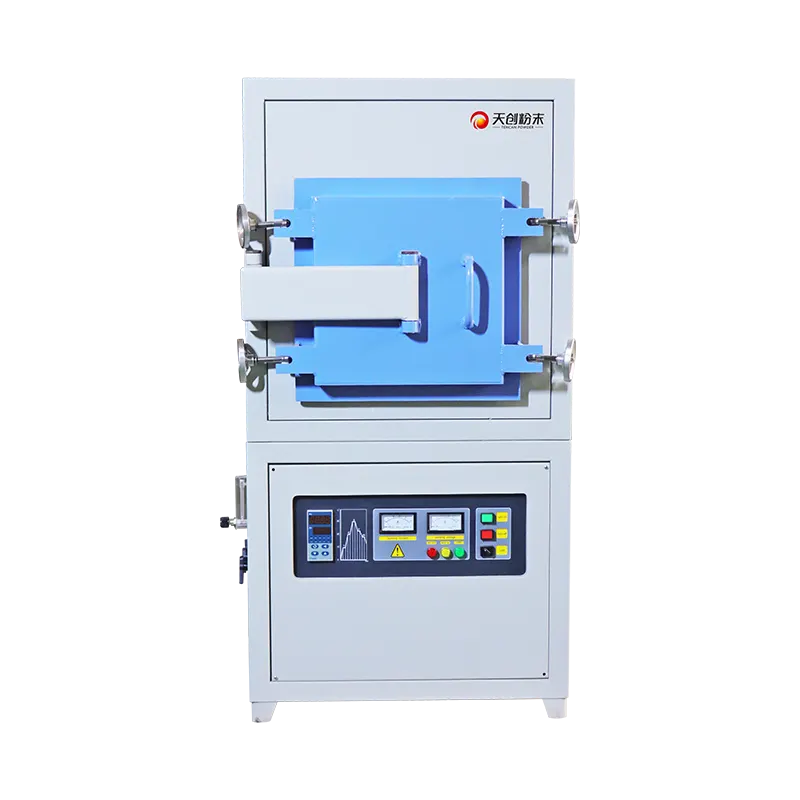
Box-Type Atmosphere Furnace: A Practical Guide for Controlled Powder Sintering

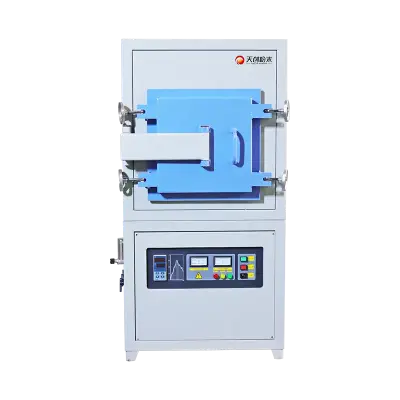
Powder processing has a way of making simple questions complicated. You choose a powder, press it into a shape, then heat it until the particles bond. That is sintering in plain language: a heat-driven conversation between particles that turns a fragile green compact into something useful. But the moment you need a controlled atmosphere, the furnace stops being a hot box and becomes part of the recipe. That is where a box-type atmosphere furnace earns its place. TENCAN's Box-Type Atmosphere Furnace is built around a straightforward idea: give the powder a clean, stable chamber, control the gas, control the heat, and let the material do its job. If you want to see the product behind this guide, start with the Box-Type Atmosphere Furnace page.
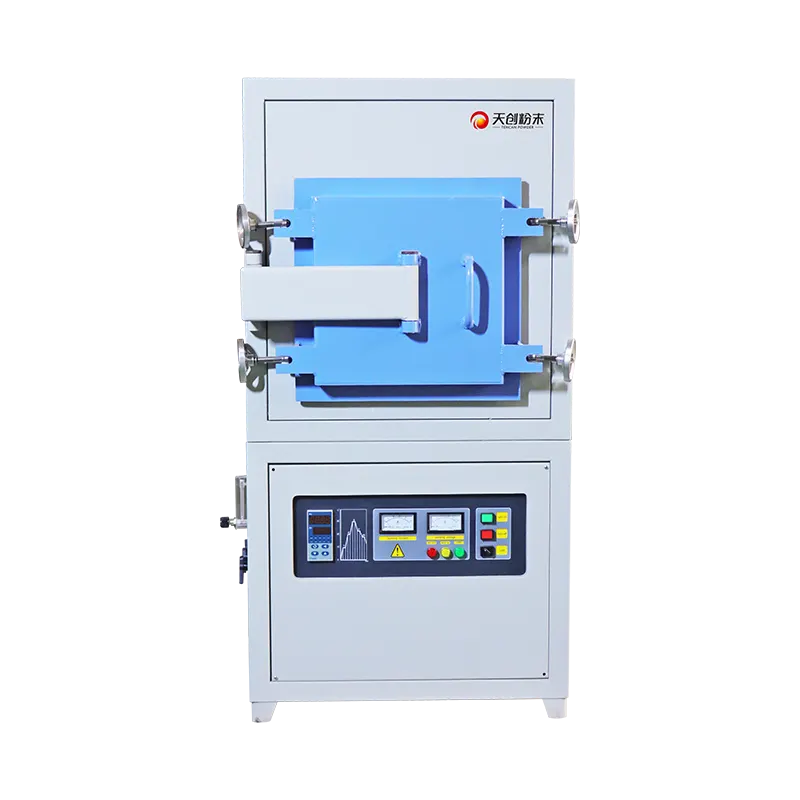
What a Box-Type Atmosphere Furnace Actually Does
The name is refreshingly honest. Box-type refers to the working chamber: usually a rectangular space that makes it easy to load parts, trays, boats, or crucibles. Atmosphere refers to the gas around the load. Furnace refers to the heat. Put those three ideas together and you have a batch furnace designed to separate your powder part from the outside air while you run a thermal cycle. That separation matters because many powders are sensitive to oxygen, moisture, or both. A clean atmosphere is not a luxury; it is part of the process window.
The box chamber and why shape matters
A rectangular chamber is practical. It accepts flat parts, stacked trays, and fixtures without wasting much space. It also gives gas a path to move around the load. But a box is not automatically uniform. Corners can become dead spots. Tall stacks can shield the middle. A tray that is too wide can choke the gas flow. When we plan a load, we think about the part, the fixture, and the gas path as one system. If the gas cannot reach a surface, that surface is in a different environment from the one on your recipe sheet.
Atmosphere is the second recipe
Heat gets the attention, but atmosphere often decides the result. In a controlled-atmosphere furnace, you first remove the unwanted gas, then introduce the gas you want. That usually means purging the chamber, checking for leaks, and letting the gas stabilize before the load reaches the sensitive part of the cycle. Oxygen and moisture are common troublemakers: they can oxidize metal powders, change the surface chemistry of ceramics, or leave defects that only show up after cooling. The exact gas depends on the material, but the principle is constant: what surrounds the part is as important as how hot it gets.
Heat, gas, and contamination are one system
It is tempting to tune temperature and atmosphere separately. In practice, they interact. A leak that is harmless at low temperature can become a problem during a long soak. A load that releases binder or moisture can swamp a small gas flow. A cold zone can condense material that later drops onto a part. Good furnace operation is less about one magic setpoint and more about watching the whole chamber. When something goes wrong, the answer is often a relationship between load, gas, and heat rather than a single failed component.
Where a Box-Type Atmosphere Furnace Fits in Powder Processing
Box-type atmosphere furnaces are batch tools. They suit work where you need a controlled environment, a repeatable thermal profile, and enough flexibility to handle different shapes or small production runs. They are not the answer to every powder problem, and that is fine. The better question is whether your process needs a sealed, gas-controlled chamber with a rectangular working space. If the answer is yes, this furnace type can be a very practical centerpiece.
From loose powder to a bonded part
Sintering usually happens after shaping. You may have a pressed pellet, a tape-cast sheet, a molded component, or a granule bed. The furnace cycle does several jobs: it removes binders or volatiles, it brings particles into contact, it grows necks between particles, and it densifies the structure. Those stages do not all happen at one temperature. A slow ramp may protect the part from cracking. A soak may give diffusion time. A controlled cool-down may prevent stress. The atmosphere must stay right through all of it, not just at the peak.
Materials that benefit from a controlled chamber
The list is broad: metal powders, ceramic powders, carbon materials, and composites can all be sensitive to the gas around them. A furnace that lets you displace air and hold a chosen atmosphere gives you room to protect surfaces, reduce oxides, or avoid unwanted reactions. We should be careful here: no single atmosphere recipe fits every material. The right choice comes from the powder supplier, the binder system, and the final properties you need. The furnace gives you control; the process recipe gives that control a direction.
When a box furnace is the right shape
Choose a box-type chamber when parts are flat, stacked, or fixture-based, and when batch identity matters. It is a good fit for laboratories, pilot lines, and production cells that run multiple recipes. It is less ideal when you need continuous flow or when the load shape wastes most of the chamber. The practical test is simple: can you load the chamber in a way that leaves a clear gas path and a sensible thermal mass? If yes, the box format is doing its job.
What to Look For in a Controlled-Atmosphere Sintering Furnace
Specification sheets are useful, but they do not tell the whole story. A furnace is a system of chamber, seals, gas lines, heating elements, insulation, controls, and safety devices. The best choice is the one that matches your process window and your daily habits. Here are the areas we would examine first.
Sealing and gas management
A controlled atmosphere is only as good as the seal around it. Look at how the chamber closes, how the door seal is protected from heat, and how gas enters and leaves. Ask how the supplier recommends leak checking and purging. A well-designed gas path helps fresh gas reach the load and helps unwanted gas leave. It should also be easy to clean, because residue from binders or powder can change the atmosphere over time.
Temperature uniformity and control
Uniformity is not a number on a brochure; it is a behavior in your load. Heating elements, insulation, and gas flow all influence it. Ask how the supplier defines the useful working volume and how the control system handles ramps, soaks, and alarms. A good controller should make a repeatable profile easy to run and easy to audit. If you need to prove a cycle, you also need records that show what actually happened.
Loading, fixturing, and throughput
The chamber size should come from your real parts, not from a wish for more capacity. A large chamber filled with a small load can waste gas and time. A crowded chamber can ruin uniformity. Think about trays, spacers, and the space gas needs to move. Also think about how you will load and unload safely. The best furnace is the one your team can run consistently on a busy day, not just on a good day.
Safety and maintenance
Atmosphere furnaces bring heat, gas, and electrical power into one piece of equipment. Safety should be visible in the design: clear gas controls, sensible exhaust, overtemperature protection, and a door that cannot be opened into a dangerous condition. Maintenance matters too. Seals, gas lines, sensors, and insulation need inspection. A furnace that is hard to maintain will drift out of specification long before it fails completely.
A Practical Run Sheet from First Purge to Cool-Down
Every material has its own recipe, but the rhythm of a safe run is fairly consistent. The details change; the discipline does not.
Before you load
Check the chamber, the seals, and the gas supply. Make sure the load is dry, stable, and compatible with the fixture. Confirm that the exhaust path is clear. If the previous run left residue, clean it before the next cycle. A few minutes of preparation can save a whole load. It also makes the run easier to repeat, which is the quiet goal behind every good process.
Purging and leak checks
Purging removes the air that was in the chamber before you started. The right amount depends on chamber size, gas flow, and the sensitivity of the material. A leak check tells you whether the chamber will hold the atmosphere you intend to use. Do not treat purging as a race. Give the gas time to move through the chamber and around the load. If your process is oxygen-sensitive, prove the result with the measurement method your team trusts.
Heating profile and soak
Ramp slowly enough to let volatiles leave and to keep the load's surface and center in step. Use the soak to do the real work: bonding, diffusion, or densification. Watch the interaction between gas flow and temperature. A load that releases a lot of vapor may need more purge or a slower ramp. A tight stack may need more time to reach uniformity. The recipe should describe what the load needs, not just what the controller can display.
Cooling without surprises
Cooling is part of the process, not a waiting period. Some materials need a slow cool to avoid stress. Some need a controlled atmosphere all the way down. Opening early can oxidize a clean surface or shock a fragile part. Let the furnace and the load tell you when it is safe. A disciplined cool-down protects the work you just did.
Common Mistakes That Quietly Ruin Results
Most furnace problems are not dramatic. They are small inconsistencies that show up later.
- Loading the chamber so tightly that gas cannot reach the middle.
- Skipping a leak check because the last run was fine.
- Using a purge time that was copied from a different chamber.
- Letting binder residue build up on fixtures and seals.
- Treating the controller display as proof of part temperature.
- Opening the furnace before the load is truly cool.
None of these mistakes looks like a mistake in the moment. That is what makes them expensive. A written run sheet and a simple pre-run checklist are boring, but they are also a competitive advantage.
How to Specify a Box-Type Atmosphere Furnace Without Guessing
Start with the process, not the catalog. The furnace should fit the material, the load, and the records you need. A few focused questions will narrow the field faster than a long list of features.
Start with the material and atmosphere
Tell the supplier what you are processing, what the powder is sensitive to, and what gas environment you intend to use. Ask how the furnace handles purge, exhaust, and leak checking. If the supplier cannot explain the gas path clearly, keep asking. The atmosphere is not an accessory; it is half the process.
Match chamber size to real parts
Measure your largest fixture, your tallest stack, and your typical batch. Then add room for gas flow and handling. A chamber that is too small forces bad loading. A chamber that is too large can make purging and temperature control harder than they need to be. The right size is the one that lets you run a clean, repeatable load without wasting space.
Ask for documentation and test data
Ask how the supplier defines working volume, uniformity, and control accuracy. Ask what safety devices are included and how maintenance is performed. Good documentation helps you compare offers and plan upkeep. It also tells you how seriously the supplier treats the furnace as a process tool rather than a box with a heater.
Gas Choices, Moisture, and the Details That Bite
The gas you choose is a process decision, not a shopping preference. An inert gas protects a surface by keeping oxygen away. A reducing gas can do more work, but it also demands more respect. The right choice depends on the powder, the binder, the fixture, and the final properties. We should never copy a gas recipe from a different material and assume it will behave. Ask the powder supplier, test with realistic loads, and record what you learn.
Moisture is the quiet troublemaker. It can come in with the gas, the load, or the insulation after a maintenance job. It can also come out of the binder during heating. A furnace with good purging and a sensible exhaust path gives you a way to move that moisture away from the parts. If your process is sensitive, measure rather than assume. A dew point reading or an oxygen reading is worth more than a confident guess.
Gas purity also matters. A high-purity supply can be wasted by a leaky fitting or a dirty line. Check the whole path, not just the cylinder or generator. Keep lines dry, label connections, and make sure the exhaust cannot create a hazard. These details are not glamorous, but they are exactly where repeatability is won or lost.
Why TENCAN's Box-Type Atmosphere Furnace Deserves a Closer Look
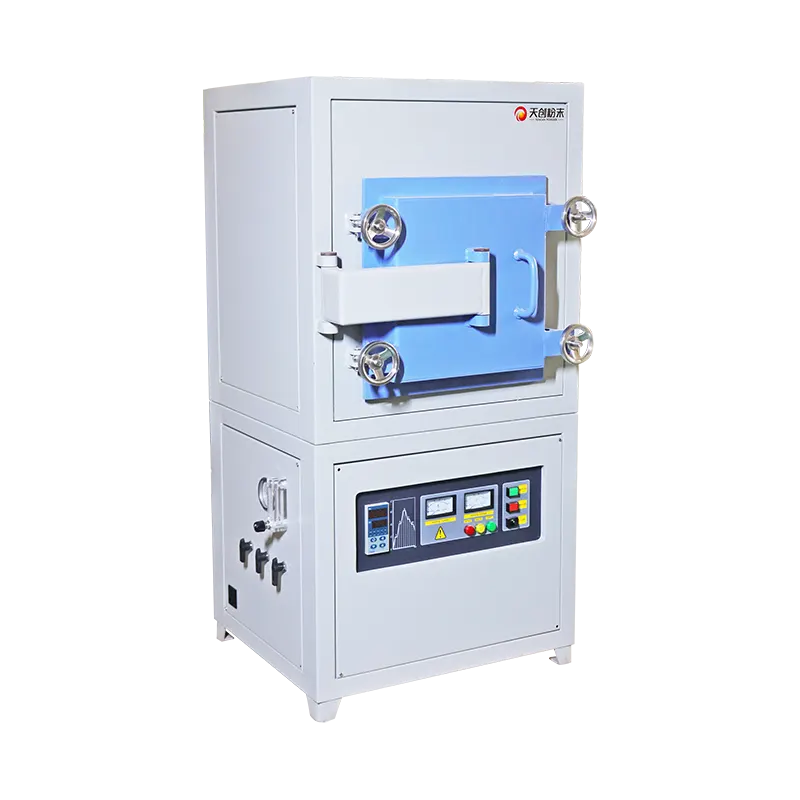
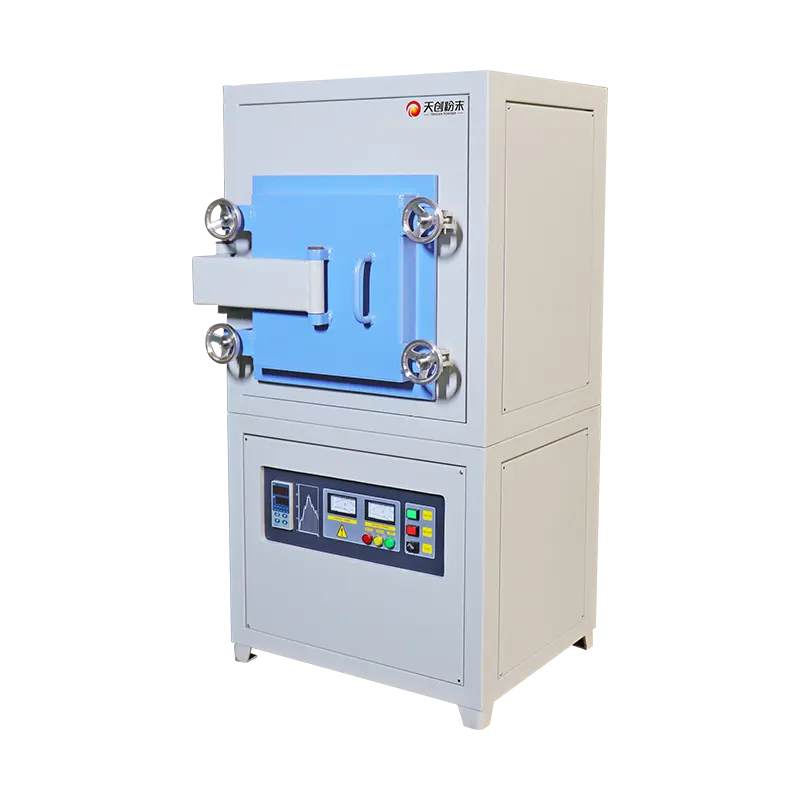
TENCAN focuses on powder equipment and the practical details that powder teams live with every day. The Box-Type Atmosphere Furnace fits that world: a rectangular chamber for real loads, a controlled atmosphere for sensitive powders, and a batch format that suits laboratories, pilot work, and flexible production. You can review the current configuration and technical details on the Box-Type Atmosphere Furnace product page. Use that page as your starting point, then match the chamber and gas setup to your material and load. That is a much better conversation than guessing from a generic spec sheet.
Questions Powder Teams Ask Before Buying
A few practical questions come up again and again. They are worth answering before the purchase order, not after.
Does every cycle need a vacuum pump?
Not necessarily. Some processes need vacuum; others rely on purging with a chosen gas. The important question is how the furnace removes the original air and how it proves the atmosphere is ready. A vacuum pump can help with certain cycles, but it is not a substitute for a clear purge strategy.
Can one furnace handle different atmospheres?
Often the hardware can be configured for more than one gas, but the safe answer depends on the design, the controls, and the cleaning between runs. Changing atmosphere is not just switching a valve. You need a procedure, training, and a way to avoid cross-contamination.
How do I know the purge is complete?
Use a measurement that matches the risk. For some work, a calculated purge time is enough. For sensitive powders, an oxygen or moisture reading gives you evidence. The furnace, the load, and the gas flow all affect the answer, so prove it on your real setup.
What about binder removal?
Binder removal needs a path out of the chamber. If the vapor cannot leave, it can condense, react, or deposit on the load. A slow ramp and adequate exhaust help. Clean the chamber after runs that leave residue. The atmosphere furnace is not a closed box during this stage; it is a controlled path for heat and vapor.
A Calmer Path to Better Sintering
A box-type atmosphere furnace is not magic, and it does not fix a weak powder recipe. What it does is remove a source of noise. When the chamber is clean, the gas is controlled, and the thermal profile is repeatable, you can see what your powder is actually doing. That is the real value: not a bigger furnace, but a clearer process. Start with the material, design the load, prove the atmosphere, and write down what worked. Do that a few times and the furnace becomes less of a mystery and more of a tool. The powder still has the final say, but at least you will hear it clearly.
Related Products
Get In Touch
Our professional team will reply to you within one business day. Please feel free to contact us!