
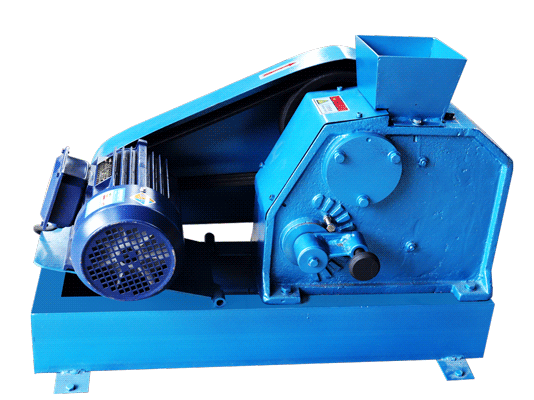
Jaw Crusher for Lab Sample Preparation: How Primary Crushing Actually Works

Every reliable analytical result starts with a sample that was prepared properly. An assay, a particle size distribution, an abrasion test, a leach recovery curve—none of them can rescue material that was broken down badly in the first place. And in most workflows, the machine that handles that first, heaviest step is a jaw crusher.
So let's look at what a jaw crusher really does, why this first stage matters far more than people expect, and what to check before you put one in a laboratory or a pilot plant.
Primary Crushing, Explained Without the Jargon
Comminution is simply the technical word for breaking solid material into smaller pieces. It happens in steps, and the steps are named for where they sit in the flow: primary, secondary, tertiary, then fine grinding. Primary crushing is the stage that takes run-of-mine rock, drill core, or bulky raw material down to a size the next machine can actually accept.
Why not just grind everything to powder in one pass? Because energy costs money and physics is stubborn. The energy needed to break a particle climbs sharply as the target size shrinks, and mills are genuinely bad at swallowing big lumps. Feed 100 mm rock into a ball mill and most of your electricity goes into bouncing grinding media around instead of fracturing anything. Break the material down first with a machine built for coarse work, and the mill gets to do the job it was designed for.
Two numbers describe this stage better than anything else. The first is the reduction ratio: feed size divided by product size. A primary crusher might take 100 mm feed and deliver 10 mm product, a ratio of 10 to 1. The second is the work index, a measure of how stubborn a material is—how much energy it takes to break. Hard, silica-rich rock has a high work index and fights you the whole way. Soft, friable material gives in easily. Know both numbers and you know whether you are asking a machine to do something sensible or something cruel.
How a Jaw Crusher Actually Breaks Rock
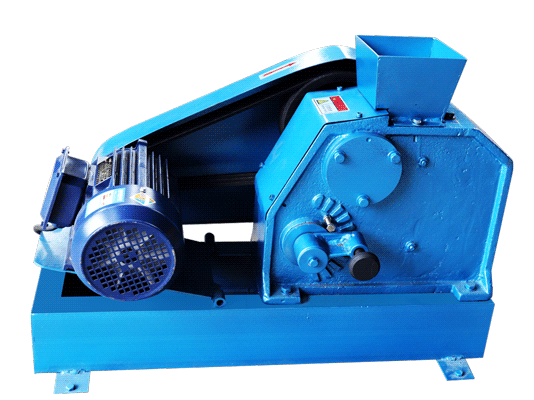
Open up the working end of a jaw crusher and the design is almost shockingly plain. Two heavy plates face each other in a V, one fixed and one moving. The gap between them at the bottom—the discharge setting—decides how fine the product comes out. Material drops in at the top, gets caught between the plates, and is squeezed until it fractures. Then it falls a little lower, gets squeezed again, and again, until it is small enough to escape through the bottom.
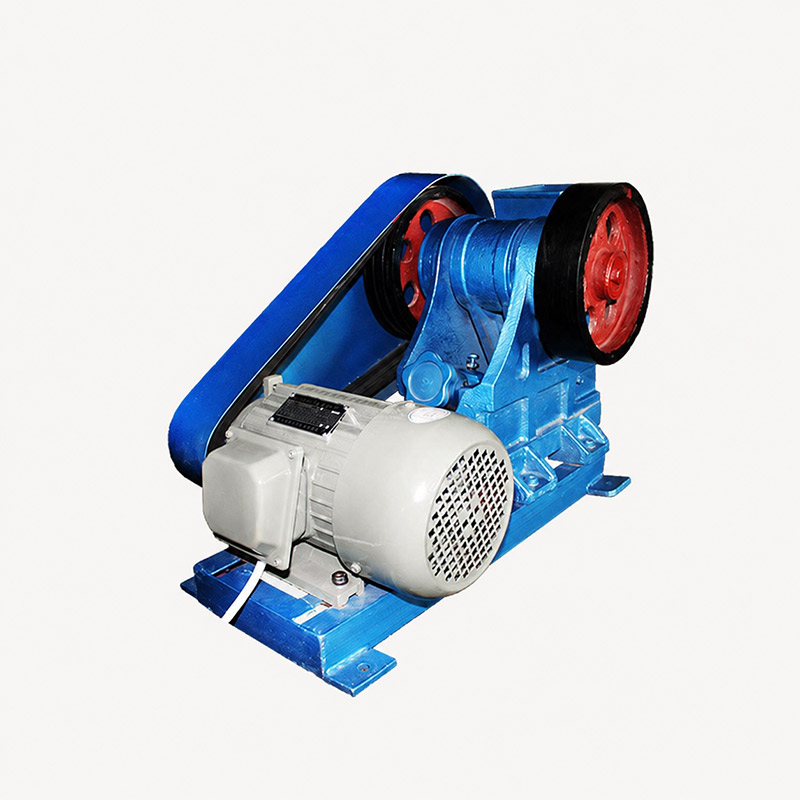
The motion comes from an eccentric shaft, which is simply a shaft with its centre offset. As it turns, it pushes a connecting rod up and down, and that rod drives the moving jaw through a toggle plate. The toggle is a solid steel part that doubles as a deliberate weak link: if something unbreakable lands in the chamber, the toggle fails instead of the frame. Behind the moving jaw sits a flywheel, storing energy between strokes and smoothing the load on the motor.
Notice what is not happening here. There is no hammer, no impact, no grinding. Jaw crushing is compression, pure and simple. That matters, because compression generates fewer fines than impact does, and fewer fines means a cleaner, more representative sample. It also matters because compression handles hard, abrasive, brittle material without turning wear parts into something you replace every few weeks.
Single Toggle and Double Toggle: What's the Difference?
Both terms show up on spec sheets, so it helps to know what they mean. In a double-toggle machine, two toggle plates support the moving jaw from behind, so the jaw moves in a nearly straight back-and-forth push. The stroke is shorter and the motion is very uniform, which is why large operations running hard, abrasive ore like that layout so much.
A single-toggle crusher hangs the moving jaw from a pivot at the top and drives it from below. The jaw swings as well as squeezes, adding a gentle rolling action that helps material travel down the chamber. Single-toggle machines are lighter, more compact, and cheaper to run, which is why most laboratory and small-scale jaw crushers use that design. For sample preparation, it is usually the right compromise.
Why Stage One Decides Everything After It
It is tempting to treat the crusher as a dumb box at the front of the line, and then be surprised when results downstream start to drift. Here is what that first stage quietly controls.
Representativeness. A sample only tells the truth if it holds the same mix of hard and soft, coarse and fine material as the lot it came from. Crush too aggressively and the softer, more brittle components shatter into dust, which then segregates or blows away. What lands on the balance is no longer the material you sampled.
Feed quality for the next mill. A mill performs best on a narrow, predictable feed size. If crusher discharge wanders between 5 mm and 30 mm, you have to set the mill for the worst case and waste energy on the easy particles. A tight, stable discharge curve lets you run the whole circuit closer to its limit.
Contamination. Jaw plates wear; that is unavoidable. Manganese steel plates shed iron into the sample. Harmless if you are assaying iron ore, a serious problem if you are measuring trace metals in the parts-per-million range. Choosing jaw plate material is a sample integrity decision, not just a maintenance one.
Dust and loss. Every gram of dust that escapes the crusher is a gram that never reaches your balance. Dry, fine, friable material is the worst offender, and in a lab that loss is not only a housekeeping problem—it is a bias baked into every result.
Where a Jaw Crusher Fits in a Lab Workflow
In a laboratory, the sequence usually runs like this. Material arrives as cores, lumps, or coarse chips. The jaw crusher reduces it to a few millimetres. A secondary crusher or roll mill takes it further. Then a mill—a planetary ball mill, a vibratory disc mill, or a similar machine—brings it down to the fineness the method demands, whether that is 75 microns for a standard assay or a few microns for X-ray diffraction work.
The jaw crusher is not trying to make the final powder. Its job is to hand the next machine a uniform, uncontaminated intermediate. Respect that boundary and you stop over-working the crusher and under-working the mill, which is one of the most common inefficiencies we see.
One practical consequence: plan the chain as a chain, not as three separate purchases. The discharge curve of the crusher should sit comfortably inside the feed range of whatever comes next. If you buy those two machines independently, you often end up with a gap in the middle—product that is too fine for one and too coarse for the other.
From Field Sample to Analytical Fineness
Field samples rarely arrive ready to crush. They need drying if they are damp, and splitting if the bag holds more than the crusher can process in one go. A riffle splitter is the usual tool: it divides a bulk sample into representative halves, and you keep splitting until you have a mass the crusher and the mill can handle. Skip this step and you are effectively analysing a scoop from the top of the bag, which is not the same thing at all.
Once the material is dry and split, run it through the jaw crusher at a discharge setting you have checked with a gauge, not by eye. Then split again before milling. That second split keeps the mill feed representative and keeps your sample mass manageable.
Mistakes We See Most Often
Feeding too fast is the classic one. Choke the chamber and the crusher stops reducing and starts rubbing, which produces fines, heat, and wear. Let the machine run empty for a moment between handfuls and it will stay in its happy zone.
Setting the gap too tight is the next favourite. Trying to squeeze a 2 mm product out of a jaw crusher pushes throughput down and plate wear up. Let the crusher do coarse work and let the mill finish the job.
Running wet or sticky material is another. Moist, clay-rich feed packs the chamber, and you end up clearing it with a bar instead of crushing. Dry it first, or slow the feed rate dramatically.
And the last one: never running a blank or a standard alongside your samples. It costs one extra run and it tells you whether the plates are contaminating your results.
Two Scenarios, Worked Through
Scenario one: a gold exploration lab. Core arrives in half-metre lengths and you need 75 microns for fire assay. The crusher takes the core down to roughly 3 to 5 mm, a roll or disc mill takes it to around 0.5 mm, and a ring mill finishes it. The crusher's job is to be fast, clean, and consistent so the rest of the chain stays predictable. Contamination control matters here, so plates are chosen with the elements you are reporting in mind.
Scenario two: a cement plant quality room. Clinker and limestone arrive as lumps and you need a repeatable fineness for strength and setting tests. The crusher sets the feed for a laboratory mill, and what matters most is that discharge stays constant from batch to batch, because a drifting crusher shows up as noisy test results weeks later.
Different industries, same principle: the crusher is a stabiliser. When it is right, nobody notices it. When it drifts, everybody blames the mill.
How to Choose the Right Jaw Crusher
Spec sheets are full of numbers and it is easy to get lost in them. Here is the order we would work through them, whether you are buying your first unit or replacing one that has been annoying you for years.
Start With the Feed Size
The largest lump you intend to feed in decides the size of the machine. Every jaw crusher has a maximum feed size, usually expressed as the opening dimensions at the top of the chamber. Feed a lump bigger than that opening and it simply sits there, or bridges across the top and blocks everything behind it. A useful rule of thumb is that feed should be no larger than about 80 percent of the inlet width, so material settles into the chamber instead of perching on top of it.
Then Look at Discharge Setting and Reduction Ratio
The discharge setting sets your product size, and the gap between maximum feed and minimum discharge tells you the reduction ratio the machine can realistically achieve in one pass. If your target needs a bigger ratio than the machine can deliver, plan for two stages rather than forcing one. Adjustable settings matter here too, because they let you tune the product curve as your methods change.
Throughput and Duty Cycle
Ask a simple question: how many samples per day, at what mass, and for how many years? A machine that runs twenty minutes a day is a very different purchase from one that runs eight hours a day, five days a week. Duty cycle drives the choice of motor, bearings, and frame stiffness far more than peak throughput does, and it is the number vendors rarely ask you about.
Jaw Plate Material
Standard plates are usually manganese steel—tough, work-hardening, and perfectly adequate for most rock and mineral samples. If you are chasing trace metals, however, you want plates made from a material that will not add the elements you are measuring, or you accept a correction you can justify with blanks. Ask what the plates are made of before you buy; it is a question that separates careful labs from busy ones.
Dust Extraction, Noise, and Safety
A crusher is a dusty, noisy machine with a fast-moving jaw, so plan the installation properly. Enclose it or connect it to extraction, give operators eye and hearing protection, and make sure nobody can reach into the feed hopper while the machine runs. Guarding and interlocks are not optional extras in a working lab.
TENCAN's Jaw Crusher for Laboratory Work
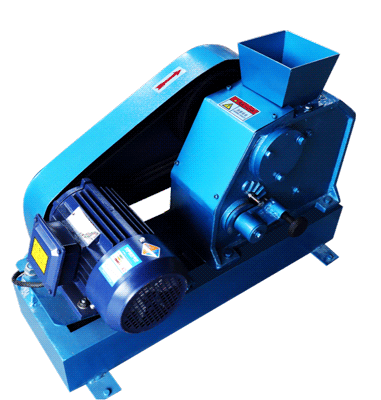
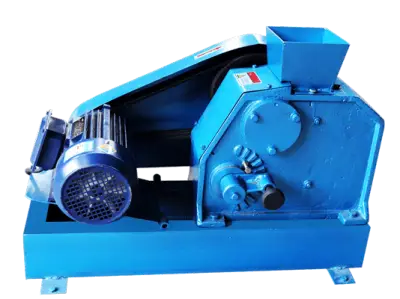
If you need a compact, single-toggle jaw crusher sized for sample preparation, the jaw crusher from TENCAN (Changsha Tencan Powder Technology Co., Ltd.) is worth a close look. It is built for the job we have been describing: taking core, lump, and chip samples down to a coarse intermediate that a mill can finish.
The full spec sheet on the jaw crusher product page lists feed opening, discharge setting range, throughput, motor power, and available jaw plate materials, so you can check each of the five selection points above against your own sample sizes rather than guessing at them.
Because crushing is only one step, it often makes sense to plan the whole line at once—crushing, secondary reduction, then grinding to analytical fineness—so the discharge of one machine matches the feed of the next. That single habit will save you more time than any clever purchase decision.
Maintenance Habits That Pay Off
Jaw crushers are forgiving machines, but they reward a small amount of routine attention. Check the toggle plate for cracks and the jaw plates for uneven wear—an uneven wear pattern usually means feed is entering on one side only, or that the setting has drifted. Grease the bearings on the schedule the manufacturer gives you, and clean the chamber between materials, especially when you switch sample types and contamination would matter.
Keep a simple log: material, feed size, discharge setting, and any abnormal noise or slowdown. When results start looking odd six months from now, that log will tell you whether the crusher changed or the samples did.
Questions We Get Asked a Lot
Can a jaw crusher handle wet or sticky material?
Poorly, and reluctantly. Moisture makes fine particles stick to the plates and bridge across the chamber, so the crusher rubs instead of breaking. Dry the sample first if you can. If you cannot, feed it slowly and in small batches, and expect to clean the chamber more often than you would like.
How fine can a jaw crusher go?
Not very, and that is deliberate. A jaw crusher is a coarse machine. Pushing it into fine-grinding territory costs you throughput, accelerates plate wear, and gives you an inconsistent product. If you need material below a millimetre or so, let a secondary crusher or a mill do that work, because that is exactly what they are built for.
Do I still need a mill if I have a crusher?
Yes, unless your method only needs coarse material. Jaw crushing typically stops somewhere in the millimetre range, and most analytical methods want powder. Think of it as two different jobs: the crusher removes bulk size, and the mill delivers the fineness your instrument needs.
How do I know if the crusher is contaminating my samples?
Run a blank or a certified reference material through the machine and compare the result with the certificate. If iron or manganese shows up where it should not, look at your plates first. It is a cheap test and it answers the question definitively.
Crushing looks like the simplest step in sample preparation, which is exactly why it gets overlooked. But it sets the size, the representativeness, and the cleanliness of everything that follows. Choose a machine that matches your feed and your target, run it well inside its comfort zone, and keep an eye on the wear parts—the rest of your workflow will thank you for it. When you are ready to compare numbers against your own samples, the jaw crusher specifications are the sensible place to start.
Related Products
Get In Touch
Our professional team will reply to you within one business day. Please feel free to contact us!